
 Reviewed by Evelyn Waugh
Should I Use a Personal Loan for a Vacation?
Reviewed by Evelyn Waugh
Quick Answer
- Avoid personal loans for vacations when possible.
- Save ahead for your trip or use rewards to reduce out-of-pocket costs.
- If you do take out a loan for vacation, compare rates and make a payoff plan first.

You can use a personal loan for a vacation, but if you do, you may be paying for your trip long after you return home.
While it can be tempting, using a personal loan for any discretionary spending, like a vacation, is almost never a good idea. Here are some reasons why financing your vacation with a loan might be a risky move, plus a few better options―so your travel plans don't trip you up financially.
Why You Shouldn't Use a Personal Loan for a Vacation
While a personal loan can help pay for travel-related costs like airfare, transportation, hotels and meals out, it's probably not ideal. Here's why.
- It's added debt that may be difficult to pay off. A personal loan adds to your overall debt burden. If you currently have trouble making payments on other debts, like student loans, credit cards or a car loan, then racking up another balance that has to be paid back (with interest) is risky and may not be practical financially.
- It will increase your DTI. Debt-to-income ratio, or DTI, is the percentage of your total monthly income that goes toward paying your debts. This may include your mortgage or rent payment, credit cards and other loans you may have. Lenders prefer a low DTI, ideally in the range of 36% or less. So if your bills are taking up a larger portion of your income, taking on additional debt for a vacation can make it more difficult to get additional financing in the future.
- A new loan can impact your credit score. When you apply for a personal loan, your lender will do a hard inquiry on your credit report, which could cause your credit score to take a slight dip. Making on-time loan payments can raise your credit score and help build it over time. But missing payments can do just the opposite, making it more challenging to qualify for any type of credit in the future.
- A personal loan comes with interest and possibly other loan fees. As of February 2026, the average interest rate for a 24-month personal loan was 11.40%, according to the Federal Reserve. And with base interest rates increasing in recent months, that figure likely will creep up. When you take out a personal loan, you'll repay not only the principal amount borrowed, but also interest and other fees, which can add to the total cost of your loan. That means the price of your vacation just got more expensive.
To help you gauge how much you'll pay each month for your vacation and how different loan offers impact your monthly payment, input the loan amount, estimated interest rate and repayment term into the personal loan calculator.
Personal loan calculator
Better Ways to Pay for a Vacation
Using a personal loan to pay for your vacation is not recommended and will likely cost you more in the long run. Rather than taking out extra debt for what should be a relaxing getaway, here are some options to help you finance that trip.
Savings
Instead of taking on more debt in the form of a personal loan, finding ways to save up and pay for your vacation—interest-free—is always a better plan. This doesn't mean tapping into your emergency fund, but instead creating a travel savings budget that aligns with your finances and your overall financial goals. You might start by setting aside a little from your paycheck each month or reducing your spending on nonessentials. It can take time to build your vacation fund, but it can be much less expensive than a personal loan that is paid back over time.
Credit Card Rewards
Paying for your trip with a rewards credit card may help reduce the amount you pay out of pocket for your vacation. In fact, you may be able to pay for a large portion of your hotel and transportation costs by taking advantage of these programs. Before taking out a loan, check your rewards balance to see if a portion (or all) of your costs can be covered.
Best rewards cards of 2026
Compare cards from our partners that earn points, cash back or miles on everyday spending.
Offers from our partners
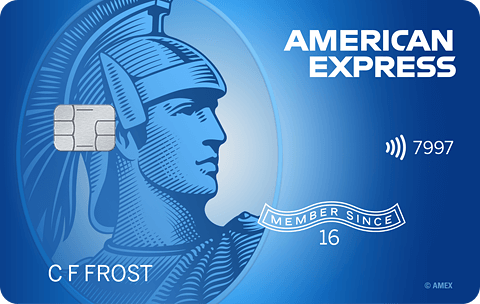
Blue Cash Everyday® Card from American Express
Intro bonus:
As High As $200 Cash Back. Find Out Your Offer.
You may be eligible for as high as $200 cash back after spending $2,000 in purchases on your new Card in the first 6 months. Welcome offers vary and you may not be eligible for an offer. Cash back is received as Reward Dollars, redeemable for statement credit or at Amazon.com checkout. Terms Apply.
Intro APR:0% on Purchases and Balance Transfers for 15 months
Ongoing APR:19.49%-28.49% Variable
Rewards:
1% - 3% (cash back)
Earn 3% cash back at U.S. supermarkets, 3% cash back on U.S. online retail purchases, 3% cash back at U.S. gas stations, on eligible purchases for each category on up to $6,000 per year in purchases (then 1%). Cash back is received in the form of Reward Dollars that can be redeemed as a statement credit and at Amazon.com checkout.
Annual Fee:$0

The opensky® Secured Visa® Credit Card
Ongoing APR:23.89% Variable
Rewards:
10% (cash back)
Earn up to 10% cash back on purchases made with your opensky Secured Visa Credit Card at 40,000+ retailers. Visit opensky Rewards in the opensky app for participating retailers. Learn more at openskycc.com. See Rewards Terms and Conditions for more information.
Annual Fee:$35
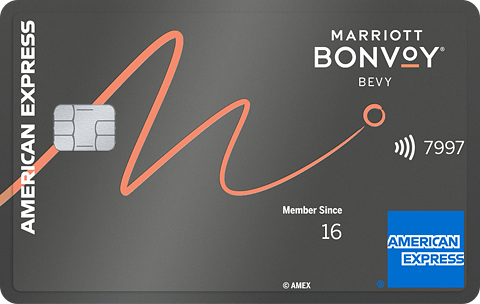
Marriott Bonvoy Bevy® American Express® Card
Intro bonus:
125,000 Bonus Points + a $150 Statement Credit
Earn 125,000 Marriott Bonvoy® bonus points plus a $150 statement credit after you use your new Card to make $5,000 in purchases within the first 6 months of Card Membership. Offer ends 09/30/2026.
Ongoing APR:19.49%-28.49% Variable
Rewards:
2x - 6x (Points per dollar)
Earn 6X Marriott Bonvoy® points for each dollar of eligible purchases at hotels participating in Marriott Bonvoy®. Earn 4X points at restaurants worldwide and U.S. Supermarkets (on up to $15,000 in combined purchases at restaurants and U.S. supermarkets per calendar year, then 2X points). Earn 2X points on all other eligible purchases.
Annual Fee:$250

Ollo Everyday Rewards
Ongoing APR:23.99%-29.99% Variable
Rewards:
1% - 3% (cash back)
Unlimited 3% cash back on all gas stations and EV charging stations, grocery store and drugstore purchases. Unlimited 1% cash back on all other purchases.
Annual Fee:$0

Avant® Cashback Rewards Mastercard® - $500 Credit Limit
Ongoing APR:35.99%*
Rewards:
1% (cash back)
Cash back will be awarded as points redeemable for a statement credit
Annual Fee:$125 first year; then $125.04/year ($10.42/mo)
Bank of America® Travel Rewards credit card
Intro bonus:
25,000 Points
25,000 online bonus points after you make at least $1,000 in purchases in the first 90 days of account opening - that can be a $250 statement credit toward travel purchases
Intro APR:0% Intro APR for 15 billing cycles for purchases, and for any balance transfers made in the first 60 days
Ongoing APR:17.49% - 27.49% Variable
Rewards:
1.5x - 3x (Points per dollar)
3 points per $1 spent on travel purchases booked through BofA Travel and 1.5 points per $1 spent on everyday purchases
Annual Fee:$0

Bank of America® Premium Rewards® credit card
Intro bonus:
60,000 Points
Receive 60,000 online bonus points - a $600 value - after you make at least $4,000 in purchases in the first 90 days of account opening.
Ongoing APR:19.49% - 27.49% Variable
Rewards:
1.5x - 2x (Points per dollar)
2 points for every $1 spent on travel and dining purchases, 1.5 points for every $1 spent on all other purchases
Annual Fee:$95
Bank of America® Unlimited Cash Rewards credit card
Intro bonus:
$250
Limited Time Offer! $250 online cash rewards bonus after you make at least $1,000 in purchases in the first 90 days of account opening.
Intro APR:0% Intro APR for 15 billing cycles for purchases, and for any balance transfers made in the first 60 days
Ongoing APR:17.49% - 27.49% Variable
Rewards:
1.5% (cash back)
1.5% cash back on all purchases
Annual Fee:$0
See all our best rewards credit cards for 2026.
Intro 0% APR Credit Card
A credit card with an introductory 0% APR can help finance your vacation, and you won't pay interest on any charges you rack up during this promotional period as long as you pay off the balance before the intro period ends. Introductory periods vary, but some are as long as 21 months. That allows you to space out payments without the added expense of interest charges.
However, using an intro 0% APR credit card can be risky because, at the end of the promotional period, any remaining card balance will incur interest at the standard rate in your credit card offer. Also, be on the lookout for promotions with a deferred interest offer. That means that if you can't or don't pay off the entire balance by the end of the promotional period, you will be charged interest going back to the date of the original purchase, which will then be tacked onto your remaining balance. That makes creating a repayment plan to pay off your vacation costs quickly during this intro period even more important.
The Bottom Line
Using a personal loan to fund a vacation can be tricky, especially with the added cost of interest and other fees. But at times, a personal loan may make sense, such as if the trip is for an emergency and you need the funds fast, or you have good credit and the money in your budget for another payment.
If your budget is stretched thin or you have poor credit, you may want to consider another option. Before you consider borrowing or credit card options, check your credit scores for free through Experian for personalized insight on where you stand now.
Need a personal loan?
Whether you're looking to eliminate debt or access cash fast, compare personal loan offers matched to your credit profile.
Start now for free
About the author

Kathryn Pomroy
Kathryn Pomroy is a writer at Experian. She is a journalist who obsesses over all things personal finance, including consumer debt and banking, credit cards, credit scores and all types of loans. She has written for dozens of major publications, small businesses and many well-known personal finance companies
Read more from Kathryn