
 By Ben Luthi
 Edited by Michelle TipswordBy Ben LuthiEdited by Michelle Tipsword
You may be able to deduct up to $2,500 in student loan interest on your federal tax return if you meet income and eligibility requirements—no itemizing needed.

If you're making student loan payments, you may be able to deduct the interest you pay over the course of the year on your tax return.
Understanding how this tax break works—and what other education-related deductions and credits are available—can help you keep more money in your pocket at tax time.
The U.S. tax code allows you to deduct up to $2,500 in student loan interest each year, depending on how much interest you paid and your modified adjusted gross income (MAGI).
Your student loan servicer or lender will send you Form 1098-E if you paid $600 or more in interest during the year. This form shows exactly how much interest you paid, which determines the amount you can deduct on your tax return.
The deduction is taken as an adjustment to income, which means you benefit from it even if you take the standard deduction instead of itemizing.
Keep in mind this is a tax deduction, not a tax credit. A deduction reduces your taxable income, which in turn lowers your tax bill. The actual tax savings depends on your tax bracket and effective tax rate.
Learn more: Tax Credit vs. Tax Deduction: What's the Difference?
To qualify for the student loan interest deduction, you'll need to meet the following criteria:
It's also important to note that the deduction begins to phase out at higher income levels and becomes completely unavailable once you exceed the maximum threshold. Here are the MAGI limits for the 2025 tax year (filing in 2026):
| Single, Head of Household and Qualifying Surviving Spouse | Married Filing Jointly | |
|---|---|---|
| Full deduction | $85,000 or less | $170,000 or less |
| Partial deduction | More than $85,000 but less than $100,000 | More than $170,000 but less than $200,000 |
| No deduction | $100,000 or more | $200,000 or more |
Source: IRS
A qualified student loan is one that was taken out to pay for qualified higher education expenses. These expenses must have been:
Qualified expenses include tuition, fees, room and board, books, supplies, equipment and other necessary costs associated with attending an eligible institution. Both federal student loans and private student loans can qualify, as can personal loans in some instances—though the latter option is often more expensive and doesn't provide the same benefits as student loans.
Sign up and get instant online access to your FICO® Score for free.
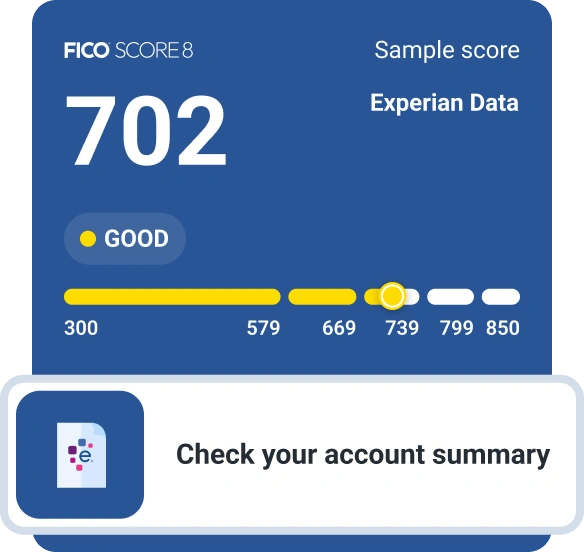
Checking your own credit won’t lower your credit scores.
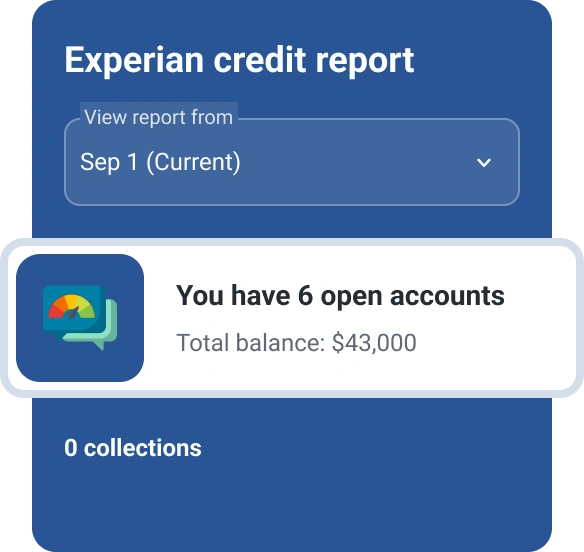
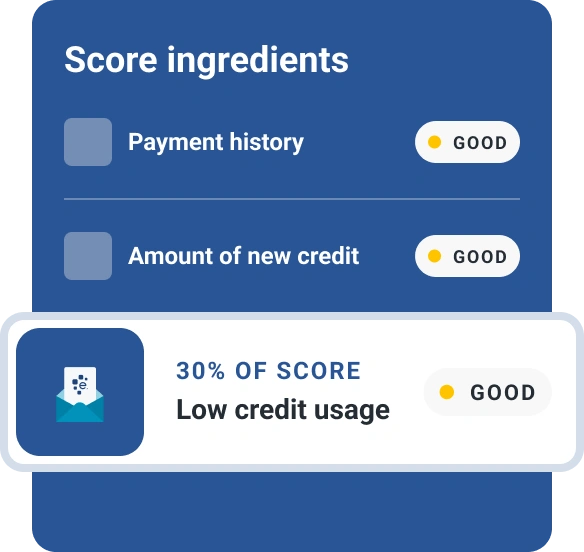
View specific factors that are affecting your score and how to improve it.
Beyond the student loan interest deduction, several other tax benefits can help offset the cost of higher education. If you're currently enrolled in school or paying education expenses for a spouse or dependent, you may qualify for one or more of these credits and savings plans.
The American Opportunity Tax Credit offers more generous tax savings than the student loan interest deduction if you're still in the first four years of undergraduate education. This credit can reduce your tax bill by up to $2,500 per eligible student each year.
The AOTC provides 100% of the first $2,000 in qualified education expenses and 25% of the next $2,000. What makes this credit especially valuable is that it's partially refundable—if the credit reduces your tax liability to zero, you can receive up to 40% of any remaining credit (up to $1,000) as a tax refund.
Eligibility requirements for AOTC include the following:
For the 2025 tax year, the full credit is available if your MAGI is $80,000 or less ($160,000 or less for married filing jointly). The credit phases out if your MAGI is between $80,000 and $90,000 for single filers (between $160,000 and $180,000 for joint filers). You cannot claim the credit if your MAGI exceeds $90,000 ($180,000 for joint filers).
If you've exhausted your four years of AOTC eligibility or you're pursuing graduate studies, professional courses or other continuing education, the Lifetime Learning Credit can provide tax savings.
The LLC offers a credit of up to $2,000 per tax return (not per student) for qualified education expenses. It's calculated as 20% of the first $10,000 you spend on qualifying expenses. Unlike the AOTC, this credit is not refundable, which means it can only reduce your tax liability to zero but won't result in a refund.
Here are some other key differences between the LLC and the AOTC:
That said, the LLC has the same income limits as the AOTC.
If you're saving for future education expenses—whether for yourself, your children or another family member—a 529 plan is one of the most tax-efficient ways to do it. These state-sponsored savings plans offer significant tax advantages that can help your education savings grow faster.
The money you save or invest in a 529 plan grows tax free and can be withdrawn on a tax-free basis, as long as you use the funds for qualified educational expenses.
While 529 plan contributions aren't deductible on your federal return, more than 30 states offer a state income tax deduction or credit for contributions to a 529 plan, but only if you contribute to your own state's plan.
An additional nine states, including Arizona, Arkansas, Kansas, Maine, Minnesota, Missouri, Montana, Ohio and Pennsylvania, offer tax parity, meaning you can claim a deduction for contributions to any state's 529 plan. The type of tax benefit and amount vary by state.
Learn more: How Much Should You Save for Your Child's College?
Getting a tax break on your student loan interest provides some savings, but paying off your loans faster and reducing the total interest you pay over the life of the loan will save you even more money in the long run.
Consider these strategies to accelerate your student loan payoff:
Remember that there's no one-size-fits-all approach to paying down student loan debt. Choose strategies that align with your financial situation, goals and other obligations like building an emergency fund or saving for retirement.
If you're a recent college graduate, you may not have had time to start building a credit history. Making your student loan payments on time every month can help you build a positive payment history, which is the most important factor in your FICO® ScoreΘ.
Even if you've been out of school for a while or you're a parent of a student, on-time payments will make it easier for you to build and maintain a good credit history.
Check your credit scores throughout the repayment process to keep track of your progress, and look for opportunities to address potential concerns as they arise.
Learn what it takes to achieve a good credit score. Review your FICO® Score for free and see what’s helping and hurting your score.
Get your FICO® ScoreNo credit card required

Ben Luthi
Ben Luthi has worked in financial planning, banking and auto finance, and writes about all aspects of money. His work has appeared in Time, Success, USA Today, Credit Karma, NerdWallet, Wirecutter and more.
Read more from Ben