
 By Ben Luthi
How to Manage Multiple Rewards Credit Cards
By Ben Luthi
Quick Answer
To make the most of using multiple rewards credit cards, it's important to understand how each rewards program works so you can use each card at the right time. It's also important to keep track of your due dates, monitor your transactions and card benefits, and remember annual fees.

Credit card rewards experts often recommend using multiple credit cards to take advantage of the different rewards rates and card benefits in your everyday spending. But to make the most of the experience and avoid potential problems, it's important to stay organized.
If you have several rewards credit cards or plan to open another one, these tips can help you manage your cards more effectively.
1. Understand How Your Cards' Rewards Programs Work
Rewards credit cards may offer cash back, points or miles on your everyday purchases. But depending on which cards you choose, the rules and features can vary. Before you apply for a rewards credit card, it's critical that you understand the following attributes of a rewards credit card:
Rewards Currency
Start by checking to see if the card offers cash back, points or miles. Keep in mind, though, that some cash back credit cards actually offer flexible points with a wider range of redemption options. If the card offers points or miles, determine whether you're earning rewards with the card issuer or with a co-branded partner, such as an airline or hotel chain.
Rewards Rates
Your credit cards may offer flat-rate, tiered or rotating rewards rates. In some cases, you may need to select which categories you want to earn bonus rewards in or activate your eligibility for bonus rewards. There may also be limits on how much you can earn in bonus cash back, points or miles.
Redemption Options
Make sure you understand how you'll be able to redeem the rewards you earn. With travel credit cards, for instance, rewards programs administered by the card issuer are typically more flexible than airline and hotel loyalty programs.
The value of your rewards can depend on how you redeem them, and some card issuers even allow you to transfer points to other rewards programs.
While cash back is a bit more straightforward, redemption options can still vary. For example, you may have the option to get a paper check, direct deposit or statement credit, or you may be limited to just statement credits.
Card Benefits
In addition to rewards, your cards may also offer a variety of benefits. Try to avoid getting different cards with too many overlapping benefits, and keep track of the perks each card offers so you don't forget to use them.
Compatibility vs. Diversification
If you want to rack up a lot of rewards with one program, you may consider getting multiple credit cards that offer points or miles for that program.
At the same time, rewards programs—especially airline and hotel loyalty programs—often experience devaluation, so it's also worth diversifying your rewards efforts across more than one program.
If you want to earn rewards for travel, for instance, you could get one credit card that offers airline miles, another that offers hotel points and a third that provides cash back so you can cover a variety of trip-related costs.
Best rewards cards of 2026
Compare cards from our partners that earn points, cash back or miles on everyday spending.
Offers from our partners
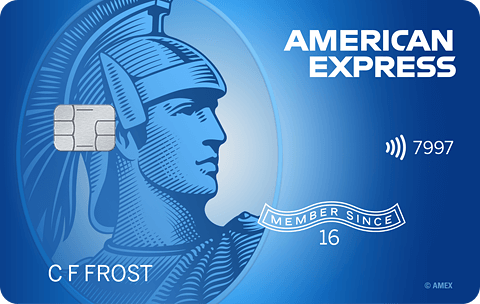
Blue Cash Everyday® Card from American Express
Intro bonus:
As High As $200 Cash Back. Find Out Your Offer.
You may be eligible for as high as $200 cash back after spending $2,000 in purchases on your new Card in the first 6 months. Welcome offers vary and you may not be eligible for an offer. Cash back is received as Reward Dollars, redeemable for statement credit or at Amazon.com checkout. Terms Apply.
Intro APR:0% on Purchases and Balance Transfers for 15 months
Ongoing APR:19.49%-28.49% Variable
Rewards:
1% - 3% (cash back)
Earn 3% cash back at U.S. supermarkets, 3% cash back on U.S. online retail purchases, 3% cash back at U.S. gas stations, on eligible purchases for each category on up to $6,000 per year in purchases (then 1%). Cash back is received in the form of Reward Dollars that can be redeemed as a statement credit and at Amazon.com checkout.
Annual Fee:$0

The opensky® Secured Visa® Credit Card
Ongoing APR:23.89% Variable
Rewards:
10% (cash back)
Earn up to 10% cash back on purchases made with your opensky Secured Visa Credit Card at 40,000+ retailers. Visit opensky Rewards in the opensky app for participating retailers. Learn more at openskycc.com. See Rewards Terms and Conditions for more information.
Annual Fee:$35
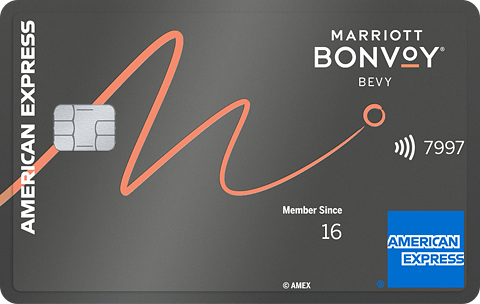
Marriott Bonvoy Bevy® American Express® Card
Intro bonus:
125,000 Bonus Points + a $150 Statement Credit
Earn 125,000 Marriott Bonvoy® bonus points plus a $150 statement credit after you use your new Card to make $5,000 in purchases within the first 6 months of Card Membership. Offer ends 09/30/2026.
Ongoing APR:19.49%-28.49% Variable
Rewards:
2x - 6x (Points per dollar)
Earn 6X Marriott Bonvoy® points for each dollar of eligible purchases at hotels participating in Marriott Bonvoy®. Earn 4X points at restaurants worldwide and U.S. Supermarkets (on up to $15,000 in combined purchases at restaurants and U.S. supermarkets per calendar year, then 2X points). Earn 2X points on all other eligible purchases.
Annual Fee:$250

Ollo Everyday Rewards
Ongoing APR:23.99%-29.99% Variable
Rewards:
1% - 3% (cash back)
Unlimited 3% cash back on all gas stations and EV charging stations, grocery store and drugstore purchases. Unlimited 1% cash back on all other purchases.
Annual Fee:$0

Avant® Cashback Rewards Mastercard® - $500 Credit Limit
Ongoing APR:35.99%*
Rewards:
1% (cash back)
Cash back will be awarded as points redeemable for a statement credit
Annual Fee:$125 first year; then $125.04/year ($10.42/mo)
Bank of America® Travel Rewards credit card
Intro bonus:
25,000 Points
25,000 online bonus points after you make at least $1,000 in purchases in the first 90 days of account opening - that can be a $250 statement credit toward travel purchases
Intro APR:0% Intro APR for 15 billing cycles for purchases, and for any balance transfers made in the first 60 days
Ongoing APR:17.49% - 27.49% Variable
Rewards:
1.5x - 3x (Points per dollar)
3 points per $1 spent on travel purchases booked through BofA Travel and 1.5 points per $1 spent on everyday purchases
Annual Fee:$0

Bank of America® Premium Rewards® credit card
Intro bonus:
60,000 Points
Receive 60,000 online bonus points - a $600 value - after you make at least $4,000 in purchases in the first 90 days of account opening.
Ongoing APR:19.49% - 27.49% Variable
Rewards:
1.5x - 2x (Points per dollar)
2 points for every $1 spent on travel and dining purchases, 1.5 points for every $1 spent on all other purchases
Annual Fee:$95
Bank of America® Unlimited Cash Rewards credit card
Intro bonus:
$250
Limited Time Offer! $250 online cash rewards bonus after you make at least $1,000 in purchases in the first 90 days of account opening.
Intro APR:0% Intro APR for 15 billing cycles for purchases, and for any balance transfers made in the first 60 days
Ongoing APR:17.49% - 27.49% Variable
Rewards:
1.5% (cash back)
1.5% cash back on all purchases
Annual Fee:$0
See all our best rewards credit cards for 2026.
2. Decide Which Card You'll Use for Each Type of Purchase
Depending on how you spend your money, it may be a good idea to use multiple rewards credit cards for different purchases. While one credit card may offer a high rewards rate on groceries, you may be able to get a higher rewards rate on gas, dining out and other expenses on different cards.
Additionally, many cards that offer bonus rewards have a low base rewards rate on non-bonus spending, so it could be worth getting a card with a high flat rewards rate for those expenses.
Remember, too, that you and the card issuer may have different opinions on spending categories. If a card offers bonus rewards on grocery purchases, for instance, that typically doesn't apply to grocery shopping at convenience stores, superstores like Walmart and Target or wholesale clubs like Costco and Sam's Club.
Knowing what your card does and doesn't include in its rewards categories can make it easier to know when to use each card.
3. Set Alerts for Your Bill Due Dates
The more credit cards you have, the harder it will be to keep track of your monthly due dates. If your card issuers allow you to pick your due date, setting them all to the same date can help. But if that's not an option, you'll want to set up alerts so you don't accidentally miss one.
You can also consider setting up automatic payments, but do this only if your income is predictable and you have a buffer in your payment account so you don't accidentally overdraw the account and get slapped with a fee.
4. Keep Track of Your Transactions
Every month, your credit card issuer will send you a statement, either in the mail or electronically. That said, it's a good idea to check your accounts more regularly to understand where you're spending your money and keep yourself from spending more than you can afford to pay back. It can also be a great way to spot potential unauthorized transactions.
One way to do this is to log in to each online account individually, but that can be time-consuming. Some budgeting apps allow you to import transactions from all of your financial accounts into one place, making it easier and more efficient to track your expenses.
5. Keep Track of All Your Cards
If you have several credit cards and you don't use all of them every day, it might not make sense to keep all of them in your wallet or purse. That said, you'll still want to have a safe place to keep track of your physical cards so they don't get lost or stolen.
Also, as you use credit cards to shop online, try to avoid saving your card information on websites that you don't shop with regularly. This step can help reduce the risk of your details getting compromised in a data breach.
6. Don't Forget About the Annual Fees
While using multiple rewards cards can add a lot of value to your everyday spending and lifestyle, your hobby can get costly if you have multiple annual fees.
That's not to say that you should avoid credit cards with annual fees. If you're consistently getting enough value—or more—from each card to cover the yearly cost, an annual fee can be worth it.
But if you find that you're not using some cards as much as you used to, it may not make sense to continue to pay an annual fee while the card collects dust.
Check Your Credit Before Applying for Another Rewards Card
If you're thinking about adding another rewards credit card to your wallet, consider getting a free credit report and credit score from Experian to evaluate your approval odds—most of the best rewards credit cards require good or excellent credit, which generally starts at a FICO® ScoreΘ of 670.
To learn more about some popular rewards credit cards, check out Experian's card comparison tool, which can pair you with specialized card offers based on your credit profile.
Get the rewards you deserve
Cash back? Miles? Points? Whatever suits your goals, we can help match you to personalized rewards card offers. Start with your FICO® Score for free.
See your offers
About the author
Ben Luthi
Ben Luthi has worked in financial planning, banking and auto finance, and writes about all aspects of money. His work has appeared in Time, Success, USA Today, Credit Karma, NerdWallet, Wirecutter and more.
Read more from Ben