
 Edited by Samuel Mountjoy
What Is High-Risk Car Insurance?
Edited by Samuel Mountjoy
Quick Answer
A high-risk insurance pool is a classification of insurance coverage that covers drivers classified as more likely to file a claim. Drivers may be classified as high-risk after a history of accidents, claims, DUI/DWIs or moving violations. Finding affordable high-risk car insurance can be challenging, but there are ways to save.

Auto insurance companies don't sell policies specifically labeled "high-risk auto insurance," but they may classify you as a high-risk driver if you have a history of accidents, claims, DUI/DWIs or moving violations. If you're a high-risk driver, you may have trouble finding auto insurance, and will likely pay more for coverage.
Learn what makes you a high-risk driver, how to find high-risk car insurance and how to keep your costs down.
What Is High-Risk Auto Insurance?
Insurance companies generally won't label specific policies or drivers as high risk. However, you might use the term "high-risk auto insurance" to shop for insurance if you've been denied coverage or your driving record shows a lot of accidents, tickets or offenses.
Car insurance companies use proprietary formulas to estimate the risk that you'll file a claim. Drivers deemed higher risk typically pay more for coverage or might be denied coverage altogether.
Learn more: Do You Need Car Insurance?
What Is an Assigned Risk Pool?
Most states require drivers to have a minimum amount of insurance coverage or otherwise assume financial responsibility for damages they cause while driving. To ensure that even high-risk drivers can get car insurance, states use assigned risk pools. Insurance companies agree to join assigned risk pools and insure any driver the state assigns to them.
Assigned risk pools are typically a last resort option if you've been denied car insurance elsewhere. Buying insurance through the assigned risk pool generally costs more than standard car insurance, but insurers in the pool can't deny you coverage regardless of your driving history. If you're unable to find standard car insurance, you can find out more about your state's assigned risk pool through your state's department of insurance.
Learn more: How to Get Affordable Car Insurance as a High-Risk Driver
How to Get High-Risk Auto Insurance
To get auto insurance as a high-risk driver, follow these steps:
-
Gather your information. Before you begin shopping, be prepared with:
- Your current car insurance policy, including annual and monthly premiums
- The vehicle identification number, year, make and model of your car
- Your driver's license number
- Your estimated annual mileage, including daily commuting mileage
- Personal information, such as your Social Security number and contact information
- Know how much insurance you need. Each state requires a minimum amount of car insurance or other evidence of financial responsibility to drive. You may be required to buy more than the minimum coverage if your vehicle is leased or financed.
- Get quotes and compare. Obtain quotes from several insurance companies so you can compare premiums and coverage. You can get quotes online or by contacting an insurance agent or broker who works with multiple insurers.
- Complete an application. Once you choose your preferred insurance provider, you can typically fill out an application online and get a final quote. This usually takes only a few minutes.
- Pay your premiums. Activate your policy by paying your premium, which you can usually do annually, every six months or monthly. There may be a discount for paying your premium annually or semiannually.
Tip: As a high-risk driver, you may want to search for specialized auto insurance coverage, such as insurance for high-performance vehicles or policies for drivers required to file SR-22 or FR-44 forms.
Learn more: What to Do if You Can't Find Car Insurance
Stop overpaying for insurance
Answer some questions about your current plan and get matched to personalized quotes.
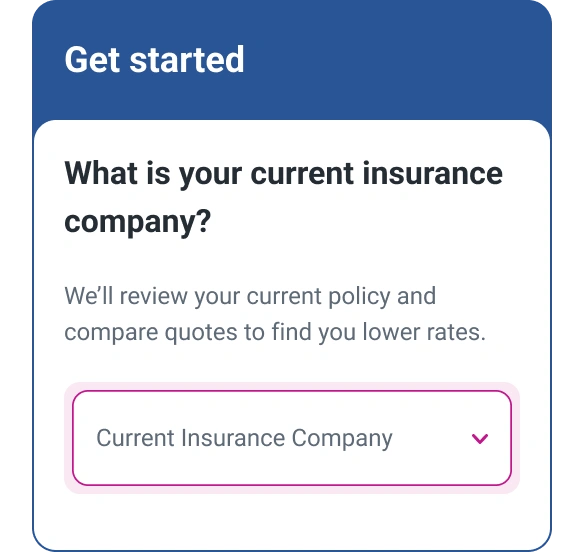
We’ll show you offers from our top insurance carriers and help you shop for better rates in the future.
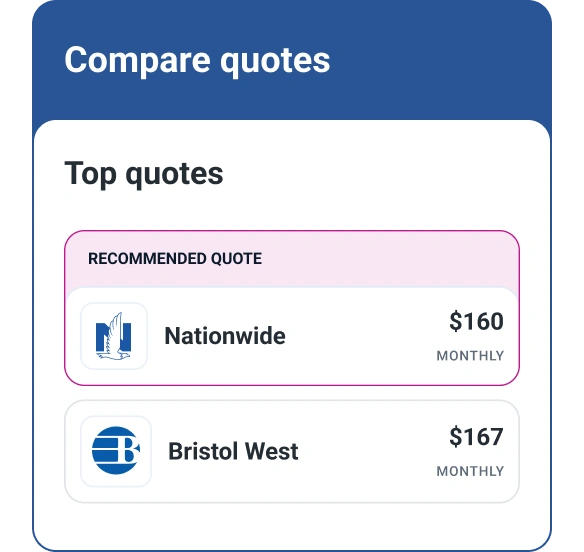
From switching your policy to canceling and requesting a partial refund on your old plan, we help you do it all.

What Is a High-Risk Driver?
Some factors that can make you a risky driver have to do with your driving. You may be considered a high-risk driver if you:
- Have been convicted of reckless driving or a DUI/DWI
- Are required to file an SR-22 due to a suspended or revoked driver's license
- Have been involved in multiple accidents, even if you weren't at fault
- Have been frequently cited for moving violations
- Are a new driver
- Drive a high-performance car that could tempt you to speed or race
Other risk factors are unrelated to how you drive but reflect other ways you might cost the insurer money. These include:
- A history of insurance claims
- Living in an area with a high crime rate
- Having gaps in your auto insurance coverage
- A history of missing premium payments
One or two of these factors generally won't deem you a high-risk driver, but you become more difficult to insure as risk factors compound. For example, a 22-year-old who drives a sports car with a record that shows an at-fault accident and a DUI is more likely to be considered high risk than a 55-year-old driver with the same model car and a clean driving record.
How Much Does High-Risk Auto Insurance Cost?
High-risk drivers can generally expect to pay significantly more for auto insurance. Although the cost of high-risk auto insurance depends on factors such as your driving record, age, vehicle and coverage, the table below will give you an idea of how being a high-risk driver could impact your premiums.
| Driving Record | Annual Cost |
|---|---|
| Clean | $2,119 |
| 3+ Violations | $2,958 |
| 3+ Incidents | $3,146 |
Source: Experian data as of April 2026
Note: Costs above are a blended average of full and minimum coverage policies
Be aware: If you can't afford insurance as a high-risk driver, driving without the minimum required insurance might sound tempting. But it's illegal, and the consequences can be severe. Depending on your state laws, you could face thousands of dollars in fines, have your driver's license or registration suspended or revoked, have your car impounded or even be sentenced to serve time in jail.
Learn more: Average Cost of Car Insurance in the U.S.
Ways to Lower the Cost of High-Risk Auto Insurance
Finding affordable car insurance as a high-risk driver can be a challenge, but the following tips can help:
- Complete a defensive driving course. You may be able to get a discount on car insurance if you pass a safe driving or defensive driving course. Check with insurance companies to see what courses they accept.
- Adjust your deductible. Raising your insurance deductible typically lowers your premiums. Since the deductible is the amount you're responsible for if you file a claim, make sure you could afford to pay it.
- Eliminate unnecessary coverage. Skipping extras such as rental car reimbursement or roadside assistance coverage could help reduce your premiums. If your car is paid off and not worth much, you could also consider dropping comprehensive and collision coverage. Before choosing this option, though, consider whether you could afford to repair or replace the vehicle out of pocket.
- Explore usage-based car insurance. If you don't drive much, consider pay-per-mile insurance, which charges you a monthly rate based on actual mileage. Although your driving record is still a factor, pay-per-mile coverage could be significantly cheaper than standard car insurance.
- Get added to your parents' policy. Are you a young adult or teen high-risk driver trying to find your own car insurance? If you live in the same household, being on your parents' policy is generally cheaper and can make it easier to get coverage.
- Shop around on a regular basis. Don't stop shopping once you have insurance. You can switch car insurance at any time, so explore your options regularly to see if you can find a better rate. At minimum, compare rates before your policy renews, which is typically every six or 12 months.
Learn more: Best Car Insurance Discounts
How Can You Get Out of the High-Risk Car Insurance Pool?
Getting out of the high-risk car insurance pool is primarily a waiting game. Moving violations, accidents, DUI/DWIs and other negative marks will eventually come off your driving record, making it easier to get insurance.
Even while the incident remains on your record, insurance companies may not factor it into your insurance rates after a certain amount of time has passed. Although the specifics can vary depending on the insurer and state, many insurers only consider the prior three to five years of your driving record when setting rates.
In the meantime, here are some things you can do to reduce your risk factors:
- Drive safely. Avoid moving violations, DUIs/DWIs or accidents.
- Maintain insurance coverage. Even if you aren't driving, going without insurance can cause insurers to raise your rates when you try to buy insurance again.
- Switch vehicles. If your car is a risk factor, consider buying a safer vehicle.
- Take steps to improve your credit score. In many states, insurers can use credit-based insurance scores when setting your rates. These differ from regular credit scores, but are based on many of the same factors, so improving your credit could boost your credit-based insurance scores and potentially lower your premiums.
The Bottom Line
Although high-risk car insurance doesn't exist as a policy type, a record reflecting unsafe driving habits could get you classified as a high-risk driver, which could mean paying more for car insurance. You can help reduce your premiums by driving safely and shopping for discounts on coverage.
Comparing quotes from multiple insurers could help you find high-risk auto insurance. Experian's free car insurance comparison tool can simplify your search by gathering auto insurance quotes from dozens of top insurance companies in one place. It's a convenient way to see which provider offers the most affordable rates.
Don’t overpay for auto insurance
If you’re looking for ways to cut back on monthly costs, it could be a good idea to see if you can save on your auto insurance.
Find savings
About the author

Karen Axelton
Karen Axelton is Experian’s in-house senior personal finance writer. She has over 20 years of experience as a journalist and has written or ghostwritten content for a variety of financial services companies.
Read more from Karen