
What Can Increase Your Credit Card’s APR?

Your credit card's annual percentage rates (APRs) can impact how much you pay in interest on different types of transactions. APRs are often variable rather than fixed, and they can change depending on a few factors. Understanding how and why a card's APR could change can help you avoid paying interest or limit how much you pay.
How Does APR Differ for Loans and Credit Cards?
With credit cards, the annual percentage rate is synonymous with the card's interest rate. It can help you understand how much interest you'll pay if you carry a balance or get a cash advance. However, it doesn't account for the card's fees or how long it takes you to repay a balance.
In contrast, an APR on a loan depends on its interest rate, repayment term and lender fees. Comparing APRs on loan offers can be helpful because a loan with a low interest rate might wind up costing you more overall if the lender charges high fees. Many loans carry fixed interest rates, meaning your interest rate and monthly payment stay the same for the lifetime of the loan.
Credit cards typically have three variable APRs—one each for purchases, balance transfers and cash advances. The APRs you receive will depend on the card, a benchmark rate and your creditworthiness when you apply. Most credit card APRs are variable and can change over time.
What Can Cause Your Credit Card's APR to Increase?
Your credit card's APRs can change for a variety of reasons. Some of these are completely out of your control, but others depend on how you use your credit card or manage your account.
- The prime rate changes. Credit cards' variable APRs are the sum of two rates: a base benchmark rate—often the prime rate—and a second rate that depends on your creditworthiness. When the benchmark rate changes, your card's APR will rise or fall as well, and the new APR can apply to your existing balance.
- A promotional period ends. Credit cards may offer low- or no-interest promotions. For example, you might get a balance transfer credit card that gives new cardholders an introductory 0% APR on balance transfers for the first 15 months. (There are also intro offers for 0% APR on purchases, and 0% APR on both balance transfers and purchases.) The APR changes to the standard APR and applies to the remaining balance once the promotional period ends. Missing a payment could also lead to the early termination of a promotional rate.
- The card issuer changes your rate. Credit card companies monitor your creditworthiness and how you're using the credit card. After your first year with the card, the issuer can increase your rate 45 days after sending you a notice—which can appear on your monthly statement. The increased APR will only apply to new transactions that occur 14 or more days after the issuer sends you the notice.
- You're 60 days or more past due. Card issuers can also raise your interest rate once you're 60 or more days behind on a bill. The increased rate is also known as a penalty APR, and it can apply to existing balances and new transactions. Once you make six monthly payments on time, however, the card issuer must revert your account back to your standard APR.
There are also a few less-common situations when a credit card's APR can change. For example, your card's APR might be lowered as part of a hardship program. But, if you don't keep up with the terms of the arrangement, your rate could go back up.
Or, you may receive a low APR while you're on active duty as part of the Servicemembers Civil Relief Act (SCRA). The APR on your credit card could increase if you're no longer eligible for SCRA benefits.
What to Do if Your APR Increases
How you respond to an APR increase can vary depending on what prompted the increase and how you use your credit card.
- If you pay your bill in full each month, you generally don't pay interest on purchases. As a result, you won't be impacted if your card's APR rises or falls, and don't necessarily need to react.
- If you occasionally carry a balance, a higher APR could cost you money. You might want to compare your cards' APRs and use the card with the lowest rate for purchases.
- If your card's promotional rate ends and you're still paying down the balance, you might want to try to pay down the balance sooner. Or, you may want to open a new balance transfer card and move the remaining balance to take advantage of a new promotional rate—and pay off the balance before that promo period ends.
- If you're over 60 days past due, you could research credit counseling and financial assistance programs. These may be able to provide help with your credit card bills and other household expenses.
You don't necessarily need or want to cancel a credit card because its APR increases. Closed cards can continue to accrue interest, and card issuers can increase the minimum payment on closed accounts. And if it applies to existing balances, that may be true even if you close your card.
Keeping your account open could help your credit scores, as you'll have more credit available to you—which may result in a lower credit utilization rate. Depending on the circumstances, you may also be able to call the issuer and try to negotiate a lower APR while your account is open.
Best 0% intro APR cards of 2026
Compare cards from our partners with 0% intro APR offers on balance transfers, purchases or both.
Offers from our partners
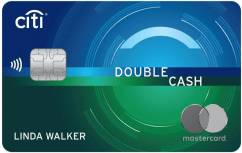
Citi Double Cash® Card
Intro APR:0% for 18 months on Balance Transfers
Ongoing APR:17.49% - 27.49% (Variable)
Rewards:2% (cash back)
Annual Fee:$0
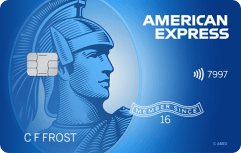
Blue Cash Everyday® Card from American Express
Intro bonus:As High As $200 Cash Back. Find Out Your Offer.
Intro APR:0% on Purchases and Balance Transfers for 15 months
Ongoing APR:19.49%-28.49% Variable
Rewards:1% - 3% (cash back)
Annual Fee:$0
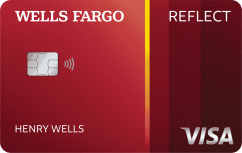
Wells Fargo Reflect® Card
Intro APR:0% intro APR for 21 months from account opening on purchases and qualifying balance transfers
Ongoing APR:17.49%, 23.99%, or 28.24% Variable APR
Rewards:N/A*
Annual Fee:$0

Discover it® Chrome
Intro bonus:Cashback Match™
Intro APR:0% intro APR for 6 Months on Purchases and 0% intro APR for 18 Months on Balance Transfers
Ongoing APR:17.49% - 26.49% Variable APR
Rewards:1% - 2% (cash back)
Annual Fee:$0
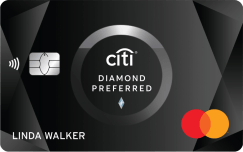
Citi® Diamond Preferred® Card
Intro APR:0% for 21 months on Balance Transfers and 12 months on Purchases
Ongoing APR:16.49% - 27.24% (Variable)
Rewards:N/A*
Annual Fee:$0
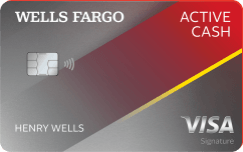
Wells Fargo Active Cash® Card
Intro bonus:$200
Intro APR:0% intro APR for 12 months from account opening on purchases and qualifying balance transfers
Ongoing APR:18.49%, 24.49%, or 28.49% Variable APR
Rewards:2% (Cash Rewards)
Annual Fee:$0

Discover it® Cash Back
Intro bonus:Cashback Match™
Intro APR:0% intro APR for 15 months on Purchases and Balance Transfers
Ongoing APR:17.49% - 26.49% Variable APR
Rewards:1% - 5% (cash back)
Annual Fee:$0
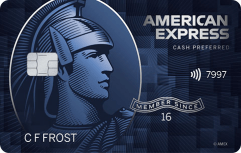
Blue Cash Preferred® Card from American Express
Intro bonus:As High As $300 Cash Back. Find Out Your Offer.
Intro APR:0% on Purchases and Balance Transfers for 12 months
Ongoing APR:19.49%-28.49% Variable
Rewards:1% - 6% (cash back)
Annual Fee:$0 intro annual fee for the first year, then $95.
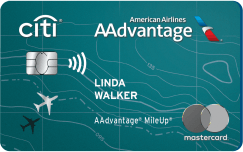
American Airlines AAdvantage® MileUp® Card
Intro APR:0% for 15 months on Balance Transfers
Ongoing APR:19.49% - 29.49% (Variable)
Rewards:2x (Miles per dollar)
Annual Fee:$0

Discover it® Miles
Intro bonus:Discover Match®
Intro APR:0% intro APR for 15 months on Purchases and Balance Transfers
Ongoing APR:17.49% - 26.49% Variable APR
Rewards:1.5x (Miles per dollar)
Annual Fee:$0
See all our best 0% intro credit cards for 2026.
Monitor Your Credit Cards and Credit Scores
You won't necessarily receive a notice every time your card's APR increases. For instance, there's no notice requirement when it's because of a rising benchmark rate. However, you can check your card's APR by logging into your account or reviewing your statements.
Improving your credit may also open up new possibilities, such as a good balance transfer promotion, which you can use if your card's APR rises. You can check and monitor your credit score for free with Experian, and get personalized suggestions on how to increase your score.
Don’t apply blindly
Apply for credit cards confidently with personalized offers based on your credit profile. Get started with your FICO® Score for free.
See your offers
About the author

Louis DeNicola
Louis DeNicola is freelance personal finance and credit writer who works with Fortune 500 financial services firms, FinTech startups, and non-profits to teach people about money and credit. His clients include BlueVine, Discover, LendingTree, Money Management International, U.S News and Wirecutter.
Read more from Louis