
 By Bev O'Shea
Should I Sign My Credit Card?
By Bev O'Shea
Quick Answer
Some credit cards have eliminated the signature panel, and few merchants require your signature to check out. But if your credit card has a place for you to sign, you should still comply with a smudge-free autograph.

Even though you can typically use a credit card with a blank signature panel, it still makes sense to sign—and it's safer than leaving it blank. Some merchants may require that a card be signed, but that's increasingly uncommon.
There is really no downside to signing your credit card, and signing it will not increase your risk of fraud or identity theft. (In fact, signing could mean it's harder for a fraudster to forge your signature; an unsigned card leaves them free to sign in their own handwriting.)
Should You Sign Your Credit Card?
Yes, you should sign your credit card if there is a signature panel. Does anything bad happen if you don't sign your card? Probably not. It's possible that a small, independent merchant could require a signature. They do have a right to ask for it, after all.
While many people don't sign their credit cards, it's not what issuers and some businesses prefer—and may require. The United States Postal Service, for example, requires that a credit card with a signature panel be signed.
Some credit cards include language that the card is not considered valid until signed, and merchants can require signatures, if they choose. But an EMV chip is far more effective than a signature in helping merchants fight credit card fraud. EMV chips make transactions faster, more secure and eliminate the need for a business to store signatures.
In many cases, merchants won't even see your credit card when you make a payment. Online shopping, mobile payments, and chip readers often mean your credit card never leaves your hand. You still might be asked to sign a receipt, but it won't be compared to a signature on your credit card.
Signing your credit card long ago outlived its original purpose as a security measure.
Best credit cards of 2026
Compare cards from our partners with intro bonuses, cash back or points offers, and annual fees as low as $0.
Offers from our partners
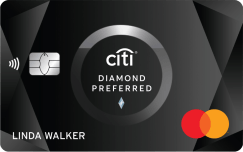
Citi® Diamond Preferred® Card
Intro APR:0% for 21 months on Balance Transfers and 12 months on Purchases
Ongoing APR:16.74% - 27.49% (Variable)
Rewards:
N/A
Annual Fee:$0
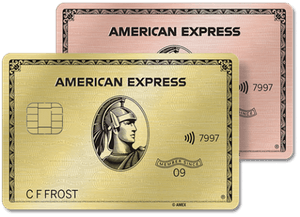
American Express® Gold Card
Intro bonus:
As High As 100,000 points. Find Out Your Offer.
You may be eligible for as high as 100,000 Membership Rewards® Points after spending $8,000 in eligible purchases on your new Card in your first 6 months of Membership. Welcome offers vary and you may not be eligible for an offer.
Ongoing APR:See Pay Over Time APR
Rewards:
1x - 5x (Points per dollar)
Earn 4X Membership Rewards® points per dollar spent on purchases at restaurants worldwide, on up to $50,000 in purchases per calendar year, then 1X points for the rest of the year. Earn 4X Membership Rewards® points per dollar spent at US supermarkets, on up to $25,000 in purchases per calendar year, then 1X points for the rest of the year. Earn 5X Membership Rewards® points on prepaid hotel stays booked through AmexTravel.com or the Amex Travel App™. Earn 3X Membership Rewards® points on flights booked through AmexTravel.com, the Amex Travel App™, or purchased directly from airlines. Earn 2X Membership Rewards® points on prepaid car rentals booked through AmexTravel.com or the Amex Travel App™ and cruises booked and paid through AmexTravel.com. Earn 1X Membership Rewards® point per dollar spent on all other eligible purchases.
Annual Fee:$325
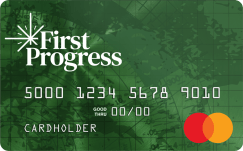
First Progress Prestige Secured Mastercard® Cash Back Rewards
Ongoing APR:13.74% Variable
Rewards:
1% - 10% (cash back)
Earn up to 10% Cash Back on everyday purchases at participating dining, grocery, retail, and other eligible merchants, plus 1% Cash Back on payments made to your First Progress Card.^^
Annual Fee:$49
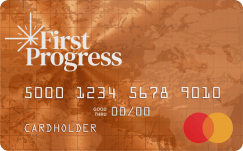
First Progress Select Secured Mastercard® Cash Back Rewards
Ongoing APR:17.74% Variable
Rewards:
1% - 10% (cash back)
Earn up to 10% Cash Back on everyday purchases at participating dining, grocery, retail, and other eligible merchants, plus 1% Cash Back on payments made to your First Progress Card.^^
Annual Fee:$39
Credit One Bank® Platinum Rewards Visa® Card
Ongoing APR:29.74% Variable
Rewards:
1% (cash back)
Earn 1% cash back rewards on eligible gas, grocery purchases and mobile phone service, internet, cable and satellite TV services, terms apply
Annual Fee:$39
Marriott Bonvoy Brilliant® American Express® Card
Intro bonus:
100,000 Bonus Points
Earn 100,000 Marriott Bonvoy® bonus points after you use your new Card to make $6,000 in purchases within the first 6 months of Card Membership.
Ongoing APR:19.74%-28.74% Variable
Rewards:
2x - 6x (Points per dollar)
Earn 6X Marriott Bonvoy® points for each dollar of eligible purchases at hotels participating in Marriott Bonvoy. Earn 3X points at restaurants worldwide and on flights booked directly with airlines. Earn 2X points on all other eligible purchases.
Annual Fee:$650

Avant® Cashback Rewards Mastercard®
Ongoing APR:29.99%*
Rewards:
1% (cash back)
Cash back will be awarded as points redeemable for a statement credit
Annual Fee:$0*
Bank of America® Travel Rewards credit card
Intro APR:0% Intro APR for 15 billing cycles for purchases, and for any balance transfers made in the first 60 days
Ongoing APR:17.74% - 27.74% Variable
Rewards:
1.5x - 3x (Points per dollar)
3 points per $1 spent on travel purchases booked through BofA Travel and 1.5 points per $1 spent on everyday purchases
Annual Fee:$0
See all our best credit cards for 2026.
Can You Write "See ID" on Your Credit Card?
Some card users hope that writing "see ID" in the signature box could reduce the chances of fraud by instructing a clerk or restaurant staff to check for a driver's license or some other form of ID.
But in many cases, you are the person who swipes, taps or inserts the credit card. That means the merchant won't see any message written on the back of your credit card, making the "see ID" instruction ineffective.
Worse, if your credit card issuer requires a signature, writing "see ID" could technically make the card invalid. And, returning to the Postal Service example, that directive would make the card unacceptable for payment.
However, there are other steps you can take to make your credit card safer, including:
- Using a virtual credit card when shopping online
- Securing physical cards and carrying only the ones you need
- Thinking twice about storing credit card information online
- Reviewing credit card statements carefully
How to Sign the Back of a Credit Card
If your credit card has a signature panel, and you want to sign, here's how to do it:
- Locate the signature box.
- Use a blue or black fine felt-tipped pen. (Ballpoint pens can scratch or leave only a faint signature.)
- Sign using the name that appears on the front of your credit card.
- Be sure to do this before you are in line to purchase something.
The Bottom Line
People who are reluctant to sign a credit card may want to protect themselves from fraud. But there's no reason to believe that leaving the signature panel blank does that, and it's actually better to sign than not. Signatures were always a weak security protection, and credit card issuers now mostly rely on EMV chips.
If you're concerned about fraud or identity theft, practice good credit behavior, including carrying only the credit cards you need, reviewing statements carefully, using virtual cards when shopping online and signing up for Experian's free credit monitoring. While credit monitoring can't keep fraud from happening, it can alert you to changes, and the sooner you spot potential problems, the sooner you can address them.
Don’t apply blindly
Apply for credit cards confidently with personalized offers based on your credit profile. Get started with your FICO® Score for free.
See your offers
About the author
Bev O'Shea
Bev O'Shea is a Georgia-based freelance journalist specializing in personal finance and consumer credit. Most recently, she was a staff writer at personal finance website NerdWallet, where she was an authority on credit reports, credit scores and identity theft.
Read more from Bev