
 Reviewed by Evelyn Waugh
APR vs. APY: What’s the Difference?
Reviewed by Evelyn Waugh
Quick Answer
- APR is what you pay each year to borrow money.
- APY is what you earn each year on savings or investments.
- APY includes compounding; APR may include fees, depending on the product.

APR, short for annual percentage rate, is the annual amount you'll pay to borrow money. On an installment loan, the APR includes fees and other charges. Your credit card may come with several APRs, such as the APR charged on balance transfers or during an introductory period.
Annual percentage yield, known as APY, is the amount of interest you earn on money kept in an account or invested. APY factors in how often interest compounds, or gets added to your balance over time.
APR and APY are both key terms to understand when it comes to your finances. They represent how much earnings or interest you'll accrue over time, and can help you make informed financial decisions and plan for the future. Here's what to know about APR and APY.
What Is APR?
APR tells you how much in total it costs to borrow money over the course of a year. For installment loans, APR includes not just the interest rate as set by the lender, but any additional fees that may increase the cost of borrowing—such as an origination fee.
A credit card's APR doesn't include fees and simply represents the interest rate you'll be charged if you don't pay off your balance in full each month. In most cases, your APR will depend largely on your creditworthiness, and a good credit score will often translate to a lower APR.
Credit card APRs can get complicated, since your card may come with multiple types to understand. They'll be listed under "Rates and Fees" or "Terms and Conditions" on your cardholder agreement. These are the key definitions to know:
- Balance transfer APR: You may choose to apply for a new credit card that has an attractive offer for balance transfers, letting you pay off a balance on another card at a lower rate. The balance transfer APR is the interest rate you'll pay on the amount you transferred from one card to the other.
- Introductory APR: An introductory or promotional APR is an initial interest rate charged on either purchases or balance transfers, which is usually low (or even 0%) to entice new customers.
- Cash advance APR: Cash advances let you withdraw money from an ATM using your credit card, but they often come with a higher APR than what you'd pay on purchases.
- Penalty APR: If you're late on a minimum credit card payment, the credit card company could charge you a higher APR on your existing balance or on future transactions. Late or missed payments may also make you ineligible for promotional APRs.
Best 0% intro APR cards of 2026
Compare cards from our partners with 0% intro APR offers on balance transfers, purchases or both.
Offers from our partners
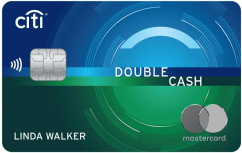
Citi Double Cash® Card
Intro APR:0% for 18 months on Balance Transfers
Ongoing APR:18.49% - 28.74% (Variable)
Rewards:
2% (cash back)
Earn 2% on every purchase with unlimited 1% cash back when you buy, plus an additional 1% as you pay for those purchases. To earn cash back, pay at least the minimum due on time. Plus, earn 5% total cash back on hotel, car rentals and attractions booked with Citi Travel.
Annual Fee:$0
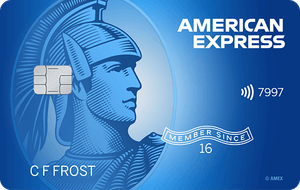
Blue Cash Everyday® Card from American Express
Intro bonus:
As High As $200 Cash Back. Find Out Your Offer.
You may be eligible for as high as $200 cash back after spending $2,000 in purchases on your new Card in the first 6 months. Welcome offers vary and you may not be eligible for an offer. Cash back is received as Reward Dollars, redeemable for statement credit or at Amazon.com checkout. Terms Apply.
Intro APR:0% on Purchases and Balance Transfers for 15 months
Ongoing APR:19.74%-28.74% Variable
Rewards:
1% - 3% (cash back)
Earn 3% cash back at U.S. supermarkets, 3% cash back on U.S. online retail purchases, 3% cash back at U.S. gas stations, on eligible purchases for each category on up to $6,000 per year in purchases (then 1%). Cash back is received in the form of Reward Dollars that can be redeemed as a statement credit and at Amazon.com checkout.
Annual Fee:$0
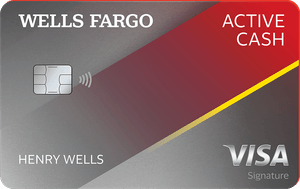
Wells Fargo Active Cash® Card
Intro bonus:
$100
Earn a $100 cash rewards bonus after spending $500 in purchases in the first 3 months.
Intro APR:0% intro APR for 12 months from account opening on purchases and qualifying balance transfers
Ongoing APR:18.74%, 24.74%, or 28.74% Variable APR
Rewards:
2% (Cash Rewards)
Earn unlimited 2% cash rewards on purchases.
Annual Fee:$0
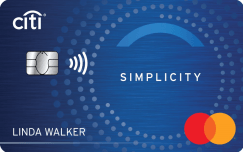
Citi Simplicity® Card
Intro APR:0% intro APR for 18 months from account opening on purchases and qualifying balance transfers
Ongoing APR:17.74% - 28.49% (Variable)
Rewards:
N/A
Annual Fee:$0
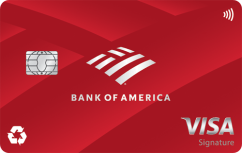
Bank of America® Customized Cash Rewards credit card
Intro APR:0% Intro APR for 15 billing cycles for purchases, and for any balance transfers made in the first 60 days
Ongoing APR:17.74% - 27.74% Variable
Rewards:
1% - 6% (cash back)
Earn 6% cash back for the first year in the category of your choice. You’ll automatically earn 2% cash back at grocery stores and wholesale clubs, and unlimited 1% cash back on all other purchases. After the first year from account opening, you’ll earn 3% cash back on purchases in your choice category. Earn 6% and 2% cash back on the first $2,500 in combined purchases each quarter in the choice category, and at grocery stores and wholesale clubs, then earn unlimited 1% thereafter. After the 3% first-year bonus offer ends, you will earn 3% and 2% cash back on these purchases up to the quarterly maximum.
Annual Fee:$0
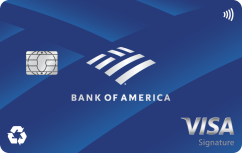
Bank of America® Travel Rewards credit card
Intro APR:0% Intro APR for 15 billing cycles for purchases, and for any balance transfers made in the first 60 days
Ongoing APR:17.74% - 27.74% Variable
Rewards:
1.5x - 3x (Points per dollar)
3 points per $1 spent on travel purchases booked through BofA Travel and 1.5 points per $1 spent on everyday purchases
Annual Fee:$0
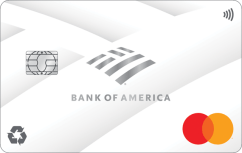
BankAmericard® credit card
Intro APR:0% Intro APR for 21 billing cycles for purchases, and for any balance transfers made in the first 60 days
Ongoing APR:15.24% - 26.24% Variable
Rewards:
N/A
Annual Fee:$0
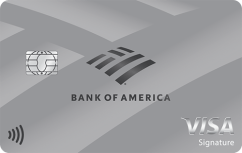
Bank of America® Unlimited Cash Rewards credit card
Intro APR:0% Intro APR for 15 billing cycles for purchases, and for any balance transfers made in the first 60 days
Ongoing APR:17.74% - 27.74% Variable
Rewards:
1.5% (cash back)
1.5% cash back on all purchases
Annual Fee:$0
See all our best 0% intro credit cards for 2026.
How to Calculate APR
APR is calculated slightly differently for credit cards and installment loans. Credit card companies will charge interest only if you don't pay off your full balance by the due date. If you do carry a balance, the company will apply the daily interest rate—your APR divided by 365—to the balance, and the interest added to the balance will compound daily.
Example: Let's say you have a balance of $500 and an APR of 17%. Your daily interest rate will be 0.047%, which is 17% divided by 365. If you carry a balance, your balance will grow to $500.23 on the first day of your next statement period. Interest will keep adding up based on the daily interest rate and keep compounding daily until the statement period, or billing cycle, ends.
Installment loan APRs can be different from their interest rates because they take into account finance charges. They can also include mortgage points on a home loan, which lower the rate you pay. You can find your APR on an installment loan by using an APR calculator and entering your principal loan amount, finance charges, interest rate and loan term.
What Is APY?
APY shows how much money a balance in a bank account, such as a savings account or certificate of deposit (CD), could earn over the course of a year (assuming you do not deposit or withdraw funds in that time). It also incorporates how frequently interest compounds on your balance. APY can be fixed or variable, and you may get a higher APY the more money you keep in the account.
How to Calculate APY
The formula to calculate APY is:
"R" represents the interest rate on the account, and "N" is how many times interest is compounded per year (12 if compounded monthly, for example).
Example: If your interest rate on a CD is 3% and interest is compounded monthly, you'd calculate: APY = (1 + .03/12)12 - 1. That would result in an APY of 3.04%.
APR vs. APY: How Compounding Differs
Compounding is what happens when interest gets added to your original balance, then additional interest gets added to that new, larger balance.
In the case of APR, installment loans use simple interest—in which interest does not compound—and credit cards use compound interest. Compounding can make carrying a credit card balance expensive. As credit card interest compounds, you're charged interest not just on the purchases you've made and haven't paid off, but also on the interest that's accrued.
APY also factors in compounding. But compounding is your friend when it comes to APY. As interest gets added to your savings account balance, you'll have more money to eventually withdraw. The more frequently interest compounds, such as daily instead of monthly, the faster your balance will grow. Frequent compounding is an incentive to keep a high balance in your bank account, which can help you save more.
The Bottom Line
APR and APY both have to do with interest paid or accumulated, but they have many important differences. Most critically, APR is what you pay, while APY is what a bank or brokerage pays you. Your credit scores and credit history will often influence the APR you receive on a loan or credit card, while your account balance is a better predictor of whether you're eligible for a higher APY.
Discover low interest credit cards
Keep more cash in your wallet with a low interest credit card. See what offers you qualify for based on your FICO® Score.
See your offers
About the author

Brianna McGurran
Brianna McGurran is a freelance journalist and writing teacher based in Brooklyn, New York. Most recently, she was a staff writer and spokesperson at the personal finance website NerdWallet, where she wrote "Ask Brianna," a financial advice column syndicated by the Associated Press.
Read more from Brianna