
 Reviewed by Karen Axelton
How Important Is Credit Card Utilization to Your Credit Score?
Reviewed by Karen Axelton
Quick Answer
- Credit card utilization, or how much of your available credit you’re using, is one of the most important factors in your credit score.
- In general, lower utilization is better; those with the highest credit scores tend to have utilization of less than 10%.
- Utilization of 30% or more can begin to negatively affect your scores.

Credit card utilization, or the percentage of available credit you're using, is an important credit scoring factor and one of the few factors you can quickly change.
While some negative marks can remain on your credit report for up to seven years, many credit scoring models only look at your most recently reported utilization rates. As a result, paying down credit card balances may quickly improve your scores.
What Is Credit Card Utilization?
Credit card utilization refers to the relationship between your credit card's balance and credit limit as they appear on your credit report. That's an important distinction from your card's current balance, as card issuers generally report the balance to the credit bureaus around the end of your billing period. As a result, even if you pay your bill in full every month, you could still have a high utilization rate.
You can calculate your credit card utilization ratio by dividing the credit card balance appearing on your credit report by the card's credit limit. Then multiply by 100 to see the result as a percentage.
Example: If your card has a balance of $1,000 and limit of $5,000, then 1,000 / 5,000 = 0.2. Multiply by 100, and you get 20%.
You can review a free copy of your Experian credit report online. When you log in, Experian will do the calculations for you and show your overall utilization rate and the utilization rate for each of your credit cards—both are factors in your credit scores.
Depending on the scoring model, the utilization rate of other types of revolving accounts, such as personal lines of credit, may also be included.
Best cash back cards of 2026
Compare cards from our partners that offer cash back on everyday spending, often with no annual fee.
Offers from our partners
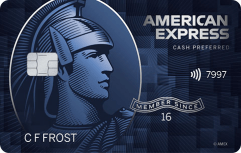
Blue Cash Preferred® Card from American Express
Intro bonus:
As High As $300 Cash Back. Find Out Your Offer.
You may be eligible for as high as $300 cash back after spending $3,000 in purchases on your new Card in the first 6 months. Welcome offers vary and you may not be eligible for an offer. Cash back is received as Reward Dollars, redeemable for statement credit or at Amazon.com checkout. Terms Apply.
Intro APR:0% on Purchases and Balance Transfers for 12 months
Ongoing APR:19.74%-28.74% Variable
Rewards:
1% - 6% (cash back)
Earn 6% cash back at U.S. supermarkets on up to $6,000 per year in eligible purchases (then 1%), 6% cash back on select U.S. streaming subscriptions, 3% cash back at eligible U.S. gas stations and on transit (including taxis/rideshare, parking, tolls, trains, buses and more) purchases and 1% cash back on other purchases. Cash Back is received in the form of Reward Dollars that can be redeemed as a statement credit and at Amazon.com checkout.
Annual Fee:$0 intro annual fee for the first year, then $95.
Credit One Bank® Secured Card
Ongoing APR:29.74% Variable
Rewards:
1% (cash back)
Earn 1% cash back rewards on eligible gas, grocery purchases and mobile phone, internet, cable and satellite TV services. Terms apply.
Annual Fee:$0
First Latitude Secured Mastercard® Cash Back Rewards
Ongoing APR:27.74% Variable
Rewards:
1% - 10% (cash back)
Earn up to 10% Cash Back on purchases at participating merchants that fit your lifestyle—from dining and grocery to retail and more—plus 1% Cash Back on payments made to your First Latitude Card.^^
Annual Fee:$0

Avant® Cashback Rewards Mastercard®
Ongoing APR:35.99%*
Rewards:
2% (cash back)
Cash back will be awarded as points redeemable for a statement credit
Annual Fee:$39*
Credit One Bank® Platinum Rewards Visa® Card
Ongoing APR:29.74% Variable
Rewards:
1% (cash back)
Earn 1% cash back rewards on eligible gas, grocery purchases and mobile phone service, internet, cable and satellite TV services, terms apply
Annual Fee:$39

Credit One Bank® Wander® American Express® Metal Card
Ongoing APR:29.74% Variable
Rewards:
1% - 10% (cash back)
Earn 5% cash back rewards on eligible dining, gas, & travel purchases, 1% cash back rewards on all other purchases, and 10% cash back rewards on eligible hotel and car rentals booked using the Credit One Bank travel partner. Cash back rewards will be awarded as rewards points redeemable for a statement credit, gift cards, travel, and more. Terms apply.
Annual Fee:$95
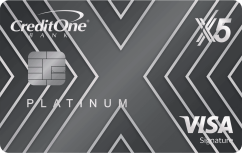
Credit One Bank® Platinum X5 Visa Signature® Metal Card
Ongoing APR:29.74% Variable
Rewards:
1% - 5% (cash back)
Earn 5% cash back rewards on the first $5,000 of eligible gas, grocery, internet, cable, satellite TV, and mobile phone service purchases each year, and then 1% thereafter. Plus 1% cash back rewards on all other purchases, terms apply.
Annual Fee:$95
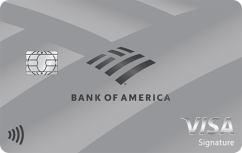
Bank of America® Unlimited Cash Rewards credit card
Intro APR:0% Intro APR for 15 billing cycles for purchases, and for any balance transfers made in the first 60 days
Ongoing APR:17.74% - 27.74% Variable
Rewards:
1.5% (cash back)
1.5% cash back on all purchases
Annual Fee:$0
See all our best cash back credit cards for 2026.
How Does Credit Card Utilization Affect Your Credit Score?
Credit card utilization can have a direct and significant impact on your credit scores. Depending on whether it's a FICO® or VantageScore® credit score, utilization falls within one of the two most important categories in determining your scores. In either case, higher utilization ratios can hurt your scores, while lower utilization rates can help them.
Most credit scores (there are many) only factor in your most recently reported balances and credit limits and the resulting utilization ratios. In these cases, using your card often or for major purchases can lead to a high utilization ratio that hurts your scores. But paying off the balance and maintaining a lower balance could help bring your scores back up.
Some newer credit scoring models, such as VantageScore 4.0 and FICO® ScoreΘ 10T 10T, also consider your balance trends and payments over time. Having a history of paying off your balance in full or paying off your debt over time, rather than having a steady or growing balance, can help you improve these scores even more.
How to Reduce Your Credit Card Utilization Ratio
You can reduce your credit card utilization ratio by decreasing your reported card balances and increasing your available credit. There are different ways you can go about doing this:
Use Your Credit Card Less
Using your credit card less often will limit how high your balance grows before the card issuer reports the balance to the bureaus. It may be especially important if you have a card with a low credit limit. Experts recommend keeping balances below 30% of credit card limits as a rule of thumb, but even lower utilization could be better for your scores—think single digits for the best scores.
Make Early Payments
You may want to use a credit card for many reasons, including the rewards you can earn and cardholder benefits some cards offer on purchases. If you want to use your card, try to pay down the balance before the end of your billing period to lower the reported balance and thus your utilization ratio.
Increase Your Credit Limits
You can ask your card issuer for a credit limit increase, although some card issuers will want to pull your credit with a hard inquiry (which may hurt your scores a little) to verify you qualify for one.
Keep Credit Cards Open
If you have a card that you rarely use, you may still want to keep it open to increase your overall available credit. However, weigh the pros and cons, as you'll also want to monitor the account for suspicious activity and avoid paying annual fees for a card you rarely use.
Consolidate Credit Card Debt
For cardholders paying down credit card debt, consolidating the debt with a personal loan could be a win-win. You may be able to get a personal loan with a lower interest rate than your cards have, which can save you money. And, because personal loans are installment loans rather than revolving accounts, the debt won't be considered in credit utilization calculations.
Monitor Your Credit and Utilization
While credit card utilization is an important scoring factor, you shouldn't let the fear of high utilization keep you from using your credit cards when you need to. If it's for an emergency purchase that you need to pay off over time, focus on paying down the balance as quickly as possible. Or, if it's because you want to earn rewards and use the cardholder protections, you can pay down your card's balance early.
Whatever the case may be, you can check your credit report and credit scores for free from Experian to quickly see your credit utilization rates and get insights into what you can do to help increase your scores.
Don’t apply blindly
Apply for credit cards confidently with personalized offers based on your credit profile. Get started with your FICO® Score for free.
See your offers
About the author

Louis DeNicola
Louis DeNicola is freelance personal finance and credit writer who works with Fortune 500 financial services firms, FinTech startups, and non-profits to teach people about money and credit. His clients include BlueVine, Discover, LendingTree, Money Management International, U.S News and Wirecutter.
Read more from Louis