
 By Gayle Sato
Can You Transfer a Personal Loan to a Balance Transfer Card?
By Gayle Sato
Quick Answer
Yes, you can transfer a personal loan to a balance transfer card. However, some card issuers don’t allow balance transfers from personal loans, so make sure you check the terms for a balance transfer card before you apply.
Borrowing money at 0% interest is about as good as borrowing gets. If credit cards with 0% introductory balance transfer offers have caught your eye, you may be wondering if you can use a balance transfer to pay off a personal loan.
You probably can. Though some card issuers don't allow balance transfers from personal loans, many do. Using a balance transfer card to pay off a personal loan interest-free may sound like an automatic win, but the following considerations can help you ensure that you're making a smart—and money-saving—move.
How Do Balance Transfers Work?
Balance transfers let you use one credit card account to pay off another card or a loan (or several, depending on their balances and your credit limit). Card companies sometimes offer limited-time, low- or no-interest balance transfers to entice you to sign up for a new card. Not every card company lets you use an introductory balance transfer offer to pay off a personal loan, so it's worth asking about this before you open an account. Here are a few additional questions to ask about your introductory balance transfer offer:
- When do you need to activate? You may need to complete your balance transfer within 60 or 120 days to get the low introductory annual percentage rate (APR).
- How long is your introductory APR in effect? Typical introductory periods last 12, 15 or 18 months.
- What is the regular APR on balance transfers? Once your introductory period is over, your APR will convert, often to a rate that's similar to or the same as your card's regular APR for purchases.
- What is the balance transfer fee? Your balance transfer fee may be lower during the introductory period. Typical balance transfer fees range from 3% to 5% with a minimum fee of $5.
Best balance transfer cards of 2026
Compare balance transfer offers from our partners with 0% APRs and generous introductory periods.
Offers from our partners
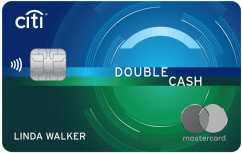
Citi Double Cash® Card
Intro APR:0% for 18 months on Balance Transfers
Ongoing APR:18.49% - 28.74% (Variable)
Rewards:
2% (cash back)
Earn 2% on every purchase with unlimited 1% cash back when you buy, plus an additional 1% as you pay for those purchases. To earn cash back, pay at least the minimum due on time. Plus, earn 5% total cash back on hotel, car rentals and attractions booked with Citi Travel.
Annual Fee:$0
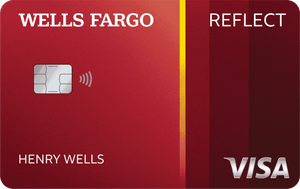
Wells Fargo Reflect® Card
Intro APR:0% intro APR for 21 months from account opening on purchases and qualifying balance transfers
Ongoing APR:17.74%, 24.24%, or 28.49% Variable APR
Rewards:
N/A
Annual Fee:$0
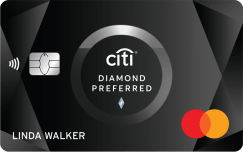
Citi® Diamond Preferred® Card
Intro APR:0% for 21 months on Balance Transfers and 12 months on Purchases
Ongoing APR:16.74% - 27.49% (Variable)
Rewards:
N/A
Annual Fee:$0
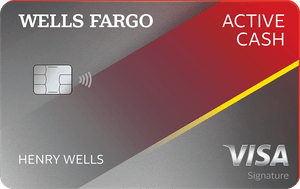
Wells Fargo Active Cash® Card
Intro bonus:
$100
Earn a $100 cash rewards bonus after spending $500 in purchases in the first 3 months.
Intro APR:0% intro APR for 12 months from account opening on purchases and qualifying balance transfers
Ongoing APR:18.74%, 24.74%, or 28.74% Variable APR
Rewards:
2% (Cash Rewards)
Earn unlimited 2% cash rewards on purchases.
Annual Fee:$0
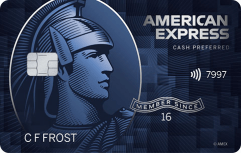
Blue Cash Preferred® Card from American Express
Intro bonus:
As High As $300 Cash Back. Find Out Your Offer.
You may be eligible for as high as $300 cash back after spending $3,000 in purchases on your new Card in the first 6 months. Welcome offers vary and you may not be eligible for an offer. Cash back is received as Reward Dollars, redeemable for statement credit or at Amazon.com checkout. Terms Apply.
Intro APR:0% on Purchases and Balance Transfers for 12 months
Ongoing APR:19.74%-28.74% Variable
Rewards:
1% - 6% (cash back)
Earn 6% cash back at U.S. supermarkets on up to $6,000 per year in eligible purchases (then 1%), 6% cash back on select U.S. streaming subscriptions, 3% cash back at eligible U.S. gas stations and on transit (including taxis/rideshare, parking, tolls, trains, buses and more) purchases and 1% cash back on other purchases. Cash Back is received in the form of Reward Dollars that can be redeemed as a statement credit and at Amazon.com checkout.
Annual Fee:$0 intro annual fee for the first year, then $95.
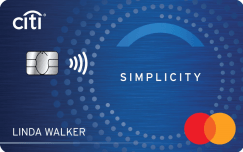
Citi Simplicity® Card
Intro APR:0% intro APR for 18 months from account opening on purchases and qualifying balance transfers
Ongoing APR:17.74% - 28.49% (Variable)
Rewards:
N/A
Annual Fee:$0
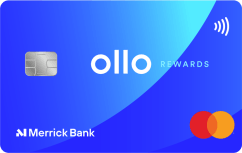
Ollo Everyday Rewards
Ongoing APR:23.99%-29.99% Variable
Rewards:
1% - 3% (cash back)
Unlimited 3% cash back on all gas stations and EV charging stations, grocery store and drugstore purchases. Unlimited 1% cash back on all other purchases.
Annual Fee:$0
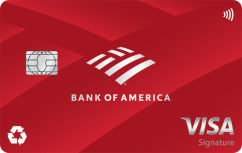
Bank of America® Customized Cash Rewards credit card
Intro APR:0% Intro APR for 15 billing cycles for purchases, and for any balance transfers made in the first 60 days
Ongoing APR:17.74% - 27.74% Variable
Rewards:
1% - 6% (cash back)
Earn 6% cash back for the first year in the category of your choice. You’ll automatically earn 2% cash back at grocery stores and wholesale clubs, and unlimited 1% cash back on all other purchases. After the first year from account opening, you’ll earn 3% cash back on purchases in your choice category. Earn 6% and 2% cash back on the first $2,500 in combined purchases each quarter in the choice category, and at grocery stores and wholesale clubs, then earn unlimited 1% thereafter. After the 3% first-year bonus offer ends, you will earn 3% and 2% cash back on these purchases up to the quarterly maximum.
Annual Fee:$0
See all our best balance transfer credit cards for 2026.
Pros and Cons of Transferring a Personal Loan to a New Card
The best reason to transfer your personal loan balance to a new credit card is to save money. The best way to know how much money you'll save is to do some math. Gather your current loan balance, number of remaining payments and monthly payment amount: Let's run some numbers.
Say you have a $10,000 personal loan you're paying off over five years at an APR of 9.4%. You've made 34 payments with 26 payments to go and have a remaining loan balance of $4,219. Your monthly payment is $210.
If you continue paying your loan, here's what you'll pay:
- 26 (your remaining number of payments) x $210 (your monthly payment) = $5,460
If you use a 0% APR, 18-month balance transfer offer to pay off your loan and figure in a 3% balance transfer fee:
- $4,219 (your remaining loan balance) + $127 (balance transfer fee) = $4,346
Since your offer is an introductory 0% APR and you plan to pay off the loan within the intro promotional period, you don't have to add interest to your balance transfer total. To pay your balance off before your 18-month introductory period expires, your monthly payment goes up $31 to $242.
You pay off your loan eight months sooner by making the transfer. By transferring your loan balance, you save $1,114.
Saving money on interest and potentially paying your loan off faster are definite pros. But there are a few cons that could throw a wrench into your plans:
Transaction blocked: Most card issuers don't allow transfers from accounts at the same bank. So if your loan is with Bank X, you can't use a Bank X balance transfer card to pay off your loan.
Transfer limit: Your balance transfer limit may not cover your remaining personal loan balance. If your offer only pays down half of your loan balance, you could end up making payments on both accounts and realizing less in interest savings than you hoped.
Higher monthly payments: Paying your remaining loan balance off within your introductory period could mean accelerating your payoff schedule: For instance, you may have four years left on your personal loan but only 15 months to pay off your balance transfer at the introductory 0% APR. This could raise your monthly payment to a point where it's no longer affordable.
Competing priorities: Using your balance transfer offer to pay off high-interest credit cards could mean even more savings than paying down a personal loan, so explore your options.
Penalty interest: In some cases, being even a day late with your balance transfer payment can cause your interest rate to skyrocket. Not only can you lose your introductory rate, but you may be charged a penalty rate. Read through all the terms of your offer and make sure you pay your bill on time every month.
How to Choose a Balance Transfer Card
Balance transfer offers are out there, but finding cards that offer balance transfers can take a bit of legwork. You can use Experian's card comparison tool to see a list of balance transfer cards; if you sign up for a free account, you'll see personalized card offers based on your credit profile.
When you're shopping for a balance transfer card, study the details of the balance transfer offer but also look for a card that suits your needs in the long term.
Does It All Add Up?
A balance transfer offer can help you pay off a personal loan and other high-interest debt, though it's always a good idea to double-check your math to make sure your payments and timeframe will be manageable—and that you'll actually save money.
Cards with introductory balance transfer offers generally go to cardholders with good to excellent credit. Check your credit score and report for free from Experian before you start card shopping. If your score isn't where you need it to be, consider taking some time to focus on paying your bills on time, paying down revolving debt and improving your credit.
Best balance transfer cards
Need to consolidate debt and save on interest? See if you qualify for intro offers like 0% intro APR up to 21 months based on your FICO® Score.
See your offers
About the author
Gayle Sato
Gayle Sato writes about financial services and personal financial wellness, with a special focus on how digital transformation is changing our relationship with money. As a business and health writer for more than two decades, she has covered the shift from traditional money management to a world of instant, invisible payments and on-the-fly mobile security apps.
Read more from Gayle