 Edited by Michelle Tipsword
What Is a Contactless Card?
Edited by Michelle Tipsword
Quick Answer
Contactless cards use near-field communication (NFC) to make payments when you hold them near a contactless-enabled terminal. They can speed up payments and reduce the spread of germs, but they may enforce transaction limits.

Swiping your credit card may feel as archaic as paying with cash. With each new technology, credit card transactions are becoming more and more efficient—and contactless cards are no exception.
Contactless cards use short-range wireless technology called near-field communication (NFC) to make payments when you tap or wave them near a compatible terminal. Most new cards are dual-interface; though they have the ability to be contactless, they still work by inserting or swiping.
Contactless cards can dramatically speed up transactions, but they're not perfect. Read on to learn more about contactless cards' pros and cons, how they work and whether or not they're safe.
What Is a Contactless Card?
A contactless card is a credit or debit card that lets you make a payment by tapping or hovering your card near a payment terminal. Using a contactless card is similar to using a digital wallet—but instead of tapping your smartphone or smartwatch, you tap your card.
Also known as "tap and go" or "tap to pay," contactless payment uses near-field communication—a form of radio frequency identification (RFID)—to briefly communicate with a card reader. This technology allows contactless cards to securely send payment information to card readers without physical contact.
Tip: In addition to having the tap-to-pay feature, many contactless cards still come with a chip. This means you can still use them even when a merchant doesn't offer contactless payment.
Best credit cards of 2026
Compare cards from our partners with intro bonuses, cash back or points offers, and annual fees as low as $0.
Offers from our partners
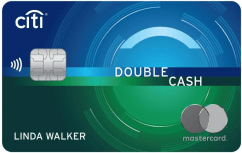
Citi Double Cash® Card
Intro bonus:
$200
Earn $200 cash back after you spend $1,500 on purchases in the first 6 months of account opening. This bonus offer will be fulfilled as 20,000 ThankYou® Points, which can be redeemed for $200 cash back.
Intro APR:0% for 18 months on Balance Transfers
Ongoing APR:18.49% - 28.74% (Variable)
Rewards:
2% (cash back)
Earn 2% on every purchase with unlimited 1% cash back when you buy, plus an additional 1% as you pay for those purchases. To earn cash back, pay at least the minimum due on time. Plus, earn 5% total cash back on hotel, car rentals and attractions booked with Citi Travel.
Annual Fee:$0

American Express Platinum Card®
Intro bonus:
As High As 175,000 points. Find Out Your Offer.
You may be eligible for as high as 175,000 Membership Rewards® Points after spending $12,000 in eligible purchases on your new Card in your first 6 months of Membership. Welcome offers vary and you may not be eligible for an offer.
Ongoing APR:See Pay Over Time APR
Rewards:
1x - 5x (Points per dollar)
Get more for your travels with 5X Membership Rewards® points on all flights and prepaid hotel bookings through American Express Travel®, including Fine Hotels + Resorts® and The Hotel Collection bookings. You earn 5X points on flights purchased directly from airlines or through American Express Travel® on up to $500,000 on these purchases per calendar year.
Annual Fee:$895
Avant® Mastercard®
Ongoing APR:29.99%*
Rewards:
N/A
Annual Fee:$0*
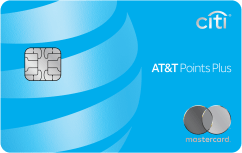
AT&T Points Plus® Card from Citi
Intro bonus:
$200
Earn a $200 statement credit after you spend $1,000 on purchases in the first 3 months of account opening.
Ongoing APR:19.74% - 27.74% (Variable)
Rewards:
1x - 3x (Points per dollar)
Earn 3 ThankYou® Points for every $1 spent at gas and EV charging stations. Earn 2 ThankYou® Points for every $1 spent at grocery stores and 2 ThankYou® Points for every $1 spent on AT&T products and services. Earn 1 ThankYou® Point for every $1 spent on all other purchases.
Annual Fee:$0
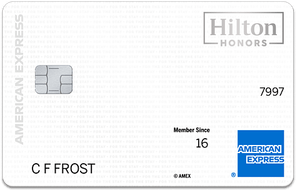
Hilton Honors American Express Card
Intro bonus:
70,000 Points
Earn 70,000 Bonus Points plus a Free Night Reward after you spend $2,000 in purchases on the card in the first 6 months of Card Membership. Offer ends 01/13/2027.
Ongoing APR:19.74%-28.74% Variable
Rewards:
3x - 7x (Points per dollar)
Earn 7X Hilton Honors Bonus Points for each dollar of eligible purchases charged on your Card directly with a hotel or resort within the Hilton portfolio. Earn 5X Hilton Honors Bonus Points for each dollar of eligible purchases on your Card: at U.S. restaurants, at U.S. supermarkets, at U.S. gas stations. Earn 3X Hilton Honors Bonus Points for all other eligible purchases on your Card.
Annual Fee:$0

Hilton Honors American Express Surpass® Card
Intro bonus:
130,000 Points
Earn 130,000 Bonus Points plus a Free Night Reward after you spend $3,000 in purchases on the Hilton Honors American Express Surpass® Card in the first 6 months of Card Membership. Offer ends 01/13/2027.
Ongoing APR:19.74%-28.74% Variable
Rewards:
3x - 12x (Points per dollar)
Earn 12X Hilton Honors Bonus Points for each dollar of eligible purchases charged on your Card directly with a hotel or resort within the Hilton portfolio. Earn 6X Hilton Honors Bonus Points for each dollar of eligible purchases on your Card at U.S. restaurants, at U.S. supermarkets, and at U.S. gas stations. Earn 4X Hilton Honors Bonus Points for each dollar of U.S. Online Retail purchases. Earn 3X Hilton Honors Bonus Points for all other eligible purchases on your Card.
Annual Fee:$150

Delta SkyMiles® Blue American Express Card
Intro bonus:
10,000 Miles
Earn 10,000 bonus miles after you spend $1,000 in purchases on your new Card in your first 6 months.
Ongoing APR:19.74%-28.74% Variable
Rewards:
1x - 2x (Miles per dollar)
Earn 2X Miles per dollar at restaurants worldwide, plus takeout and delivery in the U.S. Earn 2X Miles per dollar spent on Delta purchases, and 1X Mile on all other eligible purchases.
Annual Fee:$0
Avant® Cashback Rewards Mastercard®
Ongoing APR:35.99%*
Rewards:
1% (cash back)
Cash back will be awarded as points redeemable for a statement credit
Annual Fee:$75*
See all our best credit cards for 2026.
Pros and Cons of Contactless Cards
Contactless cards have a lot to offer in terms of convenience and security. But as with any new technology, there are pros and cons to consider.
Pros
-
More efficient: Paying with your contactless card only takes a few seconds and is quicker than swiping, inserting the chip or paying with cash.
-
Less physical contact: Using a contactless card can help stop the spread of germs, minimizing your and your card's contact with payment terminals.
-
Increased security: Using tap to pay is much more secure than swiping your card. Like using a card's chip, contactless payment generates a one-time code that protects your information. Additionally, you avoid the risks involved with skimming and shimming since you aren't inserting your card.
-
No accidental payments: You don't need to worry about accidentally making a payment, as the retailer needs to initiate the transaction before you can pay. Plus, your card needs to be within a couple of inches of the reader to make a payment.
Cons
-
Potential fraud risk: Contactless cards don't require a PIN, up to a certain dollar amount. Though convenient, this makes it easier for thieves to use lost or stolen cards.
-
Limited availability: Not all merchants offer contactless payment. This means you may have to fall back on using your card's chip or magnetic stripe.
-
Transaction limits: While there's no universal limit on contactless payments, certain banks or credit card companies may enforce their own limits. For example, American Express caps contactless payments at $250.
Learn more: What to Do if Your Contactless Card Doesn't Work
Are Contactless Cards Safe?
Contactless cards are generally considered a safe payment method, especially compared to swiping your card. Similar to using an EMV chip card, tapping your card generates a one-time code that securely transmits your payment details. Plus, your card has to be within an inch or two of a card reader to make a purchase. This makes accidental payments nearly impossible.
Plus, if you do become a victim of fraud, many card issuers won't hold you liable. For those that don't, though, federal law caps fraud liability at $50 if reported within two days.
How Do I Know if My Card Is Contactless?
To find out if your card is contactless, look for the contactless symbol: four curved vertical lines increasing in length from left to right. (It looks similar to the Wi-Fi symbol turned on its side.) You can also try hovering your card near a contactless payment terminal at checkout to see if it allows the transaction. Alternatively, you can call your debit or credit card issuer and ask if your card is contactless.
How to Use Contactless Cards
Using a contactless card is simple and convenient. Here's how it works:
- Look for the contactless symbol. Confirm your card allows contactless payments, and look for the contactless symbol on the payment terminal.
- Tap your card. After the retailer initiates the payment, tap, wave or hover your card within 1 to 2 inches of the payment terminal.
- Confirm payment. After a second or two, your payment should go through. Listen for a beep or look for a light or checkmark to confirm your transaction is complete.
Learn more: What Is Card Skimming and How Can You Avoid It?
Frequently Asked Questions
The Bottom Line
Contactless cards use near-field communication to share payment information and complete a transaction without you needing to swipe or insert your card. Though a marvel of convenience (and a boon for those wary of germs), you can't use contactless cards everywhere, and there may be transaction limits to keep in mind.
Contactless cards are generally a very safe payment method, but you should always take steps to protect yourself. Start by getting a free credit report from Experian and reviewing it carefully for any signs of fraud.
Limited-time offer. Elevate every Hilton stay.
Unlock a world of elevated travel with the Hilton Honors American Express Aspire Card. Earn 200,000 Hilton Honors Bonus Points after you spend $6,000 in purchases within the first 6 months of Card Membership and enjoy premium benefits that make every stay more rewarding. Offer ends 01/13/27. Terms apply.
Learn more
On American Express’ website
Powered by


About the author

Emily Batdorf
Emily Batdorf is a finance writer based in northern Michigan. She specializes in topics including budgeting, banking and debt payoff, leveraging her education background to break complex topics into approachable content.
Read more from Emily