Welcome to the Experian Thought Leadership Hub
Gain insights into the fast-changing world of consumer and business data through our extensive library of resources.
Gain insights into the fast-changing world of consumer and business data through our extensive library of resources.
109 resultsPage 1
 Report
Explore credit card market trends through Q2 2026, including changes in originations, issuer performance and consumer segments.
 Webinar
In this episode of the Chrisman Commentary, we explore why income and employment verification are reaching a turning point for mortgage lenders and borrowers alike. Ryan Rosales discusses how new data sources, including Experian Verify’s integration with Workday, are helping move the industry beyond the traditional choice between a few verification providers and cumbersome manual documentation. Tune in to hear how greater competition, expanded data coverage, real-time verification, and a more open ecosystem could reduce borrower friction, lower lender costs, and potentially reshape the future of mortgage origination.
 Report
Explore economic conditions and consumer credit trends shaping the lending environment in Q3 2026.
 Report
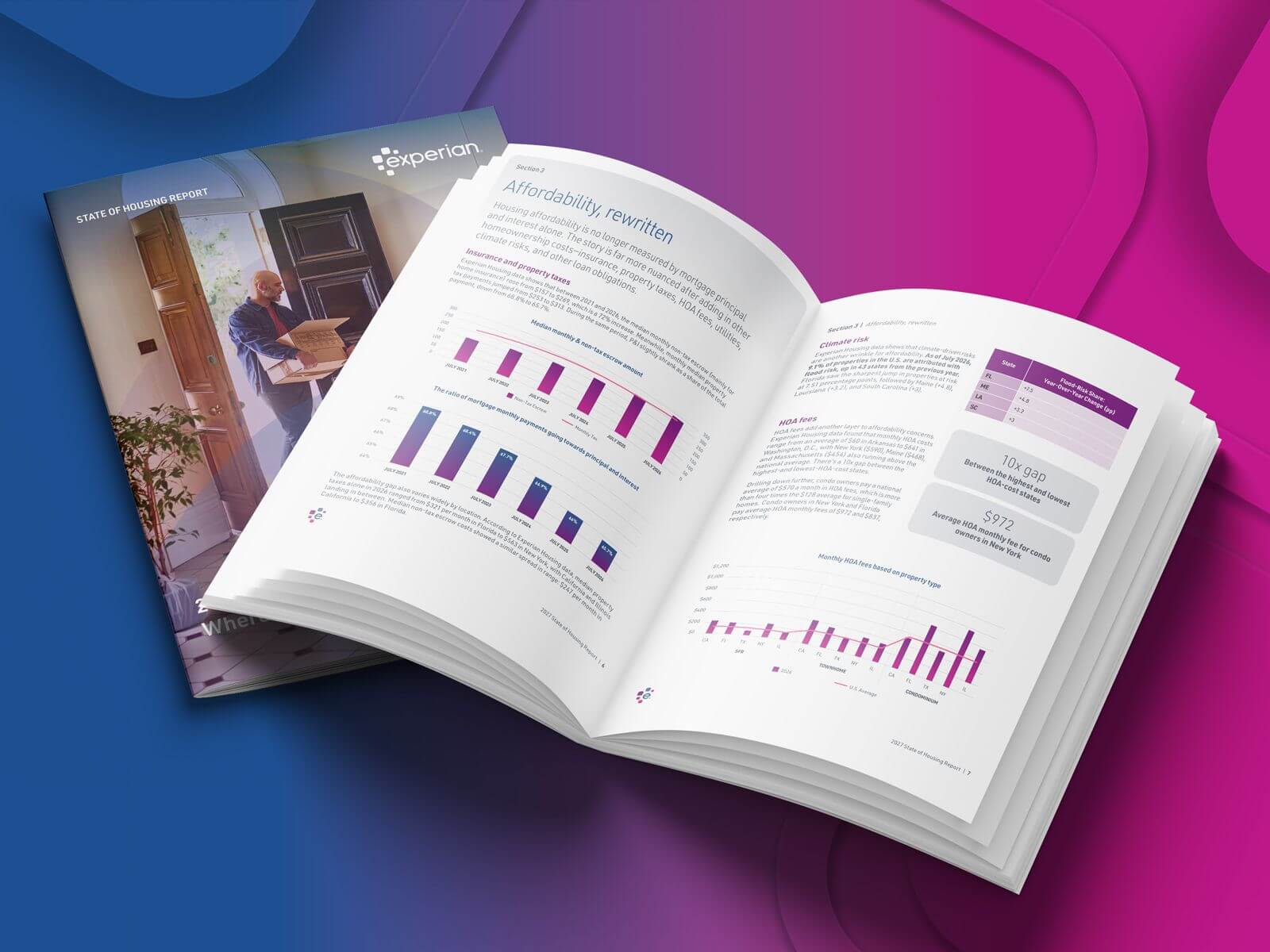
The U.S. housing market may begin to thaw in 2027, but improvement won't be universal. Changing affordability, borrower readiness, household finances and property-level costs will shape where opportunity emerges and who is positioned to act.
Experian's 2027 State of the U.S. Housing Market Report takes a closer look at the consumer, financial, and market signals behind these shifts, helping lenders look beyond national averages to understand where housing opportunity may be emerging, for whom, and under what conditions.
Inside the report
Explore the trends and data shaping the 2027 housing market, including:
Webinar
In today’s competitive mortgage market, lenders are challenged to reduce origination costs, improve operational efficiency, and create a better borrower experience. This webinar explores how the Experian Verify Preview Report gives lenders visibility into employment and income record availability before ordering a full Verification of Income and Employment (VOIE) report. By providing transparency upfront, lenders can reduce unnecessary verification expenses, improve operational efficiency, and make more informed sourcing decisions.
What we’ll cover:
 Webinar
Most commercial risk models are designed to assess every industry. Construction operates by a different set of rules. Explore the data, research, and analytics behind Experian's first construction-specific score and learn how trade creditors can improve risk visibility, credit decisions, and portfolio performance.
 Webinar
Explore Experian's Q3 2026 U.S. economic outlook and scenarios forecasts. Tune into our experts' commentary on current trends.
 Report
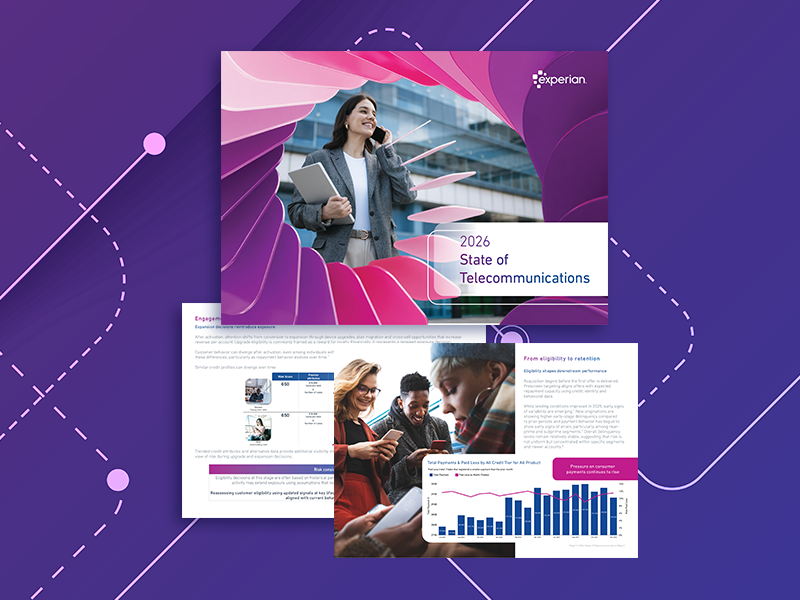
Telecom providers are operating in a mature market where customer behavior and credit trends are shaping performance. This report explores how those shifts influence outcomes across the lifecycle, including:

The latest insights, tips, and trends on all things related to commercial risk by the Experian Business Information Services team.

Experian Employer Services’ HR, payroll and tax experts share news, insights and best practices for employer compliance topics and challenges.

Experian's Global News Blog is your go-to source for the latest news, insights and trends in the world of data and analytics.

Experian Health’s blog features the latest trends and insights shaping the future of healthcare.

Helping businesses make faster, smarter, and more inclusive decisions with the power of data, analytics, and technology.

Marketing insights and solutions to help you drive more meaningful interactions so your consumers can connect, engage, and thrive.

Small business advice and credit education, news, and trends.