
Healthcare Industry Research
The latest healthcare industry research to help providers tackle their biggest challenges.
The latest healthcare industry research to help providers tackle their biggest challenges.
Revenue cycle management leaders are navigating unprecedented change. Regulatory shifts, AI innovation and rising patient financial responsibility are reshaping the industry. Experian Health’s healthcare industry research provides revenue cycle leaders with data-driven insights into patient access, claims management, financial performance and emerging healthcare trends.
Explore our latest healthcare revenue cycle research and industry trend reports below.

48%
of patients say they would delay or forfeit care without an accurate cost estimate.
Survey: State of Patient Access 2026
36%
of providers say regulatory changes create access obstacles for patients.
Survey: State of Patient Access 2026
68%
of providers say patient data collected during registration and check-in is very accurate.
Survey: State of Patient Access 2026
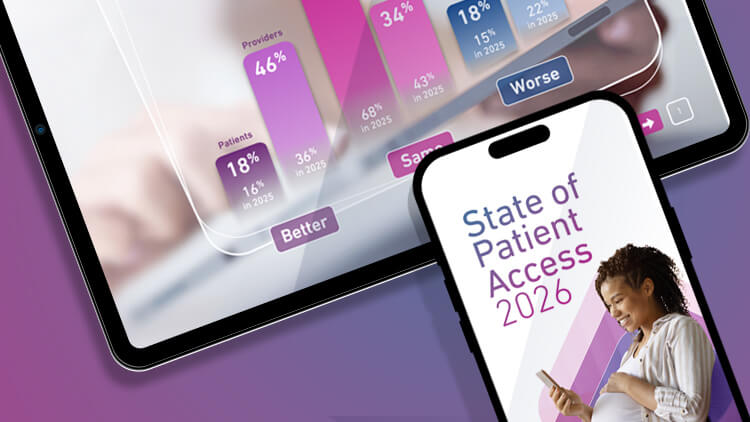
Is patient access getting better or worse?
The State of Patient Access 2026 report examines patients' and providers' perspectives on healthcare access.
24%
of providers report that claim denial rates have increased in the past 12 months.
Survey: Claims denial management survey: a front-end data quality story
82%
of providers say that reducing denials is a priority for the organization.
Survey: State of Claims 2025
49%
say automation has the biggest impact on front-end registration and verification.
Survey: claims denial management: a front-end data quality story
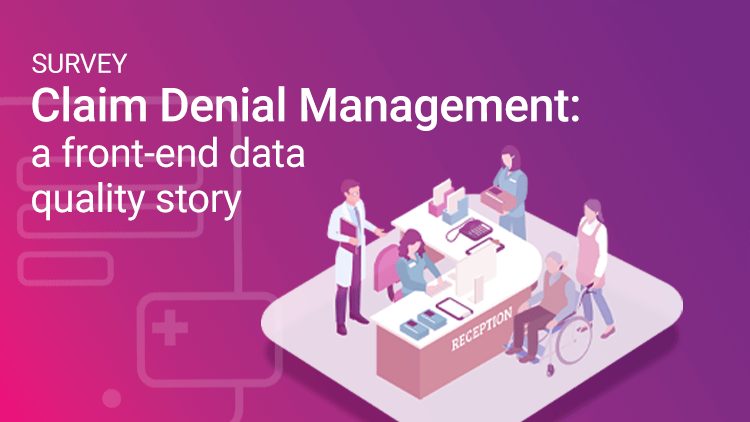
It starts at the front end.
Experian Health surveyed 200 healthcare leaders from January to February 2026 to better understand the reasons for claim denials and opportunities for improvement.
Denials are on the rise.
Health claims are [still] stuck in a cycle of denials, delays and data errors. Is AI the answer?
Data-driven insights into how artificial intelligence (AI) is impacting healthcare revenue cycle management.
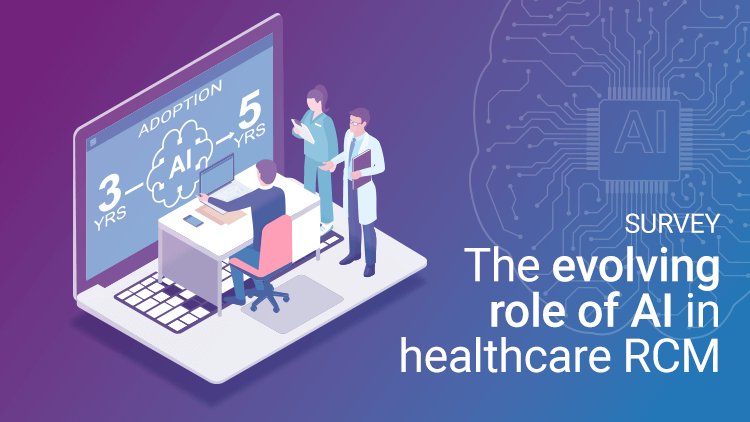
In October 2025, Experian Health surveyed 200 healthcare leaders to better understand how much they trust AI for decision-making, top use cases and AI adoption today.
Industry statistics highlight how healthcare organizations are adapting and where opportunities remain to strengthen regulatory performance.
Implementation of the One Big Beautiful Bill Act (OBBBA) is underway.
Are providers prepared? See what our survey had to say.