Report
Published May 25, 2023
Commercial Commercial InsightsQ1 GDP grew by 1.1% annualized, following a 2.6% gain in Q4 2022. However, recent data's accuracy is affected by weather-induced consumer spending and unusual seasonal adjustments. Notably, Q1 GDP doesn't reflect the impact of tightened lending standards yet. The core of the economy, measured by real final sales to domestic purchasers, rose by a solid 2.9% annualized, driven by strong consumer spending concentrated in early Q1 and aided by significant cost-of-living payments. Inventory reduction subtracted 2.3ppts from Q1 GDP growth, and this trend is expected to persist as businesses draw from existing stockpiles to meet demand. The Oxford Economics US Business Cycle Indicator declined for two consecutive months, indicating weak Q1 performance. The indicator suggests feeble Q2 growth and a possible H2 2023 recession.
Download the report
View now Webinar
From SBFE Data to Growth Intelligence: Strategies for Smarter Small Business Lending
Learn how SBFE data and Experian's analytical capabilities help lenders drive growth and improve decisioning.
- 20M+ small businesses and 110M+ accounts are represented in SBFE data, giving lenders significantly broader credit visibility than internal data alone.
- Nearly 40% of new commercial credit activity is coming from businesses less than 1 year old, highlighting the importance of building credit visibility early.
- AI is a top priority for 50% of banking leaders, but the webinar stressed that AI success depends on high-quality, validated, and enriched data.
 Infographic
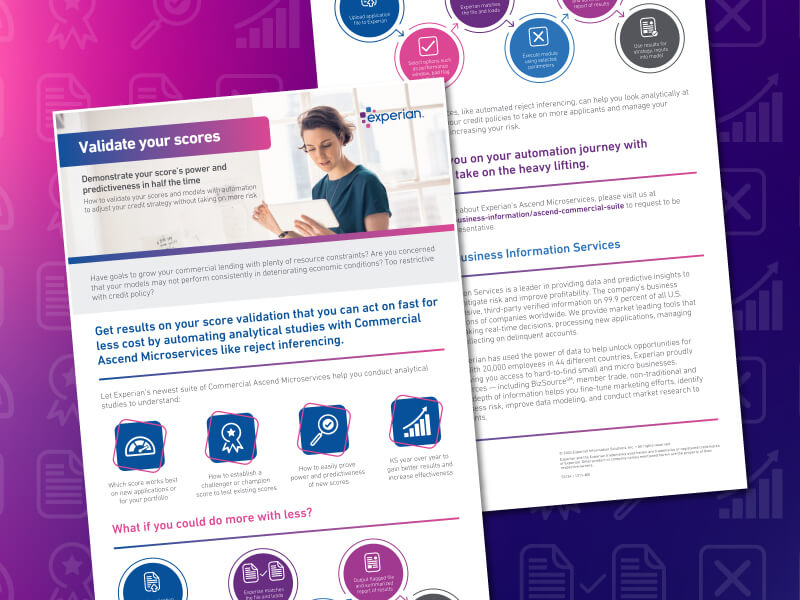
Commercial and small business lending, optimized
A concise guide to simplifying business credit modeling with automation. Learn how microservices streamline validation, testing, and analysis to help relationship managers, credit analysts, and adjudicators reduce manual effort, improve risk visibility, and make faster, more confident lending decisions.
 Webinar
2026 Credit Card Trends
Credit card performance remains a key indicator of consumer financial health. Join Experian experts as they explore the latest credit card trends shaping 2026.
- Credit card balances, utilization, and payment behavior
- Delinquency and risk trends across consumer segments
- What lenders and businesses should watch in 2026
 Report
Q1 2026 Main Street Report
U.S. small businesses entered Q1 2026 navigating a more complex and constrained operating environment shaped by slowing economic growth, rising energy costs, and tightening credit conditions. The Experian Small Business Index™ declined 5.5 points in February to 48.8, reflecting near-term softening, but remains above year-ago levels and within its historical range, signaling underlying stability.
Macroeconomic conditions are creating some headwinds. GDP growth rebounded to 2.0% in Q1 after the Q4 government shutdown but was below market expectations. Inflation re-accelerated to 3.3% in March, driven in part by rising energy prices following geopolitical disruptions in global oil markets. The closure of the Strait of Hormuz contributed to a sharp increase in oil prices, raising transportation and input costs across industries. At the same time, consumer confidence declined to a historic low of 49.8, indicating growing caution among households and increasing risk for consumer-facing businesses.
Credit conditions reflect a widening divergence between supply and demand. According to the Federal Reserve's Senior Loan Officer Opinion Survey, lenders continue to tighten underwriting standards even as demand for commercial credit is expected to increase. This dynamic is likely to constrain access to capital, particularly for smaller or higher-risk borrowers.
Despite these headwinds, small business formation remains strong, with new business applications exceeding historical averages. However, sentiment has weakened. Expectations for improved business conditions declined sharply, and capital investment activity has slowed, reflecting elevated uncertainty and cautious planning.