eBook
Published June 14, 2023
Commercial Credit Education Small Business Financial InclusionAre you a small business owner navigating the process of establishing your business credit profile?
Experian is here with a helpful guide about business credit and how it works to help you on your journey. From understanding how business credit scores and Reports are originated, to employing best practices for building up a strong business credit report, the Experian Blueprint is here to assist you every step of the way.
Complete the form to access the eBook
This site is protected by reCAPTCHA and the Google Privacy Policy and Terms of Service apply.
Thank you for your interest
Your free Experian resource is now available. Enjoy!
 Case Study
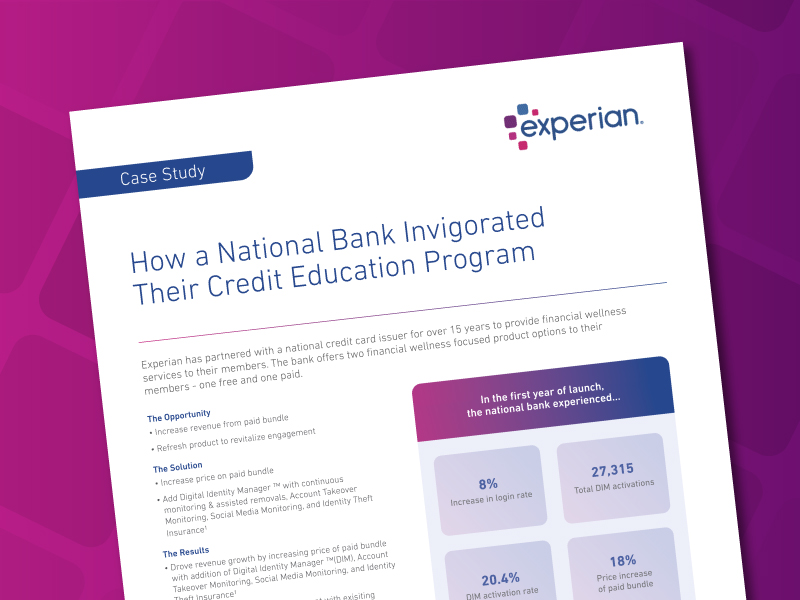
How a National Bank Revitalized Credit Education
A national credit card issuer refreshed its financial wellness program with Digital Identity Manager to strengthen engagement and grow paid bundle revenue.
- Increased the paid bundle price by 18%
- Recorded 27,315 Digital Identity Manager activations in the first year
- Increased average new acquisitions by 47%, with a 1% increase in average deactivations
 Report
Q1 2026 Main Street Report
U.S. small businesses entered Q1 2026 navigating a more complex and constrained operating environment shaped by slowing economic growth, rising energy costs, and tightening credit conditions. The Experian Small Business Index™ declined 5.5 points in February to 48.8, reflecting near-term softening, but remains above year-ago levels and within its historical range, signaling underlying stability.
Macroeconomic conditions are creating some headwinds. GDP growth rebounded to 2.0% in Q1 after the Q4 government shutdown but was below market expectations. Inflation re-accelerated to 3.3% in March, driven in part by rising energy prices following geopolitical disruptions in global oil markets. The closure of the Strait of Hormuz contributed to a sharp increase in oil prices, raising transportation and input costs across industries. At the same time, consumer confidence declined to a historic low of 49.8, indicating growing caution among households and increasing risk for consumer-facing businesses.
Credit conditions reflect a widening divergence between supply and demand. According to the Federal Reserve's Senior Loan Officer Opinion Survey, lenders continue to tighten underwriting standards even as demand for commercial credit is expected to increase. This dynamic is likely to constrain access to capital, particularly for smaller or higher-risk borrowers.
Despite these headwinds, small business formation remains strong, with new business applications exceeding historical averages. However, sentiment has weakened. Expectations for improved business conditions declined sharply, and capital investment activity has slowed, reflecting elevated uncertainty and cautious planning.
 Infographic
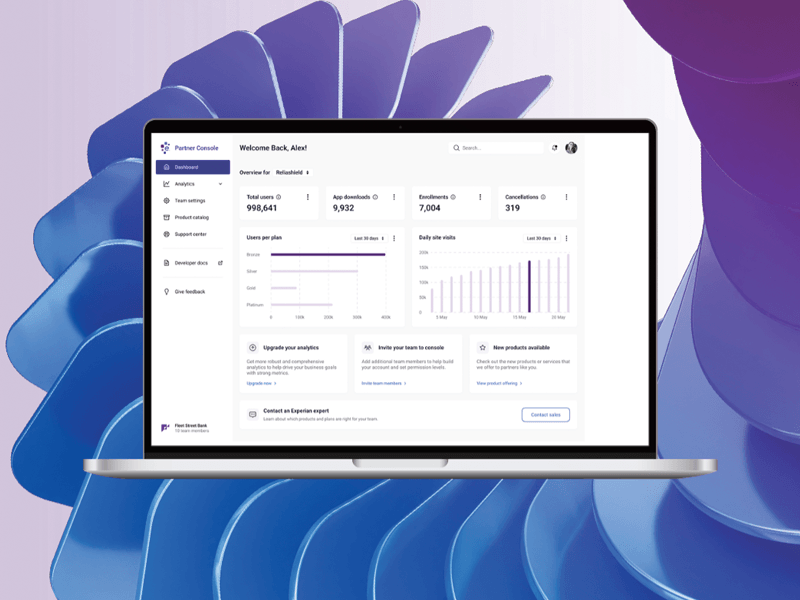
Creating a Modern, Embedded Customer Experience
Discover a faster, more efficient way to bring financial wellness and privacy solutions to market. Learn how to:
- Deliver in-demand financial wellness and identity protection solutions.
- Accelerate build and integration with developer-friendly tools.
- Launch experiences that drive engagement from day one, not months later.
- Continuously optimize through partnership, insight and iteration.
 White Paper
Elevating customer lifetime value: the power of connection
Explore how you can reframe engagement as a growth strategy and use CLV as a leading indicator of sustainable profitability.
Learn how to:
- Move beyond one-size-fits-all tools and experiences.
- Meet customer expectations for financial wellness and identity protection.
- Accelerate time-to-market with modern, embeddable solutions.
- Deliver a cohesive customer experience that drives growth.