Report
Published March 22, 2023
Commercial Commercial InsightsThis Report provides insights into the current state of the small business economy in the US. Despite challenges such as inflation and supply chain disruptions, small businesses remain a vital part of the economy and are showing resilience. Lenders and creditors are adapting to engage with new small businesses and differentiate risk earlier in the life of a business. Non-traditional data overlays are becoming critical in assessing and pricing risk. The Report also highlights the importance of innovation and entrepreneurship in the US, with new business applications trending at almost 425k a month. Subscribe to this quarterly Report here or follow our full suite of quarterly insights on our Commercial Insights Hub.
Download the report
View now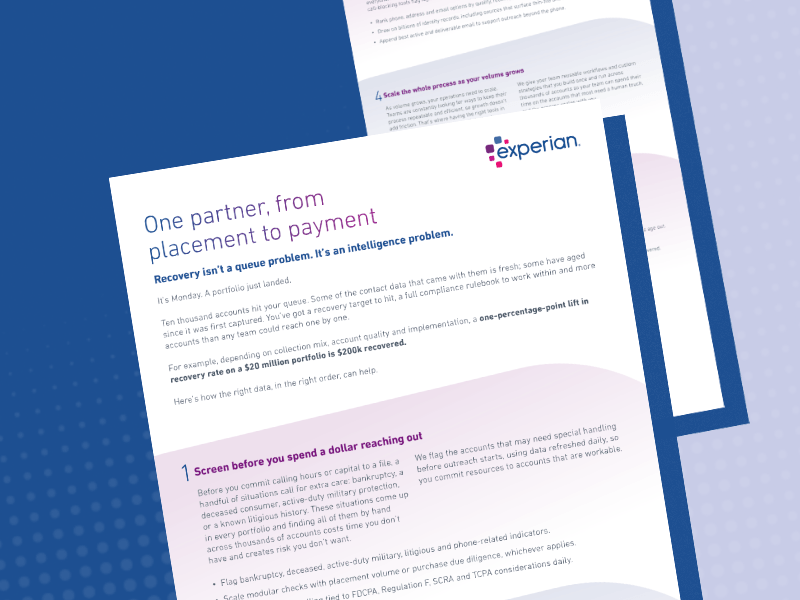 Tip Sheet
One Partner, From Placement to Payment
The right data, in the right order is helping collections teams improve recovery across their portfolio. In our latest tip sheet, learn how to:
- Screen accounts for special handling before outreach
- Prioritize accounts by recovery and payment likelihood
- Improve contact strategies with current identity data
- Scale recovery with reusable workflows and custom strategies
 Webinar
From SBFE Data to Growth Intelligence: Strategies for Smarter Small Business Lending
Learn how SBFE data and Experian's analytical capabilities help lenders drive growth and improve decisioning.
- 20M+ small businesses and 110M+ accounts are represented in SBFE data, giving lenders significantly broader credit visibility than internal data alone.
- Nearly 40% of new commercial credit activity is coming from businesses less than 1 year old, highlighting the importance of building credit visibility early.
- AI is a top priority for 50% of banking leaders, but the webinar stressed that AI success depends on high-quality, validated, and enriched data.
 Infographic
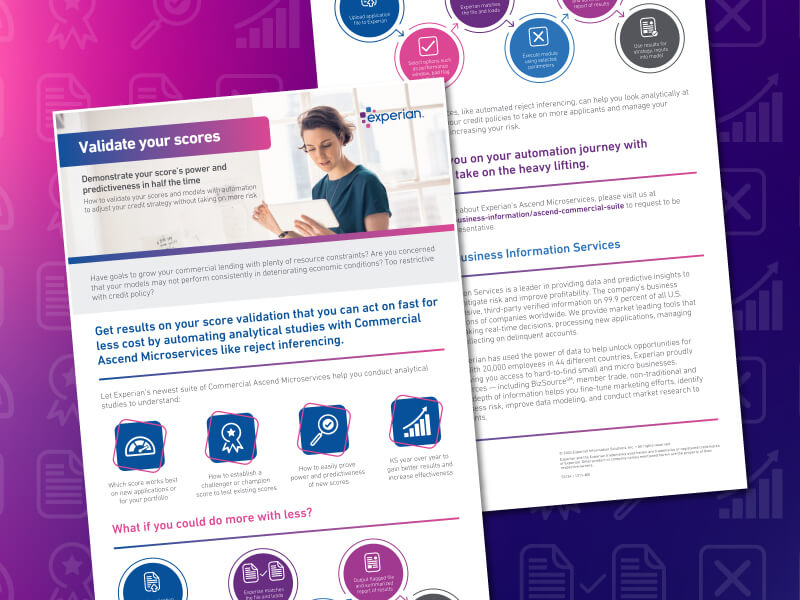
Commercial and small business lending, optimized
A concise guide to simplifying business credit modeling with automation. Learn how microservices streamline validation, testing, and analysis to help relationship managers, credit analysts, and adjudicators reduce manual effort, improve risk visibility, and make faster, more confident lending decisions.
 Webinar
2026 Credit Card Trends
Credit card performance remains a key indicator of consumer financial health. Join Experian experts as they explore the latest credit card trends shaping 2026.
- Credit card balances, utilization, and payment behavior
- Delinquency and risk trends across consumer segments
- What lenders and businesses should watch in 2026