Webinar
Published September 2, 2026
Economic & Market Insights Credit & Economic Trends
Explore Experian's Q3 2026 U.S. economic outlook and scenarios forecasts. Tune into our experts' commentary on current trends.
- See GDP projections for 2026 and 2027.
- Understand the outlook for inflation and unemployment.
- Review expectations for Federal Reserve interest rates.
- Compare base-case, optimistic and pessimistic scenarios.
Complete the form to access the webinar
This site is protected by reCAPTCHA and the Google Privacy Policy and Terms of Service apply.
'}">
 Webinar
Data Strategies for Smarter Tribal Lending Decisions
As Tribal lending evolves, understanding how consumer behavior, credit demand and portfolio performance are shifting is becoming increasingly important for effective risk strategy.
- Examine emerging credit and consumer trends across Tribal lending
- Understand where risk and growth opportunities are shifting
- Explore how more specialized data and analytics can improve risk differentiation
- Consider how purpose-built scoring can support more informed lending decisions
 Webinar
Modernizing mortgage underwriting with better data
See how evolving credit scores, alternative data, and verification tools could help lenders improve the mortgage process and expand access to homeownership.
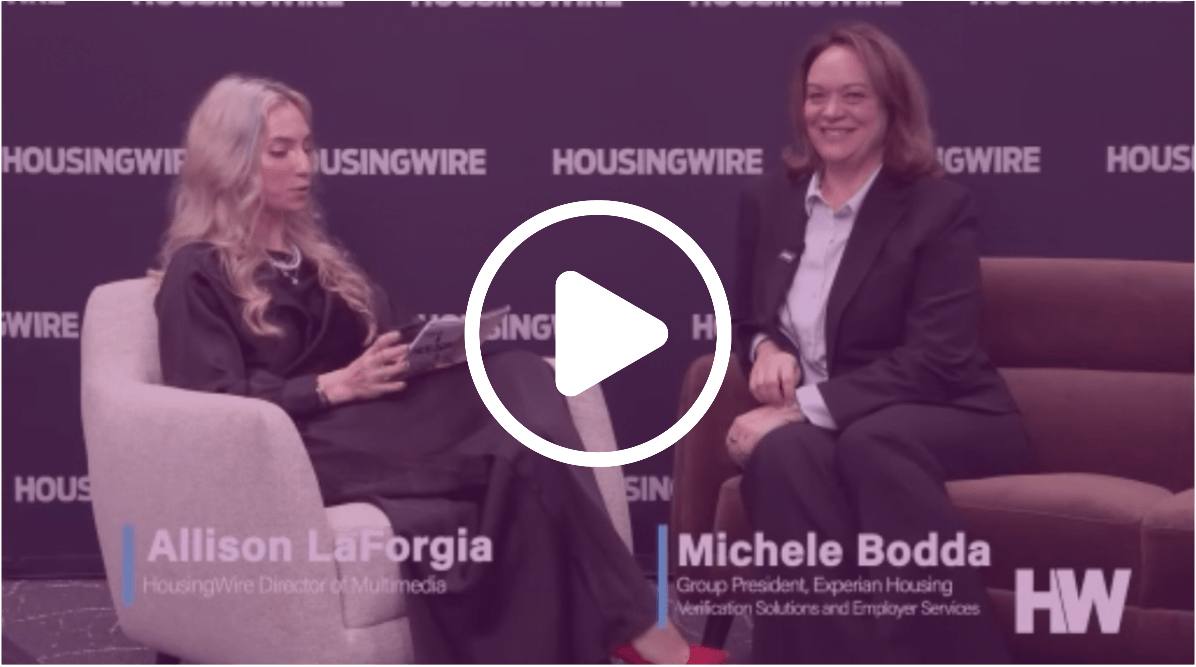
In this HousingWire conversation, Allison LaForgia speaks with Michele Bodda, Group President of Experian Housing, Verification Solutions and Employer Services. Bodda discusses how lenders can put modern credit scoring and consumer data to work in underwriting today.
Watch the video to hear about:
• Using alternative credit data to better represent consumers with limited traditional credit histories
• Bringing the right information into the underwriting process at the right time
• How Power Profile Plus lets lenders request another score later in the process without repurchasing the underlying credit data
• Experian’s investment in income and employment verification, including its partnership with Workday
• Opportunities to improve efficiency and help more people pursue homeownership
 Report
Credit Card Market Growth Chartbook: Q2 2026
Explore credit card market trends through Q2 2026, including changes in originations, issuer performance and consumer segments.
- Track secured and unsecured credit card growth.
- Compare national banks, regional banks, credit unions, fintechs and subprime issuers.
- Examine origination trends by credit score and generation.
 Webinar
Experian’s Ryan Rosales on Improving Verification Speed and Borrower Experience
In this episode of the Chrisman Commentary, we explore why income and employment verification are reaching a turning point for mortgage lenders and borrowers alike. Ryan Rosales discusses how new data sources, including Experian Verify’s integration with Workday, are helping move the industry beyond the traditional choice between a few verification providers and cumbersome manual documentation. Tune in to hear how greater competition, expanded data coverage, real-time verification, and a more open ecosystem could reduce borrower friction, lower lender costs, and potentially reshape the future of mortgage origination.