Latest Posts

Pickup trucks have long been a staple of the automotive industry, and the data show this is still the case—even seeing some growth in the third quarter of 2022. Experian’s Automotive Consumer Trends Report: Q3 2022 took a deeper dive into pickup trucks and found they accounted for 20.4% of new retail vehicle registrations, increasing from 16% in Q3 2021 and surpassing sedans (16.5%) and SUVs (11.4%). The growth in pickup truck popularity is partially due to their functionality and towing capabilities, among other features that smaller vehicles may not offer. As more consumers continue to be drawn to pickup trucks, it’s important for automotive professionals to not oversimplify by grouping potential shoppers together, but instead, dive into the data to understand the current trends, such as who is buying and the type of truck segments they may be interested in. Breaking down pickup truck registration trends by generation When looking at who is in the market for a pickup truck, data shows Gen X made up the largest percentage of buyers in Q3 2022, comprising 34.6%, with Baby Boomers coming in at 28.3%, and Millennials not too far behind at 25.2% this quarter. Knowing who is making up majority of the pickup truck registrations and the types of trucks they are looking for goes hand-in-hand when automotive professionals are searching for ways to market strategically and ensure they are reaching the right audience. For instance, in Q3 2022, 43.1% of Gen X buyers opted for a full-size luxury truck, such as the Rivian R1T, while 35.7% preferred a full-size truck, such as the Ford F-150, and 32.9% bought a midsize truck, such as the Toyota Tacoma. By comparison, 20.4% of Baby Boomers bought a full-size luxury truck in Q3 2022, 27% chose a full-size truck, and 30.7% opted for a midsize truck. Data shows Millennials preferred a full-size luxury truck over any other type—coming in at 30.6%, while 26% opted for a full-size truck, and 23.3% bought a midsize truck. As consumer preference continues to shift throughout the automotive industry, analyzing and leveraging data will allow professionals to properly assist consumers when looking for a vehicle that fits their needs, as well as stay up-to-date on the current trends. To learn more about pickup trucks and other consumer trends, watch the entire Automotive Consumer Trends Report: Q3 2022 webinar.

In our continued efforts to make vehicle information and insights quick and easy to read for auto dealers, we’ve redesigned our AutoCheck vehicle history report. As competition for used vehicles remains high, dealers must make quick decisions on whether to acquire a potential vehicle. Whether you need to evaluate a trade-in or want to make a flat-out offer on a vehicle, quickly accessing the vehicle’s history is only the first step. We’ve made it even easier for you to get key information in our newly designed report. We are confident that the newly designed report will continue to help dealers better manage risk and confidently buy and sell the right vehicles.Did you know?• AutoCheck has data from over 95% of U.S. auction houses with 99.82% manufacturer coverage of open recall data for vehicles on the road • Experian aggregates and analyzes tens of thousands of distinct accident sources; many provided only to AutoCheck • AutoCheck has exclusive Auction Announcement data for up to 2.7% of vehicles in operation (that have been to an auction)• We’re the only VHR provider integrated on all the top consumer vehicle shopping sitesHow AutoCheck can help improve your business You may also be interested in learning how AutoCheck VHRs can improve your business by reading Vehicle Detail Pages with a Free VHR Have Higher Lead and Sale Conversion Rates or how we helped a large insurance company better manage risk in our case study, LexisNexis Helps Manage Risk for National Insurance Company. Learn more about the benefits of becoming an AutoCheck subscriber.
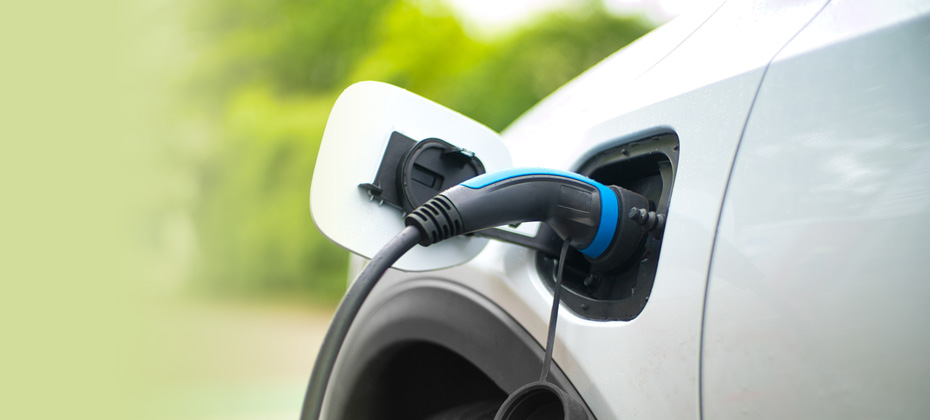
To help the industry better understand the widespread growth, ahead of the show we compiled an Auto Finance Year-in-Review report to break down all things EV—from financing trends to vehicle segments and more.

Recent economic volatility has left local, state, and even federal budgets tighter than usual, meaning agencies must prioritize debt collections efforts.

With the right technologies and solutions, rental housing operators can manage risk and create better experiences for prospective renters.

Join our fireside chat as Experian experts explore economic and market trends, their impact on consumers, and how financial institutions can adapt.

Financial stress can negatively affect employee productivity, but it can also be avoided with the right proactive steps.

Experian's 2023 Future of Fraud Forecast examines rising threats impacting businesses and consumers and how best to combat them.

Putting customers at the center of your credit marketing strategy is key to achieving higher response rates and building long-term relationships. To do this, financial institutions need fresh and accurate consumer data to inform their decisions. Atlas Credit was looking to achieve higher response rates on its credit marketing campaigns by engaging consumers with timely and personalized offers. The company implemented Experian’s Ascend Marketing, a customer marketing and acquisition engine that provides marketers with accurate and comprehensive consumer credit data to build and deploy intelligent marketing campaigns. With deeper insights into their consumers, Atlas Credit created timely and customized credit offers, resulting in a 185% increase in loan originations within the first year of implementation. Additionally, the company was able to effectively manage and monitor its targeting strategies in one place, leading to improved operational efficiency and lower acquisition costs. To learn more about creating better-targeted marketing campaigns and enhancing your strategies, read the full case study. Download the case study Learn more

Learn how you can grow your portfolio and minimize risk by leveraging industry-leading alternative credit scoring models. Read more!

Businesses must be aware of the risks associated with card not present fraud and take steps to protect themselves and their customers.

In the last decade, electric vehicle registrations have increased by 3,600%, and the demand for alternative fuel vehicles continues to soar. Manufacturers are rapidly expanding alternative fuel operations to keep up with the demand from consumers that has expanded across all generations. Target in-market EV consumers Today’s automotive marketers understand that finding targeted consumer audiences is critical to a successful marketing strategy. With more electric vehicle model options available and improved infrastructure driving popularity, we’re seeing automotive marketers wanting to target in-market EV consumers as well as current alternative fuel vehicle owners. Applying data-driven insights to find targeted consumer audiences is critical to today’s marketing strategies. For example, as of Q2 2022, 23.5% of plug-in hybrid owners that returned to market, migrated to an electric vehicle As a marketer, would it be helpful to select In-Market Likely Segment Switchers as your target audience for your marketing campaign? Or Hybrid owners as a whole? Experian Automotive has a variety of alternative fuel owner audiences and in-market consumer audiences to help marketers target the right consumer with the right message on the right channel. The Experian Marketing Engine Syndicated Auto Audience portfolio includes 70+ audiences focused on likely buyers and owners of Electric Vehicle (EV) and Plug-In Hybrid (PHEV) vehicles. Of Experian’s 750+ syndicated auto audiences, we offer a subset of over 25 audiences focused on individual EV/PHEV vehicle models. How to find EV audiences on your preferred platform Experian electric vehicle audiences are available in the Auto Audience area of your preferred platform. Simply navigate to Experian Automotive’s Audiences to find Electric Vehicle related audiences, as well as all of Experian’s Auto Audiences. To learn more about Auto Audiences for Electric Vehicles, contact our Subject Matter Expert, Gary Meteer.

Learn how using data-driven customer segmentation to create messages and offers that truly resonates will help your targeting efforts. Read more!

Lenders are increasingly using artificial intelligence (AI) and machine learning (ML) throughout the customer lifecycle and access to these advanced tools is expanding.

Strategic automotive marketing and measurement are getting more complicated with the increase in consumer channels and devices. This makes it harder for marketers to obtain a complete measurement picture. Measurement terminology is also evolving. Here's a look at some of today’s key definitions to familiarize you with the nuances and challenges it may already bring to your analytics. What is the open web? The open web is the web as a whole or the public side of the web with all the millions of sites that do not require a subscription or fee to use them. For example, in our industry, this would be an auto manufacturer’s website, a dealership’s website, or an online consumer shopping portal where you list your vehicles for sale – all of these are on the open web. These sites use open-source standards to deliver content to consumers without a separate app or company acting as gatekeepers. However, tracking approaches on the open web will shift as cookies will eventually disappear. What is a walled garden? A walled garden is a closed platform or ecosystem (e.g., Amazon, Apple, Facebook) wherein the platform provider controls the content, applications, and/or media and restricts access as it sees fit. The publisher offers consumer privacy and rich first-party data to advertisers, but the measurement is limited to activity within the ‘walls’ of the garden. From an advertising perspective, buyers can only access these platforms through their own buying tools; they do not give access to any independent platforms. The publisher (the Walled Garden) handles all the buying, serving, tracking, and reporting within their ecosystem. So, let’s say you are an automotive consumer checking out vehicles. If you’re reading your Facebook feed on your phone and you see an advertisement for a vehicle or a dealership, that OEM or dealership is advertising in a walled garden – in this case, the walled garden is Facebook. The challenge to an advertiser is that they can only measure activity that occurred within that ecosystem using the walled garden’s platform and measurement tools. What is a hedged garden? The “hedged garden” is a new industry concept. A hedged garden is when a network of publishers work together to activate first-party data sets in a privacy-compliant way across many partners at scale. These publishers run their businesses with large amounts of first-party consumer data. They often do not own or operate complete buying stacks. For example, companies like Target and Walmart let advertisers employ their data on shoppers for ad targeting, but brands can use their own buying tools. Other examples of a hedged garden might include Connected TV platforms such as Vizio’s or Samsung’s in-house ad businesses. If you’re sitting on your couch watching your Vizio-connected TV and you see an advertisement for a dealership or a manufacturer, they are advertised within that hedged garden. As an advertiser, the advantage is that you can use their buying tool when targeting shoppers for your advertising. How to fill in the gaps the walled garden may leave open The walled garden can challenge marketers who desire cross-channel activation and measurement. If you're a marketer working within a walled garden, we can work with the data you have to give you a complete picture of your audience’s digital journey. Our experience and vast databases, including vehicle, credit, and customer insights, allow us to continue building strong partnerships within the fast-growing (Hedged Garden) ecosystem. We can help. Our Subject Matter Expert, Laurel Malhotra will be happy to answer any questions you may have. Contact her today.