Ecommerce / Retail

Not long ago, every online transaction shared a simple assumption: there was a human on the other side of the screen. Someone browsing, clicking and confirming a purchase. That assumption is starting to break. Today, Artificial Intelligence (AI) agents can search for products, compare options, make payments and even complete transactions on behalf of users, without the need for human supervision. This shift, often called agentic commerce, is redefining how decisions are made and how transactions occur. But it also introduces a new and urgent question: how do you trust something that isn’t human? That’s where Know Your Agent (KYA) comes in. Understanding Know Your Agent At its core, Know Your Agent is a framework for establishing trust in AI-driven interactions. It extends traditional identity verification into a world where software, not people, is acting. Instead of asking “Who is the customer?”, KYA asks a broader question: Who is this agent, who is it acting for and is it authorized to act? In practice, KYA connects three critical elements: The human A verified individual The agent The authenticated AI agent acting on behalf of the consumer The intent What the agent is trying to do as instructed by the consumer This connection ensures that every action taken by an AI agent can be traced back to a real, verified person and that the action itself is legitimate. Why KYA is emerging now The rise of AI agents isn’t theoretical; it’s already happening. From shopping assistants to financial co-pilots, agents are beginning to act autonomously in ways previously reserved for humans. But this evolution exposes a gap in today’s trust models. Most fraud prevention, identity verification and risk systems are designed to evaluate human behavior. Additionally, most merchant checkout processes use risk controls focused on identifying the consumer interacting with the merchant site or application (app). When an AI agent initiates a transaction, those signals become harder to interpret. Is it a trusted assistant acting on behalf of a real customer, or a sophisticated bot attempting fraud? KYA is emerging to solve exactly this problem. A new trust layer for agentic commerce Agentic commerce changes not just who transacts, but how trust is established. In a traditional transaction, trust is built through familiar signals, such as login credentials, device data, location data and behavioral patterns. In an agent-driven interaction, those signals are abstracted away. The agent acts, but the human intent sits behind it. Know Your Agent introduces a new trust layer that bridges this gap. It allows businesses to answer critical questions in real time: Who is the consumer behind the agent? Is this authenticated agent linked to that consumer? Has the user authorized this specific action? Is the agent behaving consistently and within its permissions? Can this transaction be trusted? Without these answers, agentic commerce introduces risks like fraud, misrepresentation and unauthorized activity. With KYA, those risks become manageable and, more importantly, scalable. From KYC to KYA: an evolution of identity For decades, organizations have relied on Know Your Customer (KYC) to verify people and reduce fraud. But KYC alone isn’t enough in a world where AI agents act independently. KYA doesn’t replace KYC; it builds on it. If KYC verifies the individual, KYA verifies the relationship between the individual and the agent acting on their behalf. It adds context, continuity and accountability to every interaction and both are necessary for safe, agentic commerce. In other words, KYC answers who you are. KYA answers who (or what) is acting for you, and whether it should be trusted. ConceptKnow Your Customer (KYC)Know Your Agent (KYA)FocusHuman identityAI agent identity PurposePrevent fraud, ensure compliance Enable safe automation and delegationEntity verifiedIndividual or business Agent + human + authorizationScopeStatic identity checks Dynamic identity + behaviors + permissions How KYA works in practice While the concept is still evolving, most KYA approaches share a common goal: creating a verifiable chain of trust between humans and AI agents. This typically involves: Establishing a secure and auditable link between a verified person and their agent Confirming that the agent is authorized to act within defined permissions Continuously evaluating behavior and risk over time Ensuring a verified connection between humans and AI agents confirms that agent-initiated transactions are grounded in real identity. Why KYA matters for businesses For organizations, KYA is more than a security concept; it’s an enabler of growth. As agentic commerce expands, businesses will increasingly interact with AI agents as a new customer base. Those who can confidently verify and trust these interactions will be able to: Accept agent-initiated transactions with lower risk Reduce friction for legitimate users Unlock new, automated customer experiences Those that can’t may find themselves required to block or challenge these interactions, limiting adoption and missing out on emerging revenue streams. The reality is simple: agentic commerce will not scale without trust. Bringing it to life with Experian® Agent TrustTM This is exactly the challenge we’re addressing with our first-of-its-kind framework, Experian® Agent TrustTM. Experian Agent Trust is designed to create a secure, verifiable link between consumers and the AI agents acting on their behalf, bringing identity, intent and accountability into AI-driven transactions. At the center of this approach is Human-to-Agent Binding, which connects a verified individual, their device and their AI agent. This binding is recorded in Experian’s Agent Trust Registry and creates a persistent trust signal that allows businesses to understand exactly who is behind every agent-driven action. By grounding agent activity in verified identity, we are extending our expertise in fraud prevention and identity verification into the next era of commerce, one where AI agents don’t just assist, but act. The future of trust starts with knowing your agent As AI agents grow more capable, they won’t just support transactions, they’ll initiate them, negotiate them and complete them autonomously. This evolution demands a new foundation for trust, one that extends beyond verifying customers to understanding and validating the agents acting on their behalf. As agentic commerce accelerates, organizations that embrace Know Your Agent (KYA) will be better equipped to innovate with confidence, scale responsibly and strengthen trust at every interaction. Learn more about Experian Agent Trust

E-commerce is booming. Global online sales continue to rise with forecasts predicting growth to $7.89 trillion by 2028. Unfortunately, with any lucrative market comes fraudulent activity. As e-commerce grows by leaps and bounds, so do fraud incidents. E-commerce fraud is defined as any illegal or deceptive activity conducted during an online transaction with the intent to steal money, goods or sensitive information. As digital shopping flourishes, the tactics criminals use to exploit vulnerabilities in payment systems, customer accounts and merchant operations is rapidly expanding. According to Experian’s tenth annual Identity & Fraud Report, nearly 60% of U.S. businesses reported higher fraud losses in 2025, driven by more sophisticated attacks and legacy security gaps. The same report highlighted the damage from e-commerce fraud goes beyond the loss of revenue, directly impacting consumer trust. The survey found that only 13% of consumers feel fully secure opening new accounts. Chief amongst their concerns, 68% of consumer worry about identity theft, while 61% are fearful of stolen credit card data. The constant threat of e-commerce fraud has placed tremendous pressure on merchants and retailers to take robust steps in mitigating these attacks. In addition to protecting the bottom line, such measures are essential to earning consumer trust. According to Experian’s merchant-focused edition of our Identity & Fraud Report, consumers consistently perceive physical and behavioral biometrics tools as the most secure authentication methods — yet merchants are slow to adopt them. This gap highlights a key opportunity for businesses to strengthen security practices and build trust without adding friction to the user experience. After all, 74% of consumers say security is the most important factor when deciding to engage with a business.3 E-commerce fraud comes in many shapes and sizes E-commerce fraud is an umbrella term for a variety of attacks that target merchants and retailers. Amongst these is chargeback fraud, which occurs when a customer makes a legitimate purchase and then falsely disputes the charge with their credit card issuer, claiming the item never arrived or the transaction was unauthorized. The merchant loses both the product and the payment. Another is account takeover fraud, which happens when cybercriminals gain access to a customer’s online account, often through stolen login credentials, and use it to make unauthorized purchases, change shipping details or withdraw loyalty points. In card-not-present (CNP) fraud, attackers use stolen credit card information to make purchases online or by phone, where the physical card isn’t required. Because identity verification is limited, merchants bear the financial losses. This type of fraud includes BIN attacks, targeting the Bank Identification Number (BIN) on a credit or debit card that identifies the issuing financial institution. The goal of a BIN attack is to discover valid card numbers that can be used for fraudulent transactions. There are also refund fraud attacks, which involve scammers exploiting return or refund policies — such as claiming an item didn’t arrive or sending back a different or counterfeit product for reimbursement. Together, different forms of e-commerce fraud cost businesses billions annually, demanding strong fraud detection, authentication and monitoring systems to combat them. E-commerce fraud prevention should be a priority for every merchant and retailer. E-commerce fraud prevention: Ways merchants can fight back Merchants report the highest rates of new account fraud, yet it ranks just 15th among their active investments for 2025. While fraudsters continue to find new and innovative ways to attack, merchants and retailers can better prepare by following industry best practices in e-commerce fraud prevention: Chargeback fraud: When it comes to preventing and managing chargeback fraud, merchants should ensure customers are fully aware of return and refund policies. Utilize Address Verification Services (AVS) and Card Verification Value (CVV2) verification for online and over-the-phone transactions to establish the validity of a purchase. Keeping meticulous records of all transactions can serve as compelling evidence to defend the transaction. Leverage advanced fraud detection tools, such as tokenization and machine learning and AI fraud detection solutions that flag potentially fraudulent transactions and detect suspicious spending patterns and anomalies. Account takeover fraud: Merchants can minimize the risk of account takeover fraud using holistic, risk-based identity and device authentication, as well as behavioral analytics or targeted, knowledge-based authentication. End-to-end fraud management solutions can help reduce manual processes and remove the risk of information silos. Card-not-present fraud: Mitigating the risk of CNP fraud can be accomplished by implementing additional security measures at the time of transaction. These can include requiring verification information, such as a CVV code or a billing zip code to further authenticate the card holder’s identity. Advanced e-commerce fraud prevention tools To stay ahead of the fraudsters, merchants and retailers should take a multilayered approach to e-commerce fraud prevention that takes advantage of the latest, most advanced tools. At Experian®, we offer innovative fraud management solutions that provide the right level of security without causing customer friction. Three advanced e-commerce fraud prevention tools that every merchant should have in their arsenal include: Experian LinkTM: This tool enhances credit card authentication by linking the payment instrument with the digital identity presented for payment. Experian Link enables merchants to quickly and accurately identify legitimate customers to reduce friction and increase acceptance rates, reduce operation costs by preventing fraudulent credit card use, make better risk decisions to protect legitimate customers, limit false declines and identify potential fraudsters. Behavioral analytics: With the growth of AI, fraudsters can now replicate static data, but mimicking human behavior remains challenging. Behavioral analytics detects subtle interaction patterns that are extremely difficult for GenAI-driven fraudsters, including fraud rings and next-generation fraud bots, to replicate. Powered by NeuroID, our behavioral analytics capabilities help organizations proactively mitigate fraud, reduce false positives and streamline risk detection, ultimately creating a secure and frictionless experience for trustworthy users — while locking out fraudsters earlier. Precise ID®: This advanced tool enables businesses to pursue growth confidently by providing robust, real-time identity verification, as well as the ability to accurately identify a wide range of fraud risks including identity theft, synthetic identity and first-party fraud, along with tools that facilitate confirmation when risks are detected. The threat of fraud never stops Merchants and retailers are under a constant and unrelenting threat of attacks by fraudsters. Vigilance is required to protect the customer experience and the bottom line. Fortunately, innovative tools are leveling the playing field, offering much needed e-commerce fraud protection. To learn how Experian can help you combat fraud and meet consumers’ demands for trust and privacy, explore our best-in-class fraud management solutions and download our latest report on closing the trust gap in e-commerce. Explore our solutions Download report

In today’s digital payments landscape, fraudsters are constantly developing new tactics to exploit vulnerabilities. One of the most common credit card schemes financial institutions and merchants face are BIN attacks. But what exactly is a BIN attack, and how does BIN attack fraud work? What is a BIN attack? BIN attacks, a type of card not present fraud, target the Bank Identification Number (BIN) — the first six to eight digits of a credit or debit card number that identify the issuing financial institution. Fraudsters use these digits to systematically generate and test potential card number combinations. The goal of a BIN attack is to discover valid card numbers that can be used for fraudulent transactions. Because BINs are publicly available and consistent across card issuers, they provide a predictable framework for attackers. How does it differ from other types of payment fraud? Payment fraud takes many forms, but BIN attacks stand apart because of their scale and automation. Card testing fraud vs. BIN attacks: Both involve criminals running authorization attempts to identify valid card details. However, card testing typically uses data from a single stolen card, while BIN attacks systematically generate thousands of possible card numbers from a known BIN range. Account takeover fraud vs. BIN attacks: In an account takeover, fraudsters gain access to a customer’s existing account, often through phishing or stolen login credentials. BIN attacks don’t require account access — instead, they exploit card number patterns to guess valid accounts. What are the consequences of a BIN attack? BIN attacks don’t just result in stolen card numbers — they create wide-ranging business risks that can impact operations, revenue and customer trust. For financial institutions and merchants, the ripple effects can be significant: High transaction volumes: BIN attacks are carried out using automated scripts or bots that fire off thousands of transaction attempts per minute. This traffic can overwhelm payment systems, slow down processing and disrupt the checkout experience for legitimate customers. Increased chargebacks: Once fraudsters identify valid cards, they make unauthorized purchases that often result in chargebacks. Both merchants and issuers absorb these losses — merchants lose revenue, while issuers reimburse cardholders. Network and processing costs: Every transaction attempt — even those declined during a BIN attack — still incurs network and processing fees. Merchants and issuers can end up paying for thousands of authorization requests, draining resources. Reputational damage: Today’s consumers expect seamless and secure payments. If they experience frequent declines, blocked cards or fraudulent activity, their trust in the institution or merchant erodes. How to protect against BIN attack fraud Mitigating BIN attacks requires a proactive, layered defense strategy. Financial institutions and merchants should consider: Advanced fraud detection and analytics: BIN attacks generate massive volumes of fraudulent traffic. By leveraging AI-driven analytics and machine learning, institutions and merchants can monitor for unusual transaction patterns, velocity spikes and bot-driven activity. Identity and device intelligence: Fraudsters often hide behind bots, stolen IP addresses and compromised devices. With identity verification and device intelligence solutions, merchants and institutions can better determine whether a transaction is coming from a legitimate customer or a fraudster testing card details. Multi-factor authentication (MFA): BIN attacks succeed on speed and automation, firing off thousands of transactions. MFA can help disrupt this process by requiring additional proof of identity from the customer, such as facial recognition or one-time passcodes. Credit card authentication: BIN attacks exploit the gap between payment credentials and the identity of the person using them. A solution like Experian LinkTM seamlessly connects the payment instrument with the digital identity presented for payment, helping merchants to reduce false declines, fraud and operating expenses. Build a stronger defense against BIN attacks BIN attacks are a growing threat in today’s digital payments ecosystem. But with the right safeguards in place, organizations can stay ahead. Learn how Experian can help you strengthen your fraud defenses to reduce losses and protect customer trust. Learn more

Building loyalty and improving customer retention are sensible business practices, and they're essential banking growth strategies for long-term success.

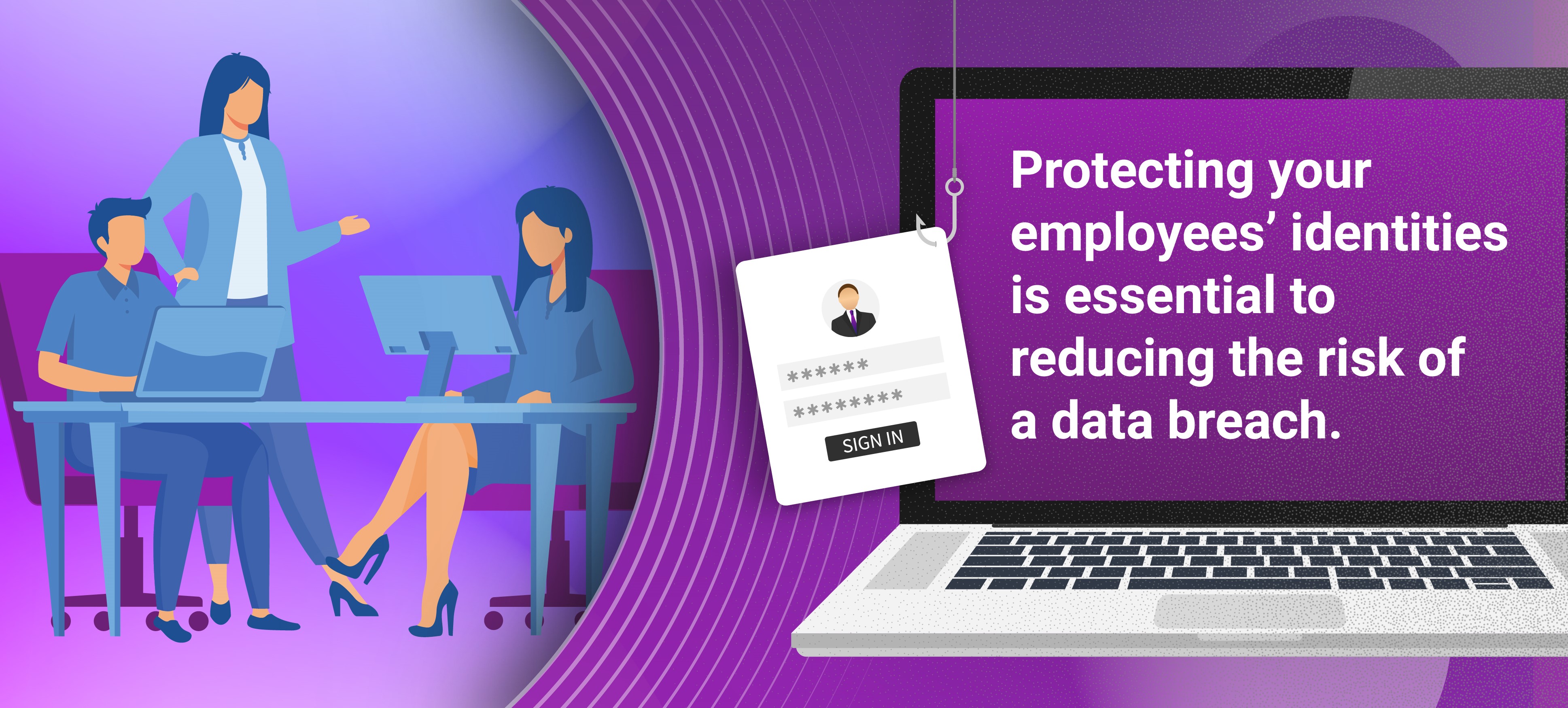
As data breaches become an ever-growing threat to businesses, the role of employees in maintaining cybersecurity has never been more critical. Did you know that 82% of data breaches involve the human element1 , such as phishing, stolen credentials, or social engineering tactics? These statistics reveal a direct connection between employee identity theft and business vulnerabilities. In this blog, we’ll explore why protecting your employees’ identities is essential to reducing data breach risk, how employee-focused identity protection programs, and specifically employee identity protection, improve both cybersecurity and employee engagement, and how businesses can implement comprehensive solutions to safeguard sensitive data and enhance overall workforce well-being. The Rising Challenge: Data Breaches and Employee Identity Theft The past few years have seen an exponential rise in data breaches. According to the Identity Theft Resource Center, there were 1,571 data compromises in the first half of 2024, impacting more than 1.1 billion individuals – a 490% increase year over year2. A staggering proportion of these breaches originated from compromised employee credentials or phishing attacks. Explore Experian's Employee Benefits Solutions The Link Between Employee Identity Theft and Cybersecurity Risks Phishing and Social EngineeringPhishing attacks remain one of the top strategies used by cybercriminals. These attacks often target employees by exploiting personal information stolen through identity theft. For example, a cybercriminal who gains access to an employee's compromised email or social accounts can use this information to craft realistic phishing messages, tricking them into divulging sensitive company credentials. Compromised Credentials as Entry PointsCompromised employee credentials were responsible for 16% of breaches and were the costliest attack vector, averaging $4.5 million per breach3. When an employee’s identity is stolen, it can give hackers a direct line to your company’s network, jeopardizing sensitive data and infrastructure. The Cost of DowntimeBeyond the financial impact, data breaches disrupt operations, erode customer trust, and harm your brand. For businesses, the average downtime from a breach can last several weeks – time that could otherwise be spent growing revenue and serving clients. Why Businesses Need to Prioritize Employee Identity Protection Protecting employee identities isn’t just a personal benefit – it’s a strategic business decision. Here are three reasons why identity protection for employees is essential to your cybersecurity strategy: 1. Mitigate Human Risk in Cybersecurity Employee mistakes, often resulting from phishing scams or misuse of credentials, are a leading cause of breaches. By equipping employees with identity protection services, businesses can significantly reduce the likelihood of stolen information being exploited by fraudsters and cybercriminals. 2. Boost Employee Engagement and Financial Wellness Providing identity protection as part of an employee benefits package signals that you value your workforce’s security and well-being. Beyond cybersecurity, offering such protections can enhance employee loyalty, reduce stress, and improve productivity. Employers who pair identity protection with financial wellness tools can empower employees to monitor their credit, secure their finances, and protect against fraud, all of which contribute to a more engaged workforce. 3. Enhance Your Brand Reputation A company’s cybersecurity practices are increasingly scrutinized by customers, stakeholders, and regulators. When you demonstrate that you prioritize not just protecting your business, but also safeguarding your employees’ identities, you position your brand as a leader in security and trustworthiness. Practical Strategies to Protect Employee Identities and Reduce Data Breach Risk How can businesses take actionable steps to mitigate risks and protect their employees? Here are some best practices: Offer Comprehensive Identity Protection Solutions A robust identity protection program should include: Real-time monitoring for identity theft Alerts for suspicious activity on personal accounts Data and device protection to protect personal information and devices from identity theft, hacking and other online threats Fraud resolution services for affected employees Credit monitoring and financial wellness tools Leading providers like Experian offer customizable employee benefits packages that provide proactive identity protection, empowering employees to detect and resolve potential risks before they escalate. Invest in Employee Education and Training Cybersecurity is only as strong as your least-informed employee. Provide regular training sessions and provide resources to help employees recognize phishing scams, understand the importance of password hygiene, and learn how to avoid oversharing personal data online. Implement Multi-Factor Authentication (MFA) MFA adds an extra layer of security, requiring employees to verify their identity using multiple credentials before accessing sensitive systems. This can drastically reduce the risk of compromised credentials being misused. Partner with a Trusted Identity Protection Provider Experian’s suite of employee benefits solutions combines identity protection with financial wellness tools, helping your employees stay secure while also boosting their financial confidence. Only Experian can offer these integrated solutions with unparalleled expertise in both identity protection and credit monitoring. Conclusion: Identity Protection is the Cornerstone of Cybersecurity The rising tide of data breaches means that businesses can no longer afford to overlook the role of employee identity in cybersecurity. By prioritizing identity protection for employees, organizations can reduce the risk of costly breaches and also create a safer, more engaged, and financially secure workforce. Ready to protect your employees and your business? Take the next step toward safeguarding your company’s future. Learn more about Experian’s employee benefits solutions to see how identity protection and financial wellness tools can transform your workplace security and employee engagement. Learn more 1 2024 Experian Data Breach Response Guide 2 Identity Theft Resource Center. H1 2024 Data Breach Analysis 3 2023 IBM Cost of a Data Breach Report
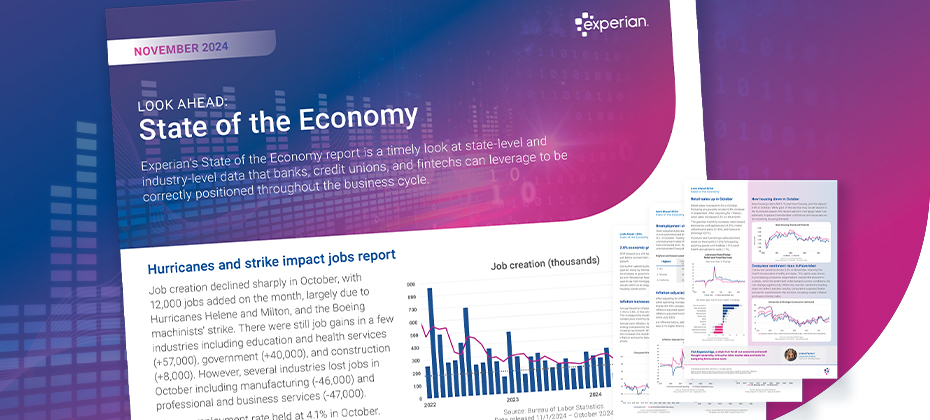
This series will explore our monthly State of the Economy report, which provides a snapshot of the top monthly economic and credit data for financial service professionals to proactively shape their business strategies. The U.S. economy remains on solid footing, as GDP grew at a healthy 2.8% rate in Q3, driven by consumer spending. Alongside growth, inflation ticked up, while the labor market eased across several measures. In response to these developments, the Federal Reserve announced a quarter-point cut in November, with another cut penciled in for December. The November State of the Economy report fills in the rest of the macroeconomic story. This month’s highlights include: Annual headline inflation ticked up from 2.4% to 2.6%. 12,000 jobs were added in October, amid hurricane and strike impacts. Retail sales increased by 0.4% in October. Check out the full report for a detailed analysis of the rest of this month’s data, including the latest trends in originations, job openings, and growth. Download November's report As our economy continues to fluctuate, it’s critical to stay updated on the latest developments. Subscribe to our new series, The Macro Moment, for economic commentary from Experian NA’s Chief Economist, Joseph Mayans, with additional economic resources, including our new Election Eve’s Scenario Forecasts report. For more economic trends and market insights, visit Experian Edge.
Online fraud has increased exponentially over the past few years, with the Federal Trade Commission (FTC) data showing that consumers reported losing more than $10 billion to fraud in 2023. This marks the first time that fraud losses have reached that benchmark, and it’s a 14% increase over reported losses in 2022. As a result, e-commerce merchants and retailers have reacted by adding friction to e-commerce interactions. The risk is that a legitimate user may be denied a purchase because they have incorrectly been labeled a fraudster — a “false decline.” Now, as the holiday shopping season approaches, e-commerce merchants expect a surge in online spending and transactions, which in turn creates concern for an uptick in false declines. In a recent webinar, Experian experts Senior Vice President of Business Development and eCommerce Dave Tiezzi and Senior Director of Product Management Jose Pallares explored strategies for how e-commerce merchants can determine the risk level of a transaction and ensure that they do not miss out on genuine purchases and good customers. Below are a few key perspectives from our speakers: What are the biggest challenges posed by online card transactions? DT: One of the biggest issues merchants face is false declines. In the report, The E-Commerce Fraud Enigma: The Quest to Maximize Revenue While Minimizing Fraud Experian and Aite-Novarica Group (now Datos Insights) found that 1.16% of all sales are unnecessarily rejected by merchants. While this percentage may seem small, it represents significant revenue loss during the high-volume holiday shopping season. The report also highlights that 16% of all attempted online transactions encounter some form of friction due to suspected fraud. Alarmingly, 70% of that friction is unnecessary, meaning it’s not preventing fraud but instead disrupting the purchasing process for legitimate customers. This friction translates into a poor online shopping experience, often resulting in cart abandonment, lost sales and a decline in customer loyalty. What are the key consumer trends and expectations for the upcoming holiday season? DT: Experian's 2024 Holiday Spending Trends and Insights Report reveals that while 35% of holiday shopping in 2023 occurred in December, peaking at 9% the week before Christmas, Cyber Week in November also represented 8% of total holiday sales. This highlights the importance for merchants to be prepared well before the holiday rush begins in November and extends through December. As they gear up for this high-volume season, merchants must also prioritize meeting consumer expectations for speed, ease and security—which are top-of-mind for consumers. According to our 2024 U.S. Identity & Fraud Report, 63% of consumers consider it extremely or very important for businesses to recognize them online, while 81% say they’re more trusting of businesses that can accomplish easy and accurate identification. They’re also wary of fraud, ranking identity theft (84%) and stolen credit card information (80%) as their top online security concerns. Considering these trends, it’s important for merchants to ensure seamless and secure transactions this holiday season. False declines are a persistent problem for e-commerce merchants, especially during the holidays. How can merchants minimize these declines while protecting consumers from fraud? What best practices can merchants adopt to address these risks? JP: False declines often result from overly cautious fraud detection systems that flag legitimate transactions as suspicious. While it’s essential to prevent fraud, turning away legitimate customers can severely impact both revenue and customer satisfaction. To minimize false declines, merchants should leverage advanced fraud prevention tools that combine multiple data points and behavioral insights. This approach goes beyond basic fraud detection by using attributes such as customer behavior, transaction patterns and real-time data analysis. Solutions incorporating NeuroID’s behavioral analytics and signals can also better assess whether a transaction is genuine based on the user’s interaction patterns, helping merchants filter out bad actors and make more informed decisions without disrupting the customer experience. What actionable strategies should e-commerce brands or merchants implement now to reduce cart abandonment and ensure a successful holiday season? JP: One of the most effective tools we offer is Experian Link™, a credit card owner verification solution designed to reduce false declines while protecting against fraud. Experian Link helps e-commerce merchants and additional retailers accurately assess transaction risk by answering a key question: Does this consumer own the credit card they presented for payment? This ensures that legitimate customers aren’t mistakenly turned away while suspicious transactions are properly flagged for further review. By adopting a multilayered identity and fraud prevention strategy, merchants can significantly reduce false declines, offer a frictionless checkout experience and maintain robust fraud defenses—all of which are essential for a successful holiday shopping season. Are there any examples of a retailer successfully leveraging credit card owner verification solutions? What were the results? JP: Yes. We recently partnered with a leading U.S. retailer with a significant online presence. Their primary goals were to reduce customer friction, increase conversion and identify their customers accurately. By leveraging Experian Link and its positive signals, the retailer could refine, test and optimize their auto-approval strategies. As a result, the retailer saw an additional $8 million in monthly revenue from transactions that would have otherwise been declined. They also achieved a 10% increase in auto-approvals, reducing operating expenses and customer friction. By streamlining backend processes, they delivered a more seamless shopping experience for their customers. Stay ahead this holiday season For more expert insights on boosting conversions and enhancing customer loyalty, watch our on-demand webinar, Friction-Free Festivities: Strategies to Maximize Conversion and Reduce False Declines, hosted by the Merchant Risk Council (MRC). Additionally, visit us online to learn more about how Experian Link can transform your business strategy. Watch on-demand webinar Visit us The webinar is available to MRC members. If you’re already a member, you can access this resource here. Not a member? Our team would be happy to schedule a demo on Experian Link and discuss strategies to help your business grow. Get in touch today.

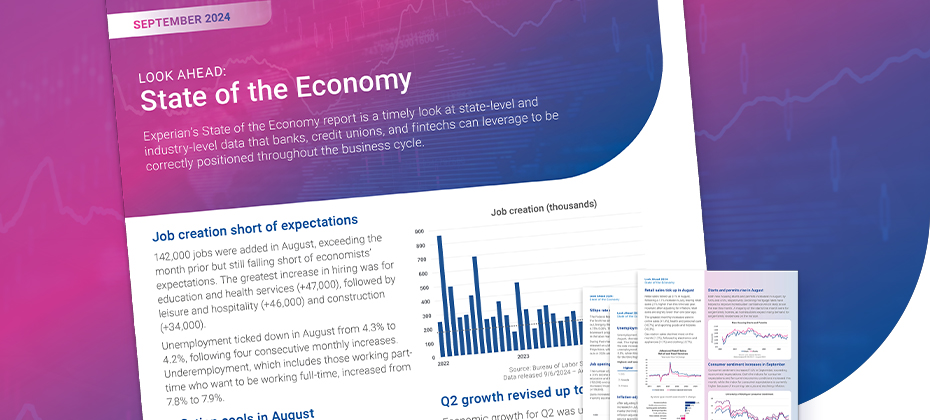
This series will explore our monthly State of the Economy report, which provides a snapshot of the top monthly economic and credit data for financial service professionals to proactively shape their business strategies. During their September meeting, the Federal Reserve made a highly-anticipated announcement to cut rates for the first time since 2020. Fed officials cut rates by 50bps, while also penciling in an additional 50bps of cuts for 2024 and 100bps of cuts in 2025 in their Summary of Economic Projections. While rates are coming down and inflation continues to cool, there were downward revisions to job creation made in August and declining job openings in July. Data highlights from this month’s report include: The Federal Reserve announced a 50bps rate cut during the September meeting. Annual headline inflation cooled from 2.9% to 2.5%, getting closer to the Fed’s 2% goal. Mortgage originations increased 7.0% in August. Check out our report for a deep dive into the rest of this month’s data, including the latest trends in job creation, retail sales, and consumer sentiment. Download September's report As our economy continues to fluctuate, it's critical to stay updated on the latest developments. Subscribe to our new series, The Macro Moment, for economic commentary from Experian North America's Chief Economist, Joseph Mayans, and download our new Lending Conditions Chartbook for additional insights. For more economic trends and market insights, visit Experian Edge.

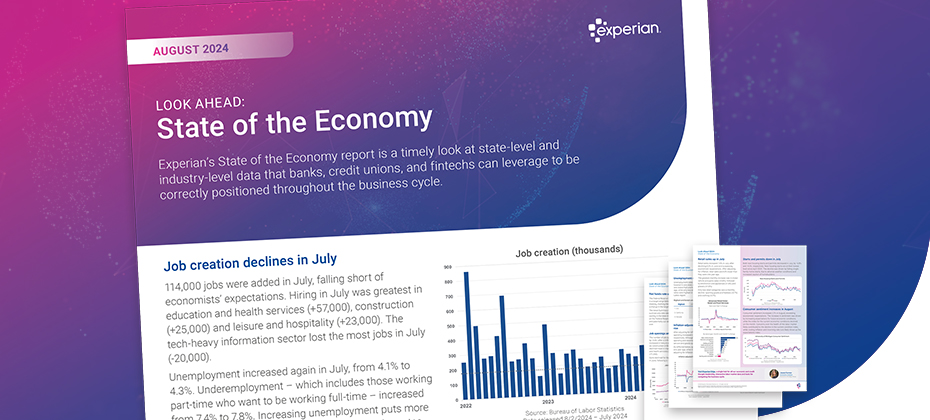
This series will dive into our monthly State of the Economy report, providing a snapshot of the top monthly economic and credit data for those in financial services to proactively shape their business strategies. The labor market has been a source of strength for the U.S. economy coming out of the pandemic, providing workers with stable employment and solid wages. However, the labor market has slowed in recent months, with lower-than-expected job creation and rising unemployment, causing weakening sentiment in the broader market. This has resulted in increased pressure on the Federal Reserve to begin cutting rates and places more importance on the incoming data between now and the September FOMC meeting. Data highlights from this month’s report include: Job creation declined in July, falling short of economists’ expectations. Unemployment increased from 4.1% to 4.3%. Inflation cooled again in July, with annual headline inflation easing from 3.0% to 2.9%. GDP picked up in Q2 to 2.8%, primarily driven by strong consumer spending. Check out our report for a deep dive into the rest of this month’s data, including the latest trends in originations, retail sales, and the new housing market. Download August's report To have a holistic view of our current environment, it’s important to view the economy from different angles and through different lenses. Download our latest macroeconomic forecasting report for our views on what's to come in the U.S. economy and listen to our latest Econ to Action podcast. For more economic trends and market insights, visit Experian Edge.

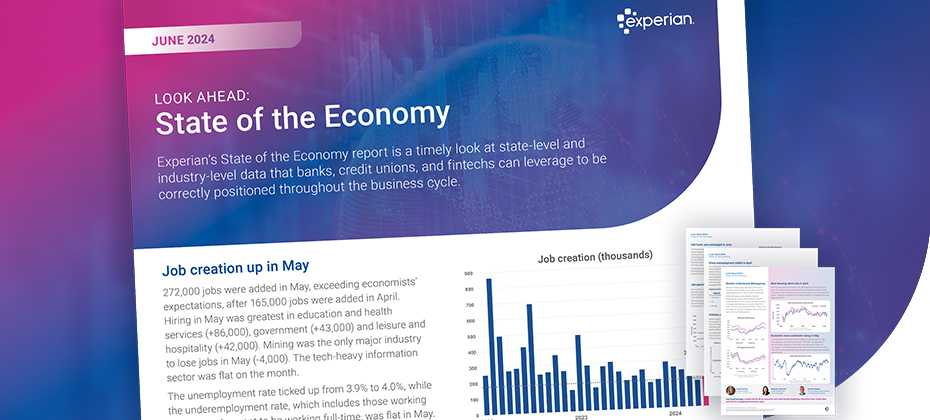
This series will dive into our monthly State of the Economy report, providing a snapshot of the top monthly economic and credit data for those in financial services to proactively shape their business strategies. During their June meeting, the Federal Reserve continued to hold rates steady and released an updated Summary of Economic Projections. In this update, the committee reduced 2024 rate cut projections from three to one and increased their year-end inflation expectations. Both of these updates were likely driven by a lack of downward progress in inflation in Q1. But as the Federal Reserve extends the period of restrictive rates, it places more weight on each monthly economic data release to inform the Fed’s next move. Data highlights from this month’s report include: Job creation exceeded economists’ expectations with 272,000 jobs added in May. Inflation cooled in May, with annual headline inflation down from 3.4% to 3.3% and annual core inflation down from 3.6% to 3.4%. Auto loan amounts decreased in Q1 as inventories continue to stabilize. Check out our report for a deep dive into the rest of this month’s data, including the latest trends in delinquencies, spending, and the new housing market. Download June's report To have a holistic view of our current environment, it’s important to view the economy from different angles and through different lenses. Watch our experts discuss the latest economic and credit trends in the recording of our latest macroeconomic forecasting webinar and listen to our latest Econ to Action podcast. For more economic trends and market insights, visit Experian Edge.

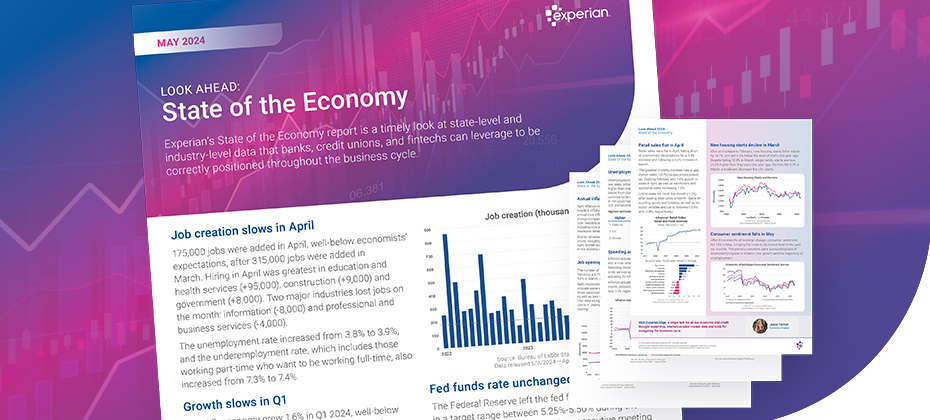
This series will dive into our monthly State of the Economy report, providing a snapshot of the top monthly economic and credit data for those in financial services to proactively shape their business strategies. After again announcing no change in the target fed funds rate during their May meeting, the Federal Reserve continues to face the decision of when to begin cutting rates. The economic data released this month only complicated this decision, as growth came in well-below expectations and the labor market seemed to ease on several fronts. However, there was only minimal downward progress in inflation, especially considering the high prices seen over the past few months. In this month’s report, we dive into the data developments that comprise this economic story. Data highlights from this month’s report include: Economic growth in Q1 came in at 1.6%, under economists’ expectations. Underlying components of consumer spending and business investment remained solid. Inflation cooled in April, with annual headline inflation down from 3.5% to 3.4% and annual core inflation down from 3.8% to 3.6%. Consumer sentiment fell 13% in May, due to stubborn inflation, low growth, and easing in the labor market. Check out our report for a deep dive into the rest of this month’s data, including the latest trends in job creation, spending, and the fed funds rate. Download May's State of the Economy report To have a holistic view of our current environment, it’s important to view the economy from different angles and through different lenses. Watch our team of experts discuss the latest economic and credit trends in the recording of our latest macroeconomic forecasting webinar, download our latest forecast scenario report, or listen to our latest Econ to Action podcast for views on the economic environment in different market segments. For more economic trends and market insights, visit Experian Edge.

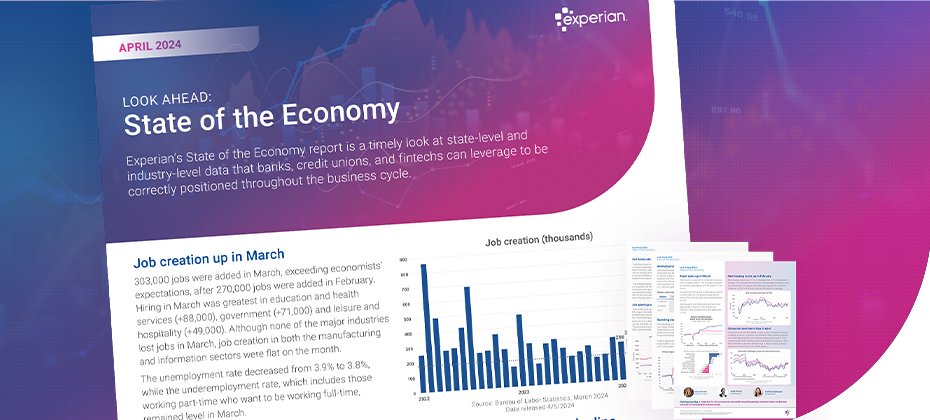
This series will dive into our monthly State of the Economy report, providing a snapshot of the top monthly economic and credit data for those in financial services to proactively shape their business strategies. During their March meeting, the Federal Reserve announced no change in the federal funds rate and released their updated Summary of Economic Projects for the remainder of 2024 and 2025. In response to slow but steady cooling inflation, they maintained projections for three rate cuts by the end of 2024. Additionally, they upgraded their growth projections and lowered their unemployment projections, signaling more optimism toward the U.S. economic trajectory. In this month's report, we dive into the data developments that are contributing to this economic story. Data highlights from this month's report include: The Federal Reserve held rates steady and maintained projections for three rate cuts by the end of the year. Inflation progress slowed, with annual headline inflation flat and annual core inflation ticking up from 3.2% to 3.5%. The median rent-to-income ratio increased 4.1% year-over-year to 37.9% nationally. Check out our report for a deep dive into the rest of April's data, including the latest trends in income, originations, and job creation. To have a holistic view of our current environment, we must understand our economic past, present, and future. Check out our annual chartbook for a comprehensive view of the past year and register for our upcoming macroeconomic forecasting webinar for a look at the year ahead. Download April's State of the Economy report Register for webinar For more economic trends and market insights, visit Experian Edge.

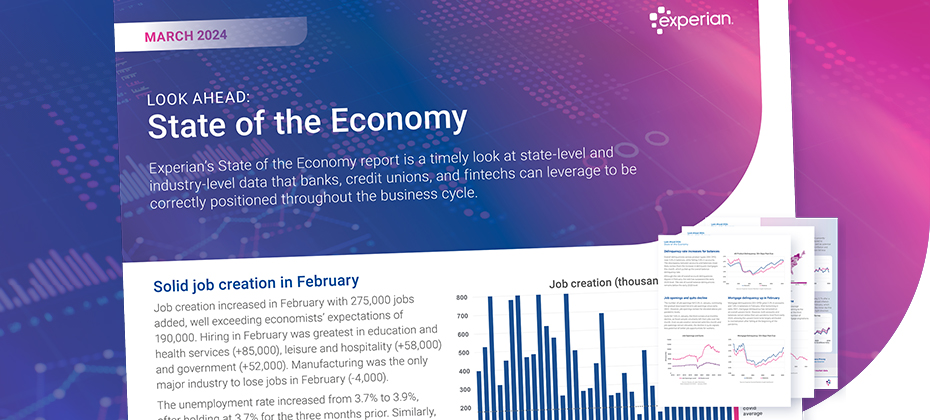
This series will dive into our monthly State of the Economy report, providing a snapshot of the top monthly economic and credit data for those in financial services to proactively shape their business strategies. As we near the end of the first quarter, the U.S. economy has maintained its solid standing. We're also starting to see some easing in a few areas. This month saw a slight uptick in unemployment, slowed spending growth, and a slight increase in annual headline inflation. At the same time, job creation was robust, incomes continued to grow, and annual core inflation cooled. In light of the mixed economic landscape, this month’s upcoming Federal Reserve meeting and their refreshed Summary of Economic Projections should shine some light on what’s in store in the coming months. Data highlights from this month’s report include: Annual headline inflation increased from 3.1% to 3.2%, while annual core inflation cooled from 3.9% to 3.8%. Job creation remained solid, with 275,000 jobs added this month. Unemployment increased to 3.9% from 3.7% three months prior. Mortgage delinquencies rose for accounts (2.3%) and balances (1.8%) in February, contributing to overall delinquencies across product types. Check out our report for a deep dive into the rest of March’s data, including consumer spending, the housing market, and originations. To have a holistic view of our current environment, we must understand our economic past, present, and future. Check out our annual chartbook for a comprehensive view of the past year and download our latest forecasting report for a look at the year ahead. Download March's State of the Economy report Download latest forecast For more economic trends and market insights, visit Experian Edge.

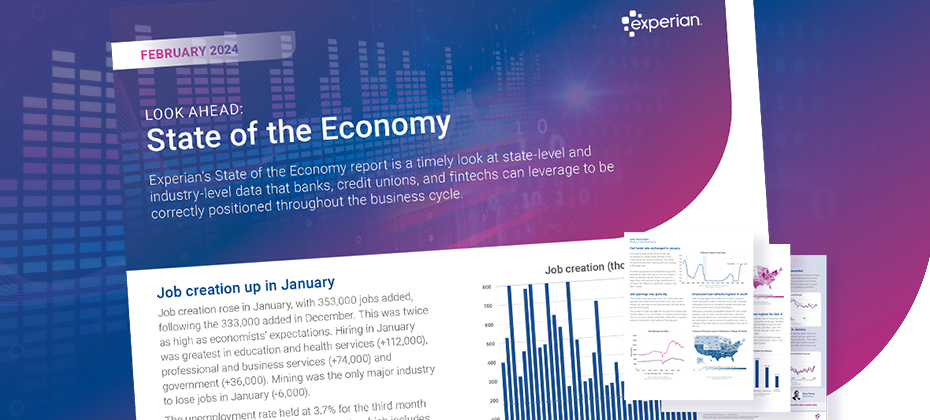
This series will dive into our monthly State of the Economy report, providing a snapshot of the top monthly economic and credit data for those in financial services to proactively shape their business strategies. In February, economic growth and job creation outperformed economists’ expectations, likely giving confirmation to the Federal Reserve that it remains too early to begin cutting rates. Data highlights from this month’s report include: U.S. real GDP rose 3.3% in Q4 2023, driven by consumer spending and bringing the average annual 2023 growth to 2.5%, the same as the five-year average growth prior to the pandemic. The labor market maintained its strength, with 353,000 jobs added this month and unemployment holding at 3.7% for the third month in a row. Consumer sentiment rose 13% in January, following a 14% increase in December, as consumers are feeling some relief from cooling inflation. Check out our report for a deep dive into the rest of February’s data, including inflation, the latest Federal Reserve announcement, the housing market, and credit card balances. To have a holistic view of our current environment, we must understand our economic past, present, and future. Check out our annual chartbook for a comprehensive view of the past year and register for our upcoming Macroeconomic Forecasting webinar for a look at the year ahead. Download report Register for webinar For more economic trends and market insights, visit Experian Edge.

This article was updated on February 21, 2024. With the rise of technology and data analytics in the financial industry today, it's no longer enough for companies to rely solely on traditional marketing methods. Data-driven marketing insights provide a more sophisticated and comprehensive view of shifting customer preferences and behaviors. With this in mind, this blog post will highlight the importance of data-driven marketing insights, particularly for financial institutions. The importance of data-driven marketing insights 30% of companies say poor data quality is a key challenge to delivering excellent customer experiences. Today’s consumers want personalized experiences built around their individual needs and preferences. Data-driven marketing insights can help marketers meet this demand, but only if it is fresh and accurate. When extending firm credit offers to consumers, lenders must ensure they reach individuals who are both creditworthy and likely to respond. Additionally, their message must be relevant and delivered at the right time and place. Without comprehensive data insights, it can be difficult to gauge whether a consumer is in the market for credit or determine how to best approach them. READ: Case study: Deliver timely and personalized credit offers The benefits of data-driven marketing insights By drawing data-driven marketing insights, you can reach and engage the best customers for your business. This means: Better understanding current and potential customers To increase response and conversion rates, organizations must identify high-propensity consumers and create personalized messaging that resonates. By leveraging customer data that is valid, fresh, and regularly updated, you’ll gain deeper insights into who your customers are, what they’re looking for and how to effectively communicate with them. Additionally, you can analyze the performance of your campaigns and better predict future behaviors. Utilizing technology to manage your customer data With different sources of information, it’s imperative to consolidate and optimize your data to create a single customer view. Using a data-driven technology platform, you can break down data silos by collecting and connecting consumer information across multiple sources and platforms. This way, you can make data available and accessible when and where needed while providing consumers with a cohesive experience across channels and devices. Monitoring the accuracy of your data over time Data is constantly changing, so implementing processes to effectively monitor and control quality over time is crucial. This means leveraging data quality tools that perform regular data cleanses, spot incomplete or duplicated data, and address common data errors. By monitoring the accuracy of your data over time, you can make confident decisions and improve the customer experience. Turning insights into action With data-driven marketing insights, you can level up your campaigns to find the best customers while decreasing time and dollars wasted on unqualified prospects. Visit us to learn more about how data-driven insights can power your marketing initiatives. Learn more Enhance your marketing strategies today This article includes content created by an AI language model and is intended to provide general information.