
All posts by Stefani Wendel

Four organizations show what’s possible when data, analytics, AI and technology are put to work against real business and consumer challenges.
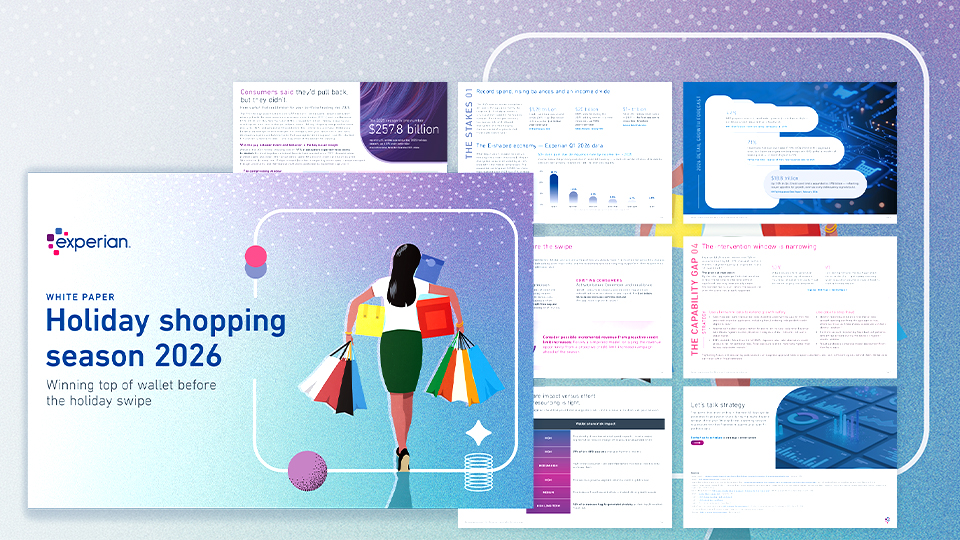
Every year, consumers say they'll spend less during the holidays. Every year, many do the opposite. Ahead of the 2025 holiday shopping season, 57% of consumers told Deloitte they expected the economy to weaken, the most pessimistic outlook recorded in the survey's history. Planned holiday spending was down 10%. Yet by the end of the season, online holiday sales reached a record $257.8 billion, up 6.8% year over year. Credit card balances climbed to $1.28 trillion, and Buy Now, Pay Later (BNPL) financing surpassed $20 billion during the holiday period. For lenders, the takeaway is to identify and engage the right consumers before the holidays were best equipped to capture that spending while effectively managing risk. As the 2026 holiday season approaches, Experian's latest market insights suggest that while credit performance appears relatively stable at the portfolio level, important shifts beneath the surface are changing how lenders should evaluate both opportunity and risk. Holiday shopping season 2026 Winning top of wallet before the holiday swipe Download the white paper now Holiday lending decisions happen long before the holidays It’s been observed that the holiday shopping season has expanded – beginning before Black Friday – over recent years. While Cyber Week continues to generate headlines, holiday spending is becoming more distributed throughout the quarter. For lenders, that means strategies must be in place before peak shopping begins. Credit line increases, portfolio reviews, acquisition strategies and risk segmentation completed in late summer often determine how much holiday spending an institution can safely capture. At the same time, early signs of credit deterioration are emerging faster than traditional portfolio metrics suggest reinforcing the importance of identifying emerging portfolio risk early rather than relying solely on broad portfolio performance indicators. Income is becoming a stronger predictor of credit performance One of the most notable shifts in today's lending environment is the growing relationship between income and future credit performance. Experian's data suggests the market is becoming increasingly polarized. The population earning more than $250,000 annually has more than doubled since 2023, but more than one-quarter of those consumers have since moved into lower income brackets, often following retirement or job loss. Meanwhile, consumers earning less than $50,000 annually show relatively little income mobility, with approximately 85% remaining in the same income band year-over-year. These trends highlight an important reality: a credit score alone may no longer provide a complete picture of borrower risk. Four priorities before peak holiday spending With only a short window before holiday borrowing accelerates, lenders have an opportunity to strengthen both growth and risk strategies. Key areas of focus include: Refine acquisition strategies Move beyond score-only targeting by incorporating verified income, cash flow and existing credit relationships to identify qualified borrowers. Optimize existing portfolios Identify customers demonstrating positive credit migration and proactively evaluate opportunities to increase credit lines before peak spending begins. Monitor emerging credit risks Use early-stage delinquency indicators and behavioral signals to identify potential performance issues before losses accelerate. Strengthen fraud management and prevention Seasonal account openings and increased transaction volumes create greater fraud exposure. Identity verification, synthetic identity detection and dormant account monitoring remain critical during high-volume acquisition periods. Preparing for the holiday shopping season ahead The 2025 holiday season demonstrated that consumer spending decisions don't always align with consumer sentiment. How does that translate for the 2026 shopping season? For lenders, success will depend less on reacting to spending trends in November and more on making informed credit decisions months earlier. As consumer financial behavior continues to evolve, combining traditional credit data with income, cash flow and alternative data can provide a more complete understanding of both opportunity and risk. Institutions that incorporate these broader insights into acquisition, portfolio management and fraud strategies will be better positioned to grow responsibly during one of the year's most active lending periods. Ready to learn more? Access the full white paper
Lending hasn’t slowed down—but many decisioning processes have. Applications are coming in faster. Fraud is becoming more sophisticated. Borrowers expect near-instant responses. And yet, inside many organizations, decisions are still being made across fragmented systems, manual reviews, and rigid strategies that weren’t designed and aren’t optimized for today’s environment. That broadening gap isn’t just an operational issue but often stems from a lack of innovation as well. And it’s quietly costing lenders growth, efficiency, and competitive position. When decisioning falls behind, some symptoms are easy to recognize, like applications taking days to process, teams overloaded with manual reviews, and credit and fraud decisions happening in separate platforms. Others are not as obvious, but arguably more impactful, slipping bottom lines and fraud and therefore losses lurking in lenders’ portfolios. The root issue is a fragmented infrastructure. Experian has reported that while 79% of financial institutions surveyed globally want fewer vendors or more unified approaches, they typically use eight or more tools across credit, fraud and compliance. As most decisioning environments cannot integrate data, adapt strategies, and execute decisions in real time, lenders often have to make tradeoffs. Speed vs. accuracy; growth vs. risk; and automation vs. control are just some. Meanwhile, the market has moved on. Leading lenders are no longer optimizing individual steps. They’re rethinking decisioning as a connected, intelligent system. Gaps forming from status quo in 8 key decision areas Across the lending lifecycle, there are eight critical moments where decisioning can either accelerate growth or create friction. Pre-qualification: Pre-qualification should expand your funnel with confidence. But limited data access and static criteria often result in overly conservative targeting or missed opportunities. Additionally, the delay in acting on a pre-qualification funnel highlights a key area for opportunity among many lenders. Instant credit decisions: Customers expect real-time outcomes. When decisions rely on manual intervention or fragmented inputs, speed and conversions suffer. Prescreen and targeting: Disconnected data and rigid segmentation can lead to poorly aligned offers, reducing response rates and wasting acquisition spend. Credit line management: Without dynamic strategies, credit lines may be too restrictive (limiting growth) or too aggressive (increasing risk). Early delinquency management: Missed early signals and delayed interventions make it harder to prevent accounts from deteriorating. Mid- and late-stage delinquency: Strategies that don’t adapt to evolving borrower behavior reduce recovery effectiveness and increase losses. Collections and recovery: Manual, one-size-fits-all approaches limit recovery rates and increase operational cost. Ongoing strategy optimization: Perhaps the most overlooked gap: many lenders lack the ability to continuously test, learn, and refine decision strategies as conditions change. What these gaps are really costing you Individually, each of these breakdowns may seem manageable. Together, they can create systemic drag on performance. That shows up in four critical ways: Missed growth opportunities: Good borrowers are declined, abandoned, or never targeted in the first place. Credit offers fail to align with actual borrower potential. Higher operational costs: Manual reviews and disconnected workflows consume time and resources that could be spent on higher-value work. Increased fraud exposure and friction: Fraud is proliferating and becoming more expensive to manage. The Federal Trade Commission reported $12.5B were lost to fraud in the U.S. in 2024, a 25% increase over the prior year. For many financial institutions, the first reaction is often to add more steps to the decisioning process, which can impact good borrowers. Increased competitive pressure: Fintechs and modern lenders are focused on delivering faster, more personalized experiences, capturing share while traditional processes lag behind. 80% of banks and credit unions plan to increase their technology spending in 2026, yet many continue to fall short on planned system deployments, according to Cornerstone Advisors’ annual “What’s Going On in Banking” research report. What innovative decisioning leaders are doing differently Leading lenders are changing how decisions are made, creating a competitive advantage. Instead of stitching together point solutions, they’re adopting a more integrated approach that brings together: Comprehensive data – including both credit and fraud insights Optimized decision strategies – designed to balance growth and risk Real-time execution – enabling faster, more consistent outcomes Continuous optimization – adapting to changing market conditions Strategic partnerships – leveraging third-party industry expertise to augment their own This shift eliminates the need for tradeoffs and instead allows lenders to increase approvals while maintaining control, reducing manual effort while improving consistency, and responding faster without sacrificing confidence. The stakes are high and the competition for consumers is even higher, particularly against a backdrop of ever-evolving fraud risks, continuously increasing consumer expectations for seamless, digital-first experiences and often limited resources. Nearly half of banks and 59% of credit unions have already deployed generative AI, with more investing now, according to the Cornerstone Advisors’ report. Closing the innovation gap requires a more fundamental shift toward decisioning systems that are connected, scalable, and built for continuous change. A new foundation for decisioning This is where platforms like Experian Decisioning are changing the landscape. By bringing together credit and fraud insights, decision strategies, and a flexible technology architecture, lenders can move beyond fragmented processes and build a more unified, intelligent decisioning approach. One that fits within existing systems but also evolves with your needs. Where to start Impactful change doesn’t need to be an overhaul of everything at once for most organizations. The first step is understanding where your biggest gaps exist, and which decision areas are creating the most friction or missed opportunity. Once you can see where decisioning is not optimized, you can begin to redesign it in a way that’s faster and more adept for what lending has become. By making better decisions, faster, and with greater confidence, lenders can process applications more efficiently and also break away from the pack by leveraging decisioning as a strategic advantage. Learn more

The mortgage industry is adapting to a structural shift. Experian’s 2026 State of the U.S. Housing Market Report shows a market in transition. Conventional loans account for 72% of originations, FHA 17.5% and VA 10.8% with VA showing the strongest growth from 2023 to 2025. But origination mix only tells part of the story. Beneath it lies an arguably more consequential shift: borrower expectations, affordability pressures and regulatory changes are converging. On the regulatory front, the Homebuyers Privacy Protection Act (HPPA) may reduce mortgage trigger leads and limit broad competitive outreach. As competitive visibility narrows, the lender relationship becomes more central and important beyond the closing transaction. In this environment, lenders must provide value to win, and that increasingly means financial wellness. A growing trust gap Only 34% of first mortgage hard inquiries of first mortgage hard inquiries convert into funded originations, according to Experian. That means two-thirds of borrowers who initiate the process never close. External data confirms the trend as Mortgage Bankers Association reported retail mortgage pull-through rates declined to roughly 69% in early 2025 – the lowest in over a decade – and as low as 55% among depository lenders. While pull-through can be impacted by a number of factors not influenced by the lender, when borrowers abandon applications, it can be a biproduct of uncertainty – something that the lender can influence. This is where financial wellness becomes strategic and lenders can close the trust gap by providing proactive credit visibility and guidance before underwriting friction occurs. Read more in our white paper, “The New Unlock for Mortgage.” Affordability stress While rates have eased from their 2023 highs, they remain above 6%, sustaining the lock-in effect and limiting housing supply, according to Experian’s 2026 State of the U.S. Housing Market Report. Approximately 70% of homeowners are locked into sub-6% mortgages, according to Freddie Mac. Beyond mortgage rates, increases in property taxes and non-tax escrow amounts (i.e. insurance) increase affordability pressures for consumers. Financial wellness solutions that incorporate credit monitoring, budgeting insights and cashflow visibility help borrowers understand whether they are prepared. Opportunity among millennials and Gen Z Nearly 47% of U.S. renters expect to purchase a home within four years, rising to 67% within eight years, according to Experian. This signals the time to invest in financial wellness as a differentiator, and both a growth and retention driver, is now. Financial wellness as the new unlock for mortgage Financial wellness is not an ancillary service but the foundation upon which borrower confidence, long-term engagement, conversion and risk management connect. Lenders who embed solutions like credit education, score visibility, alerts, and identity protection directly into the consumer experience can differentiate themselves from the competition above and beyond rates alone. Read more in our white paper, “The New Unlock for Mortgage.” Learn more about Experian Mortgage

Three winners were announced at Experian’s inaugural Vision Awards ceremony held on Tuesday, October 7 in front of more than 800 attendees at Experian’s Vision Conference held in Miami, Fla. Figure, PREMIER Bankcard and Members First Credit Union were recognized for their work in artificial intelligence, innovation and financial empowerment. The four-day gathering provided a dynamic forum for exploring the latest innovations shaping the future of data-driven decisioning. “Our Vision Awards celebrate the unique impact financial industry leaders can have when data, technology and purpose align,” said Jeff Softley, CEO, Experian North America. “We are proud to recognize these three organizations with whom we collaborate to drive opportunities and help create change for society as a whole.” The Vision Awards recognize the achievements of organizations that accelerate action. These forward-thinking institutions leverage artificial intelligence, innovation and financial empowerment to drive opportunities and create actionable change for consumers, businesses and society. Recognizing Leaders in AI, Innovation, and Financial Empowerment A panel of interdisciplinary judges reviewed nominations from across industries across the regions, evaluating submissions based on rigor, originality, and impact. The 2025 winners reflect how organizations are leveraging data and technology to advance innovation and inclusion. Excellence in AI: Figure Figure’s submission showcased how it has redefined consumer lending outreach through an AI-driven targeting engine powered by more than 90 machine learning models and 5,000+ behavioral and financial features. By combining Experian’s prescreen data with proprietary insights, Figure delivers highly precise, cost-efficient firm offers of credit — helping it become one of the top three home equity line of credit lenders in the U.S. “This win reflects more than just a successful application of AI. It represents the broader innovative culture deeply embedded in our company’s DNA,” said Ruben Padron, Chief Data Officer at Figure. “Our work with Experian has been instrumental in helping us assess creditworthiness and predict borrower intent with greater precision.” Excellence in Innovation: PREMIER Bankcard PREMIER Bankcard continues to demonstrate how financial inclusion and innovation go hand in hand. From modernizing its technology to reimagining its product suite, PREMIER has made bold strides to serve the underserved and democratize access to credit. “This award affirms our belief that financial inclusion and innovation must go hand in hand,” said Chris Thornton, Senior Vice President of Credit at PREMIER Bankcard. “We’re committed to reaching those who need it most, and Experian has proven to be an exceptional partner in that mission.” With more than 30 million customers served, PREMIER has become a leader in first-time and second-chance credit, while also giving back more than $4 billion to charitable causes through its partnership with First PREMIER Bank and founder Denny Sanford. “We’re here to change lives,” Thornton added. “That’s how we measure success — and that’s ultimately what we’re investing in.” Excellence in Financial Empowerment: Members First Credit Union Members First Credit Union was honored for its commitment to inclusive lending and community development across Michigan. In 2024 alone, the credit union’s programs helped thousands of members access fair and affordable credit, supported 166 community organizations, and contributed nearly $230,000 in donations — backed by 2,000 volunteer hours from its employees. “Our impact demonstrates how mission-driven financial institutions can meaningfully expand access, strengthen communities, and foster long-term financial health,” said Carrie Iafrate, CEO/President at Members First Credit Union. “We’re honored to receive this recognition and inspired to continue helping individuals thrive financially.” Honoring the Judges Behind the Vision The 2025 Vision Awards were evaluated by a distinguished panel of judges representing both Experian and external associations and partners in the financial inclusion community, including: Lisa Cantu-Parks, Vice President of Resource Development, Unidos Jean Carlos Rosario Mercado, Juntos Avanzamos Program Officer, Inclusiv Ian P. Moloney, Senior Vice President, Head of Policy and Regulatory Affairs, American Fintech Council Marc Morial, President and CEO, National Urban League Kevin O’Connor, Senior Vice President, Membership and Sponsorship, Consumer Bankers Association Their expertise ensured that the winners reflect the industry’s highest standards of innovation, integrity, and impact. Ian P. Moloney, Senior Vice President, Head of Policy and Regulatory Affairs, American Fintech Council, and Rhonda Spears Bell, Senior Vice President and Chief Marketing Officer, National Urban League, were at the recognition session at Vision and shared about their organizations and experience serving as a judge. Video messages were also shared from Jean Carlos Rosario Mercado of Inclusiv and Kevin O’Connor of Consumer Bankers Association, who were unable to attend the live event. “I greatly appreciated the opportunity to participate as a judge in the Experian Vision Awards because it provided me a chance to look beyond my usual day-to-day, and understand the myriad of innovations and projects going on to help consumers and the industry,” Moloney said. “The award winners tonight showcase the best of our industry, and I appreciate the opportunity to take part in highlighting their success.” “I’m inspired by the outstanding organizations we’re celebrating tonight - each making a lasting impact in our country and globally,” Spears Bell said. “I want to take a moment to recognize Experian - not only as a valued corporate partner, but as a true ally in our mission to advance financial literacy, stability, and generational wealth.” Looking Ahead: Vision Awards 2026 Experian will continue to champion progress in financial services and across all industries, and the Vision Awards offers one of the avenues through which the industry can recognize organizations driving change through responsible innovation. Submissions for the 2026 Vision Awards open on June 1, 2026. To learn more about this year’s winners and how to apply for next year’s program, visit the Vision Awards page.

Explore how AI in telecommunications helps providers navigate industry challenges and how Experian's advanced analytics drives results.

Discover how data analytics in utilities helps energy providers navigate regulatory, economic, and operational challenges. Learn how utility analytics and advanced analytics solutions from Experian can optimize operations and enhance customer engagement.

Discover how data and analytics can enhance deposit growth strategies, improve customer engagement, and drive financial wellness for banks and credit unions.

As data breaches become an ever-growing threat to businesses, the role of employees in maintaining cybersecurity has never been more critical. Did you know that 82% of data breaches involve the human element1 , such as phishing, stolen credentials, or social engineering tactics? These statistics reveal a direct connection between employee identity theft and business vulnerabilities. In this blog, we’ll explore why protecting your employees’ identities is essential to reducing data breach risk, how employee-focused identity protection programs, and specifically employee identity protection, improve both cybersecurity and employee engagement, and how businesses can implement comprehensive solutions to safeguard sensitive data and enhance overall workforce well-being. The Rising Challenge: Data Breaches and Employee Identity Theft The past few years have seen an exponential rise in data breaches. According to the Identity Theft Resource Center, there were 1,571 data compromises in the first half of 2024, impacting more than 1.1 billion individuals – a 490% increase year over year2. A staggering proportion of these breaches originated from compromised employee credentials or phishing attacks. Explore Experian's Employee Benefits Solutions The Link Between Employee Identity Theft and Cybersecurity Risks Phishing and Social EngineeringPhishing attacks remain one of the top strategies used by cybercriminals. These attacks often target employees by exploiting personal information stolen through identity theft. For example, a cybercriminal who gains access to an employee's compromised email or social accounts can use this information to craft realistic phishing messages, tricking them into divulging sensitive company credentials. Compromised Credentials as Entry PointsCompromised employee credentials were responsible for 16% of breaches and were the costliest attack vector, averaging $4.5 million per breach3. When an employee’s identity is stolen, it can give hackers a direct line to your company’s network, jeopardizing sensitive data and infrastructure. The Cost of DowntimeBeyond the financial impact, data breaches disrupt operations, erode customer trust, and harm your brand. For businesses, the average downtime from a breach can last several weeks – time that could otherwise be spent growing revenue and serving clients. Why Businesses Need to Prioritize Employee Identity Protection Protecting employee identities isn’t just a personal benefit – it’s a strategic business decision. Here are three reasons why identity protection for employees is essential to your cybersecurity strategy: 1. Mitigate Human Risk in Cybersecurity Employee mistakes, often resulting from phishing scams or misuse of credentials, are a leading cause of breaches. By equipping employees with identity protection services, businesses can significantly reduce the likelihood of stolen information being exploited by fraudsters and cybercriminals. 2. Boost Employee Engagement and Financial Wellness Providing identity protection as part of an employee benefits package signals that you value your workforce’s security and well-being. Beyond cybersecurity, offering such protections can enhance employee loyalty, reduce stress, and improve productivity. Employers who pair identity protection with financial wellness tools can empower employees to monitor their credit, secure their finances, and protect against fraud, all of which contribute to a more engaged workforce. 3. Enhance Your Brand Reputation A company’s cybersecurity practices are increasingly scrutinized by customers, stakeholders, and regulators. When you demonstrate that you prioritize not just protecting your business, but also safeguarding your employees’ identities, you position your brand as a leader in security and trustworthiness. Practical Strategies to Protect Employee Identities and Reduce Data Breach Risk How can businesses take actionable steps to mitigate risks and protect their employees? Here are some best practices: Offer Comprehensive Identity Protection Solutions A robust identity protection program should include: Real-time monitoring for identity theft Alerts for suspicious activity on personal accounts Data and device protection to protect personal information and devices from identity theft, hacking and other online threats Fraud resolution services for affected employees Credit monitoring and financial wellness tools Leading providers like Experian offer customizable employee benefits packages that provide proactive identity protection, empowering employees to detect and resolve potential risks before they escalate. Invest in Employee Education and Training Cybersecurity is only as strong as your least-informed employee. Provide regular training sessions and provide resources to help employees recognize phishing scams, understand the importance of password hygiene, and learn how to avoid oversharing personal data online. Implement Multi-Factor Authentication (MFA) MFA adds an extra layer of security, requiring employees to verify their identity using multiple credentials before accessing sensitive systems. This can drastically reduce the risk of compromised credentials being misused. Partner with a Trusted Identity Protection Provider Experian’s suite of employee benefits solutions combines identity protection with financial wellness tools, helping your employees stay secure while also boosting their financial confidence. Only Experian can offer these integrated solutions with unparalleled expertise in both identity protection and credit monitoring. Conclusion: Identity Protection is the Cornerstone of Cybersecurity The rising tide of data breaches means that businesses can no longer afford to overlook the role of employee identity in cybersecurity. By prioritizing identity protection for employees, organizations can reduce the risk of costly breaches and also create a safer, more engaged, and financially secure workforce. Ready to protect your employees and your business? Take the next step toward safeguarding your company’s future. Learn more about Experian’s employee benefits solutions to see how identity protection and financial wellness tools can transform your workplace security and employee engagement. Learn more 1 2024 Experian Data Breach Response Guide 2 Identity Theft Resource Center. H1 2024 Data Breach Analysis 3 2023 IBM Cost of a Data Breach Report

We are squarely in the holiday shopping season. From the flurry of promotional emails to the endless shopping lists, there are many to-dos and even more opportunities for financial institutions at this time of year. The holiday shopping season is not just a peak period for consumer spending; it’s also a critical time for financial institutions to strategize, innovate, and drive value. According to the National Retail Federation, U.S. holiday retail sales are projected to approach $1 trillion in 2024, , and with an ever-evolving consumer behavior landscape, financial institutions need actionable strategies to stand out, secure loyalty, and drive growth during this period of heightened spending. Download our playbook: "How to prepare for the Holiday Shopping Season" Here’s how financial institutions can capitalize on the holiday shopping season, including key insights, actionable strategies, and data-backed trends. 1. Understand the holiday shopping landscape Key stats to consider: U.S. consumers spent $210 billion online during the 2022 holiday season, according to Adobe Analytics, marking a 3.5% increase from 2021. Experian data reveals that 31% of all holiday purchases in 2022 occurred in October, highlighting the extended shopping season. Cyber Week accounted for just 8% of total holiday spending, according to Experian’s Holiday Spending Trends and Insights Report, emphasizing the importance of a broad, season-long strategy. What this means for financial institutions: Timing is crucial. Your campaigns are already underway if you get an early start, and it’s critical to sustain them through December. Focus beyond Cyber Week. Develop long-term engagement strategies to capture spending throughout the season. 2. Leverage Gen Z’s growing spending power With an estimated $360 billion in disposable income, according to Bloomberg, Gen Z is a powerful force in the holiday market. This generation values personalized, seamless experiences and is highly active online. Strategies to capture Gen Z: Offer digital-first solutions that enhance the holiday shopping journey, such as interactive portals or AI-powered customer support. Provide loyalty incentives tailored to this demographic, like cash-back rewards or exclusive access to services. Learn more about Gen Z in our State of Gen Z Report. To learn more about all generations' projected consumer spending, read new insights from Experian here, including 45% of Gen X and 52% of Boomers expect their spending to remain consistent with last year. 3. Optimize pre-holiday strategies Portfolio Review: Assess consumer behavior trends and adjust risk models to align with changing economic conditions. Identify opportunities to engage dormant accounts or offer tailored credit lines to existing customers. Actionable tactics: Expand offerings. Position your products and services with promotional campaigns targeting high-value segments. Personalize experiences. Use advanced analytics to segment clients and craft offers that resonate with their holiday needs or anticipate their possible post-holiday needs. 4. Ensure top-of-mind awareness During the holiday shopping season, competition to be the “top of wallet” is fierce. Experian’s data shows that 58% of high spenders shop evenly across the season, while 31% of average spenders do most of their shopping in December. Strategies for success: Early engagement: Launch educational campaigns to empower credit education and identity protection during this period of increased transactions. Loyalty programs: Offer incentives, such as discounts or rewards, that encourage repeat engagement during the season. Omnichannel presence: Utilize digital, email, and event marketing to maintain visibility across platforms. 5. Combat fraud with multi-layered strategies The holiday shopping season sees an increase in fraud, with card testing being the number one attack vector in the U.S. according to Experian’s 2024 Identity and Fraud Study. Fraudulent activity such as identity theft and synthetic IDs can also escalate. Fight tomorrow’s fraud today: Identity verification: Use advanced fraud detection tools, like Experian’s Ascend Fraud Sandbox, to validate accounts in real-time. Monitor dormant accounts: Watch these accounts with caution and assess for potential fraud risk. Strengthen cybersecurity: Implement multi-layered strategies, including behavioral analytics and artificial intelligence (AI), to reduce vulnerabilities. 6. Post-holiday follow-up: retain and manage risk Once the holiday rush is over, the focus shifts to managing potential payment stress and fostering long-term relationships. Post-holiday strategies: Debt monitoring: Keep an eye on debt-to-income and debt-to-limit ratios to identify clients at risk of defaulting. Customer support: Offer tailored assistance programs for clients showing signs of financial stress, preserving goodwill and loyalty. Fraud checks: Watch for first-party fraud and unusual return patterns, which can spike in January. 7. Anticipate consumer trends in the New Year The aftermath of the holidays often reveals deeper insights into consumer health: Rising credit balances: January often sees an uptick in outstanding balances, highlighting the need for proactive credit management. Shifts in spending behavior: According to McKinsey, consumers are increasingly cautious post-holiday, favoring savings and value-based spending. What this means for financial institutions: Align with clients’ needs for financial flexibility. The holiday shopping season is a time that demands precise planning and execution. Financial institutions can maximize their impact during this critical period by starting early, leveraging advanced analytics, and maintaining a strong focus on fraud prevention. And remember, success in the holiday season extends beyond December. Building strong relationships and managing risk ensures a smooth transition into the new year, setting the stage for continued growth. Ready to optimize your strategy? Contact us for tailored recommendations during the holiday season and beyond. Download the Holiday Shopping Season Playbook

The morning kicked off with the buzz of innovation. Shri Santhanam, Financial Services and Data General Managers Platforms and Software, and leaders from Experian debuted the latest enhancements for the Experian Ascend Technology PlatformTM. The demo touted faster automation, seamless data integration, security and compliance, and simplified experience. Resiliency, security and gen AI capabilities are all core components and outputs of the new platform. Keynote speakers: Steffi Graf and Andre AgassiTennis icons Steffi Graf and Andre Agassi captivated the audience with stories of their memorable matches, how they met and their foray into pickleball. From notorious rivals to the pivotal moments that were part of their weeks at seeding in the number 1 position – 377 weeks and 101 weeks respectively. Keynote speaker: Jason SudeikisEmmy-award winning actor, comedian, writer and producer – and also known as the affable Ted Lasso – Jason Sudeikis had the crowd laughing reminiscing his favorite skits from his time at Saturday Night Live and outtakes from his numerous films. He talked about the impact of Ted Lasso and the origin of the “Believe” sign, as well as what’s ahead. Sessions – Day 2 highlights The conference hall was buzzing with conversations, discussions and thought leadership. Some themes definitely rose to the top — the increasing proliferation of fraud and how to combat it without diminishing the customer experience, leveraging AI and transformative technology in decisioning and how Experian is pioneering the GenAI era in finance and technology. Alternative dataAlternative data can be used to holistically measure a consumer's creditworthiness. Property data to banking insights to consumer-permissioned data and more can be a critical part of your strategies to segment, analyze and underwrite unbanked and new-to-credit consumers. EngagementEconomic headwinds and fierce competition in the banking industry have acquisition costs soaring, making it more important than ever to be critical of your organization’s advertising spend. Meanwhile, consumers are trending back toward the convenience of banking bundles, and they expect their financial institutions to help them improve their financial health. These conditions create a unique opportunity to extract value from digital experiences. CollectionsData, advanced analytics and machine learning are transforming all aspects of collections during a time when consumer debt pressure is building. Organizations can harness the power of data-driven insights, predictive modeling, enhanced segmentation and optimized decisions to ensure they have the strongest contact data and best collections strategy to reduce delinquencies and boost recovery rates. See you next year for Vision 2025!

“Learn how to learn.” One of Zack Kass’, AI futurist and one of the keynote speakers at Vision 2024, takeaways readily embodies a sentiment most of us share — particularly here at Vision. Jennifer Schulz, CEO of Experian, North America, talked about AI and transformative technologies of past and present as she kicked off Vision 2024, the 40th Vision. Keynote speaker: Dr. Mohamed El-Erian Dr. Mohamed El-Erian, President of Queens’ College, Cambridge and Chief Economic Advisor at Allianz, returned to the Vision stage to discuss the labor market, “sticky” inflation and the health of consumers. He emphasized the need to embrace and learn how to talk to AI engines and that AI can facilitate content, creation, collaboration and community Keynote speaker: Zack Kass Zack Kass, AI futurist and former Head of Go-To-Market at OpenAI, spoke about the future of work and life and artificial general intelligence. He said AI is aiding in our entering of a superlinear trajectory and compared the thresholds of technology versus those of society. Sessions – Day 1 highlights The conference hall was buzzing with conversations, discussions and thought leadership. Some themes definitely rose to the top — the increasing proliferation of fraud and how to combat it without diminishing the customer experience, leveraging AI and transformative technology in decisioning and how Experian is pioneering the GenAI era in finance and technology. Transformative technologiesAI and emerging technologies are reshaping the finance sector and it's the responsibility of today's industry leaders to equip themselves with cutting-edge strategies and a comprehensive understanding to master the rapidly evolving landscape. That said, transformation is a journey and aligning with a partner that's agile and innovative is critical. Holistic fraud decisioningGenerative AI, a resurgence of bank branch transactions, synthetic identity and pig butchering are all fraud trends that today's organizations must be acutely aware of and armed to protect their businesses and customers against. Leveraging a holistic fraud decisioning strategy is important in finding the balance between customer experience and mitigating fraud. Unlocking cashflow to grow, protect and reduce riskCash flow data can be used not only across the lending lifecycle, but also as part of assessing existing portfolio opportunities. Incorporating consumer-permissioned data into models and processes powers predicatbility and can further assess risk and help score more consumers. Navigating the economyAmid a slowing economy, consumers and businesses continue to struggle with higher interest rates, tighter credit conditions and rising delinquencies, creating a challenging environment for lenders. Experian's experts outlined their latest economic forecasts and provided actionable insights into key consumer and commercial credit trends. More insights from Vision to come. Follow @ExperianVision and @ExperianInsights to see more of the action.

As part of banks’ anti-money laundering (AML) programs, KYC in banking can help stop corruption, money laundering and terrorist financing. Creating and maintaining KYC programs is also important for regulatory compliance, reputation management and fraud prevention. The three components of KYC in banking programs Banks can largely determine how to set up their KYC and AML programs within the applicable regulatory guidelines. In the United States, KYC needs to happen when banks initially onboard a new customer. But it’s not a one-and-done event—ongoing customer and transaction monitoring is also important. 1. Customer Identification Program (CIP) Creating a robust Customer Identification Program (CIP) is an essential part of KYC. At a minimum, a bank’s CIP requires it to collect the following information from new customers: Name Date of birth Address Identification number, such as a Social Security number (SSN) or Employer Identification Number (EIN) Banks' CIPs also have to use risk-based procedures to verify customers’ identities and form a reasonable belief that they know the customer's true identity.1 This might involve comparing the information from the application to the customer’s government-issued ID, other identifying documents and authoritative data sources, such as credit bureau databases. Additionally, the bank's CIP will govern how the bank: Retains the customer’s identifying information Compares customer to government lists Provides customers with adequate notices Banks can create CIPs that meet all the requirements in various ways, and many use third-party solutions to quickly collect data, detect forged or falsified documents and verify the provided information. 2. Customer due diligence (CDD) CIP and CDD overlap, but the CIP primarily verifies a customer’s identity while customer due diligence (CDD) helps banks understand the risk that each customer poses. To do this, banks try to understand what various types of customers do, what those customers’ normal banking activity looks like, and in contrast, what could be unusual or suspicious activity. Financial institutions can use risk ratings and scores to evaluate customers and then use simplified, standard or enhanced due diligence (EDD) processes based on the results. For example, customers who might pose a greater risk of laundering money or financing terrorism may need to undergo additional screenings and clarify the source of their funds. 3. Ongoing monitoring Ongoing or continuous monitoring of customers’ identities and transactions is also important for staying compliant with AML regulations and stopping fraud. The monitoring can help banks spot a significant change in the identity of the customer, beneficial owner or account, which may require a new KYC check. Unusual transactions can also be a sign of money laundering or fraud, and they may require the bank to file a suspicious activity report (SAR). Why is KYC important in banking? Understanding and implementing KYC in banking processes can be important for several reasons: Regulatory compliance: Although the specific laws and rules can vary by country or region, many banks are required to have AML procedures, including KYC. The fines for violating AML regulations can be in the hundreds of millions— a few banks have been fined over $1 billion for lax AML enforcement and sanctions breaching. Reputation management: In some cases, enforcement actions and fines were headline news. Banks that don’t have robust KYC procedures in place risk losing their customers' trust and respect. Fraud prevention: In addition to the regulatory requirements, KYC policies and systems can also work alongside fraud management solutions for banks. Identity verification at onboarding can help banks identify synthetic identities attempting to open money mule accounts or take out loans. Ongoing monitoring can also be important for identifying long-term fraud schemes and large fraud rings. KYC in a digital-first world Modernizing KYC in banking is a key part of financial institutions’ digital transformation efforts. Part of that journey is updating the systems and tools in place to meet the expectations of customers and regulators. Experian’s 2025 U.S. Identity and Fraud Report shows four in 10 consumers considered abandoning a new account setup midway through the process – rising to 50% among high-income earners – highlighting growing expectations for seamless digital experiences. The survey wasn’t specific to financial services, but friction could be a problem for banks wanting to attract new account holders. Just as access to additional data sources and machine learning help automate underwriting, financial institutions can use technological advances to add an appropriate amount of friction based on various risk signals. Some of these can be run in the background, such as an electronic Consent Based Social Security Number Verification (eCBSV) check to verify the customer’s name, SSN and date of birth match the Social Security Administration’s records. Others may require more customer involvement, such as taking a selfie that’s then compared to the image on their photo ID — Experian CrossCore® Doc Capture enables this type of verification. Experian is a leader in identity and data management Our identity verification solutions use proprietary and third-party data to help banks manage their KYC procedures, including identity verification and Customer Identification Programs (CIP). As a global leader in identity management and fraud prevention, we combine advanced analytics, rich data assets, and innovative technology to deliver secure, seamless identity experiences. Our comprehensive identity ecosystem enables organizations to confidently verify, authenticate and manage customer identities across the lifecycle—reducing fraud risk, improving compliance and enhancing the customer experience.By bundling identity verification with fraud assessment, banks can stop fraudsters while quickly resolving identity discrepancies. The automated processes also allow you to offer a low-friction identity verification experience and use step-up authentications as needed. Explore identity solutions
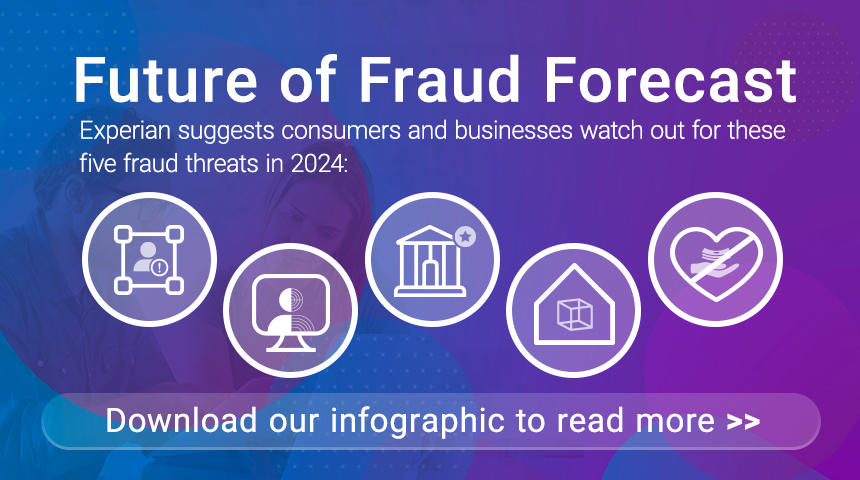
Spoiler alert: Gen AI is everywhere, including the top of Experian’s list of fraud trends 2024. “The speed and complexity of fraud attacks due to new technology and sophisticated fraudsters is leaving both businesses and consumers at risk in 2024,” said Kathleen Peters, chief innovation officer at Experian Decision Analytics in North America. “At Experian, we’re constantly innovating to deliver data-driven solutions to help our customers fight fraud and to protect the consumers they serve.” To deter fraudulent activity in 2024, businesses and consumers must get tactical for their fraud fighting strategies. And for businesses, the need for more sophisticated fraud protection solutions leveraging data and technology is greater than ever before. Experian suggests consumers and businesses watch out for these big five rounding out our fraud trends 2024. Generative AI: Generative AI accelerates DIY fraud: Experian predicts fraudsters will use generative AI to accelerate “do-it-yourself” fraud ranging from deepfake content – think emails, voice and video – as well as code creation to set up scam websites. A previous blog post of ours highlighted four types of generative AI used for fraud, including fraud automation at scale, text content generation, image and video manipulation and human voice generation. The way around it? Fight AI fraud with AI as part of a multilayered fraud prevention solution. Fraud at bank branches: Bank branches are making a comeback. A growing number of consumers prefer visiting bank branches in person to open new accounts or get financial advice with the intent to conduct safer transactions. However, face-to-face verification is not flawless and is still susceptible to human error or oversight. According to an Experian report, 85% of consumers report physical biometrics as the most trusted and secure authentication method they’ve recently encountered, but the measure is only currently used by 32% of businesses to detect and protect against fraud. Retailers, beware: Not all returns are as they appear. Experian predicts an uptick in cases where customers claim to return their purchases, only for the business to receive an empty box in return. Businesses must be vigilant with their fraud strategy in order to mitigate risk of lost goods and revenue. Synthetic identity fraud will surge: Pandemic-born synthetic identities may have been dormant, but now have a few years of history, making it easier to elude detection leading to fraudsters using those dormant accounts to “bust out” over the next year. Cause-related and investment deception: Fraudsters are employing new methods that strike an emotional response from consumers with cause-related asks to gain access to consumers’ personal information. Experian predicts that these deceptive cause-related methods will surge in 2024 and beyond. How businesses and consumers feel about fraud in 2024 According to an Experian report, over half of consumers feel they’re more of a fraud target than a year ago and nearly 70% of businesses report that fraud losses have increased in recent years. Business are facing mounting challenges – from first-party fraud and credit washing to synthetic identity and the yet-to-be-known impacts generative AI may have on fraud schemes. Synthetic identity fraud has been mentioned in multiple Experian Fraud Forecasts and the threat is ever growing. As technology continues to enhance consumers’ connectedness, it also heightens the stakes for various fraud attacks. As highlighted by this list of fraud trends 2024, the ways that fraudsters are looking to deceive is increasing from all angles. “Now more than ever, businesses need to implement a multilayered approach to their identity verification and fraud prevention strategies that leverages the latest technology available,” said Peters. Consumers are increasingly at risk from sophisticated fraud schemes. Increases in direct deposit account and check fraud, as well as advanced technologies like deepfakes and AI-generated phishing emails, put consumers in a precarious position. The call to action for consumers is to remain vigilant of seemingly authentic interactions. Experian can help with your fraud strategy To learn more about Experian’s fraud prevention solutions, please visit https://www.experian.com/business/solutions/fraud-management. Download infographic Watch Future of Fraud webinar

Effective online identity verification can help improve your customers' experiences while preventing fraud.