AI & Innovation

Four organizations show what’s possible when data, analytics, AI and technology are put to work against real business and consumer challenges.

From thought-provoking conversations on AI and the future of financial services, day two of Vision brought bold ideas and insights.

AI agents are changing the way consumers interact with businesses online. Learn how you can establish greater confidence in AI transactions.

Every business makes decisions about people and transactions all day long. Should we approve this loan? Is this purchase fraud? Which customer should get this offer, and what should it be? For a long time, those decisions were made in one of two ways: a person reviewed each case by hand, or the company wrote fixed rules, like "approve anyone with a credit score above 700." Both work. Both also leave value on the table. The manual review is slow and hard to scale. The fixed rule can turn away good applicants and is slow to adapt when the market shifts. AI decisioning is a third way. What makes AI decisioning work Instead of relying on a single reviewer or a rigid rule, automated decisioning uses models that learn from data — studying how thousands of past cases turned out, finding the patterns that predict an outcome, and applying them to each new decision, often in real time. The result is faster, more consistent decisions. But a model on its own isn't the whole story. Getting real value from AI decisioning takes good data to learn from, AI analytics to generate insights, the tools to act on it and the governance to keep it compliant. What we've found is that the pieces only pay off when they work together, and that is where we're built differently. A model is only as good as what it learns from, and we pair your data with one of the deepest views of consumer and commercial credit: decades of full-file history and vetted attributes. Then we give you the tools to act on it. Use cases across your business Whether you're trying to grow your customer base, reduce fraud, manage lending risk, or improve collections, automated decisioning brings all the pieces together to make more accurate, consistent and explainable decisions at scale. Fraud and Identity A fraudulent transaction that slips through costs money and erodes trust. Rules are static, and fraudsters move fast. They'll probe boundaries, find the blind spots and move to the next scheme. By the time the rules are updated, they're already three steps ahead. How AI decisioning changes this: AI fraud detection with real-time risk scoring and decisioning across transactions and customer interactions Intelligence that continuously learns from results to help adapt fraud strategies as threats evolve Reduced false positives and less friction for customers at account opening and checkout Identity verification tools that confirm someone is who they say they are without slowing down the experience Credit and Lending Loan approval is where the relationship begins. Credit risk decisioning helps lenders find that delicate balance between approving enough people to grow, but carefully enough to manage risk. Missing that balance means turning away good customers or taking on losses that are difficult to absorb. How AI decisioning changes this: Increased approval opportunities for creditworthy applicants without increasing overall risk Models you can update and deploy quickly as market conditions change, rather than waiting months Ability to run "what-if" scenarios to test how a new strategy would have performed on your historical data before putting it live Collections Which customer should your team reach out to today? Through which channel? What kind of message? If you reach out too aggressively, you push someone who might have recovered into default. If you wait too long, you lose them. If you call someone at work, they resent you; if you text, they might ignore it. If you offer a payment plan, they might accept it, but only if the terms make sense to their financial situation. How AI decisioning changes this: Optimized next-best-action and contact-channel strategies for each individual customer Improved recovery potential through better targeting Less time spent on accounts with a lower propensity to pay, freeing your team for higher-impact cases Ability to segment and test new strategies before rollout Customer Acqusition Finding the right customers is about reaching the right people with the right offer at the right time. To stay competitive, it’s now a requirement to balance growth with risk while creating a seamless experience converting prospects into customers. How AI decisioning changes this: More precise prospect targeting using credit, behavioral, and alternative data, where permitted, to identify consumers most likely to respond Personalized offers delivered in real time Dynamic decision strategies that can be updated quickly as market conditions and customer behavior change Ongoing testing and optimization of acquisition strategies to improve campaign performance and support customer lifetime value Driving results with AI decisioning Every customer interaction is a decision. Businesses that can adapt quickly will be better positioned to grow, manage risk, and deliver the experiences customers expect. The technology will continue to evolve, but the goal remains the same: making informed decisions that balance business objectives, risk, and customer experience. Learn more about our decisioning software

ValidMind CEO Jonas Jacobi shares insights on AI, innovation and why Experian's partnership is helping shape the future of responsible AI.

From innovation to inspiration, Day 2 of Vision 2025 delivered on every front. Attendees experienced a powerful lineup of speakers, engaging breakout sessions and hands-on exploration of technologies shaping the future of finance. Setting the tone: Responsible AI and the future of work The morning opened with an insightful keynote from Sol Rashidi, Chief Strategy Officer of AI & Data at Cyera. With a forward-looking perspective on responsible AI, Sol emphasized the need for data stewardship, workforce readiness and using AI to amplify, not replace, human potential. Her message resonated deeply: Responsible AI means outsourcing tasks, not critical thinking. Challenging convention with Dave Portnoy Next, Dave Portnoy, Founder and Chief of Content at Barstool Sports, brought an energetic conversation on entrepreneurship and disruption in the digital age. His keynote was a reminder that progress is driven by those willing to challenge convention, adapt fast and embrace change with confidence. Exploring the future of financial services After the general session, attendees joined a new wave of breakout sessions exploring the future of financial services. Discussions spanned from how fintech disruptors and embedded finance are reshaping e-commerce and investments to how data and analytics are unlocking new opportunities in housing, lending and fraud prevention. Meanwhile, the Innovation Showcase brought Experian’s cutting-edge capabilities to life, highlighting the power of AI, analytics and modern platforms in driving smarter, faster financial solutions. Closing inspiration: Shaquille O’Neal on reinvention and resilience As the day came to a close, NBA legend Shaquille O’Neal took the stage, captivating the audience with his trademark humor and hard-earned wisdom. He shared stories of his iconic basketball career and business ventures, and his philosophy behind the “business of fun,” leaving us all inspired to think big, act boldly and lead with kindness. A Vision to remember While Vision 2025 has come to a close, the conversations, partnerships and ideas sparked here will continue to shape what’s next in our industry. Thank you for making this year’s event our most inspiring and impactful yet. We can’t wait to see you next year in San Antonio, Texas!

Day 1 of Vision 2025 is in the books – and what a start. From bold keynotes to breakout sessions and networking under the Miami sun, the energy and inspiration were undeniable. A wave of change: Jeff Softley opens Vision 2025 The day kicked off with a powerful keynote from Jeff Softley, Experian North America CEO, who issued a call to action for the industry: to not just adapt to change, but to lead it. “It isn’t a ripple – it’s a tidal wave of technology,” Jeff said. “Together we ride this wave with confidence.” His keynote set the tone for a day centered on innovation and the future of financial services – where technology, insight and trust converge to create lasting impact. Jeff continues this conversation in the latest Experian Exchange episode, where he explores three forces shaping the industry: the rise of AI, the demand for personalized digital experiences and the mission to expand credit access for all. Turning vision into action: Alex Lintner on agentic AI Building on Jeff’s message, Alex Lintner, CEO of Experian Software and Technology, took the stage to show how Experian is turning innovation into measurable results. His keynote explored how agentic and advanced AI capabilities are redefining financial services ROI and powering the next generation of the Ascend Platform™. For a deeper look into how Experian is reshaping the economics of credit and fraud decisioning, read the latest American Banker feature. Unfiltered insights from “Mr. Wonderful” The day’s highlight came from Kevin O’Leary, investor, entrepreneur and the always-candid “Mr. Wonderful.” With his trademark wit and honesty, Kevin shared sharp insights on thriving in a disruptive economy, offering candid advice on leadership, risk and opportunity. He even gave attendees a peek behind the Shark Tank curtain, revealing a few surprises and the mindset that drives his bold business decisions. Breakouts that inspired and informed The conference floor buzzed with energy as attendees joined breakout sessions on fraud defense, AI-driven personalization, regulatory trends and consumer insights. Sessions highlighted how Experian’s unified value proposition is fueling double-digit growth, how to future-proof credit risk strategies and how data and innovation are redefining customer engagement across the lifecycle. Hands-on innovation and connection The Innovation Showcase gave attendees an up-close look at Experian’s latest tools and technologies in action. Meanwhile, friendly competition kept the excitement high through the Vision mobile app leaderboard – with every check-in and connection earning points toward the top spot. Networking beyond the conference hall walls As the sun set, Vision 2025 shifted into high gear with unforgettable networking events across Miami – from golf at the Miller Course to art walks, brewery tours and a scenic cruise through Biscayne Bay. An evening to remember The day closed with the first-ever Vision Awards Dinner, celebrating standout leaders who are shaping the future of financial services. Up Next: Day 2 The momentum continues tomorrow as more keynote speakers take the stage. Stay tuned for more insights, innovation, and inspiration from Vision 2025.

Industry leaders are leveraging GenAI technology to accelerate the modeling lifecycle, streamline workflows and ensure regulatory compliance.

Using AI in debt collection can help financial institutions leverage technology to ensure more accurate and timely collections.
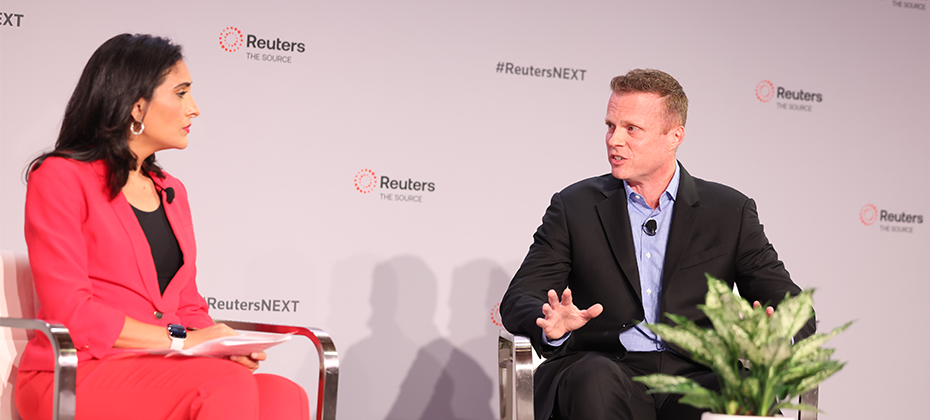
Scott Brown, Group President at Experian, recently presented at Reuters Next on the power of AI innovation in financial services.

Learn how GenAI is reshaping financial services from customer engagement to compliance, leading to improved decisions and operations.

Experian's latest GenAI solution empowers organizations to increase productivity, improve data visibility, and scale expertise.

With the advent of AI and ML, optimizing credit prescreen campaigns has never been easier or more efficient.

“Learn how to learn.” One of Zack Kass’, AI futurist and one of the keynote speakers at Vision 2024, takeaways readily embodies a sentiment most of us share — particularly here at Vision. Jennifer Schulz, CEO of Experian, North America, talked about AI and transformative technologies of past and present as she kicked off Vision 2024, the 40th Vision. Keynote speaker: Dr. Mohamed El-Erian Dr. Mohamed El-Erian, President of Queens’ College, Cambridge and Chief Economic Advisor at Allianz, returned to the Vision stage to discuss the labor market, “sticky” inflation and the health of consumers. He emphasized the need to embrace and learn how to talk to AI engines and that AI can facilitate content, creation, collaboration and community Keynote speaker: Zack Kass Zack Kass, AI futurist and former Head of Go-To-Market at OpenAI, spoke about the future of work and life and artificial general intelligence. He said AI is aiding in our entering of a superlinear trajectory and compared the thresholds of technology versus those of society. Sessions – Day 1 highlights The conference hall was buzzing with conversations, discussions and thought leadership. Some themes definitely rose to the top — the increasing proliferation of fraud and how to combat it without diminishing the customer experience, leveraging AI and transformative technology in decisioning and how Experian is pioneering the GenAI era in finance and technology. Transformative technologiesAI and emerging technologies are reshaping the finance sector and it's the responsibility of today's industry leaders to equip themselves with cutting-edge strategies and a comprehensive understanding to master the rapidly evolving landscape. That said, transformation is a journey and aligning with a partner that's agile and innovative is critical. Holistic fraud decisioningGenerative AI, a resurgence of bank branch transactions, synthetic identity and pig butchering are all fraud trends that today's organizations must be acutely aware of and armed to protect their businesses and customers against. Leveraging a holistic fraud decisioning strategy is important in finding the balance between customer experience and mitigating fraud. Unlocking cashflow to grow, protect and reduce riskCash flow data can be used not only across the lending lifecycle, but also as part of assessing existing portfolio opportunities. Incorporating consumer-permissioned data into models and processes powers predicatbility and can further assess risk and help score more consumers. Navigating the economyAmid a slowing economy, consumers and businesses continue to struggle with higher interest rates, tighter credit conditions and rising delinquencies, creating a challenging environment for lenders. Experian's experts outlined their latest economic forecasts and provided actionable insights into key consumer and commercial credit trends. More insights from Vision to come. Follow @ExperianVision and @ExperianInsights to see more of the action.

Lenders who use AI-driven credit risk decisioning can help improve outcomes for borrowers and increase financial inclusion.