Public Sector

Explore the public sector trends for 2026 shaping digital services, workforce resilience, and citizen trust for better governance.

Voter registration lists are the backbone of our democratic process. However, maintaining accurate and up-to-date lists is a challenge that election agencies constantly face. With several regulations related to voting and election integrity that have been enacted or proposed in the last two years, maintaining a quality voter list is more important now than ever before. Election officials now have a powerful tool at their disposal: commercially available data to enhance voter list maintenance and boost voter confidence. The importance of maintaining voter lists Audit teams within election agencies are tasked with ensuring election integrity through voter list maintenance. These teams need reliable tools to: Verify and correct voter registration data Identify and update contact information Provide a cost-effective method for record updates Reduce election costs for taxpayers Success stories in voter list management Case study: West Virginia Secretary of State The West Virginia Secretary of State (WVSOS) uses Experian’s TrueTrace™ solution to enhance voter roll maintenance. Traditionally a skip-tracing solution for debt collectors, TrueTrace leverages unique data sources to ensure voters receive correct information, reducing wasted resources and improving election efficiency. WVSOS was challenged with enhancing their existing processes to a more robust 50-state comparison for cross-state movers. After WVSOS’s first data pull using TrueTrace, nearly 16,000 individuals were identified with a potential new "best" address that were also not flagged by other data comparison programs used by the state. The results? Of the almost 16,000 mailings sent, about 25% returned were undeliverable, confirming those individuals had moved. Access the full case study to discover best practices for maintaining voter rolls and conducting cost-effective elections. Webinar: El Paso County Clerk & Recorder's Office The El Paso County Clerk & Recorder’s Office was looking to bring transparency, efficiency, and increased voter confidence to the elections in El Paso County, Texas. To achieve this, they required verified enriched data for registered voters. By partnering with Experian, voter data was enriched using our TrueTrace solution. This partnership has enabled the Office to verify and append the most up-to-date voter address, leading to significant improvements in list maintenance. To date, the El Paso County Clerk & Recorder’s Office has seen a reduction of more than $39,860 in undeliverable ballot costs. Their ROI to date is a positive $4,537 back to the citizens of El Paso County. Listen to our on-demand webinar to hear more about this collaboration. Visit us online to learn more about our public sector solutions. Learn more
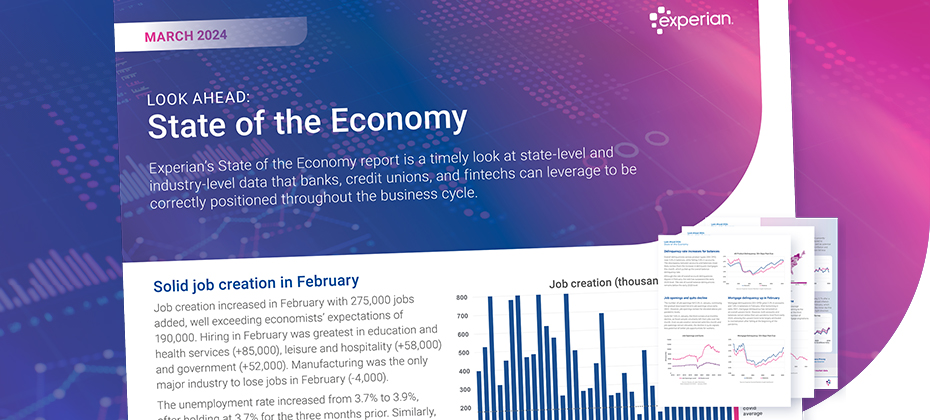
In March's State of the Economy report, we provide insights into consumer spending, the housing market, originations, and more.
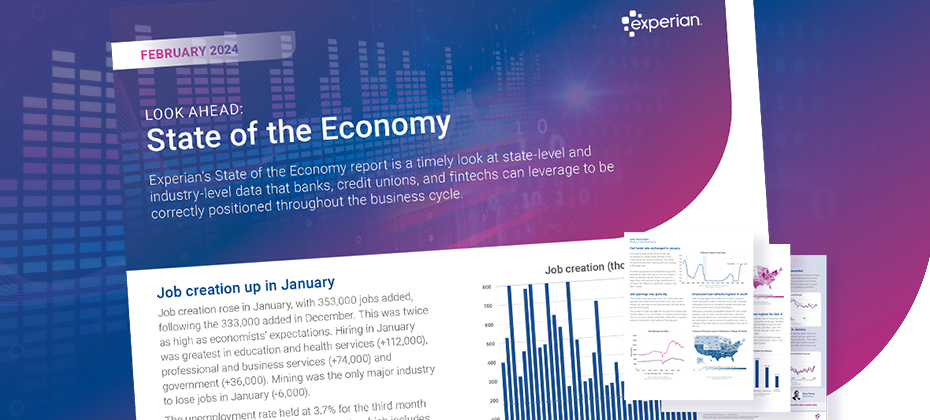
This report provides a snapshot of the top monthly economic and credit data, including inflation, the housing marketing, and card balances.

Third-party fraud involves an identifiable victim that is willing to collaborate in the investigation and resolution.

Fraud analytics can help your business keep up with sophisticated fraud attempts and provide expert security.

With an ever-present need for efficiency, security, and seamless citizen services, many agencies are looking at the benefits of a data-driven government. Last year, the federal government kicked off a unified effort to enable data-driven decision making. The goal at that level – and across all agencies – is to serve citizens more efficiently and effectively. By embracing the power of data and analytics, agencies of all sizes can set themselves up to better serve their citizens. What is a data-driven government? Agencies collect citizen data from a variety of service-based sources, including the Postal Service, Census Bureau, social welfare departments, and agencies that issue government IDs. When properly leveraged, this data holds many possibilities. However, many agencies face challenges when it comes to efficient collection, sharing, usage, integrity, and accessibility. Due to the amount of data collected and the potential lack of consistency in the collection and storage techniques, the data may not be usable. Without proper management and analysis, there’s little government agencies can do with their data to improve their processes. A data-driven government has well-managed data and uses that data to drive their decisions as they relate to citizen requests for benefits, tax collection, elections, and more. What are the benefits of data-driven decision making? Data management and government data analytics enable agencies to react quickly to citizen demands and concerns and proactively anticipate an issue before it becomes a crisis. With the right tools, agencies can gain a holistic view of their citizens, communicate effectively internally, provide digitally-driven services and improve overall efficiency through government-wide data integration and management. These changes have a wide range of benefits, including reduction of cost, fraud, waste and abuse, the automation of manual processes, and better service delivery. Why is a data-driven strategy required? In addition to the benefits listed above, a data-driven strategy also helps agencies align with published NIST guidelines and the need to monitor, evaluate, and maintain digital identity systems. Proper use of data-driven digital identity strategies will enhance equity and the usability of the solutions agencies provide to their citizens. Building an effective data-driven strategy The right strategy starts with ensuring that all departments about the need for proper data management and analytics and the guidelines that will govern it, such as maintaining up-to-date data, removing silos, and leveraging the right tools. The next step is finding the right partner. An effective partner can help agencies develop and maintain data management systems and implement the right tools and analytics – things like machine learning in government – to help each agency function efficiently and safeguard the data of its citizens. To learn how Experian can help your agency improve its use of data, visit us or request a call. Visit us

During their redeterminations process stats should look for efficiency and a risk-based approach to ensure compliance during the unwinding process.

What Is Identity Proofing? Identity proofing, authentication and management are becoming increasingly complex and essential aspects of running a successful enterprise. Organizations need to get identity right if they want to comply with regulatory requirements and combat fraud. It's also becoming table stakes for making your customers feel safe and recognized. 63 percent of consumers expect businesses to recognize them online, and 48 percent say they're more trusting of businesses when they demonstrate signs of security. Identify proofing is the process organizations use to collect, validate and verify information about someone. There are two goals — to confirm that the identity is real (i.e., it's not a synthetic identity) and to confirm that the person presenting the identity is its true owner. The identity proofing process also relates to and may overlap with other aspects of identity management. Identity proofing vs identity authentication Identity proofing generally takes place during the acquisition or origination stages of the customer lifecycle — before someone creates an account or signs up for a service. Identity authentication is the ongoing process of re-checking someone's identity or verifying that they have the authorization to make a request, such as when they're logging into an account or trying to make a large transaction. How does identity proofing work? Identity proofing typically involves three steps: resolution, validation, and verification. Resolution: The goal of the first step is to accurately identify the single, unique individual that the identity represents. Resolution is relatively easy when detailed identity information is provided. In the real world, collecting detailed data conflicts with the need to provide a good customer experience. Resolution still has to occur, but organizations have to resolve identities with the minimum amount of information. Validation: The validation step involves verifying that the person's information and documentation are legitimate, accurate and up to date. It potentially involves requesting additional evidence based on the level of assurance you need. Verification: The final step confirms that the claimed identity actually belongs to the person submitting the information. It may involve comparing physical documents or biometric data and liveness tests, such as a comparison of the driver's license to a selfie that the person uploads. Different levels of identity proofing may require various combinations of these steps, with higher-risk scenarios calling for additional checks such as biometric or address verification. Service providers can implement a range of methods based on their specific needs, including document verification, database validation, or knowledge-based authentication. Building an effective identity proofing strategy By requiring identity proofing before account opening, organizations can help detect and deter identity fraud and other crimes. You can use different online identity verification methods to implement an effective digital identity proofing and management system. These may include: Document verification plus biometric data: The consumer uploads a copy of an identification document, such as a driver's license, and takes a selfie or records a live video of their face. Database validations: The proofing solution verifies the shared identifying information, such as a name, date of birth, address and Social Security number against trusted databases, including credit bureau and government agency data. Knowledge-based authentication (KBA): The consumer answers knowledge-based questions, such as account information, to confirm their identity. It can be a helpful additional step, but they offer a low level of assurance, partially because data breaches have exposed many people's personal information. In part, the processes you'll use may depend on business policies, associated risks and industry regulations, such as know your customer (KYC) and anti-money laundering (AML) requirements. But organizations also have to balance security and ease of use. Each additional check or requirement you add to the identity proofing flow can help detect and prevent fraud, but the added friction they bring to your onboarding process can also leave customers frustrated — and even lead to customers abandoning the process altogether. Finding the right amount of friction can require a layered, risk-based approach. And running different checks during identity proofing can help you gauge the risk involved. For example, comparing information about a device, such as its location and IP address, to the information on an application. Or sending a one-time password (OTP) to a mobile device and checking whether the phone number is registered to the applicant's name. With the proper systems in place, you can use high-risk signals to dynamically adjust the proofing flow and require additional identity documents and checks. At the same time, if you already have a high level of assurance about the person's identity, you can allow them to quickly move through a low-friction flow. Experian goes beyond identity proofing Experian builds on its decades of experience with identity management and access to multidimensional data sources to help organizations onboard, authenticate and manage customer identities. Our identity proofing solutions are compliant with National Institute of Standards and Technology (NIST) and enable agencies to confidently verify user identities prior to or during account opening, biometric enrollment or while signing up for services. Learn more This article includes content created by an AI language model and is intended to provide general information.

Recent economic volatility has left local, state, and even federal budgets tighter than usual, meaning agencies must prioritize debt collections efforts.

Fraud mitigation is an ongoing process to identify suspected fraud quickly and manage any fallout without increasing risk.

Earlier this year, I explored the potential impact of the end of the current Public Health Emergency (PHE). The U.S. federal government has been operating under a PHE for COVID-19 for more than 30 consecutive months since it was initially announced in January 2020. On July 15, 2022, this PHE was renewed for a tenth time. Following this latest extension, the Centers for Medicare & Medicaid Services (CMS) has released a roadmap for the end of the COVID-19 PHE. In a related blog, they reiterate the commitment to provide a 60-day notice prior to the end of the PHE, but urge states and healthcare providers to prepare for the end “as soon as possible.” With these upcoming changes in mind, I wanted to review key areas for providers to consider as they prepare for the end of the PHE. Enrollments continue to increase, putting state budgets at risk From the start of the PHE in February 2020 through April 2022, Medicaid/Children’s Health Insurance Plan (CHIP) enrollment has increased by more than 17M people and this is affecting every state. Nearly half of all states have experienced an increase of more than 25% during this time period, with some experiencing increases of more than 40%. Given an average Medicaid cost to states of more than $8.4K per capita, that translates to an increase of billions of dollars. Once the PHE expires, states will have 12 months to redetermine eligibility for continued enrollment in the program, or risk bearing 100% of the associated cost. Preparing for the end of the PHE To avoid unnecessary expenditures and ensure that citizens are receiving access to the correct services, states will have to conduct a holistic review of their Medicaid rolls to confirm eligibility. In CMS’s guidance for states to prepare for the end of the PHE, they recommend creating an automated process to handle this unprecedented review. With the right partner, agencies can perform redeterminations of their existing registration rolls, and prepare for future services requests. The right solution can allow citizens to easily apply for benefits, triggering the automatic, real-time pull of income and employment information so that the agency can verify eligibility. Experian is a trusted government partner that is ready to assist states with preparing and automating the process for redetermination of benefits. To learn more about how Experian can assist with citizen benefit redetermination and registration efforts, visit us or request a call. Learn more

Experian’s identity, verification, and fraud solutions can help government agencies of all sizes on their journey to digital modernization.

Experian's 2022 Global Identity and Fraud Report explores consumer expectations and preferences and effective risk mitigation strategies.

At the end of the Public Health Emergency, states will need a system to easily and confidently review their current Medicaid rolls to confirm eligibility.