The Ultimate Guide to Identity Proofing

Updated: June 12, 2026 by Guest Contributor 5 min read March 13, 2023

What Is Identity Proofing?

two coworkers with headseats

Identity proofing, authentication and management are becoming increasingly complex and essential aspects of running a successful enterprise. Organizations need to get identity right if they want to comply with regulatory requirements and combat fraud.

It’s also becoming table stakes for making your customers feel safe and recognized. 63 percent of consumers expect businesses to recognize them online, and 48 percent say they’re more trusting of businesses when they demonstrate signs of security.

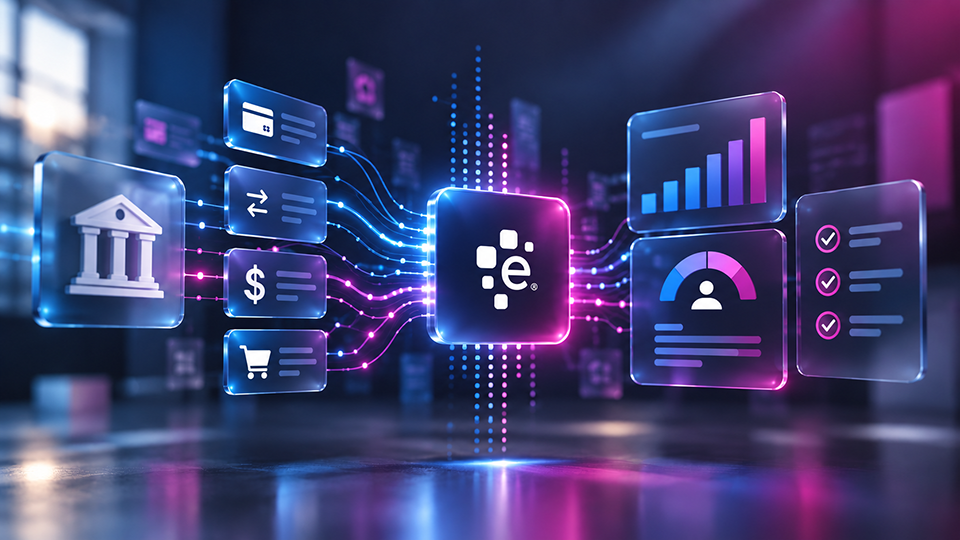
Identify proofing is the process organizations use to collect, validate and verify information about someone. There are two goals — to confirm that the identity is real (i.e., it’s not a synthetic identity) and to confirm that the person presenting the identity is its true owner.

The identity proofing process also relates to and may overlap with other aspects of identity management.

Identity proofing vs identity authentication

Identity proofing generally takes place during the acquisition or origination stages of the customer lifecycle — before someone creates an account or signs up for a service. Identity authentication is the ongoing process of re-checking someone’s identity or verifying that they have the authorization to make a request, such as when they’re logging into an account or trying to make a large transaction.

How does identity proofing work?

Identity proofing typically involves three steps: resolution, validation, and verification.

  • Resolution: The goal of the first step is to accurately identify the single, unique individual that the identity represents. Resolution is relatively easy when detailed identity information is provided. In the real world, collecting detailed data conflicts with the need to provide a good customer experience. Resolution still has to occur, but organizations have to resolve identities with the minimum amount of information.
  • Validation: The validation step involves verifying that the person’s information and documentation are legitimate, accurate and up to date. It potentially involves requesting additional evidence based on the level of assurance you need.
  • Verification: The final step confirms that the claimed identity actually belongs to the person submitting the information. It may involve comparing physical documents or biometric data and liveness tests, such as a comparison of the driver’s license to a selfie that the person uploads.

Different levels of identity proofing may require various combinations of these steps, with higher-risk scenarios calling for additional checks such as biometric or address verification. Service providers can implement a range of methods based on their specific needs, including document verification, database validation, or knowledge-based authentication.

Building an effective identity proofing strategy

By requiring identity proofing before account opening, organizations can help detect and deter identity fraud and other crimes. You can use different online identity verification methods to implement an effective digital identity proofing and management system. These may include:

  • Document verification plus biometric data: The consumer uploads a copy of an identification document, such as a driver’s license, and takes a selfie or records a live video of their face.
  • Database validations: The proofing solution verifies the shared identifying information, such as a name, date of birth, address and Social Security number against trusted databases, including credit bureau and government agency data.
  • Knowledge-based authentication (KBA): The consumer answers knowledge-based questions, such as account information, to confirm their identity. It can be a helpful additional step, but they offer a low level of assurance, partially because data breaches have exposed many people’s personal information.

In part, the processes you’ll use may depend on business policies, associated risks and industry regulations, such as know your customer (KYC) and anti-money laundering (AML) requirements. But organizations also have to balance security and ease of use.

Each additional check or requirement you add to the identity proofing flow can help detect and prevent fraud, but the added friction they bring to your onboarding process can also leave customers frustrated — and even lead to customers abandoning the process altogether.

Finding the right amount of friction can require a layered, risk-based approach. And running different checks during identity proofing can help you gauge the risk involved.

For example, comparing information about a device, such as its location and IP address, to the information on an application. Or sending a one-time password (OTP) to a mobile device and checking whether the phone number is registered to the applicant’s name.

With the proper systems in place, you can use high-risk signals to dynamically adjust the proofing flow and require additional identity documents and checks. At the same time, if you already have a high level of assurance about the person’s identity, you can allow them to quickly move through a low-friction flow.

Experian goes beyond identity proofing

Experian builds on its decades of experience with identity management and access to multidimensional data sources to help organizations onboard, authenticate and manage customer identities. Our identity proofing solutions are compliant with National Institute of Standards and Technology (NIST) and enable agencies to confidently verify user identities prior to or during account opening, biometric enrollment or while signing up for services.

 
This article includes content created by an AI language model and is intended to provide general information.

Related Posts

Used EV Growth Signals a New Phase of Consumer Purchasing Behavior

The electric vehicle (EV) revolution isn’t slowing down, it’s changing lanes. While recent conversations have seemingly focused on softening demand for new EVs, the used segment has been gaining momentum. According to Experian Automotive’s 2025 EV Year in Review Report, new retail individual EV registrations fell 35.9% year-over-year. Meanwhile, the used retail individual EV registrations grew 25.4% from a year ago. As affordability and growing model availability reshapes consumer behavior, buyers are increasingly turning to pre-owned EVs, which has shown an interesting market divergence that is redefining how consumers are adopting this segment and what it can mean for automakers, dealers, and the overall industry. Key players behind rising used EV demand Notably, Tesla accounted for over half (60.5%) of used retail individual EV registrations in 2025, followed by Chevrolet at 6.4% and Nissan (5.5%). Diving a bit deeper, Tesla made up the top three models of the used individual registrations last year, with the Model 3 coming in at 27.2%, Model Y at 21.7%, and Model S (6.6%). The Chevrolet Bolt EV followed at 4.8% and the Nissan Leaf was at 4%. Tesla’s position as the leading make in the used EV market is a natural extension of its long-standing dominance in new EV sales. The brand’s leadership over the years created a large fleet of vehicles that are now entering the pre-owned market. What the used EV boom means for automotive professionals The growing demand for used EVs can present more opportunities for automotive professionals. Dealers that provide a healthy supply of pre-owned EVs can increase accessibility and play a role in adoption for consumers who are actively looking to purchase, while marketers can emphasize value and ownership benefits. As the market continues to evolve, automotive professionals who understand and respond to these changing dynamics will be best positioned to capitalize on the expanding pool of used EV shoppers. To learn more about EV insights, visit Experian Automotive’s EV Resource Center.

Published: June 30, 2026 by Kirsten Von Busch
How Terrace Finance Uses NeuroID to Respond to Fraud Faster and Smarter

Learn how Terrace Finance used NeuroID behavioral analytics to detect fraud faster, respond to attacks, and strengthen risk management.

Published: June 29, 2026 by Scarlet.Nickel@experian.com
Ask the Expert: A Closer Look at Modern Lending with Jeff Hops and Erin Haselkorn

In this first episode of Ask the Expert, Experian's Jeff Hops, Senior Director of Data Platform and Product, and Erin Haselkorn, Senior Director of Analyst Relations, explore how broader data and new signals can help lenders better understand today’s consumers, while maintaining responsible decisioning. Lending is changing  Interest rates, regulation, embedded finance and AI are reshaping the lending landscape. Consumer behavior is evolving just as quickly. But the core job hasn’t changed. Lenders are still making decisions about people they don’t fully know, and that makes data more important than ever. "There are periods where nothing changes, and periods where it seems like everything changes. We’re in the latter … but the core premise hasn’t changed. You’re still trying to lend to somebody you don’t know."Jeff Hops, Senior Director of Data Platform and Product To make those decisions with confidence, lenders need a strong foundation of identity, history and reliable signals. In a period of rapid change, the quality and completeness of that data become even more critical. A more complex view of today’s consumer What has changed is the consumer. Traditional credit data is foundational but can be further enhanced with visibility on how people earn, manage and move money. Income may come from multiple sources, and financial activity often spans bank accounts, applications (apps) and digital channels. Cash flow data, for example, can provide a clearer view of what’s actually coming into a consumer’s account, beyond what traditional records may show.These additional signals can help lenders better understand: Income variability across multiple earning sources Current financial behavior through cash flow activity Digital and identity-linked activity across channels These signals don’t replace traditional data; they expand it. The result is a more complete and current view of the consumer. From exploration to real-world application The conversation around broader data signals has moved beyond theory. Lenders are no longer just asking whether these signals are useful. They’re asking where, how and under what governance they can be applied across the lending lifecycle. Lenders are actively researching, testing and implementing new data sources across the lending lifecycle. What was once experimental is now operational. Institutions are progressing through a clear path: Research Understanding available signals and use cases Testing Evaluating performance in controlled environments Implementation Applying insights in production Today, alternative data is being used in areas like analytics, channel scoring and decisioning, often within governed environments that allow for safe testing and validation. AI may accelerate this shift by helping institutions identify patterns at scale, but its value depends on the strength of the underlying data: quality, governance, context and clear business use cases. More signal, more responsibility As data availability expands, lenders have access to more granular insights than ever before. That creates opportunity, but also responsibility. The institutions that lead won’t be the ones that use the most data. They’ll be the ones that know which signals to use, how to validate them and how to apply them in ways that are fair, explainable and aligned to consumer outcomes. “Institutions can unlock more granular and powerful decisions, but they have to do it responsibly.”Erin Haselkorn, Senior Director, Analyst Relations The future of lending will be shaped not just by how much data is available, but by how thoughtfully it’s applied. Keeping the consumer at the center of decisioning is essential to building trust and long-term success. Explore alternative data with us A more complete understanding of today’s consumers starts with better data. We help lenders responsibly incorporate broader data signals and advanced analytics into decisioning strategies, enhancing visibility into today’s consumers while strengthening risk assessment and expanding access to credit. Let’s work together to build more confident, more responsible lending decisions. Learn more Contact us About our experts Jeff Hops Senior Director, Data Platform and Product, Experian Jeff Hops is a Senior Director in Experian’s Financial Services and Data business with over eight years of experience driving innovation in credit and data solutions. He has led product development for Experian’s Credit Report and played a key role in launching Ascend Identity Platform™, a leading identity resolution platform. Erin Haselkorn Senior Director, Analyst Relations, Experian Erin Haselkorn is responsible for analyst relations for Experian. She has developed an understanding of key marketing trends across a broad range of verticals. Her market research around data strategy, AI, fraud, identity and data management, paired with her broad Experian product knowledge, gives her a unique understanding of business automation and data trends. Erin is a frequent spokesperson and guest blogger.

Published: June 22, 2026 by Julie.JLee@experian.com

Subscribe to our thought leadership

Enter your name and email for the latest updates.

This site is protected by reCAPTCHA and the Google Privacy Policy and Terms of Service apply.

Subscribe to our thought leadership

Don't miss out on the latest industry trends and insights!
Subscribe