Collections & Debt Recovery

Read our e-book to learn how forward-thinking agencies are adapting their collections strategies to recover more and enhance relationships.

Locating individuals quickly and accurately is crucial for debt collectors and lenders. Our skip tracing software addresses these challenges.

Debt collectors face many challenges when trying to contact the right people at the right time and improve collection strategies.

Using AI in debt collection can help financial institutions leverage technology to ensure more accurate and timely collections.

Here’s a step-by-step guide on how to create an effective credit union collection strategy. Read on to learn more.
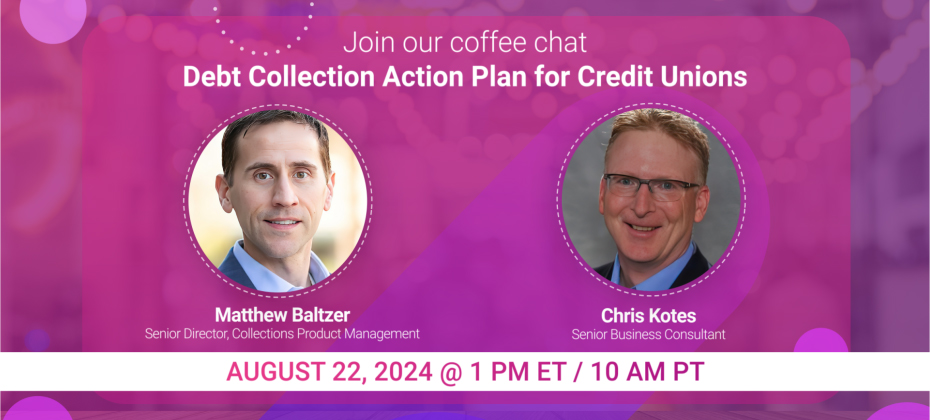
Grab a cup of coffee and join our experts for a conversation on credit union collection trends and successful account management strategies.

In this blog post, we'll explore skip-tracing best practices, offering valuable insights and practical tips and tools. Read more!

Dealing with delinquent debt is a challenging task.Thankfully, advanced analytics offers a promising solution. Learn more!
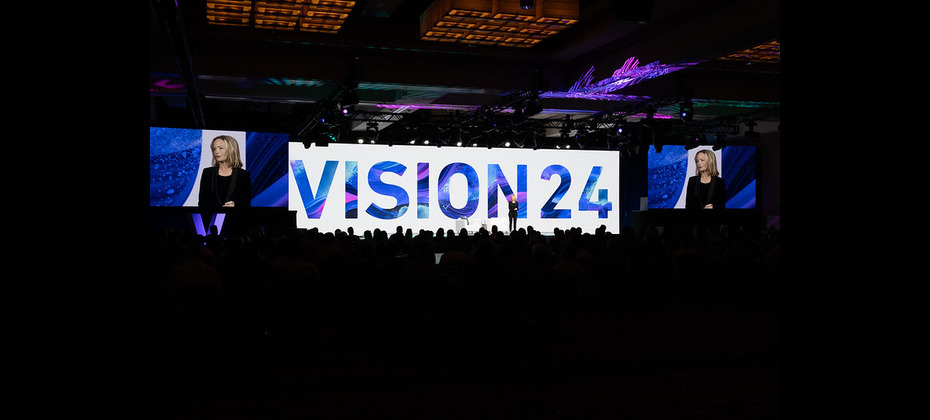
“Learn how to learn.” One of Zack Kass’, AI futurist and one of the keynote speakers at Vision 2024, takeaways readily embodies a sentiment most of us share — particularly here at Vision. Jennifer Schulz, CEO of Experian, North America, talked about AI and transformative technologies of past and present as she kicked off Vision 2024, the 40th Vision. Keynote speaker: Dr. Mohamed El-Erian Dr. Mohamed El-Erian, President of Queens’ College, Cambridge and Chief Economic Advisor at Allianz, returned to the Vision stage to discuss the labor market, “sticky” inflation and the health of consumers. He emphasized the need to embrace and learn how to talk to AI engines and that AI can facilitate content, creation, collaboration and community Keynote speaker: Zack Kass Zack Kass, AI futurist and former Head of Go-To-Market at OpenAI, spoke about the future of work and life and artificial general intelligence. He said AI is aiding in our entering of a superlinear trajectory and compared the thresholds of technology versus those of society. Sessions – Day 1 highlights The conference hall was buzzing with conversations, discussions and thought leadership. Some themes definitely rose to the top — the increasing proliferation of fraud and how to combat it without diminishing the customer experience, leveraging AI and transformative technology in decisioning and how Experian is pioneering the GenAI era in finance and technology. Transformative technologiesAI and emerging technologies are reshaping the finance sector and it's the responsibility of today's industry leaders to equip themselves with cutting-edge strategies and a comprehensive understanding to master the rapidly evolving landscape. That said, transformation is a journey and aligning with a partner that's agile and innovative is critical. Holistic fraud decisioningGenerative AI, a resurgence of bank branch transactions, synthetic identity and pig butchering are all fraud trends that today's organizations must be acutely aware of and armed to protect their businesses and customers against. Leveraging a holistic fraud decisioning strategy is important in finding the balance between customer experience and mitigating fraud. Unlocking cashflow to grow, protect and reduce riskCash flow data can be used not only across the lending lifecycle, but also as part of assessing existing portfolio opportunities. Incorporating consumer-permissioned data into models and processes powers predicatbility and can further assess risk and help score more consumers. Navigating the economyAmid a slowing economy, consumers and businesses continue to struggle with higher interest rates, tighter credit conditions and rising delinquencies, creating a challenging environment for lenders. Experian's experts outlined their latest economic forecasts and provided actionable insights into key consumer and commercial credit trends. More insights from Vision to come. Follow @ExperianVision and @ExperianInsights to see more of the action.

This article was updated on March 7, 2024. Like so many government agencies, the U.S. military is a source of many acronyms. Okay, maybe a few less, but there really is a host of abbreviations and acronyms attached to the military – and in the regulatory and compliance space, that includes SCRA and MLA. So, what is the difference between the two? And what do financial institutions need to know about them? Let’s break it down in this basic Q&A. SCRA and MLA: Who is covered and when are they covered? The Servicemember Civil Relief Act (SCRA) protects service members and their dependents (indirectly) on existing debts when the service member becomes active duty. In contrast, the Military Lending Act (MLA) protects service members, their spouses and/or covered dependents at point of origination if they are on active duty at that time. For example, if a service member opens an account with a financial institution and then becomes active military, SCRA protections will apply. On the other hand, if the service member is of active duty status when the service member or dependent is extended credit, then MLA protections will apply. Both SCRA and MLA protections cease to apply to a credit transaction when the service member ceases to be on active duty status. What is covered? MLA protections apply to all forms of payday loans, vehicle title loans, refund anticipation loans, deposit advance loans, installment loans, unsecured open-end lines of credit, and credit cards. However, MLA protections exclude loans secured by real estate and purchase-money loans, including a loan to finance the purchase of a vehicle. What are the interest rate limitations for SCRA and MLA? The SCRA caps interest rate charges, including late fees and other transaction fees, at 6 percent. The MLA limits interest rates and fees to 36 percent Military Annual Percentage Rate (MAPR). The MAPR is not just the interest rate on the loan, but also includes additional fees and charges including: Credit insurance premiums/fees Debt cancellation contract fees Debt suspension agreement fees and Fees associated with ancillary products. Although closed-end credit MAPR will be a one-time calculation, open-end credit transactions will need to be calculated for each covered billing cycle to affirm lender compliance with interest rate limitations. Are there any lender disclosure requirements? There is only one set of circumstances that triggers SCRA disclosures. The Department of Housing and Urban Development (HUD) requires that SCRA disclosures be provided by mortgage servicers on mortgages at 45 days of delinquency. This disclosure must be provided in written format only. For MLA compliance, financial institutions must provide the following disclosures: MAPR statement Payment obligation descriptions Other applicable Regulation Z disclosures. For MLA, it is also important to note that disclosures are required both orally and in a written format the borrower can keep. How Experian can help Experian's solutions help you comply with the Department of Defense's (DOD's) final amendment rule. We can access the DOD's database on your behalf to identify MLA-covered borrowers and provide a safe harbor for creditors ascertaining whether a consumer is covered by the final rule's protection. Visit us online to learn more about our SCRA and military lending act compliance solutions. Learn more

Learn how third-party collections can benefit from modern technology to improve recovery rates and compliance.

Automated debt collection can help you save time and money while increasing customer satisfaction and long-term values.

Learn about the differences between prescreen and prequalification and how these tools can help you increase ROI.

Debt collectors and agencies that implement debt collection techniques and debt recovery tools can improve their performance and bottom line. Read more.

Discover how to create a successful collections strategy to maximize recovery rates through communication, choice, and control.