Fintech
Explore the Fintech Identity and Fraud Report for insights on AI-driven fraud threats, identity protection and the evolving fraud landscape.
Fintech growth is returning, but growth alone is no longer enough to separate market leaders from the rest. The next stage of fintech will be shaped by how well organizations understand the consumers they serve, how accurately they assess risk and how consistently they make decisions across the customer lifecycle. That requires more than speed, more data or a single new model. It requires a unified view of the consumer that brings together identity, credit and behavioral signals into one decisioning strategy. Experian’s 2026 State of Fintech Report identifies partnerships, data and fraud as three forces shaping the next phase of fintech growth. The report also makes a clear point: institutions that integrate these forces into cohesive strategies will be better positioned to grow with confidence. For many fintechs, the challenge is not a lack of innovation. It is the increasing complexity of turning innovation into scalable, explainable and profitable growth. Fintech organizations span a wide range of maturity, from early-stage startups to scaled lenders, and many are experimenting with new products, technologies and customer engagement models at the same time. That creates opportunity, but it also creates pressure to make more disciplined decisions. The market is rewarding institutions that connect product strategy, risk management and customer experience in a more coordinated way. This is why the unified consumer view is becoming so important. It helps fintechs turn fragmented signals into consistent decisions that support both growth and resilience. Why a unified consumer view matters now A unified consumer view means bringing together the signals that define a customer’s identity, credit behavior, financial capacity and risk profile. It moves fintechs away from isolated decision points and toward a more connected picture of the customer across origination, account management and servicing. This matters because consumer behavior is becoming more fluid, fraud is becoming more sophisticated and product strategies are becoming more specialized. A customer may appear strong through one lens and risky through another. An application may pass an onboarding check, but later show behavior that suggests emerging fraud or repayment stress. Without a connected view, those signals may stay trapped in different systems or teams. The 2026 State of Fintech Report highlights this shift across several areas. Fintechs are managing credit cards and unsecured personal loans with greater precision, recognizing that each product requires different strategies and risk controls. Credit cards require ongoing account management because exposure continues after origination. Unsecured personal loans follow a fixed repayment structure, which makes underwriting precision especially important at the point of origination. These differences show why a one-size-fits-all strategy cannot support modern fintech growth. A unified consumer view helps lenders apply the right data, risk framework and customer strategy to the right product at the right time. Siloed decisions create blind spots Many fintechs already use multiple sources of data. They may rely on traditional credit data, alternative data, fraud tools, cash flow information, identity verification and internal account performance data. If those signals are managed separately, the organization may still lack a clear view of the customer. Data can become fragmented. Risk teams can reach different conclusions than fraud teams. Product teams can pursue growth without a full understanding of emerging portfolio pressure. The State of Fintech Report points out that fintech competition is increasingly defined by the ability to align data strategies with decision frameworks. That means data is not just a support function. It is becoming central to growth, risk management and customer experience. Organizations are investing in richer datasets and more advanced analytics, but the differentiator is how effectively those inputs are operationalized. This is where many fintechs still have work to do. The value comes not from any single dataset, but from how signals are layered, interpreted and applied together. For example, a lender may understand a consumer’s credit score, but that does not always reveal broader financial behavior. Cash flow data may add insight into income and expenses, but it needs to be categorized and normalized to support reliable decisions. Identity signals may help detect fraud, but they become more powerful when combined with credit and behavioral data. A unified view brings these inputs together so fintechs can better determine whether a customer represents a growth opportunity, a fraud risk, an emerging credit risk or a borrower who needs a different product experience. Product complexity requires better decisioning The need for a unified consumer view becomes even clearer when looking at how fintechs manage different credit products. Fintech lenders continue to originate approximately 1.5 unsecured personal loans for every one credit card, which reinforces the importance of both products within portfolio strategy. Credit card originations continue to grow moderately while unsecured personal loan originations have slowed after tighter lending standards. These patterns suggest that fintechs are not simply shifting from one product to another. They are becoming more mature in how they manage each product based on its structure, risk profile and consumer use case. Credit cards and installment loans behave differently. Credit cards introduce ongoing exposure and require active account management, line management and monitoring of utilization behavior. Unsecured personal loans carry fixed terms and structured repayment schedules, which makes origination quality especially important. For fintechs, this means product strategy and risk strategy must be tightly connected. The same consumer may need to be evaluated differently depending on the product, loan amount, repayment expectations and observed behavior. A unified consumer view gives lenders the context needed to make those differences actionable. This is also where segmentation becomes more sophisticated. The State of Fintech Report’s loan segmentation framework connects strategy, risk and data advantage across small-dollar, mid-tier and large-ticket loans. Small-dollar lending can support thin-file acquisition, but may require alternative data and stronger identity visibility. Mid-tier lending may involve debt consolidation and cash flow pressure, where transaction insights and trended data can be particularly useful. Large-ticket lending can support higher-value growth, but it also creates greater exposure and may require a fuller combination of credit, fraud and identity signals. This kind of framework helps fintechs align product strategy with risk and data strategy in a more deliberate way. Fraud is making the unified view even more urgent Fraud is another reason fintechs need to move beyond siloed decisioning. Fraud is becoming more complex across the customer lifecycle. Synthetic identities, first-party misuse and AI-driven threats are reshaping the risk landscape. Traditional controls that focus primarily on onboarding are no longer enough. Effective strategies now require continuous monitoring across account access, transactions and servicing. That shift changes how fintechs should think about customer intelligence. Fraud is no longer something that only happens at the point of application. It can emerge later through account behavior, suspicious activity or patterns that look normal when viewed in isolation. Advanced identity signals, including email intelligence, are becoming more central to fraud prevention because they add context that traditional data may not capture. The report also highlights Experian’s acquisition of AtData as part of a broader recognition that email-based identity signals represent a critical layer in digital identity and fraud detection. The takeaway for fintech leaders is clear. Identity, fraud and credit risk cannot be treated as separate problems. A customer who appears creditworthy may still present identity risk. A fraud signal may also influence credit exposure. A repayment pattern may reflect financial stress, misuse or both. A unified view helps lenders evaluate these signals together so they can make decisions with more confidence and less friction for legitimate customers. Trust is becoming a growth strategy Trust has always mattered in financial services, but fintechs now need to think about trust as a measurable part of decisioning. Customers expect fast applications, seamless experiences and fair outcomes. Regulators and internal governance teams expect transparency, explainability and consistency. Business leaders expect growth without unnecessary exposure. These expectations are difficult to meet when data and decisions are fragmented. The State of Fintech Report’s 2026 action playbook identifies trust as a function of decision accuracy, identity confidence and customer transparency. That framing is important because it moves the conversation beyond speed alone. A fast decision is not valuable if it approves the wrong customer, declines a good customer or creates unnecessary friction in the wrong place. Fintechs should evaluate where friction improves outcomes, such as preventing fraud or identifying risk, and where it creates unnecessary loss of good customers. For many lenders, the path forward is not removing friction everywhere. It is applying the right level of friction at the right moment based on a clearer view of the consumer. This is where unified decisioning becomes a competitive advantage. It allows fintechs to create experiences that feel faster and more relevant while still protecting the portfolio. It supports better segmentation, more informed offers and more consistent risk treatment. It also gives teams a shared understanding of why decisions are made, which is essential as AI and automation become more embedded in lending workflows. What should fintech leaders do next? A unified view of the consumer is not built by adding one more tool or one more dataset. It requires a decisioning strategy that connects data, analytics, fraud, identity and product objectives. Fintech leaders should start by evaluating where their current decisioning frameworks fall short. Are credit and fraud signals looked at together? Are cash flow insights being used consistently? Are identity signals monitored after account opening? Are decisions explainable across teams and channels? The 2026 State of Fintech Report recommends prioritizing experimentation tied to measurable decision lift and model performance. This means testing combinations of credit, alternative, cash flow and identity signals to determine where incremental data improves response rates, approval rates, early-loss reduction and fraud mitigation. It also means treating data and decisioning as connected priorities, with a focus on signal quality, integration and measurable impact. The goal is not to collect more inputs for the sake of volume. The goal is to understand which signals improve outcomes and how those signals should be applied at scale. For fintechs, this is the next competitive frontier. Growth will continue to depend on product innovation, customer acquisition and speed to market. But the lenders that separate themselves will be the ones that can connect those growth priorities to a stronger decisioning foundation. That requires a consumer view that is broader than a credit profile, deeper than a fraud check and more actionable than a data warehouse. It requires a unified framework that helps lenders understand who the customer is, how the customer behaves and how risk may change over time. Download the 2026 State of Fintech Report The next phase of fintech will not be defined by a single innovation. It will be defined by the ability to connect identity, credit and behavioral data into more confident decisions across the full customer lifecycle. Fintechs that build this unified view will be better positioned to grow, manage risk and strengthen customer trust in a more complex market. To explore the trends shaping fintech growth and decisioning in 2026, download Experian’s 2026 State of Fintech Report. Read now To learn more about how Experian partners with fintechs, visit www.experian.com/fintech. Learn more

Learn how Caliber Financial uses Experian data to improve lead targeting, underwriting and AI-driven decisioning for better outcomes.
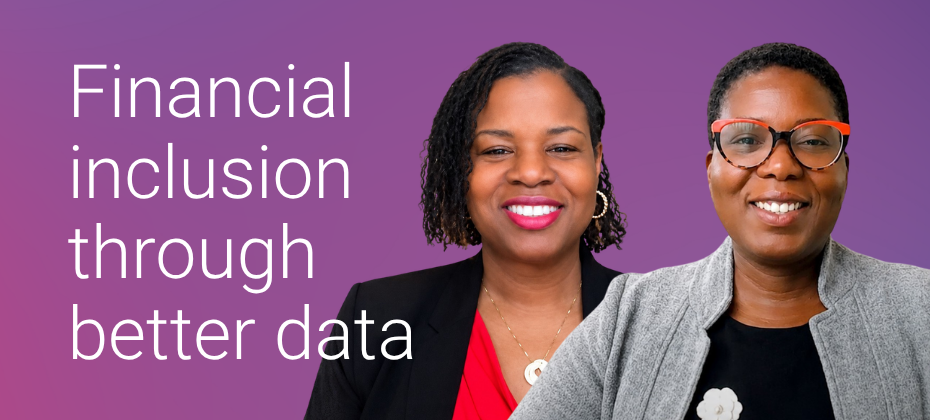
Consumer visibility is changing Roughly 45 million Americans, or 1 in 5 consumers, are considered credit invisible or unscoreable.[1] They’re working, paying bills and participating in the economy, yet many are not fully visible during the lending process. That creates both a visibility challenge and a growth opportunity for lenders. In this Ask the Expert session, Corliss Hill, Senior Director, Inclusion and Belonging at Experian, joins Dr. Vaneesha Dutra, Endowed Professor of Finance at Morehouse College, to discuss how evolving consumer behaviors are reshaping conversations around financial inclusion and lending decisions. For lenders, visibility matters because confident decisions depend on reliable context and insight. Broader consumer signals can help institutions better understand repayment behaviors, financial stability and consumer capacity. “The benefit of banks using alternative data is that they capture a very significant and new consumer base. That's 20% of the population, 45 million Americans.”Dr. Vaneesha Dutra, Endowed Professor of Finance A more complete understanding of today’s consumers Today’s consumers often manage obligations across a wide range of payment types and financial channels, creating additional signals through cash flow activity, recurring payments and consumer-permissioned financial data. Rent, utilities, subscriptions and mobile phone payments can all provide meaningful insight into how consumers manage their financial lives. What’s changing isn’t the need for risk assessment. It’s the amount of consumer behavior lenders can now evaluate. For example, a consumer experiencing temporary financial disruption may fall behind on certain obligations while continuing to consistently pay rent, utilities and phone bills. Those recurring payment behaviors can provide important context into financial priorities and stability. “These are consumers that pay rent on time every month, pay utilities every month on time and meet many other financial obligations in a timely manner.”Dr. Vaneesha Dutra, Endowed Professor of Finance From visibility to more-informed decisioning Broader consumer insights may help lenders move from limited visibility to more informed decisioning. The conversation shifts when lenders move from asking: “Should we take a risk on this consumer?” to: “Do we have enough information to fully understand this consumer?” That broader context can help institutions: Strengthen risk assessment. Identify financially active consumers with strong repayment behaviors. Support more informed lending strategies. Alternative data isn’t about replacing established credit approaches. It’s about helping lenders build on trusted credit foundations with additional context and insight. Responsible lending starts with better context For lenders, the path forward is practical and actionable. As lenders evaluate broader consumer behaviors, three priorities become increasingly important: Modernize data strategies Incorporate broader consumer signals alongside existing credit data to create a more holistic view of repayment behavior and financial stability. Engage consumers earlier Earlier intervention may help lenders better support consumers before financial challenges become more severe. Create pathways to financial access Smaller lending opportunities can help consumers establish stronger financial profiles and demonstrate positive repayment behaviors over time. The institutions that lead will be the ones that can combine strong risk practices with a broader understanding of consumer behavior. Whitepaper: Bridging the credit divide: income, risk and inclusion in consumer finance Building on the themes discussed in this Ask the Expert session, Dr. Dutra explores how demographic shifts, evolving borrower behaviors and broader consumer visibility are reshaping lending strategies and what they mean for lenders seeking to balance growth, risk management and financial inclusion. Download whitepaper Explore alternative data with Experian Experian can help lenders combine broader consumer insights with trusted credit data to strengthen decisioning, improve risk assessment and support more-informed lending strategies. With solutions spanning identity, cash flow and advanced analytics, lenders can gain a more complete view of consumer behavior and expand access to credit with greater confidence. Learn more Watch episode 1 About our experts Corliss Hill Senior Director, Belonging Business Partner, Experian Corliss Hill is a collaborative leader well-versed in working with executive stakeholders, crossfunctional teams, external partners and community organizations to design and deliver initiatives and programs that create sustainable impact. With over 25 years of extensive experience in multicultural marketing, communications, PR and inclusion and belonging initiatives, she is dedicated to advancing equitable access to financial. Her mission is to drive impactful marketing initiatives that foster meaningful change and address systemic barriers to inclusion and the communities they serve.Hill has been a part of the Experian family since 2021, and resides in Atlanta with her daughter who is a rising 11-year-old entrepreneur. Vaneesha Dutra, Ph.D. Endowed Professor of Finance and Associate Dean, Morehouse College Vaneesha Dutra, Ph.D., serves as Associate Dean in the Division of Business and Economics. With more than 20 years of experience spanning higher education, banking and real estate, Dr. Dutra’s work focuses on the racial and gender wealth gap, financial literacy and financial decision-making. She is an active researcher and consultant whose work has earned numerous grants and fellowships, including serving as the inaugural Tracy A. Pruitt Visiting Research Faculty Fellow at the Wharton School of Business. Dr. Dutra has also been named a Research Faculty Fellow for both the Center for Black Entrepreneurship and the PNC Bank Center for Entrepreneurship. [1] Consumer Financial Protection Bureau, Expanding access to credit.

Ian P. Moloney of the American Fintech Council discusses responsible fintech innovation and Experian’s role in expanding credit access.

Learn how Terrace Finance used NeuroID behavioral analytics to detect fraud faster, respond to attacks, and strengthen risk management.

Customers rarely announce their departure. Instead, they quietly reduce engagement, move deposits and explore competing offers. By the time attrition shows up in reporting, competitors may have already captured meaningful wallet share. For lenders, the risk isn’t just lost accounts, it’s silent revenue erosion within relationships that still appear intact. The hidden risk in your portfolio Today’s consumers often hold less than half of their deposits or loans with a single provider. At the same time: Competition for prime borrowers continues to intensify. Cross-sell remains one of the most effective and efficient growth strategies available. Even small improvements in retention can drive outsized profitability gains. The opportunity is real, but only if you can see momentum early and act before competitors do. From static reviews to strategic signals Traditional monthly and quarterly reviews confirm what has already happened, but they rarely surface early indicators like emerging behavioral shifts or improving credit capacity. Modern portfolio management requires continuous visibility into behavioral signals, trended credit data and event-based triggers that highlight change as it happens. When you can see momentum forming, you can act with precision, intervene before balances leave, engage customers as capacity strengthens, and activate compliant prescreen cross-sell campaigns at the right moment. Our new interactive strategic snapshot outlines the modern approach to portfolio management, one that connects ongoing account review with timely, event-based signals, helping you protect, retain and grow high-value customers. Download it now to see how to turn early signals into stronger customer lifetime value. Read the snapshot

Financial services leaders are dealing with numerous pressures at the same time. These growing challenges for financial services organizations include sophisticated fraud, rapid Artificial Intelligence (AI) adoption without clear regulatory direction, rising customer expectations and the need for compliant, sustainable growth. Businesses are rethinking how they manage risk, growth and customer trust. These financial industry challenges are no longer confined to internal risk teams. They directly impact long-term customer loyalty. How organizations navigate these challenges will determine how effectively they deliver value to their customers. We’ve outlined the six challenges for financial services oranizations that consistently rank highest among industry leaders today. Challenge 1: Fraud is becoming harder to detect and eroding customer trust 72% of business leaders expect AI-generated fraud and deepfakes to be major challenges by 20261 As fraud tactics evolve quickly, driven in part by AI, customers are being targeted through identity-based attacks from account takeovers to synthetic identities and misuse of personal information. When these threats go undetected, or when legitimate activity is incorrectly flagged, the result isn’t just financial loss. It’s a breakdown of trust. Organizations that want to stay ahead must move beyond isolated fraud controls. By embedding identity management and monitoring into the customer experience, organizations can move from reactive fraud response to proactive identity protection. Identity theft protection and monitoring help organizations turn fraud prevention into a visible, trust-building experience for customers — offering early alerts, guidance, and peace of mind when identity risks arise. Challenge 2: AI decisions must be trusted by customers, not just regulators 76% of businesses say implementing responsible AI is one of their biggest challenges2 As AI becomes more embedded in financial services, it shapes the experiences customers see every day. From credit decisions to eligibility outcomes and personalized offers. While AI can drive faster and more inclusive decisions, it also introduces a new expectation: customers want to understand why a decision was made. Responsible AI is no longer just about regulatory compliance. It’s about delivering outcomes that feel fair, consistent and easy to understand. When decisions appear unclear, confidence erodes. When organizations can clearly explain outcomes, not just internally, they build confidence across regulators, partners and customers. This allows AI to scale responsibly while reinforcing trust in every interaction. Financial wellness tools such as credit scores, reports and education help make AI-driven decisions more transparent, giving customers clarity into outcomes and confidence in how their financial health is assessed. Challenge 3: Digital experiences are failing to deliver clarity and confidence 57% of U.S. consumers remain concerned about conducting activities online3 Customer confidence is affected by day-to-day interactions such as onboarding, payments and issue resolution. Inconsistent decisions, unclear outcomes and friction in digital journeys can quickly erode confidence and increase confusion, disengagement and abandonment. Financial services leaders will need to rebuild and strengthen confidence. Improving key decision points with better data and analytics helps ensure customers receive timely insights, understandable outcomes and meaningful guidance, turning everyday interactions into opportunities to build stronger relationships. By delivering ongoing financial wellness insights and education, organizations can replace confusion with clarity — helping consumers better understand their financial standing and stay engaged over time. Challenge 4: Gen Z continues to raise the bar It's no secret that Gen Z stands out for its strong preference for digital financial services and digital interactions, but Gen Z is also pushing the envelope on financial wellness. 48% of Gen Z report that they do not feel financially secure, indicating strong demand for financial support and tools4 Their expectations for instant decisions, seamless digital experiences, transparency and tools that help them manage their financial lives are quickly becoming the baseline. To meet and exceed these expectations, financial institutions will need to support real-time, data-driven decisioning that adapt to individual needs. Delivering modern, app-like financial experiences, without compromising risk management. Increasingly, organizations are meeting Gen Z expectations by offering financial wellness and protection tools through employee benefits, supporting everyday financial confidence beyond traditional compensation. Challenge 5: Limited data limits meaningful consumer engagement 62 million U.S. consumers are thin-file or credit invisible under traditional credit scoring.5 Growth will always be a priority, but it must be responsible and inclusive. Traditional credit data alone often provides an incomplete picture of consumer financial behavior, limiting visibility and making it harder to confidently expand access. By incorporating alternative and expanded data, organizations can gain a more holistic view of consumers. This broader perspective supports smarter decisions, personalized insights and more inclusive engagement, which enables growth while maintaining compliance and managing risk responsibly. Expanded data supports more personalized financial wellness experiences, enabling organizations to provide relevant insights, responsible access and guidance tailored to individual consumer needs. Challenge 6: Disconnected decisions create inconsistent customer experiences Increasingly, fintech leaders are moving toward unified risk and decisioning strategies to deliver more personalized experiences6 While customers interact with a single institution, decisions are often made across disconnected data sources, systems and teams. These silos create inconsistent experiences, slow responses and operational complexities that customers feel directly through conflicting messages and uneven outcomes. Experian helps organizations break down these silos by unifying data, analytics and decisioning across the enterprise. When data incidents occur, integrated experiences enable faster data breach resolution, helping consumers understand what happened, take action, and recover with confidence. Looking ahead These challenges for financial services organizations are not emerging; they’re already here and reshaping how financial institutions engage with consumers. Leaders who proactively address financial industry challenges by connecting data, analytics, and responsible AI are better positioned to deliver trusted, transparent and meaningful experiences. Learn More References:1. https://www.experian.com/blogs/insights/2025-identity-fraud-report2. https://www.techradar.com/pro/businesses-are-struggling-to-implement-responsible-ai-but-it-could-make-all-the-difference3. https://www.experian.com/blogs/insights/2025-identity-fraud-report4. https://www.deloitte.com/global/en/issues/work/genz-millennial-survey.html5. https://www.experian.com/thought-leadership/business/the-roi-of-alternative-data6. https://us-go.experian.com/2025-state-of-fintech-report?cmpid=IM-2025-state-of-fintech-report-livesocial-share

Unlock the future of fintech by exploring how alternative data is reshaping decision-making and growth strategies.

Discover why Experian’s unified fraud prevention platform, backed by decades of data stewardship and AI innovation, is the trusted choice for enterprises seeking scalable, compliant, and transparent identity verification solutions.

Fintech analytics transforms fragmented data into real-time decisioning power, helping lenders manage risk and earn consumer trust.

Today’s BNPL consumers are showing signs of financial responsibility, offering lenders new opportunities to empower financial futures.

Discover how data-driven risk management strategies are transforming credit risk management in the fintech industry.
Tenant screening fraud is rising fast. Discover how income verification tools, Experian income verification, and AI-powered document upload strengthen fraud detection and streamline employment checks.
Experian is proud to be a Thought Leadership Sponsor at this year’s Federal Identity Forum & Expo. Meet us on site at FedID!