
Better Together: Collaboration is the Key to Driving the Financial Services Industry Forward 

by Brian Funicelli 4 min read June 26, 2025

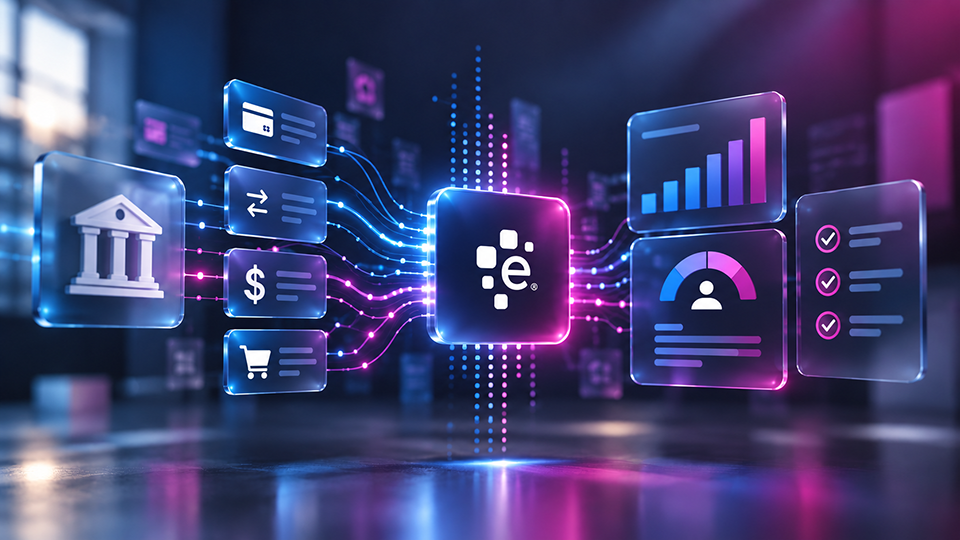
Collaboration between financial institutions and tech companies is essential to stay competitive and enhance the consumer experience. Working with forward-thinking companies can help unlock new ways to empower both consumers and financial institutions.

As the classic proverb goes,

“If you want to go fast, go alone. If you want to go far, go together.”

These collaborations provide lenders with advanced tools like real-time analytics and AI, enabling smarter decisions and more personalized services. For financial institutions, the benefits of these partnerships are tangible:

  • Access to alternative data improves credit risk assessment
  • Automation tools streamline compliance and fraud detection
  • AI-driven personalization enhances customer engagement
  • Shared innovation reduces development costs and time-to-market

At Experian, we value the many relationships we’ve built with financial institutions and fintech companies. These mutually beneficial connections help us empower organizations to adapt quickly, serve customers more effectively, and grow sustainably in a fast-changing environment while also enhancing our ability to accomplish our mission of bringing financial power to all.

Here are a few examples of how we’re teaming up with like-minded organizations to enable clients to drive strong business results, improve access to credit, strengthen risk management, and prevent fraud.

Unlocking faster, smarter lending through cash flow insights with Plaid

Our collaboration with Plaid, announced earlier this month, brings together Experian’s advanced data and analytics expertise and Plaid’s premiere account connectivity capabilities, lowering barriers to accessing cash flow insights and expanding financial inclusion.

Joining forces with Plaid means we can help organizations prioritize:

  • Speed and simplicity
  • Broader visibility
  • Smarter lending decisions
  • More inclusive lending
  • Proven trust

As a result, this provides lenders with a comprehensive solution to approve more borrowers with greater precision.

Bringing transparency to Buy Now, Pay Later with Affirm

Buy Now, Pay Later (BNPL) services are growing, and the need for transparency is more important than ever. In our ongoing efforts to support responsible lending, we’ve expanded our partnership with Affirm who now reports all its pay-over-time products to Experian.

This helps consumers build their credit histories and supports responsible lending, giving lenders better visibility of consumers’ financial health. Our work with Affirm emphasizes our commitment to creating a more transparent and responsible credit ecosystem. We plan to work with other leading BNPL providers, continuing to drive the future of credit data integration that will benefit lenders and consumers alike.

Smarter refinancing with Micronotes.ai

Debt refinancing can be a powerful tool if consumers know when and how to use it. We joined forces with Micronotes.ai, an industry leader in automated, AI-driven financial marketing systems, and launched Automated Prescreen™, a credit marketing solution that equips financial institutions with personalized credit offers to expand market and wallet share.

By combining Experian’s credit data with personalized digital engagement, this tool helps organizations identify profitable lending opportunities for existing accounts as well as prospective customers.

Automating risk management with ValidMind

Managing model risk is increasingly complex, especially with the rise of AI in financial services. Our strategic partnership with ValidMind addresses this challenge head-on. The Experian Assistant for Model Risk Management integrates ValidMind’s AI-driven governance tools within our Experian Ascend Platform, automating documentation, validation, and compliance. It helps institutions meet regulatory standards like SR 11-7 and the EU AI Act while reducing risk and accelerating time-to-market.

Strengthening fraud detection with NeuroID

Institutions that use behavioral analytics to predict and prevent fraud have a strategic advantage over the competition. Experian recently acquired NeuroID, an industry leader in behavioral analytics, to bolster its fraud detection capabilities and combat AI-enabled fraud.

With NeuroID’s insights into digital behavioral signals and analytics, we’re better able to provide organizations with valuable data that helps detect risk and prevent the exploitation of consumers’ personal information.

Looking ahead

Each of these collaborations reflects our commitment to using data and technology to empower financial institutions and improve consumer financial well-being. Whether it’s expanding access to credit, promoting transparency, preventing fraud, or ensuring responsible AI use, we’re proud to work with organizations to enable them to stand out from competitors, better serve consumers, and drive strong business results.

Visit our website to learn more about Experian’s business solutions for financial institutions.
Related Posts

The Email Address as Your Most Powerful Identity Signal

The why behind Experian's acquisition of AtData What happens when a comprehensive email intelligence database joins a global leader in data, analytics and fraud prevention? The acquisition of AtData adds 25+ years of building a complete view of email as an identity signal. Financial institutions can recognize, engage and protect customers unlocking a new standard for the way their teams work and the customer experience. That's what Experian's acquisition of AtData delivers. How we got here Not all email addresses tell the same story. Some are newly created. Some exhibit bot-like patterns. Some are inconsistent with every other signal you have about that person. Imagine a real customer. You have a job. You shop online. You have a primary email from your employer, a personal Gmail you've used for 15 years, and an old Yahoo address you still use for shopping because you've been using it since college. You're an engaged customer who interacts with brands, makes purchases and pays bills on time. But each system sees a different version of you. When you apply for credit, the lender sees one email. When you shop, the retailer sees another. When you sign up for a service, you might use the third. For financial institutions: You slow down the approval process to manually verify identity or approve applicants without the full picture. For retailers: You can't tell which version of "customer" is the most engaged, so you either over-mail or under-serve. For fraud systems: Sees a new account created under one email and flags it as suspicious because it doesn't have the history. This was the original problem AtData was built to solve in 1999. Twenty-five years later, that problem didn’t go away, it became more complex. Email fragmentation and device sharing are more common, and identity theft is more sophisticated. Capabilities that now work together Experian has built sophisticated identity and fraud solutions backed by consumer data resources and decades of expertise in credit and risk. AtData brought the ability to assess whether an email address is trustworthy, reachable and consistent—at scale, in real time. Experian is now making email intelligence foundational, not optional. This matters for: Fraud prevention and risk management: Distinguishing a returning customer from a new threat. Knowing whether an email is newly created, exhibiting bot-like patterns or inconsistent with other identities is crucial. Compliance: Building audit trails that can explain identity decisions. Email data history and behavioral signals create the documentation needed to defend your decisions. Credit: Verifying identity in a world where traditional signals are shifting. Email signals provide a persistent, durable identifier that confirms who someone actually is. Marketing: Reaching the right person across email, mail and digital channels. Email intelligence reveals which addresses are actively engaged and reachable. Research shows email remains one of the highest-ROI marketing channels outperforming paid search and social advertising1. The problem every marketer faces: You end up burning budget on addresses that bounce, are unmonitored or are associated with users who never open mail. For credit marketing specifically, email enables faster, more targeted delivery of firm offers across channels, something that's increasingly important in a post-cookie world. "Email is a persistent identifier in a fragmented world. It's what connects a person's postal address, phones, devices, behaviors—the full picture of who they are. By embedding that into our infrastructure, we're not just adding another data point. We're fundamentally improving how businesses understand who their customers are."- Ashley Knight, Senior Vice President, Financial Services and Data Why now? AI is reshaping how decisions are made in every industry. Models are getting faster, more automated and more embedded in core workflows. But AI is only as effective as the data behind it. Fragmented data + fast models = faster, larger-scale misclassifications. In an era of synthetic identities, AI agents, deepfakes and AI-generated activity, the value of durable, persistent, real-world data signals has increased dramatically. Deloitte’s Center for Financial Services projects that generative AI could drive fraud losses in the U.S. up to $40 billion by 2027, a 32% growth rate since 2023. And email sits at the center of it with business email compromise already being one of the most common and costly fraud types. People change phones, move homes and swap devices, but they often hold onto their email for years. That's the signal that protects your business, and the one we've built into the core of how we help you make decisions with confidence. View the press release here

August 6, 2026 by Zohreen Ismail
Building Financial Opportunity Through Purpose-Driven Partnership

Discover how the National Urban League and Experian partner to expand financial literacy and create economic opportunity.

August 6, 2026 by Scarlet Nickel
2026 U.S. Identity and Fraud Report 

Explore key findings and insights from our newly released 2026 U.S. Identity and Fraud Report. Read more now!

August 5, 2026 by Laura Burrows

Subscribe to our Newsletter

Enter your name and email for the latest updates.

This site is protected by reCAPTCHA and the Google Privacy Policy and Terms of Service apply.

Subscribe to our Newsletter

Don't miss out on the latest industry trends and insights!
Subscribe