Search Results for: synthetic id
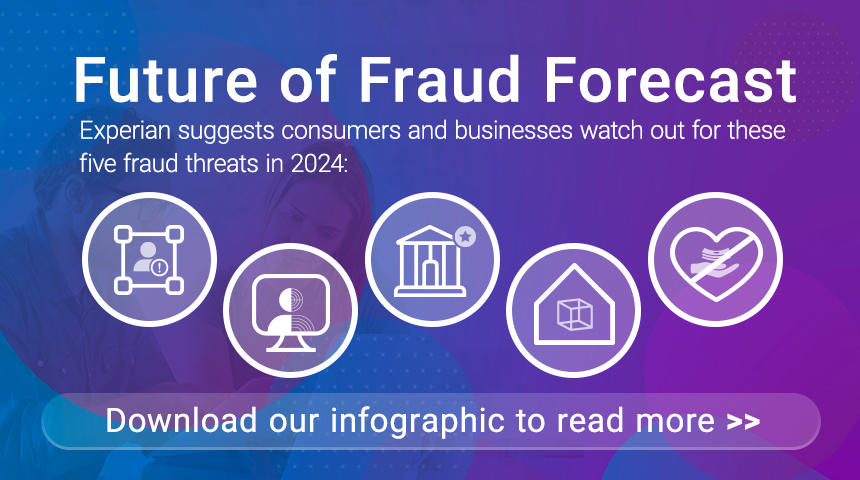
Spoiler alert: Gen AI is everywhere, including the top of Experian’s list of fraud trends 2024. “The speed and complexity of fraud attacks due to new technology and sophisticated fraudsters is leaving both businesses and consumers at risk in 2024,” said Kathleen Peters, chief innovation officer at Experian Decision Analytics in North America. “At Experian, we’re constantly innovating to deliver data-driven solutions to help our customers fight fraud and to protect the consumers they serve.” To deter fraudulent activity in 2024, businesses and consumers must get tactical for their fraud fighting strategies. And for businesses, the need for more sophisticated fraud protection solutions leveraging data and technology is greater than ever before. Experian suggests consumers and businesses watch out for these big five rounding out our fraud trends 2024. Generative AI: Generative AI accelerates DIY fraud: Experian predicts fraudsters will use generative AI to accelerate “do-it-yourself” fraud ranging from deepfake content – think emails, voice and video – as well as code creation to set up scam websites. A previous blog post of ours highlighted four types of generative AI used for fraud, including fraud automation at scale, text content generation, image and video manipulation and human voice generation. The way around it? Fight AI fraud with AI as part of a multilayered fraud prevention solution. Fraud at bank branches: Bank branches are making a comeback. A growing number of consumers prefer visiting bank branches in person to open new accounts or get financial advice with the intent to conduct safer transactions. However, face-to-face verification is not flawless and is still susceptible to human error or oversight. According to an Experian report, 85% of consumers report physical biometrics as the most trusted and secure authentication method they’ve recently encountered, but the measure is only currently used by 32% of businesses to detect and protect against fraud. Retailers, beware: Not all returns are as they appear. Experian predicts an uptick in cases where customers claim to return their purchases, only for the business to receive an empty box in return. Businesses must be vigilant with their fraud strategy in order to mitigate risk of lost goods and revenue. Synthetic identity fraud will surge: Pandemic-born synthetic identities may have been dormant, but now have a few years of history, making it easier to elude detection leading to fraudsters using those dormant accounts to “bust out” over the next year. Cause-related and investment deception: Fraudsters are employing new methods that strike an emotional response from consumers with cause-related asks to gain access to consumers’ personal information. Experian predicts that these deceptive cause-related methods will surge in 2024 and beyond. How businesses and consumers feel about fraud in 2024 According to an Experian report, over half of consumers feel they’re more of a fraud target than a year ago and nearly 70% of businesses report that fraud losses have increased in recent years. Business are facing mounting challenges – from first-party fraud and credit washing to synthetic identity and the yet-to-be-known impacts generative AI may have on fraud schemes. Synthetic identity fraud has been mentioned in multiple Experian Fraud Forecasts and the threat is ever growing. As technology continues to enhance consumers’ connectedness, it also heightens the stakes for various fraud attacks. As highlighted by this list of fraud trends 2024, the ways that fraudsters are looking to deceive is increasing from all angles. “Now more than ever, businesses need to implement a multilayered approach to their identity verification and fraud prevention strategies that leverages the latest technology available,” said Peters. Consumers are increasingly at risk from sophisticated fraud schemes. Increases in direct deposit account and check fraud, as well as advanced technologies like deepfakes and AI-generated phishing emails, put consumers in a precarious position. The call to action for consumers is to remain vigilant of seemingly authentic interactions. Experian can help with your fraud strategy To learn more about Experian’s fraud prevention solutions, please visit https://www.experian.com/business/solutions/fraud-management. Download infographic Watch Future of Fraud webinar

This article was updated on February 12, 2024. The Buy Now, Pay Later (BNPL) space has grown massively over the last few years. But with rapid growth comes an increased risk of fraud, making "Buy Now, Pay Never" a crucial fraud threat to watch out for in 2024 and beyond. What is BNPL? BNPL, a type of short-term financing, has been around for decades in different forms. It's attractive to consumers because it offers the option to split up a specific purchase into installments rather than paying the full total upfront. The modern form of BNPL typically offers four installments, with the first payment at the time of purchase, as well as 0% APR and no hidden fees. According to an Experian survey, consumers cited managing spending (34%), convenience (31%), and avoiding interest payments (23%) as main reasons for choosing BNPL. Participating retailers generally offer BNPL at point-of-sale, making it easy for customers to opt-in and get instantly approved. The customer then makes a down payment and pays off the installments from their preferred account. BNPL is on the rise The fintech and online-payment-driven world is seeing a rise in the popularity of BNPL. According to Experian research, 3 in 4 consumers have used BNPL in 2023, with 11% using BNPL weekly to make purchases. The interest in BNPL also spans generations — 36% of Gen Z, 43% of Millennials, 32% of Gen X, and 12% of Baby Boomers have used this payment method. The risks of BNPL While BNPL is a convenient, easy way for consumers to plan for their purchases, experts warn that with lax checkout and identity verification processes it is a target for digital fraud. Experian predicts an uptick in three primary risks for BNPL providers and their customers: identity theft, first-party fraud, and synthetic identity fraud. WATCH: Fraud and Identity Challenges for Fintechs Victims of identity theft can be hit with charges from BNPL providers for products they have never purchased. First-party and synthetic identity risks will emerge as a shopper's buying power grows and the temptation to abandon repayment increases. Fraudsters may use their own or fabricated identities to make purchases with no intent to repay. This leaves the BNPL provider at the risk of unrecoverable monetary losses and can impact the business' risk tolerance, causing them to narrow their lending band and miss out on properly verified consumers. An additional risk lies with fraudsters who may leverage account takeover to gain access to a legitimate user's account and payment information to make unauthorized purchases. READ: Payment Fraud Detection and Prevention: What You Need to Know Mitigating BNPL risks Luckily, there are predictive credit, identity verification, and fraud prevention tools available to help businesses minimize the risks associated with BNPL. Paired with the right data, these tools can give businesses a comprehensive view of consumer payments, including the number of outstanding BNPL loans, total BNPL loan amounts, and BNPL payment status, as well as helping to detect and apply the relevant treatment to different types of fraud. By accurately identifying customers and assessing risk in real-time, businesses can make confident lending and fraud prevention decisions. To learn more about how Experian is enabling the protection of consumer credit scores, better risk assessments, and more inclusive lending, visit us or request a call. And keep an eye out for additional in-depth explorations of our Future of Fraud Forecast. Learn more Future of Fraud Forecast

It is a New Year and a new start. How about a new job? That is what thousands of employees will consider over the next month. It is also a time for employers to attract new talents, but they must be aware of different types of employment fraud. The rise of remote work has significantly increased the prevalence of remote hiring practices, from the initial job application to the onboarding process and beyond. Unfortunately, this shift has also opened the door to a surge in imposter employees, also known as ‘candidate fraud,’ posing a significant concern for organizations. How does employment identity theft happen? Instances of potential job candidates utilizing real-time deepfake video and deepfake audio, along with personally identifiable information (PII), during remote interviews to secure positions within American companies have been on the rise. The Federal Bureau of Investigation (FBI) reports that fraudulent individuals often acquire PII through fake job opening posts, which enable them to gather candidate information and resumes. Surprisingly, the tools necessary for impersonation on live video calls do not require sophisticated or expensive hardware or software. Employment identity theft can occur in several ways. Here are a few examples: Inaccurate credentials: Employers may inadvertently hire someone with false or stolen credentials if they fail to conduct comprehensive background checks. When the employer discovers the deception, it can be challenging to trace the true identity of the person they unknowingly hired. Limited-term job offers: Some industries offer temporary job opportunities in distant locations. Individuals with criminal backgrounds may steal victims' identities to apply for these jobs, hoping that their crimes will go unnoticed until after the job is complete. Perpetrated by colleagues: In rare instances, jealous colleagues or coworkers can commit employment identity theft. They may steal a coworker's information during a data breach and sell it on the dark web or use the victim's credentials to frame them for fraudulent workplace actions. Preventing employment identity theft In addition to the reported cases of imposter employee fraud, it is crucial to acknowledge the potential for other scams that exploit new technologies and the prevalence of remote work. Malicious cyber attackers could secure employment using stolen credentials, enabling them to gain unauthorized access to sensitive data or company systems. A proficient hacker possessing the necessary IT skills may find it relatively easy to leverage social engineering techniques during the hiring process. Consequently, the reliability of traditional methods for employee verification, such as face-to-face interactions and personal recognition, is diminishing in the face of remote work and the technological advancements that enable individuals to manipulate their appearance, voice, and identity. To mitigate risks associated with hiring imposters, it is imperative to incorporate robust measures into the recruitment process. Here are some key considerations: Establish clear policies and employment contracts: Clearly communicate your organization's policies regarding moonlighting in employment contracts, employee handbooks, or other official documents. Confidentiality and non-compete agreements: Implement confidentiality and non-compete agreements to protect your company's sensitive information and intellectual property. Monitoring: Automate employment and income verification of your employees. Provide training on cybersecurity best practices: Educate employees about cyber-attacks and identity scams, such as phishing scams, through seminars and workplace training sessions. Implement robust security measures: Use firewalls, encrypt sensitive employee information, and limit access to personal data. Minimize the number of employees who have access to this information. Thoroughly screen new employees: Verify the accuracy of Social Security numbers and other information during the hiring process. Conduct comprehensive background checks, including checking bank account information and credit reports and fight against synthetic identities. Offer identity theft protection as a benefit: Consider providing identity theft protection services to your employees as part of their benefits package. These services can detect and alert victims of potential identity theft, facilitating a fast response. The new era of remote work necessitates a fresh perspective on the hiring process. It is crucial to reevaluate HR practices and leverage AI fraud detection technologies to ensure that the individuals you hire, and employ are who they claim to be, guarding against the infiltration of imposters. Navigating employment fraud with effective solutions Employment fraud presents significant risks and challenges for employers, including conflicts of interest, reputation damage, and breaches of confidentiality. By taking the right preventative measures, you can safeguard your organization and employees. Streamlining the hiring process is essential to remain competitive. But how do you balance the need for speed and ease of use with essential ID checks? By combining the best data with our automated ID verification processes, Experian helps you protect your business and onboard new talents efficiently. Our best-in-class solutions employ device recognition, behavioral biometrics, machine learning and global fraud databases to spot and block suspicious activity before it becomes a problem. Learn more about preventing employement fraud *This article includes content created by an AI language model and is intended to provide general information.

Fraud is a serious concern for everyone, including businesses and individuals. In fact, according to our 2023 U.S. Identity and Fraud Report, nearly two-thirds (64%) of consumers are very or somewhat concerned with online security, and over 50% of businesses have a high level of concern about fraud risk. The fraud landscape is constantly evolving, and staying vigilant against the latest trends is critical to safeguarding your organization and consumers. As we reflect on 2023, let’s look at the top fraud trends and their continued potential impact on your business. The evolution of new fraud trends When economic uncertainty reigns, a rise in fraud often follows. To begin with, consumers tend to be financially stressed in such periods and prone to making risky decisions. In addition, fraudsters are keenly aware of the opportunities inherent in unstable times and develop tactics to take advantage of them. For example, as consumers rein in spending and financial institutions struggle to maintain new account volumes, fraudsters might ramp up their new account and loan activities. Fraud is becoming more sophisticated. For instance, thanks to the rapid rise in the availability of artificial intelligence (AI) tools, fraudsters are increasingly able to impersonate companies and individuals with ease, as well as consolidate data from diverse sources and use it more efficiently. The most impactful fraud trends of 2023 The fraud trends that emerged in 2023 were diverse, though they all had one thing in common: fraudsters' keen ability to take advantage of new technologies and opportunities. And businesses are feeling the repercussions, with nearly 70% reporting that fraud losses have increased in recent years. Here are five trends we forecasted in the fraud and identity space that challenged fraud fighters on the front lines this year. Deposit and checking account fraud With everyone focused on fraud in the on-line channels, it is interesting that financial institutions reported more fraud occurring at brick-and-mortar locations. Preying on the good nature of helpful branch employees, criminals are taking risks by showing up in person to open accounts, pass bad deposits and try to work their way into other financial products. The Treasury Department reports complaints doubling YoY, after increasing more than 150% between 2020 and 2021. Synthetic identity fraud Not quite fake, not quite real, so-called synthetic or "Frankenstein" identities mash up real data with false information to create unique customer profiles that can outsmart retailers' or financial institutions' fraud control systems. With synthetic identity (SID) fraud real data is often stolen or purchased on the dark web and combined with other information — even Artificial Intelligence (AI)-created faces — so that fraudsters can build up a synthetic identity's credit score before taking advantage of them to borrow and spend money that will never be paid back. One major risk? As fraud rates rise due to the use of tactics like synthetic identities, it could become more challenging and expensive to access credit. Fake job postings and mule schemes Well-paying remote work was in high demand this year, creating opportunities for fraudsters to create fake jobs to harvest data such as Social Security numbers from unsuspecting applicants. Experian also predicts a continued rise in "mule" jobs, in which workers unknowingly sign on to do illegal work, such as re-shipping stolen goods. According to the Better Business Bureau, an estimated 14 million people get caught in a fake employment scam yearly. Job seekers can protect themselves by being skeptical of jobs that ask them to do work that appears suspicious, requires money, financial details, or personal information upfront. Peer-to-peer payment fraud Peer-to-peer payment tools are increasingly popular with consumers and fraudsters, who appreciate that they're both instant and irreversible. Experian expects to continue to see an increase in fraudulent activity on these payment systems, as fraudsters use social engineering techniques to deceive consumers into paying for nonexistent merchandise or even sharing access credentials. Stay safe while using peer-to-peer payment tools by avoiding common scams like requests to return accidental payments, opting for payment protection whenever possible and choosing other transaction methods like paying with a credit card. Social media shopping fraud Social media platforms are eager to make in-app shopping fun and friction-free for consumers — and many brands and shoppers are keen to get on board. In fact, approximately 58% of users in the U.S. have purchased a product after seeing it on social media. Unfortunately, these tools neglect effective identity resolution and fraud prevention, leaving sellers vulnerable to fraudulent purchases. And while buyers have some recourse when a purchase turns out to be a scam, it's wise to be cautious while shopping on social media platforms by researching sellers, only using credit cards and being cognizant of common scams, like when vendors on Facebook Marketplace ask for payment upfront. Employer text fraud Fraudulent text messages — also known as “smishing,” a mash-up of Short Messaging Service (SMS) and phishing — continues to rise. In fact, according to data security company Lookout, 2022 was the biggest year ever for such mobile phishing attacks, with more than 30 percent of personal and enterprise mobile phone users exposed every quarter. One modern example of these types of schemes? Expect to continue to see a rise in gift card fraud targeting companies. For example, an employee might receive a text from their "boss" asking them to purchase gift cards and relay the numbers. The fraudsters get to shop, and the company is left with the bill. Why fraud prevention and detection solutions matter Nearly two-thirds of consumers say they are "very" or "somewhat concerned" with online security, and more than 85 percent expect businesses to respond to their identity and fraud concerns. Addressing and preventing fraud — and communicating these fraud-prevention actions to customers — is an essential strategy for businesses that want to maintain customer trust, thereby decreasing churn and maximizing conversions on new leads. There's a financial imperative to address fraud as well. Businesses stand to lose a great deal of money without adequate fraud prevention strategies. Account takeover fraud, for example, is an increasing threat to financial institutions, which saw a 90 percent increase in account takeover losses from 2020 to 2021. By making account takeover fraud prevention a priority, financial institutions can alleviate risks and prevent major losses. How to build an effective fraud strategy in 2024 In 2024, fraud management solutions must be even more technically advanced than the fraudulent techniques they're combating. But more than that, they need to be appealing to consumers, who are likely to abandon signup or purchase attempts when they become too onerous. In fact, 37% of consumers have moved their business elsewhere due to a negative account opening experience. Worryingly for businesses, this number was even higher among high-income households and those aged 25 to 39. To succeed, effective fraud strategies must be seamless, low friction, data-driven and customer-focused. That means making use of up-to-date technologies that boost security while prioritizing a positive customer experience. Concerned about fraud? Let Experian help As we look back at the top fraud trends of 2023, it's clear that scammers are becoming increasingly sophisticated in their methods. Fraud can create huge risks for your business — but there are ways to act. Experian's suite of fraud prevention and identity verification tools can help you detect and combat fraud. Find out more about Experian's fraud risk management strategies and how they can help keep you and your customers safe. Learn more
Financial institutions are under increasing pressure to grow deposits and onboard more demand deposit accounts (DDA). But as demand increases, so do fraud attempts from scammers. While a robust mitigation effort is needed to stop fraud, this same effort can also drive away potential clients. In fact, 37 percent of U.S. adults said that they abandoned opening an account online due to experiencing friction. This leaves institutions in a unique quandary: how do they stop DDA fraud without scaring away potential clients? The answer lies in utilizing robust, machine learning tools that can help you navigate fraud attempts without increasing onboarding friction. Chris Ryan, Go to Market Lead for Experian Identity and Fraud, shares his thoughts on demand deposit account fraud and which decisioning tools can best combat it. Q: What is a demand deposit account and how is it used? "Demand deposit is just your basic checking account," Ryan explains." The funds are deposited and held by an institution, which enables you to spend those assets or resources, whether it be through checks, debit cards, person-to-person, Automated Clearing House (ACH) — all the things we do every day as consumers to manage our operating budget." Q: What is demand deposit account fraud? "There are two different ways that demand deposit account fraud works," Ryan says. "One is with existing account holders, and the other is with the account opening process.” When fraud affects existing account holders, it typically involves tricking an account holder into sending money to a scammer or using fraudulent actions, like phishing emails or credit card skimmers, to gain access to their accounts. There is also a resurgence in fraud involving duplication, theft and forgery of paper checks, Ryan explains. Fraud impacting the account opening process occurs when scammers originate new DDAs. This can work in a variety of ways, such as these three examples: A scammer steals your identity and opens an account at the same bank where you have a home equity loan. They link their DDA to your line of credit, transferring your money into their new account and withdrawing the funds. A scammer uses a synthetic identity (SID) to open a fraudulent DDA. They will then use this new DDA to open more lucrative accounts that the institution cross-sells to them. A scammer uses a stolen or SID to open “mule” accounts to receive funds they dupe consumers into sending through fake relationship schemes, bogus merchandise sales and dozens of similar scams. While both types of fraud need to be dealt with, account opening fraud can have especially large repercussions for lenders or financial institutions. Q: What are the consequences of DDA fraud for organizations? "Fraud hurts in a number of ways," Ryan explains. "There are direct losses, which is the money that criminals take from our financial system. Under most circumstances, the financial institution replaces the money, so the consumer doesn’t absorb the loss, but the money is still gone. That takes money away from lending, community engagement and other investments we want banks to make. The direct losses are what most people focus on." But there are even more repercussions for institutions beyond losing money, and this can include the attempts that institutions put into place to stop the fraud. "Preventing fraud requires some friction for the end consumer," Ryan says. "The volume of fraudulent attempts is overwhelmingly large in the DDA space. This forces institutions to apply more friction. The friction is costly, and it often drives would-be-customers away. The results include high costs for the institutions and low booking rates. At the same time, institutions are hungry for deposit money right now. So, it's kind of a perfect storm." Q: What is the impact of DDA fraud on customer experience? Experian’s 2023 Identity and Fraud Report revealed that up to 37 percent of U.S. adults in the survey had abandoned a new account entirely in the previous six months because of the friction they encountered during onboarding. And 51 percent reported considering abandoning the process because of problems they encountered. Unfortunately, fraud mitigation and deposit fraud detection efforts can end up driving customers away. "People can be impatient," Ryan says, "and in the online world, a competing product is a mouse-click away. So, while it is tempting to ask new applicants for more information, or further proof of identity, that conflicts with their need for convenience and can impact their experience.” Companies looking for cheap and fast mitigation can end up impeding customers trying to onboard to sweep out the bad actors, Ryan explains. "How do you get the bad people without interrupting the good people?" Ryan asks. "That's the million-dollar question." Q: What are some other problems with how organizations traditionally combat DDA fraud? Unfortunately, traditional attempts to combat DDA fraud are inefficient due to the fragmentation of technology. Ryan says this was revealed by Liminal, an industry analyst think tank. "Nearly half of institutions use four-or-more-point solutions to manage identity and fraud-related risk," Ryan explains. "But all of those point solutions were meant to work on their own. They weren't developed to work together. So, there's a lot of overlap. And in the case of fraud, there's a high likelihood that the multiple solutions are going to find the same fraud. So, you create a huge inefficiency." To solve this challenge, institutions need to shift to integrated identity platforms, such as Experian CrossCore®. Q: How is Experian trying to change the way organizations approach DDA fraud? Experian is pushing a paradigm shift for institutions that will increase fraud detection efficiency and accuracy, without sacrificing customer experience. "Organizations need to start thinking of identity through a different lens," Ryan says. Experian has developed an identity graph that aggregates consumer information in a manner that reaches far beyond what an institution can create on its own. "Experian is able to bring the entire breadth of every identity presentation we see into an identity graph," Ryan says. "It's a cross-industry view of identity behavior." This is important because people who commit fraud manipulate data, and those manipulations can get lost in a busy marketplace. For example, Ryan explains, if you're newly married, you may have recently presented your identity using two different surnames: one under your maiden name and one under your married name. Traditional data sources may show that your identity was presented twice, but they won’t accurately reflect the underlying details; like the fact that different surnames were used. The same holds true for thousands of other details seen at each presentation but not captured in a way that enables changes over time to be visible, such as information related to IP addresses, email accounts, online devices, or phone numbers. "Our identity graph is unlocking the details behind those identity presentations," Ryan says. "This way, when a customer comes to us with a DDA application, we can say, 'That's Chris's identity, and he's consistently presenting the same information, and all that underlying data remains very stable.'" This identity graph, part of Experian's suite of fraud management solutions — also connects unique identity details to known instances of fraud, helping catch fraudulent attempts much faster than traditional methods. "Let's say you and your spouse share an address, phone numbers, all the identity details that married couples typically share," Ryan explains. "If an identity thief steals your identity and uses it along with a brand-new email and IP address not associated with your spouse, that might be concerning. However, perhaps you started a new job, and the email/IP data is legitimate. Or maybe it’s a personal email using a risky internet service provider that shares a format commonly used by a known ring of identity thieves. Traditional data might flag the email and IP information as new, but our identity graph would go several layers deeper to confirm the possible risks that the new information brings. Q: Why is this approach superior to traditional methods of fraud detection? "Historically, organizations were interested in whether an identity was real,” Ryan says. "The next question was if the provided data (I.e., addresses, date of birth, Social Security numbers, etc.) have been historically associated with the identity. Last, the question would be whether there’s known risk associated with any of the identity components.” The identity graph turns that approach upside down. "The identity graph allows us to pull in insights from past identity presentations, " Ryan says. "Maybe the current presentation doesn’t include a phone number. Our identity graph should still recognize previously provided phone numbers and the risks associated with them. Instead of looking at identity as a small handful of pieces of data that were given at the time of the presentation, we use the data given to us to get to the identity graph and see the whole picture." Q: How are businesses applying this new paradigm? The identity graph is part of Experian's Ascend Fraud Platform™ and a full suite of fraud management solutions. Experian's approach allows companies to clean out fraud that already occurred and stop new fraudulent actors before they're onboarded. "Ideally, you want to start with cleaning up the house, and then figure out how to protect the front door," Ryan says. In other words, institutions can start by applying this view to recently opened accounts to identify problematic identities that they missed. The next step would be to bring these insights into the new account onboarding process. Q: Is this new fraud platform accessible to both small and large businesses? The Ascend Fraud Platform will support several use cases that will bring value to a broad range of businesses, Ryan explains. It can not only enable Experian experts to build and deliver better tools but can enable self-serve analytical development too. "Larger organizations that have robust, internal data science capabilities will find that it’s an ideal environment for them to work in," Ryan says. "They can add their own internal data assets to ours, and then have a better place to develop analytics. Today, organizations spend months assembling data to develop analytics internally. Our Ascend Fraud Platform will reduce the timeline of the data assembly and analytical development process to weeks, and speed to market is critical when confronting continually changing fraud threats. "But for customers who have less robust analytical teams, we're able to do that on their behalf and bring solutions out to the marketplace for them," Ryan explains. Q: What type of return on investment (ROI) are businesses experiencing? "Some customers recover their investment in days," Ryan says. "Part of this is from mitigating fraud risks among recently opened accounts that slipped through existing defenses.” "In addition to reducing losses, institutions we're working with are also seeing potentially millions of dollars a month in additional bookings, as well as significant cost savings in their account opening processes," Ryan says. "We're able to help clients go back and audit the people who had fallen out of their process, to figure out how to fine-tune their tools to keep those people in," Ryan says. “By reducing risks among existing accounts, better protecting the front door against future fraud, and growing more efficiently, we’re helping clients Q: What are Experian's plans for this service? "We're working with top-tier financial institutions on the do-it-yourself techniques," Ryan says. "In parallel, we're launching our first offerings that are created for the broader marketplace. That will start with the portfolio review capability, along with making the most predictive attributes available through our integrated identity resolution platform. And while the Ascend Fraud Platform has a strong use case for DDA fraud, its uses extend beyond that to small business lending and other products. In fact, Experian offers an entire suite of fraud management solutions to help keep your DDA accounts secure and your customers happy. Experian can help optimize your DDA fraud detection Experian is revolutionizing the approach to combating DDA fraud, helping institutions create a faster onboarding process that retains more customers, while also stopping more bad actors from gaining access. It's a win-win for everyone. Experian's full suite of fraud management solutions can optimize your business's DDA fraud detection, from scrubbing your current portfolio to gatekeeping bad actors before they're onboarded. Learn more Speak with a specialist About our expert: Chris Ryan has over 20 years of experience in fraud prevention and uses this knowledge to identify the most critical fraud issues facing individuals and businesses in North America, and he guides Experian’s application of technology to mitigate fraud risk.

This article was updated on April 23, 2024. Keeping your organization and consumers safe can be challenging as cybercriminals test new attack vectors and data breaches continually expose credentials. Instead of relying solely on usernames and passwords for user identity verification, adding extra security measures like multi-factor authentication can strengthen your defense. What is multi-factor authentication? Multi-factor authentication, or MFA, is a method of authenticating people using more than one type of identifier. Generally, you can put these identifiers into three categories based on the type of information: Something a person knows: Usernames, passwords, and personal information are common examples of identifiers from this category. Something a person has: These could include a phone, computer, card, badge, security key, or another type of physical device that someone possesses. Something a person is: Also called the inherence factor, these are intrinsic behaviors or qualities, such as a person's voice pattern, retina, or fingerprint. The key to MFA is it requires someone to use identifiers from different categories. For example, when you withdraw money from an ATM, you're using something you have (your ATM card or phone), and something you know (your PIN) or are (biometric data) to authenticate yourself. Common types of authenticators Organizations that want to implement multi-factor authentication can use different combinations of identifiers and authenticators. Some authenticator options include: One-time passwords: One-time passwords (OTPs) can be generated and sent to someone's mobile phone via text to confirm the person has the phone or via email. There are also security tokens and apps that can generate OTPs for authentication. (Something you know.) Knowledge-based authentication: Knowledge-based authentication (KBA) identity verification leverages the ability to verify account information or a payment card, “something you have,” by confirming some sequence of numbers from the account. (Something you know.) Security tokens: Devices that users plug into their phone or computer, or hold near the device, to authenticate themselves. (Something you have.) Biometric scans: These can include fingerprint and face scans from a mobile device, computer, or security token. (Something you are.) Why MFA is important It can be challenging to keep your users and employees from using weak passwords. And even if you enforce strict password requirements, you can't be sure they're not using the same password somewhere else or accidentally falling for a phishing attack. In short, if you want to protect users' data and your business from various types of attacks, such as account takeover fraud, synthetic identity fraud, and credential stuffing, you’ll need to require more than a username and password to authenticate users. That’s where MFA comes in. Because it uses a combination of elements to verify a consumer’s identity, if one of the required components in a transaction is missing or supplied incorrectly, the transaction won’t proceed. As a result, you can ensure you’re interacting with legitimate consumers and protect your organization from risk. LEARN MORE: Explore our fraud prevention solutions. How to provide a frictionless MFA experience While crucial to your organization, in-person and online identity verification shouldn’t create so much friction that legitimate consumers are driven away. Experian's 2023 U.S. Identity and Fraud Report found that 96 percent of consumers view OTPs as convenient identity verification solutions when opening a new account. An increasing number of consumers also view physical and behavioral biometrics as some of the most trustworthy recognition methods — 81 and 76 percent, respectively. To create a low friction MFA experience that consumers trust, you could let users choose from different MFA authentication options to secure their accounts. You can also create step-up rules that limit MFA requests to riskier situations — such as when a user logs in from a new device or places an unusually large order. To make the MFA experience even more seamless for consumers, consider adding automated identity verification (AIV) to your processes. Because AIV operates on advanced analytics and artificial intelligence, consumers can verify their identities within seconds without physical documentation, allowing for a quick, hassle-free verification experience. How Experian powers multi-factor authentication Experian offers various identity verification and risk-based authentication solutions that organizations can leverage to streamline and secure their operations, including: Experian’s CrossCore® Doc Capture confidently verifies identities using a fully supported end-to-end document verification service where consumers upload an image of a driver’s license, passport, or similar directly from their smartphone. Experian’s CrossCore Doc Capture adds another layer of security to document capture with a biometric component that enables the individual to upload a “selfie” that’s compared to the document image. Experian's OTP service uses additional verification checks and identity scoring to help prevent fraudsters from using a SIM swapping attack to get past an MFA check. Before sending the OTP, we verify that the number is linked to the consumer's name. We also review additional attributes, such as whether the number was recently ported and the account's tenure. Experian's Knowledge IQSM offers KBA with over 70 credit- and noncredit-based questions to help you engage in additional authentication for consumers when sufficiently robust data can be used to prompt a response that proves the person has something specific in their possession. You can even configure it to ask questions based on your internal data and phrase questions to match your brand's language. Learn more about how our multi-factor authentication solutions can help your organization verify consumer identities and mitigate fraud. Learn about our MFA solutions

This article was updated on November 9, 2023. Fraud – it’s a word that comes up in conversations across every industry. While there’s a general awareness that fraud is on the rise and is constantly evolving, for many the full impact of fraud is misunderstood and underestimated. At the heart of this challenge is the tendency to lump different types of fraud together into one big problem, and then look for a single solution that addresses it. It’s as if we’re trying to figure out how to un-bake a terrible cake instead of thinking about the ingredients and the process needed to put them together in the first place. This is the first of a series of articles in which we’ll look at some of the key ingredients that create different types of fraud, including first party, third party, synthetic identity, and account takeover. We’ll talk about why they’re unique and why we need to approach each one differently. At the end of the series, we’ll get a result that’s easier to digest. I had second thoughts about the cake metaphor, but in truth it really works. Creating a good fraud risk management process is a lot like baking. We need to know the ingredients and some tried-and-true methods to get the best result. With that foundation in place, we can look for ways to improve the outcome every time. Let’s start with a look at the best known type of fraud, third party. What is third-party fraud? Third-party fraud – generally known as identity theft – occurs when a malicious actor uses another person’s identifying information to open new accounts without the knowledge of the individual whose information is being used. When you consider first-party vs third-party fraud, or synthetic identity fraud, third-party stands out because it involves an identifiable victim that’s willing to collaborate in the investigation and resolution, for the simple reason that they don’t want to be responsible for the obligation made under their name. Third-party fraud is often the only type of activity that’s classified as fraud by financial institutions. The presence of an identifiable victim creates a high level of certainty that fraud has indeed occurred. That certainty enables financial institutions to properly categorize the losses. Since there is a victim associated with it, third party fraud tends to have a shorter lifespan than other types. When victims become aware of what’s happening, they generally take steps to protect themselves and intervene where they know their identity has been potentially misused. As a result, the timeline for third-party fraud is shorter, with fraudsters acting quickly to maximize the funds they’re able to amass before busting out. How does third-party fraud impact me? As the digital transformation continues, more and more personally identifiable information (PII) is available on the dark web due to data breaches and phishing scams. Given that consumer spending is expected to increase1, we anticipate that the amount of PII readily available to criminals will only continue to grow. All of this will lead to identity theft and increase the risk of third-party fraud. More than $43 billion in total losses was reported due to identity theft and fraud in the U.S. in 2022.2 Solving the third-party fraud problem We’ve examined one part of the fraud problem, and it is a complex one. With Experian as your partner, solving for it isn’t. Continuing my cake metaphor, by following the right steps and including the right ingredients, businesses can detect and prevent fraud. Third-party fraud detection and prevention involves two distinct steps. Analytics: Driven by extensive data that captures the ways in which people present their identity—plus artificial intelligence and machine learning—good analytics can detect inconsistencies, and patterns of usage that are out of character for the person, or similar to past instances of known fraud. Verification: The advantage of dealing with third-party fraud is the availability of a victim that will confirm when fraud is happening. The verification step refers to the process of making contact with the identity owner to obtain that confirmation and may involve identity resolution. It does require some thought and discipline to make sure that the contact information used leads to the identity owner—and not to the fraudster. In a series of articles, we’ll be exploring first-party fraud, synthetic identity fraud, and account takeover fraud and how a layered fraud management solution can help keep your business and customers safe and manage third-party fraud detection, first-party fraud, synthetic identity fraud, and account takeover fraud prevention. Let us know if you’d like to learn more about how Experian is using our identity expertise, data, and analytics to create robust fraud prevention solutions. Contact us 1 Experian Ascend Sandbox 2 2023 U.S. Identity and Fraud Report, Experian.

As the sophistication of fraudulent schemes increases, so must the sophistication of your fraud detection analytics. This is especially important in an uncertain economic environment that breeds opportunities for fraud. It's no longer enough to rely on old techniques that worked in the past. Instead, you need to be plugged into machine learning, artificial intelligence (AI) and real-time monitoring to stay ahead of criminal attempts. Your customers have come to expect cutting-edge security, and fraud analytics is the best way to meet — and surpass — those expectations. Leveraging these analytics can help your business better understand fraud techniques, uncover hidden insights and make more strategic decisions. What is fraud analytics? Fraud analytics refers to the idea of preventing fraud through sophisticated data analysis that utilizes tools like machine learning, data mining and predictive AI.1 These services can analyze patterns and monitor for anomalies that signal fraud attempts.2 While at first glance this may sound like a lot of work, it's necessary in today's technologically savvy culture. Fraud attempts are becoming more sophisticated, and your fraud detection services must do the same to keep up. Why is fraud analytics so important? According to the Experian® 2025 US Identity and Fraud Report, fraud is a growing issue that businesses cannot ignore, especially in an environment where economic uncertainty provides a breeding ground for fraudsters. Last year alone, consumers lost $8.8 billion — an increase of 30 percent over the previous year. Understandably, nearly two-thirds of consumers are at least somewhat concerned about online security. Their worries range from authorized push payment scams (such as phishing emails) to online privacy, identity theft and stolen credit cards. Unfortunately, while 75 percent of surveyed businesses feel confident in protecting against fraud, only 45 percent understand how fraud impacts their business. There's a lot of unearned confidence out there that can leave businesses vulnerable to attack, especially with nearly 70 percent of businesses admitting an increase in fraud loss in recent years. The types of fraud that businesses most frequently encounter include: Authorized push payment fraud: Phishing emails and other schemes that persuade consumers to deposit funds into fraudulent accounts. Transactional payment fraud: When fraudulent actors steal credit card or bank account information, for example, to make unauthorized payments. Account takeover: When a fraudster gains access to an account that doesn't belong to them and changes login details to make unauthorized transactions. First-party fraud: When an account holder uses their own account to commit fraud, like misrepresenting their income to get a lower loan rate. Identity theft: Any time a person's private information is used to steal their identity. Synthetic identity theft: When someone combines real and fake personal data to create an identity that's used to commit fraud. How can fraud analytics be used to help your business? More than 85% of consumers expect businesses to respond to their security and fraud concerns. A good portion of them (67 percent) are even ready to share their personal data with trusted sources to help make that happen. This means that investing in risk and fraud analytics is not only vital for keeping your business and customer data secure, but it will score points with your consumers as well. So how can your business utilize fraud analytics? Machine learning is a great place to start. Rather than relying on outdated rules-based analytic models, machine learning can vastly increase your speed in identifying fraud attempts. This means that when a new fraudulent trend emerges, your machine learning software can pinpoint it fast and flag your security team. Machine learning also lets you automatically analyze large data sets across your entire customer portfolio, improving customer experiences and your response time. In general, the best way for your business to use fraud analytics is by utilizing a multi-layered approach, such as the robust fraud management solutions offered by Experian. Instead of a one-size-fits-all solution, Experian lets you customize a framework of physical and digital data security that matches your business needs. This framework includes a cloud-based platform, machine learning for streamlined data analytics, biometrics and other robust identity-authentication tools, real-time alerts and end-to-end integration. How Experian can help Experian's platform of fraud prevention solutions and advanced data analytics allows you to be at the forefront of fraud detection. The platform includes options such as: Account takeover prevention. Account takeovers can go unnoticed without strong fraud detection. Experian's account takeover prevention tools automatically flag and monitor unusual activities, increase efficiency and can be quickly modified to adapt to the latest technologies. Bust-out fraud prevention. Experian utilizes proactive monitoring and early detection via machine learning to prevent bust-out fraud. Access to premium credit data helps enhance detection. Commercial entity fraud prevention. Experian's Sentinel fraud solutions blend consumer and business datasets to create predictive insights on business legitimacy and credit abuse likelihood. First-party fraud prevention. Experian's first-party fraud prevention tools review millions of transactions to detect patterns, using machine learning to monitor credit data and observations. Global data breach protection. Experian also offers data breach protection services, helping you use turnkey solutions to build a program of customer notifications and identity protection. Identity protection. Experian offers identity protection tools that deliver a consistent brand experience across touchpoints and devices. Risk-based authentication. Minimize risk with Experian's adaptive risk-based authentication tools. These tools use front- and back-end authentication to optimize cost, risk management and customer experience. Synthetic identity fraud protection. Synthetic identity fraud protection guards against the fastest-growing financial crimes. Automated detection rules evaluate behavior and isolate traits to reduce false positives. Third-party fraud prevention. Experian utilizes third-party prevention analytics to identify potential identity theft and keep your customers secure. Your business's fraud analytics system needs to increase in sophistication faster than fraudsters are fine-tuning their own approaches. Experian's robust analytics solutions utilize extensive consumer and commercial data that can be customized to your business's unique security needs. Experian can help secure your business from fraud Experian is committed to helping you optimize your fraud analytics. Find out today how our fraud management solutions can help you. Learn more 1 Pressley, J.P. "Why Banks Are Using Advanced Analytics for Faster Fraud Detection," BizTech, July 25, 2023. https://biztechmagazine.com/article/2023/07/why-banks-are-using-advanced-analytics-faster-fraud-detection 2 Coe, Martin and Melton, Olivia. "Fraud Basics," Fraud Magazine, March/April 2022. https://www.fraud-magazine.com/article.aspx?id=4295017143

In a series of articles, we talk about different types of fraud and how to best solve for them. This article will explore first-party fraud and how it's similar to biting into a cookie you think is chocolate chip, only to find that it’s filled with raisins. The raisins in the cookie were hiding in plain sight, indistinguishable from chocolate chips without a closer look, much like first-party fraudsters. What is first-party fraud? First-party fraud refers to instances when an individual purposely misrepresents their identity in exchange for goods or services. Borrowers may falsify income, misrepresent employment or exploit credit systems without the intention of repaying. In the financial services industry, it's often miscategorized as credit loss and written off as bad debt, which masks true fraud exposure and distorts credit-risk forecasting. Read now: Download Experian’s latest research on first-party fraud Common types of first-party fraud include: Chargeback fraud: Also known as "friendly fraud," chargeback fraud occurs when an individual knowingly makes a purchase with their credit card and then requests a chargeback from the issuer, claiming they didn't authorize the purchase. Application fraud: This takes place when an individual uses stolen or manipulated information to apply for a loan, credit card or job. In 2023, the employment sector accounted for 45% of all false document submissions — 70% of those who falsified their resumes still got hired. Fronting: Done to get cheaper rates, this form of insurance fraud happens when a young or inexperienced individual is deliberately listed as a named driver, when they're actually the main driver of the vehicle. Goods lost in transit fraud (GLIT): This occurs when an individual claims the goods they purchased online did not arrive. To put it simply, the individual is getting a refund for something they actually already received. Bust-out: This occurs when an individual builds what appears to be good credit behavior over time, making small purchases and on-time payments, and then suddenly maxes out their credit lines or abandons repayment entirely. The account looks legitimate until the “bust-out,” making it one of the hardest forms of first-party fraud to detect. Credit washing: This happens when an individual falsely disputes legitimate accounts or debts to have them removed from their credit report. By portraying valid obligations as fraud, the individual can temporarily improve their credit standing or access new credit they wouldn’t qualify for otherwise. A first-party fraudster can also recruit “money mules” — individuals who are persuaded to use their own information to obtain credit or merchandise on behalf of a larger fraud ring. This type of fraud has become especially prevalent as more consumers are active online. Money mules constitute up to 0.3% of accounts at U.S. financial institutions, or an estimated $3 billion in fraudulent transfers. How does it impact my organization? Firstly, first-party fraud can cause significant losses. According to our latest study, first-party fraud costs $36.7 million annually on average. Nearly one-third of respondents in our annual Identity and Fraud survey reported that first-party fraud had increased stress on their businesses. An imperfect first-party fraud solution can also strain relationships with good customers and hinder growth. When lenders have to interpret actions and behavior to assess customers, there’s a lot of room for error and losses. Those same losses hinder growth when misclassification inflates credit-risk estimates and masks true fraud exposure. This type of fraud isn’t a single-time event, and it doesn’t occur at just one point in the customer lifecycle. It occurs when good customers develop fraudulent intent, when new applicants who have positive history with other lenders have recently changed circumstances or when seemingly good applicants have manipulated their identities to mask previous defaults. Finally, misclassified first-party fraud losses can impact how your organization categorizes and manages risk – and that’s something that touches every department. Solving the first-party fraud problem First-party fraud detection requires a shift in how we think about the fraud problem. It starts with the ability to separate first-party fraud and credit risk, since they are often indiscernible at origination. To effectively combat first-party fraud, businesses should consider the following actions: Define first-party fraud as its own risk: Don’t blend it into credit loss. Build targeted models that use behavioral, identity and activity signals. Start with first-payment default as a key indicator. Use a longer risk window: A 12-month view helps surface early fraud patterns and supports stronger credit and fraud analysis. Unify fraud, credit and compliance decisions: Coordinated strategies reduce blind spots and improve customer experience. Upgrade your models: Apply machine learning and segment by factors like credit age or product type to better detect bust-outs and early defaults. Combine credit and noncredit data: Use device intelligence, identity velocity and behavioral data to help separate fraud from financial hardship. Benchmark against peers: Regular comparisons help assess exposure, validate performance and refine strategies. How Experian can help As we’ve already discussed, the fraud problem is complex. However with a partner like Experian, you can leverage the fraud risk management strategies required to perform a closer examination and the ability to differentiate between the types of fraud so you can determine the best course of action moving forward. Additionally, our robust fraud management solutions can be used for synthetic identity fraud and account takeover fraud prevention, which can help you minimize customer friction to improve and deepen your relationships while preventing fraud. Contact us if you’d like to learn more about how Experian is using our identity expertise, data and analytics to improve identity resolution and detect and prevent all types of fraud. Contact us Read report Watch webinar

In today’s fast-paced world, the telecommunications industry is not just about connecting calls or sending messages. It’s about creating seamless digital experiences, especially when onboarding new customers. However, with the rise of digital services, the industry faces an increasing challenge: the need to mitigate fraud while streamlining the onboarding process. The digital onboarding revolution Digital onboarding has transformed the way customers join telecommunications services. No longer are people required to visit a physical store or wait for lengthy paperwork. Instead, they can sign up for mobile, internet or TV services from the comfort of their homes, often within minutes. The convenience, however, has opened new doors for fraudsters. As the onboarding process happens online, the risk of identity theft, synthetic identity fraud and other fraudulent activities has surged. So, how can telecom companies provide fritctionless experiences while keeping fraud at bay? Mitigating fraud in telecommunications onboarding Know your customer (KYC) verification: Implement robust KYC solutions to verify the identity of new customers. This may include identity document checks, facial recognition or biometric authentication. Device and location data; and velocity: Analyze the device and location data of applicants. Does the device match the customer’s claimed location? Unusual patterns could signal potential fraud. Behavioral analysis: Monitor user behavior during the onboarding process. Frequent changes in information or suspicious browsing activity may indicate fraudulent intent. Machine learning (ML) and artificial intelligence (AI): Leverage AI/ML algorithms to detect patterns and anomalies humans might miss. These technologies can adapt and evolve to stay ahead of fraudsters. Document verification: Use document verification services to ensure that documents provided by customers are genuine. This can include checks for altered or forged documents. Industry data sharing–consortia: Collaborate with industry databases and share fraud-related information to help identify applicants with a history of fraudulent activity or reveal patterns. The balancing act While it’s crucial to mitigate fraud, telecommunication companies must strike a balance between security and a seamless onboarding experience. Customers demand a hassle-free process, and overly stringent security measures can deter potential subscribers. By combining advanced technology, behavioral analysis and proactive fraud prevention strategies, telecom companies can create a secure digital onboarding journey that minimizes risk without compromising user experience. In doing so, they empower customers to embrace the convenience of digital services while staying one step ahead of fraudsters in today’s interconnected world. Learn more about Experian and the telecom industry Learn more about our fraud and identity solutions

Have you heard about the mischievous ghosts haunting our educational institutions? No, I am not talking about Casper's misfit pals. These are the infamous ghost students! They are not here for a spooky study session, oh no! They are cunning fraudsters lurking in the shadows, pretending to be students who never attend classes. It is taking ghosting to a whole new level. Understanding ghost student fraud Ghost student fraud is a serious and alarming issue in the educational sector. The rise of online classes due to the pandemic has made it easier for fraudsters to exploit application systems and steal government aid meant for genuine students. Community colleges have become primary targets due to slower adoption of cybersecurity defenses. It is concerning to hear that a considerable number of applications, such as in California (where Social Security numbers are not required at enrollment), are fictitious, with potential losses in financial aid meant for students in need. The use of stolen or synthetic identities in creating bot-powered applications further exacerbates the problem. The consequences of enrollment fraud can have a profound impact on institutions and students. The recent indictment of individuals involved in enrollment fraud, where identities were stolen to receive federal student loans, highlights the severity of the issue. Unfortunately, the lack of awareness and inadequate identity document verification processes in many institutions make it difficult to fully grasp the extent of the problem. What is a ghost student? Scammers use different methods to commit ghost student loan fraud, including creating fake schools or enrolling in real colleges. Some fraudsters use deceitful tactics to obtain the real identities of students, and then they use it to fabricate loan applications. Types of ghost loan fraud, include: Fake loan offers: Fraudsters contact students via various channels, claiming to offer exclusive student loan opportunities with attractive terms and low interest rates. They often request personal and financial information including their SSN and bank account information and use it to create ghost loans. Identity theft: Threat actors will steal personal info through data breaches or phishing. They will then forge loan applications using the victim’s identity. Targeting vulnerable individuals: Ghost student loan fraud tends to prey on those already burdened by debt. Scammers may target borrowers with poor credit history, promising loan forgiveness or debt consolidation plans in exchange for a fee. Once the victim pays, the fraudsters disappear. Ultimately, addressing ghost student fraud requires a multi-faceted approach involving collaboration between educational institutions, government agencies, and law enforcement to safeguard the accessibility and integrity of education for all deserving students. Safeguarding the financial integrity of educational institutions One powerful weapon in the battle against ghost student fraudsters is the implementation of robust identity verification solutions. Financial institutions, online marketplaces, and government entities have long employed such tools to verify the authenticity of individuals, and their application in the educational domain can be highly effective. By leveraging these tools, institutions can swiftly and securely carry out synthetic fraud detection and confirm the identity of applicants by cross-referencing multiple credible sources of information. For instance, government-issued IDs can be verified against real-time selfies, email addresses can be screened against reliable databases, and personally identifiable information (PII) can be compared to third-party dark web data to detect compromised identities. Clinching evidence from various sources renders it nearly impossible for fraudsters to slip past the watchful eyes of enrollment officers. Moreover, implementation of identity verification measures can be facilitated through low-code implementation, ensuring seamless integration into existing enrollment workflows without requiring extensive technical expertise or incurring exorbitant development costs. To further fortify security measures, educational institutions may consider incorporating biometric enrollment and authentication solutions. By requiring face or voice biometrics for accessing school resources, institutions can create an additional layer of protection against fraudsters and their ethereal counterparts. The reluctance of fraudsters to enroll their own biometric data serves as a powerful deterrent against their intrusive activities. Taking action By adopting these robust measures, higher educational institutions can fortify their defenses against ghost student fraud and maintain the integrity of their finances. The use of online identity verification methods and biometric authentication systems not only strengthens the enrollment process but serves as a stringent reminder that there is no resting place for fraudsters within the hallowed halls of education. To learn more about how Experian can help you leverage fraud prevention solutions, visit us online or request a call. *The SSN Verification tool, better known as eCBSV is also a tool that can be utilized to verify SSN. *This article leverages/includes content created by an AI language model and is intended to provide general information.

"Grandma, it’s me, Mike.” Imagine hearing the voice of a loved one (or what sounds like it) informing you they were arrested and in need of bail money. Panicked, a desperate family member may follow instructions to withdraw a large sum of money to provide to a courier. Suspicious, they even make a video call to which they see a blurry image on the other end, but the same voice. When the fight or flight feeling settles, reality hits. Sadly, this is not the scenario of an upcoming Netflix movie. This is fraud – an example of a new grandparent scam/family emergency scam happening at scale across the U.S. While generative AI is driving efficiencies, personalization and improvements in multiple areas, it’s also a technology being adopted by fraudsters. Generative AI can be used to create highly personalized and convincing messages that are tailored to a specific victim. By analyzing publicly available social media profiles and other personal information, scammers can use generative AI to create fake accounts, emails, or phone calls that mimic the voice and mannerisms of a grandchild or family member in distress. The use of this technology can make it particularly difficult to distinguish between real and fake communication, leading to increased vulnerability and susceptibility to fraud. Furthermore, generative AI can also be used to create deepfake videos or audio recordings that show the supposed family member in distress or reinforce the scammer's story. These deepfakes can be incredibly realistic, making it even harder for victims to identify fraudulent activity. What is Generative AI? Generative artificial intelligence (GenAI) describes algorithms that can be used to create new content, including audio, code, images, text, simulations, and videos. Generative AI has the potential to revolutionize many industries by creating new and innovative content, but it also presents a significant risk for financial institutions. Cyber attackers can use generative AI to produce sophisticated malware, phishing schemes, and other fraudulent activities that can cause data breaches, financial losses, and reputational damage. This poses a challenge for financial organizations, as human error remains one of the weakest links in cybersecurity. Fraudsters capitalizing on emotions such as fear, stress, desperation, or inattention can make it difficult to protect against malicious content generated by generative AI, which could be used as a tactic to defraud financial institutions. Four types of Generative AI used for Fraud: Fraud automation at scale Fraudulent activities often involve multiple steps which can be complex and time-consuming. However, GenAI may enable fraudsters to automate each of these steps, thereby establishing a comprehensive framework for fraudulent attacks. The modus operandi of GenAI involves the generation of scripts or code that facilitates the creation of programs capable of autonomously pilfering personal data and breaching accounts. Previously, the development of such codes and programs necessitated the expertise of seasoned programmers, with each stage of the process requiring separate and fragmented development. Nevertheless, with the advent of GenAI, any fraudster can now access an all-encompassing program without the need for specialized knowledge, amplifying the inherent danger it poses. It can be used to accelerate fraudsters techniques such as credential stuffing, card testing and brute force attacks. Text content generation In the past, one could often rely on spotting typos or errors as a means of detecting such fraudulent schemes. However, the emergence of GenAI has introduced a new challenge, as it generates impeccably written scripts that possess an uncanny authenticity, rendering the identification of deceit activities considerably more difficult. But now, GenAI can produce realistic text that sounds as if it were from a familiar person, organization, or business by simply feeding GenAI prompts or content to replicate. Furthermore, the utilization of innovative Language Learning Model (LLM) tools enables scammers to engage in text-based conversations with multiple victims, skillfully manipulating them into carrying out actions that ultimately serve the perpetrators' interests. Image and video manipulation In a matter of seconds, fraudsters, regardless of their level of expertise, are now capable of producing highly authentic videos or images powered by GenAI. This innovative technology leverages deep learning techniques, using vast amounts of collected datasets to train artificial intelligence models. Once these models are trained, they possess the ability to generate visuals that closely resemble the desired target. By seamlessly blending or superimposing these generated images onto specific frames, the original content can be replaced with manipulated visuals. Furthermore, the utilization of AI text-to-image generators, powered by artificial neural networks, allows fraudsters to input prompts in the form of words. These prompts are then processed by the system, resulting in the generation of corresponding images, further enhancing the deceptive capabilities at their disposal. Human voice generation The emergence of AI-generated voices that mimic real people has created new vulnerabilities in voice verification systems. Firms that rely heavily on these systems, such as investment firms, must take extra precautions to ensure the security of their clients' assets. Criminals can also use AI chatbots to build relationships with victims and exploit their emotions to convince them to invest money or share personal information. Pig butchering scams and romance scams are examples of these types of frauds where AI chatbots can be highly effective, as they are friendly, convincing, and can easily follow a script. In particular, synthetic identity fraud has become an increasingly common tactic among cybercriminals. By creating fake personas with plausible social profiles, hackers can avoid detection while conducting financial crimes. It is essential for organizations to remain vigilant and verify the identities of any new contacts or suppliers before engaging with them. Failure to do so could result in significant monetary loss and reputational damage. Leverage AI to fight bad actors In today's digital landscape, businesses face increased fraud risks from advanced chatbots and generative technology. To combat this, businesses must use the same weapons than criminals, and train AI-based tools to detect and prevent fraudulent activities. Fraud prediction: Generative AI can analyze historical data to predict future fraudulent activities. By analyzing patterns in data and identifying potential risk factors, generative AI can help fraud examiners anticipate and prevent fraudulent behavior. Machine learning algorithms can analyze patterns in data to identify suspicious behavior and flag it for further investigation. Fraud Investigation: In addition to preventing fraud, generative AI can assist fraud examiners in investigating suspicious activities by generating scenarios and identifying potential suspects. By analyzing email communications and social media activity, generative AI can uncover hidden connections between suspects and identify potential fraudsters. To confirm the authenticity of users, financial institutions should adopt sophisticated identity verification methods that include liveness detection algorithms and document-centric identity proofing, and predictive analytics models. These measures can help prevent bots from infiltrating their systems and spreading disinformation, while also protecting against scams and cyberattacks. In conclusion, financial institutions must stay vigilant and deploy new tools and technologies to protect against the evolving threat landscape. By adopting advanced identity verification solutions, organizations can safeguard themselves and their customers from potential risks. To learn more about how Experian can help you leverage fraud prevention solutions, visit us online or request a call
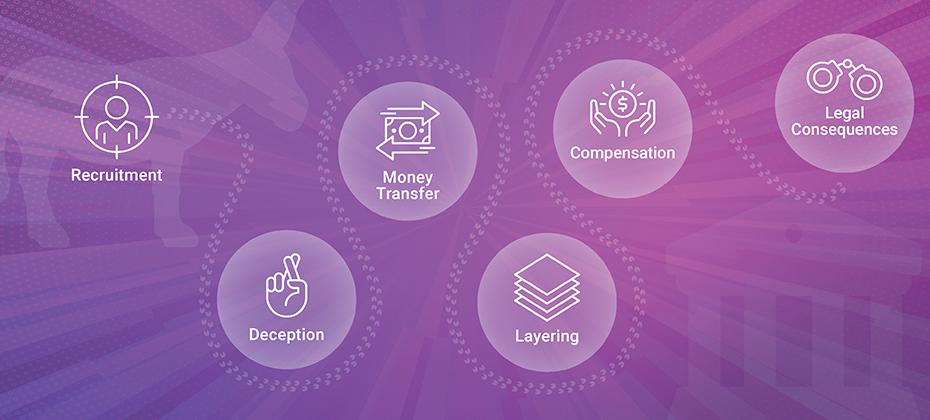
Money mule fraud is a type of financial scam in which criminals exploit individuals, known as money mules, to transfer stolen money or the proceeds of illegal activities. Money mule accounts are becoming increasingly difficult to distinguish from legitimate customers, especially as criminals find new ways to develop hard-to-detect synthetic identities. How money mule fraud typically works: Recruitment: Fraudsters seek out potential money mules through various means, such as online job ads, social media, or email/messaging apps. They will often pose as legitimate employers offering job opportunities promising compensation or claiming to represent charitable organizations. Deception: Once a potential money mule is identified, the fraudsters use persuasive tactics to gain their trust. They may provide seemingly legitimate explanations like claiming the money is for investment purposes, charity donations or for facilitating business transactions. Money Transfer: The mule is instructed to receive funds to their bank or other financial account. The funds are typically transferred from other compromised bank accounts obtained through phishing or hacking. The mule is then instructed to transfer the money to another account, sometimes located overseas. Layering: To mask the origin of funds and make them difficult to trace, fraudsters will employ layering techniques. They may ask the mule to split funds into smaller amounts, make multiple transfers to different accounts, or use various financial platforms such as money services or crypto. Compensation: The money mule is often promised a percentage of transferred funds as payment. However, the promised monies are lower than the dollars transferred, or sometimes the mule receives no payment at all. Legal consequences: Regardless whether mules know they are supporting a criminal enterprise or are unaware, they can face criminal charges. In addition, their personal information could be compromised leading to identity theft and financial loss. How can banks get ahead of the money mule curve: Know your beneficiaries Monitor inbound paymentsEngage identity verification solutionsCreate a “Mule Persona” behavior profileBeware that fraudsters will coach the mule, therefore confirmation of payee is no longer a detection solution Educate your customers to be wary of job offers that seem too good to be true and remain vigilant of requests to receive and transfer money, particularly from unknown individuals and organizations. How financial institutions can mitigate money mule fraud risk When new accounts are opened, a financial institution usually doesn’t have enough information to establish patterns of behavior with newly registered users and devices the way they can with existing users. However, an anti-fraud system should catch a known behavior profile that has been previously identified as malicious. In this situation, the best practice is to compare the new account holder’s behavior against a representative pool of customers, which will analyze things like: Spending behavior compared to the averagePayee profileSequence of actionsNavigation data related to machine-like or bot behaviorAbnormal or risky locationsThe account owner's relations to other users The risk engine needs to be able to collect and score data across all digital channels to allow the financial institution to detect all possible relationships to users, IP addresses and devices that have proven fraud behavior. This includes information about the user, account, location, device, session and payee, among others. If the system notices any unusual changes in the account holder’s personal information, the decision engine will flag it for review. It can then be actively monitored and investigated, if necessary. The benefits of machine learning This is a type of artificial intelligence (AI) that can analyze vast amounts of disparate data across digital channels in real time. Anti-fraud systems based on AI analytics and predictive analytics models have the ability to aggregate and analyze data on multiple levels. This allows a financial institution to instantly detect all possible relationships across users, devices, transactions and channels to more accurately identify fraudulent activity. When suspicious behavior is flagged via a high risk score, the risk engine can then drive a dynamic workflow change to step up security or drive a manual review process. It can then be actively monitored by the fraud prevention team and escalated for investigation. How Experian can help Experian’s fraud prevention solutions incorporate technology, identity-authentication tools and the combination of machine learning analytics with Experian’s proprietary and partner data to return optimal decisions to protect your customers and your business. To learn more about how Experian can help you leverage fraud prevention solutions, visit us online or request a call

More than half of U.S. businesses say they discuss fraud management often, making fraud detection in banking top-of-mind. Banking fraud prevention can seem daunting, but with the proper tools, banks, credit unions, fintechs, and other financial institutions can frustrate and root out fraudsters while maintaining a positive experience for good customers. What is banking fraud? Banking fraud is a type of financial crime that uses illegal means to obtain money, assets, or other property owned or held by a bank, other financial institution, or customers of the bank. This type of fraud can be difficult to detect when misclassified as credit risk or written off as a loss rather than investigated and prevented in the future. Fraud that impacts financial institutions consists of small-scale one-off events or larger efforts perpetrated by fraud rings. Not long ago, many of the techniques utilized by fraudsters required in-person or phone-based activities. Now, many of these activities are online, making it easier for fraudsters to disguise their intent and perpetrate multiple attacks at once or in sequence. Banking fraud can include: Identity theft: When a bad actor steals a consumer’s personal information and uses it to take money, open credit accounts, make purchases, and more. Check fraud: This type of fraud occurs when a fraudster writes a bad check, forges information, or steals and alters someone else’s check. Credit card fraud: A form of identity theft where a bad actor makes purchases or gets a cash advance in the name of an unsuspecting consumer. The fraudster may takeover an existing account by gaining access to account numbers online, steal a physical card, or open a new account in someone else’s name. Phishing: These malicious efforts allow scammers to steal personal and account information through use of email, or in the case of smishing, through text messages. The fraudster often sends a link to the consumer that looks legitimate but is designed to steal login information, personally identifiable information, and more. Direct deposit account fraud: Also known as DDA fraud, criminals monetize stolen information to open new accounts and divert funds from payroll, assistance programs, and more. Unfortunately, this type of fraud doesn’t just lead to lost funds – it also exposes consumer data, impacts banks’ reputations, and has larger implications for the financial system. Today, top concerns for banks include generative AI (GenAI) fraud, peer-to-peer (P2P) payment scams, identity theft and transaction fraud. Without the proper detection and prevention techniques, it’s difficult for banks to keep fraudsters perpetrating these schemes out. What is banking fraud prevention? Detecting and preventing banking fraud consists of a set of techniques and tasks that help protect customers, assets and systems from those with malicious intent. Risk management solutions for banks identify fraudulent access attempts, suspicious transfer requests, signs of false identities, and more. The financial industry is constantly evolving, and so are fraudsters. As a result, it’s important for organizations to stay ahead of the curve by investing in new fraud prevention technologies. Depending on the size and sophistication of your institution, the tools and techniques that comprise your banking fraud prevention solutions may look different. However, every strategy should include multiple layers of friction designed to trip up fraudsters enough to abandon their efforts, and include flags for suspicious activity and other indicators that a user or transaction requires further scrutiny. Some of the emerging trends in banking fraud prevention include: Use of artificial intelligence (AI) and machine learning (ML). While these technologies aren’t new, they are finding footing across industries as they can be used to identify patterns consistent with fraudulent activity – some of which are difficult or time-consuming to detect with traditional methods. Behavioral analytics and biometrics. By noting standard customer behaviors — e.g., which devices they use and when — and how they use those devices — looking for markers of human behavior vs. bot or fraud ring activity — organizations can flag riskier users for additional authentication and verification. Leveraging additional data sources. By looking beyond standard credit reports when opening credit accounts, organizations can better detect signs of identity theft, synthetic identities, and even potential first-party fraud. With real-time fraud detection tools in place, financial institutions can more easily identify good consumers and allow them to complete their requests while applying the right amount and type of friction to detect and prevent fraud. How to prevent and detect banking fraud In order to be successful in the fight against fraud and keep yourself and your customers safe, financial institutions of all sizes and types must: Balance risk mitigation with the customer experience Ensure seamless interactions across platforms for known consumers who present little to no risk Leverage proper identity resolution and verification tools Recognize good consumers and apply the proper fraud mitigation techniques to riskier scenarios With Experian’s interconnected approach to fraud detection in banking, incorporating data, analytics, fraud risk scores, device intelligence, and more, you can track and assess various activities and determine where additional authentication, friction, or human intervention is required. Learn more

Credit risk refers to the likelihood that a borrower will fail to repay a debt as agreed. Credit risk management is the art and science of utilizing risk mitigation tools to minimize losses while maximizing profits from lending activities. Lenders can establish credit underwriting criteria for each of their products and utilize risk-based pricing to adjust the terms of a loan or line of credit based on the risk associated with the product and borrower. Credit portfolio management extends beyond originations and individual decisions to encompass portfolios as a whole. Why is credit risk management important? Continuously managing credit risk matters because there's always a balancing act. Tightening a credit box – using more restrictive underwriting criteria – might reduce credit losses. However, it can also decrease approval rates, excluding borrowers who would have repaid as agreed. Expanding a credit box might increase approval rates, but it is only beneficial if the profit from good new loans exceeds credit losses. Fraud is also on the rise and becoming increasingly complex, making fraud management a crucial part of understanding risk. For instance, with synthetic identity fraud, fraudsters might “age an account" or make on-time payments before “busting out” or maxing out a credit card, and then abandoning the account. If you examine payment activity alone, it may be challenging to classify the loss as either a fraud loss or a credit loss. Additionally, external economic forces and consumer behavior are constantly in flux. Financial institutions need effective consumer risk management and to adjust their strategies to minimize losses. And they must dynamically adjust their underwriting criteria to account for these changes. You could be pushed off balance if you don't react in time. What does managing credit risk entail? Lenders have used the five C’s of credit to measure credit risk and make lending decisions for decades: Character: The likelihood a borrower will repay the loan as agreed, often measured by analyzing their credit report and a credit risk score. Capacity: The borrower's ability to pay, which lenders might measure by reviewing their outstanding debt, income, and debt-to-income ratio. Capital: The borrower's commitment to the purchase, such as their down payment when buying a vehicle or home. Collateral: The value of the collateral, such as a vehicle or home, for an auto loan or mortgage. Conditions: The external conditions that can impact a borrower's ability to afford payments, such as broader economic trends. Credit risk management considers these within the context of a lender’s goals and its specific lending products. For example, capital and collateral aren't relevant for unsecured personal loans, which makes character and capacity the primary drivers of a decision. Credit risk management best practices at origination Advances in analytics, computing power and real-time access to additional data sources are helping lenders better measure some of the C’s. For example, credit risk scores can more precisely assess character for a lender's target market than generic risk scores. Open banking data enables lenders to more accurately assess a borrower's capacity by directly analyzing their cash flows. With these advances in mind, leading lenders: View underwriting as a dynamic process: Lenders have always had to respond to changing forces, and the pandemic highlighted the need to be nimble. Consider how you can utilize analytical insights to quickly adjust your strategies. Test the latest credit risk modeling techniques: Artificial intelligence (AI) and machine learning (ML) techniques can improve credit risk model performance and drive automated credit risk decisioning. Use multiple data sources: Alternative credit data and consumer-permissioned data offer increased and real-time visibility into borrowers' creditworthiness to help lenders more accurately assess credit risk. These additional data sources can score those who are unscoreable by conventional models and help fuel ML credit risk models. Experian helps lenders measure and manage credit risk Experian is a leading provider of traditional credit data, alternative credit data and credit risk analytics. For those who want to quickly benefit from the latest technological advancements, our Lift Premium credit risk model utilizes both traditional and alternative data to score up to 96 percent of U.S. consumers — compared to the 81 percent that conventional models can score.¹ Experian’s Ascend Platform and Ascend Intelligence Services™ can help lenders develop, deploy and monitor custom credit risk models to optimize their decisions. With end-to-end platforms, our account and portfolio management services can help you limit risk, detect fraud, automate underwriting and identify opportunities to grow your business. Learn more about credit risk management ¹Experian (2023). Lift Premium™ and Lift Plus™