Search Results for: synthetic id

U.S. rental housing market outlook 2026: Analyze elevated mortgage rates, rental supply constraints, affordability pressure, and rising fraud risk. Discover how data analytics, rent reporting, and digital income and employment verification help property managers reduce risk, improve screening accuracy, and make smarter, faster leasing decisions.
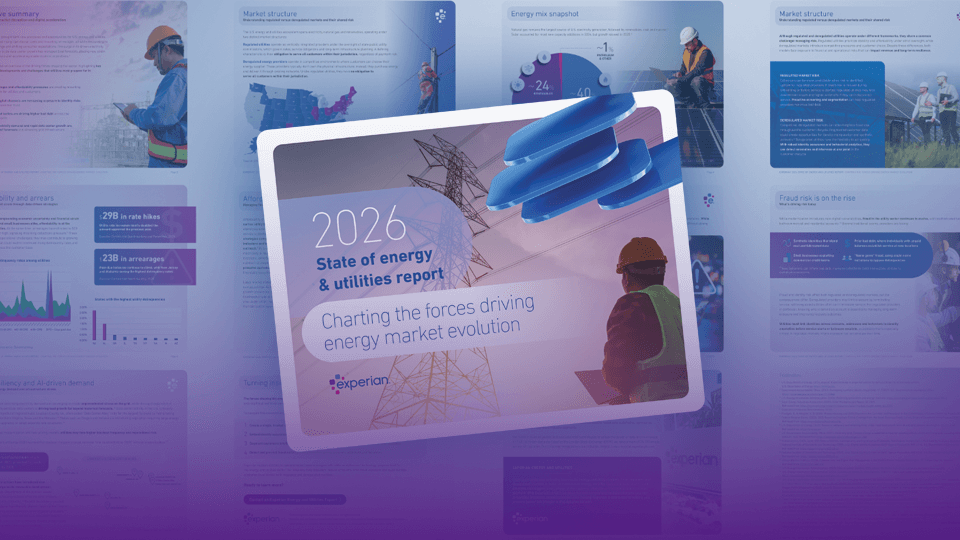
Explore energy and utilities industry trends 2026, focusing on digital services and evolving customer demands in the sector.

For lenders, the job has never been more complex. You’re expected to protect portfolio performance, meet regulatory expectations, and support growth, all while fraud tactics evolve faster than many traditional risk frameworks were designed to handle. One of the biggest challenges of the job? The line between credit loss and fraud loss is increasingly blurred, and misclassified losses can quietly distort portfolio performance. First-party fraud can look like standard credit risk on the surface and synthetic identity fraud can be difficult to identify, allowing both to quietly slip through decisioning models and distort portfolio performance. That’s where fraud risk scores come into play. Used correctly, they don’t replace credit models; they strengthen them. And for credit risk teams under pressure to approve more genuine customers without absorbing unnecessary losses, understanding how fraud risk scores fit into modern decisioning has become essential. What is a fraud risk score (and what isn’t it) At its core, a fraud risk score is designed to assess the likelihood that an applicant or account is associated with fraudulent behavior, not simply whether they can repay credit. That distinction matters. Traditional credit scores evaluate ability to repay based on historical financial behavior. Fraud risk scores focus on intent and risk signals, patterns that suggest an individual may never intend to repay, may be manipulating identity data, or may be building toward coordinated abuse. Fraud risk scores are not: A replacement for credit scoring A blunt tool designed to decline more applicants A one-time checkpoint limited to account opening Instead, they provide an additional lens that helps credit risk teams separate true credit risk from fraud that merely looks like credit loss. How fraud scores augment decisioning Credit models were never built to detect fraud masquerading as legitimate borrowing behavior. Consider common fraud scenarios facing lenders today: First-payment default, where an applicant appears creditworthy but never intends to make an initial payment Bust-out fraud, where an individual builds a strong credit profile over time, then rapidly maxes out available credit before disappearing Synthetic identity fraud, where criminals blend real and fabricated data to create identities that mature slowly and evade traditional checks In all three cases, the applicant may meet credit criteria at the point of decision. Losses can get classified as charge-offs rather than fraud, masking the real source of portfolio degradation. When credit risk teams rely solely on traditional models, the result is often an overly conservative response: tighter credit standards, fewer approvals, and missed growth opportunities. How fraud risk scores complement traditional credit decisioning Fraud risk scores work best when they augment credit decisioning. For credit risk officers, the value lies in precision. Fraud risk scores help identify applicants or accounts where behavior, velocity or identity signals indicate elevated fraud risk — even when credit attributes appear acceptable. When integrated into decisioning strategies, fraud risk scores can: Improve confidence in approvals by isolating high-risk intent early Enable adverse-actionable decisions for first-party fraud, supporting compliance requirements Reduce misclassified credit losses by clearly identifying fraud-driven outcomes Support differentiated treatment strategies rather than blanket declines The goal isn’t to approve fewer customers. It’s to approve the right customers and to decline or treat risk where intent doesn’t align with genuine borrowing behavior. Fraud risk across the credit lifecycle One of the most important shifts for credit risk teams is recognizing that fraud risk is not static. Fraud risk scores can deliver value at multiple stages of the credit lifecycle: Marketing and prescreen: Fraud risk insights help suppress high-risk identities before offers are extended, ensuring marketing dollars are maximized by targeting low risk consumers. Account opening and originations: Real-time fraud risk scoring supports early detection of first-party fraud, synthetic identities, and identity misuse — before losses are booked. Prequalification and instant decisioning: Fraud risk scores can be used to exclude high-risk applicants from offers while maintaining speed and customer experience. Account management and portfolio review: Fraud risk doesn’t end after onboarding. Scores applied in batch or review processes help identify accounts trending toward bust-out behavior or coordinated abuse, informing credit line management and treatment strategies. This lifecycle approach reflects a broader shift: fraud prevention is no longer confined to front-end controls — it’s a continuous risk discipline. What credit risk officers should look for in a fraud risk score Not all fraud risk scores are created equal. When evaluating or deploying them, credit risk officers should prioritize: Lifecycle availability, so fraud risk can be assessed beyond originations Clear distinction between intent and ability to repay, especially for first-party fraud Adverse-action readiness, including explainability and reason codes Regulatory alignment, supporting fair lending and compliance requirements Seamless integration alongside existing credit and decisioning frameworks Increasingly, credit risk teams also value platforms that reduce operational complexity by enabling fraud and credit risk assessment through unified workflows rather than fragmented point solutions. A more strategic approach to fraud and credit risk The most effective credit risk strategies today are not more conservative, they’re more precise. Fraud risk scores give credit risk officers the ability to stop fraud earlier, classify losses accurately and protect portfolio performance without tightening credit across the board. When fraud and credit insights work together, teams can gain a clearer view of risk, stronger decision confidence and more flexibility to support growth. As fraud tactics continue to evolve, the organizations that succeed will be those that can effectively separate fraud from credit loss. Fraud risk scores are no longer a nice-to-have. They’re a foundational tool for modern credit risk strategies. How credit risk teams can operationalize fraud risk scores For credit risk officers, the challenge isn’t just understanding fraud risk, it’s operationalizing it across the credit lifecycle without adding friction, complexity or compliance risk. Rather than treating fraud as a point-in-time decision, credit risk teams should assess fraud risk where it matters most, from acquisition through portfolio management. Fraud risk scores are designed to complement credit decisioning by focusing on intent to repay, helping teams distinguish fraud-driven behavior from traditional credit risk. Key ways Experian supports credit risk teams include: Lifecycle coverage: Experian award-winning fraud risk scores are available across marketing, originations, prequalification, instant decisioning and ongoing account review. This allows organizations to apply consistent fraud strategies beyond account opening. First-party and synthetic identity fraud intelligence: Experian’s fraud risk scoring addresses first-payment default, bust-out behavior and synthetic identity fraud, which are scenarios that often bypass traditional credit models because they initially appear creditworthy. Converged fraud and credit decisioning: By delivering fraud and credit insights together, often through a single integration, Experian can help reduce operational complexity. Credit risk teams can assess fraud and credit risk simultaneously rather than managing disconnected tools and workflows. Precision over conservatism: The emphasis is not on declining more applicants, but on approving more genuine customers by isolating high-risk intent earlier. This precision helps protect portfolio performance without sacrificing growth. For lenders navigating increasing fraud pressure, Experian’s approach reflects a broader shift in the industry: fraud prevention and credit risk management are no longer separate disciplines; they are most effective when aligned. Explore our fraud solutions Contact us
Financial services leaders are dealing with numerous pressures at the same time. These growing challenges for financial services organizations include sophisticated fraud, rapid Artificial Intelligence (AI) adoption without clear regulatory direction, rising customer expectations and the need for compliant, sustainable growth. Businesses are rethinking how they manage risk, growth and customer trust. These financial industry challenges are no longer confined to internal risk teams. They directly impact long-term customer loyalty. How organizations navigate these challenges will determine how effectively they deliver value to their customers. We’ve outlined the six challenges for financial services oranizations that consistently rank highest among industry leaders today. Challenge 1: Fraud is becoming harder to detect and eroding customer trust 72% of business leaders expect AI-generated fraud and deepfakes to be major challenges by 20261 As fraud tactics evolve quickly, driven in part by AI, customers are being targeted through identity-based attacks from account takeovers to synthetic identities and misuse of personal information. When these threats go undetected, or when legitimate activity is incorrectly flagged, the result isn’t just financial loss. It’s a breakdown of trust. Organizations that want to stay ahead must move beyond isolated fraud controls. By embedding identity management and monitoring into the customer experience, organizations can move from reactive fraud response to proactive identity protection. Identity theft protection and monitoring help organizations turn fraud prevention into a visible, trust-building experience for customers — offering early alerts, guidance, and peace of mind when identity risks arise. Challenge 2: AI decisions must be trusted by customers, not just regulators 76% of businesses say implementing responsible AI is one of their biggest challenges2 As AI becomes more embedded in financial services, it shapes the experiences customers see every day. From credit decisions to eligibility outcomes and personalized offers. While AI can drive faster and more inclusive decisions, it also introduces a new expectation: customers want to understand why a decision was made. Responsible AI is no longer just about regulatory compliance. It’s about delivering outcomes that feel fair, consistent and easy to understand. When decisions appear unclear, confidence erodes. When organizations can clearly explain outcomes, not just internally, they build confidence across regulators, partners and customers. This allows AI to scale responsibly while reinforcing trust in every interaction. Financial wellness tools such as credit scores, reports and education help make AI-driven decisions more transparent, giving customers clarity into outcomes and confidence in how their financial health is assessed. Challenge 3: Digital experiences are failing to deliver clarity and confidence 57% of U.S. consumers remain concerned about conducting activities online3 Customer confidence is affected by day-to-day interactions such as onboarding, payments and issue resolution. Inconsistent decisions, unclear outcomes and friction in digital journeys can quickly erode confidence and increase confusion, disengagement and abandonment. Financial services leaders will need to rebuild and strengthen confidence. Improving key decision points with better data and analytics helps ensure customers receive timely insights, understandable outcomes and meaningful guidance, turning everyday interactions into opportunities to build stronger relationships. By delivering ongoing financial wellness insights and education, organizations can replace confusion with clarity — helping consumers better understand their financial standing and stay engaged over time. Challenge 4: Gen Z continues to raise the bar It's no secret that Gen Z stands out for its strong preference for digital financial services and digital interactions, but Gen Z is also pushing the envelope on financial wellness. 48% of Gen Z report that they do not feel financially secure, indicating strong demand for financial support and tools4 Their expectations for instant decisions, seamless digital experiences, transparency and tools that help them manage their financial lives are quickly becoming the baseline. To meet and exceed these expectations, financial institutions will need to support real-time, data-driven decisioning that adapt to individual needs. Delivering modern, app-like financial experiences, without compromising risk management. Increasingly, organizations are meeting Gen Z expectations by offering financial wellness and protection tools through employee benefits, supporting everyday financial confidence beyond traditional compensation. Challenge 5: Limited data limits meaningful consumer engagement 62 million U.S. consumers are thin-file or credit invisible under traditional credit scoring.5 Growth will always be a priority, but it must be responsible and inclusive. Traditional credit data alone often provides an incomplete picture of consumer financial behavior, limiting visibility and making it harder to confidently expand access. By incorporating alternative and expanded data, organizations can gain a more holistic view of consumers. This broader perspective supports smarter decisions, personalized insights and more inclusive engagement, which enables growth while maintaining compliance and managing risk responsibly. Expanded data supports more personalized financial wellness experiences, enabling organizations to provide relevant insights, responsible access and guidance tailored to individual consumer needs. Challenge 6: Disconnected decisions create inconsistent customer experiences Increasingly, fintech leaders are moving toward unified risk and decisioning strategies to deliver more personalized experiences6 While customers interact with a single institution, decisions are often made across disconnected data sources, systems and teams. These silos create inconsistent experiences, slow responses and operational complexities that customers feel directly through conflicting messages and uneven outcomes. Experian helps organizations break down these silos by unifying data, analytics and decisioning across the enterprise. When data incidents occur, integrated experiences enable faster data breach resolution, helping consumers understand what happened, take action, and recover with confidence. Looking ahead These challenges for financial services organizations are not emerging; they’re already here and reshaping how financial institutions engage with consumers. Leaders who proactively address financial industry challenges by connecting data, analytics, and responsible AI are better positioned to deliver trusted, transparent and meaningful experiences. Learn More References:1. https://www.experian.com/blogs/insights/2025-identity-fraud-report2. https://www.techradar.com/pro/businesses-are-struggling-to-implement-responsible-ai-but-it-could-make-all-the-difference3. https://www.experian.com/blogs/insights/2025-identity-fraud-report4. https://www.deloitte.com/global/en/issues/work/genz-millennial-survey.html5. https://www.experian.com/thought-leadership/business/the-roi-of-alternative-data6. https://us-go.experian.com/2025-state-of-fintech-report?cmpid=IM-2025-state-of-fintech-report-livesocial-share
Discover how Experian Verify’s real-time “Go Fetch” model enhances data integrity, reduces fraud, and redefines trust in income and employment verification amid rising digital threats.

Learn how you can mitigate e-commerce fraud with identity verification and fraud prevention best practices.

Learn what lending fraud is, what you can do to safeguard your organization and consumers and how we can help. Read more!

An OTP bot is an automated tool designed to trick users into revealing their one-time password, a temporary code used in MFA.
Here are the top fraud trends and actionable resolutions to help risk managers stay ahead of fraud in 2025.

Bots have been a consistent thorn in fraud teams’ side for years. But since the advent of generative AI (genAI), what used to be just one more fraud type has become a fraud tsunami. This surge in fraud bot attacks has brought with it: A 108% year-over-year increase in credential stuffing to take over accounts1 A 134% year-over-year increase in carding attacks, where stolen cards are tested1 New account opening fraud at more than 25% of businesses in the first quarter of 2024 While fraud professionals rush to fight back the onslaught, they’re also reckoning with the ever-evolving threat of genAI. A large factor in fraud bots’ new scalability and strength, genAI was the #1 stress point identified by fraud teams in 2024, and 70% expect it to be a challenge moving forward, according to Experian’s U.S. Identity and Fraud Report. This fear is well-founded. Fraudsters are wasting no time incorporating genAI into their attack arsenal. GenAI has created a new generation of fraud bot tools that make bot development more accessible and sophisticated. These bots reverse-engineer fraud stacks, testing the limits of their targets’ defenses to find triggers for step-ups and checks, then adapt to avoid setting them off. How do bot detection solutions fare against this next generation of bots? The evolution of fraud bots The earliest fraud bots, which first appeared in the 1990s2 , were simple scripts with limited capabilities. Fraudsters soon began using these scripts to execute basic tasks on their behalf — mainly form spam and light data scraping. Fraud teams responded, implementing bot detection solutions that continued to evolve as the threats became more sophisticated. The evolution of fraud bots was steady — and mostly balanced against fraud-fighting tools — until genAI supercharged it. Today, fraudsters are leveraging genAI’s core ability (analyzing datasets and identifying patterns, then using those patterns to generate solutions) to create bots capable of large-scale attacks with unprecedented sophistication. These genAI-powered fraud bots can analyze onboarding flows to identify step-up triggers, automate attacks at high-volume times, and even conduct “behavior hijacking,” where bots record and replicate the behaviors of real users. How next-generation fraud bots beat fraud stacks For years, a tried-and-true tool for fraud bot detection was to look for the non-human giveaways: lightning-fast transition speeds, eerily consistent keystrokes, nonexistent mouse movements, and/or repeated device and network data were all tell-tale signs of a bot. Fraud teams could base their bot detection strategies off of these behavioral red flags. Stopping today’s next-generation fraud bots isn’t quite as straightforward. Because they were specifically built to mimic human behavior and cycle through device IDs and IP addresses, today’s bots often appear to be normal, human applicants and circumvent many of the barriers that blocked their predecessors. The data the bots are providing is better, too3, fraudsters are using genAI to streamline and scale the creation of synthetic identities.4 By equipping their human-like bots with a bank of high-quality synthetic identities, fraudsters have their most potent, advanced attack avenue to date. Skirting traditional bot detection with their human-like capabilities, next-generation fraud bots can bombard their targets with massive, often undetected, attacks. In one attack analyzed by NeuroID, a part of Experian, fraud bots made up 31% of a business's onboarding volume on a single day. That’s nearly one-third of the business’s volume comprised of bots attempting to commit fraud. If the business hadn’t had the right tools in place to separate these bots from genuine users, they wouldn’t have been able to stop the attack until it was too late. Beating fraud bots with behavioral analytics: The next-generation approach Next-generation fraud bots pose a unique threat to digital businesses: their data appears legitimate, and they look like a human when they’re interacting with a form. So how do fraud teams differentiate fraud bots from an actual human user? NeuroID’s product development teams discovered key nuances that separate next-generation bots from humans, and we’ve updated our industry-leading bot detection capabilities to account for them. A big one is mousing patterns: random, erratic cursor movements are part of what makes next-generation bots so eerily human-like, but their movements are still noticeably smoother than a real human’s. Other bot detection solutions (including our V1 signal) wouldn’t flag these advanced cursor movements as bot behavior, but our new signal is designed to identify even the most granular giveaways of a next-generation fraud bot. Fraud bots will continue to evolve. But so will we. For example, behavioral analytics can identify repeated actions — down to the pixel a cursor lands on — during a bot attack and block out users exhibiting those behaviors. Our behavior was built specifically to combat next-gen challenges with scalable, real-time solutions. This proactive protection against advanced bot behaviors is crucial to preventing larger attacks. For more on fraud bots’ evolution, download our Emerging Trends in Fraud: Understanding and Combating Next-Gen Bots report. Learn more Sources 1 HUMAN Enterprise Bot Fraud Benchmark Report 2 Abusix 3 NeuroID 4 Biometric Update

Learn how background screeners can optimize pre-employment verification processes, reduce fraud risks, and ensure compliance.

Browser fingerprinting, alongside other fraud prevention tools, can help businesses safeguard their operations and uphold customer trust.

Our behavioral analytics solutions help you stop fraud rings, fraud bots, and other third-party fraud attacks.

Bot attacks are plaguing financial institutions. The risks are significant, weakening both security and financial stability.
With fraudsters continuously refining their methods, fintechs must invest in advanced fintech fraud detection and prevention solutions.