Tag: compliance
With increasing regulatory complexities, compliance with model risk management requirements is crucial for operational resilience.
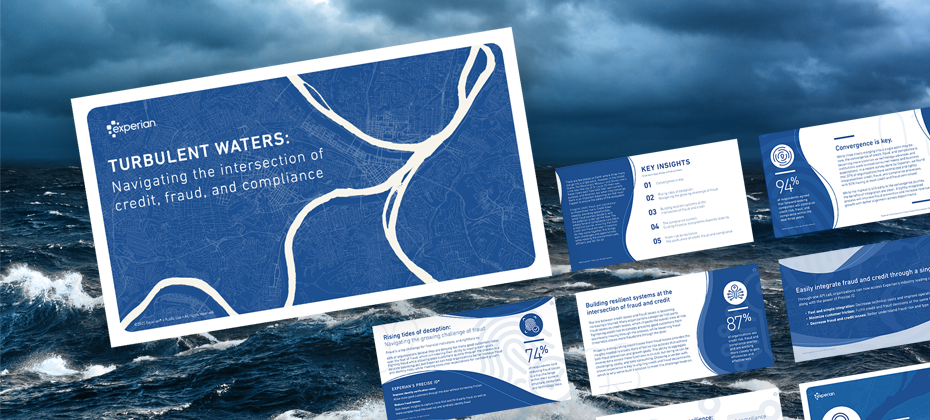
The days of managing credit risk, fraud prevention, and compliance in silos are over. As fraud threats evolve, regulatory scrutiny increases, and economic uncertainty persists, businesses need a more unified risk strategy to stay ahead. Our latest e-book, Navigating the intersection of credit, fraud, and compliance, explores why 94% of forward-looking companies expect credit, fraud, and compliance to converge within the next three years — and what that means for your business.1 Key insights include: The line between fraud and credit risk is blurring. Many organizations classify first-party fraud losses as credit losses, distorting the true risk picture. Fear of fraud is costing businesses growth. 68% of organizations say they’re denying too many good customers due to fraud concerns. A unified approach is the future. Integrating risk decisioning across credit, fraud, and compliance leads to stronger fraud detection, smarter credit risk assessments, and improved compliance. Read the full e-book to explore how an integrated risk approach can protect your business and fuel growth. Download e-book 1Research conducted by InsightAvenue on behalf of Experian
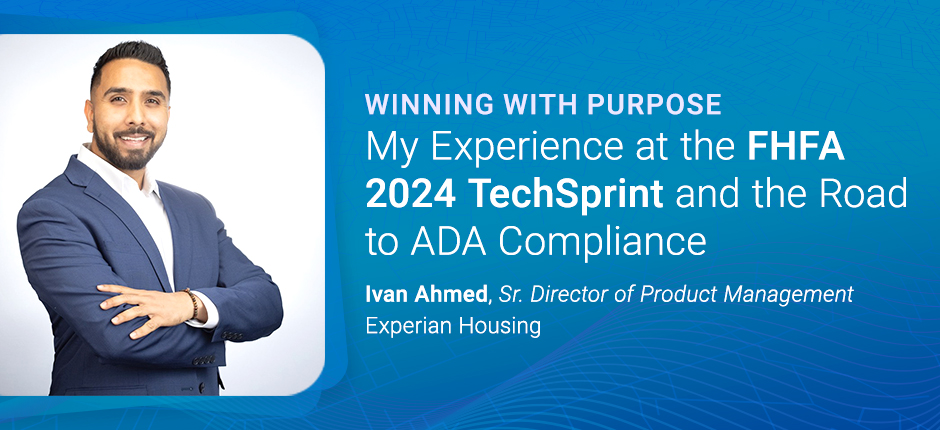
At Experian, we believe in fostering innovation and collaboration to solve complex challenges. Recently, Ivan Ahmed, one of our talented product management leaders at Experian Housing, had the opportunity to participate in the FHFA 2024 TechSprint, where his team won the award for the best Risk Management and Compliance idea. In this article, we share Ivan's experience as he reflects on the TechSprint, the inspiration behind his team's project, and the valuable lessons learned. Can you share your experience participating in the FHFA 2024 TechSprint? What was the atmosphere like, and how did it feel to be recognized for the best Risk Management and Compliance idea? Let me start by explaining what a TechSprint is. It is a fast-paced, high-energy collaborative workshop where diverse experts and stakeholders come together to design technological solutions to complex problems. Each team is given a high-level problem and use case. From there, stakeholders and domain experts must develop a proof of concept within 3 days to best address the problem. On the last and final day, called the “Demo Day,” teams must showcase their solution in front of a panel of judges. It’s a fun, high-energy, challenging, and rewarding experience. A TechSprint is a convergence of everything I love – technology, business, and design and I think FHFA did a wonderful job orchestrating the event. Each team consisted of representatives from different functions in the housing ecosystem, including lenders, technologists, product managers, and regulators. We were given access to a room, whiteboards, and, most importantly, delicious snacks. We were also given access to industry subject matter experts outside our teams, including representatives from Fannie Mae and Freddie Mac, FHFA, and leaders from top companies. What I found the most impactful was the ability to pressure test our ideas and solutions against these industry subject matter experts. Ideating in a vacuum can be challenging, so being able to stress test things rapidly with these experts allowed us to change course quickly as new information was introduced. Winning the best Risk Management and Compliance idea award was rewarding, especially as we were able to ideate a solution to such a critical accessibility issue. Ultimately, our goal was to help create a fairer, more equitable, and inclusive housing finance system. A big shoutout to my teammates, Wemimo Abbey, Joseph Karbowski, Will Regenauer, and Eddy Atkins. What inspired Team Arsenal to focus on identifying potential gaps in ADA compliance within multifamily buildings, and what were some of the key challenges your team faced during the process? My mother has suffered from several disabilities most of her life. With age, she has become more wheelchair-dependent, and traveling has become a major challenge. On a recent family trip, the entry to our hotel building wasn’t ADA-compliant, and I had to carry her up a flight of stairs. It was frustrating to deal with. I later went down a rabbit hole around ADA compliance and, much to my surprise, learned that only 0.15% of all homes in the U.S. are wheelchair accessible! As we explored the problem space further as a team, we learned how difficult it is to ensure that new and existing rental homes are ADA-compliant. We hypothesized that a solution is needed to establish incentives for borrowers, lenders, and GSEs to meet compliance. A technological solution could more easily enable multi-family lenders and builders to identify rental units that are non-ADA compliant and could provide ways to address the gaps. We noticed two primary challenges: an enforcement gap and an incentive gap. We learned that agency loans (Fannie Mae and Freddie Mac) account for most multi-family home loan originations. If we could tackle the enforcement challenge at the GSE level, we could set up the proper incentives for all players in the multi-family lending process. By providing tools to both the borrower and the GSE’s, we could help foster a more inclusive and accessible rental housing market. How do you envision your AI-driven solution impacting the rental housing market and improving ADA compliance for multifamily buildings? We wanted to ensure that we leveraged the true power of Generative AI, which meant that our solution could take multimodal inputs and produce multimodal outputs. For example, we could train the Generative AI model on photos of interior multi-family rental units and structured or unstructured text like building sketches, site layouts, and local building codes. We could then incorporate ADA design requirements and analyze discrepancies. The result would be a compliance report or tool outlining the adherence level to ADA design requirements and providing tips and recommendations on remediation. The solution could be delivered as a free tool by the GSEs, who could incentivize its usage by offering price concessions to borrowers. Developers could also use the tool to evaluate whether new or existing builds were ADA-compliant. How did your background and experience with Experian contribute to developing your team's winning idea at the FHFA TechSprint? Much of my role at Experian has involved exploring ways to leverage proprietary and public record property data for marketing, account review, and analytical use cases. I work very closely with property data at Experian, so I was very familiar with the types of input fields of property data that would be the most relevant to improving a generative AI model output. Specifically, in our use case, we wanted to train the model to better identify homes and features that were non-compliant with ADA and provide clear remediation steps. We knew that public record property information was available from various sources and could be leveraged as additional third-party input data to improve our model accuracy. What advice would you give to other teams or individuals looking to participate in future TechSprint events, especially those aiming to tackle complex issues like risk management and compliance? It’s important to remember that an ideal solution is both impactful and practical. Practicality is achieved when the solution has both business and technical viability. Therefore, it’s crucial to carefully vet problems and solutions by understanding their viability. Working as a team to solve the problem means leveraging the expertise of subject matter experts around you. Each team member should draw on their strengths, making the collective effort stronger than individual contribution. Most importantly, fairness, inclusivity, and accessibility matter. An effective solution should strive to have a positive social impact in addition to other considerations. Winning with purpose Ivan’s journey through the FHFA 2024 TechSprint exemplifies the innovative and collaborative spirit that drives our team at Experian. His reflections highlight the impact of well-designed technological solutions on critical issues like ADA-compliance in multifamily housing. We hope Ivan’s experience inspires others to explore their potential in solving complex problems and to participate in future TechSprints, where innovative thinking and a commitment to social good can lead to meaningful change.

Ensuring fair lending practices while leveraging machine learning models is crucial for organizations committed to ethical and compliant operations.

AML transaction monitoring stands as a crucial barrier against financial crimes, which ensures the integrity of financial systems worldwide.

As part of banks’ anti-money laundering (AML) programs, KYC in banking can help stop corruption, money laundering and terrorist financing. Creating and maintaining KYC programs is also important for regulatory compliance, reputation management and fraud prevention. The three components of KYC in banking programs Banks can largely determine how to set up their KYC and AML programs within the applicable regulatory guidelines. In the United States, KYC needs to happen when banks initially onboard a new customer. But it’s not a one-and-done event—ongoing customer and transaction monitoring is also important. 1. Customer Identification Program (CIP) Creating a robust Customer Identification Program (CIP) is an essential part of KYC. At a minimum, a bank’s CIP requires it to collect the following information from new customers: Name Date of birth Address Identification number, such as a Social Security number (SSN) or Employer Identification Number (EIN) Banks' CIPs also have to use risk-based procedures to verify customers’ identities and form a reasonable belief that they know the customer's true identity.1 This might involve comparing the information from the application to the customer’s government-issued ID, other identifying documents and authoritative data sources, such as credit bureau databases. Additionally, the bank's CIP will govern how the bank: Retains the customer’s identifying information Compares customer to government lists Provides customers with adequate notices Banks can create CIPs that meet all the requirements in various ways, and many use third-party solutions to quickly collect data, detect forged or falsified documents and verify the provided information. 2. Customer due diligence (CDD) CIP and CDD overlap, but the CIP primarily verifies a customer’s identity while customer due diligence (CDD) helps banks understand the risk that each customer poses. To do this, banks try to understand what various types of customers do, what those customers’ normal banking activity looks like, and in contrast, what could be unusual or suspicious activity. Financial institutions can use risk ratings and scores to evaluate customers and then use simplified, standard or enhanced due diligence (EDD) processes based on the results. For example, customers who might pose a greater risk of laundering money or financing terrorism may need to undergo additional screenings and clarify the source of their funds. 3. Ongoing monitoring Ongoing or continuous monitoring of customers’ identities and transactions is also important for staying compliant with AML regulations and stopping fraud. The monitoring can help banks spot a significant change in the identity of the customer, beneficial owner or account, which may require a new KYC check. Unusual transactions can also be a sign of money laundering or fraud, and they may require the bank to file a suspicious activity report (SAR). Why is KYC important in banking? Understanding and implementing KYC in banking processes can be important for several reasons: Regulatory compliance: Although the specific laws and rules can vary by country or region, many banks are required to have AML procedures, including KYC. The fines for violating AML regulations can be in the hundreds of millions— a few banks have been fined over $1 billion for lax AML enforcement and sanctions breaching. Reputation management: In some cases, enforcement actions and fines were headline news. Banks that don’t have robust KYC procedures in place risk losing their customers' trust and respect. Fraud prevention: In addition to the regulatory requirements, KYC policies and systems can also work alongside fraud management solutions for banks. Identity verification at onboarding can help banks identify synthetic identities attempting to open money mule accounts or take out loans. Ongoing monitoring can also be important for identifying long-term fraud schemes and large fraud rings. KYC in a digital-first world Modernizing KYC in banking is a key part of financial institutions’ digital transformation efforts. Part of that journey is updating the systems and tools in place to meet the expectations of customers and regulators. Experian’s 2025 U.S. Identity and Fraud Report shows four in 10 consumers considered abandoning a new account setup midway through the process – rising to 50% among high-income earners – highlighting growing expectations for seamless digital experiences. The survey wasn’t specific to financial services, but friction could be a problem for banks wanting to attract new account holders. Just as access to additional data sources and machine learning help automate underwriting, financial institutions can use technological advances to add an appropriate amount of friction based on various risk signals. Some of these can be run in the background, such as an electronic Consent Based Social Security Number Verification (eCBSV) check to verify the customer’s name, SSN and date of birth match the Social Security Administration’s records. Others may require more customer involvement, such as taking a selfie that’s then compared to the image on their photo ID — Experian CrossCore® Doc Capture enables this type of verification. Experian is a leader in identity and data management Our identity verification solutions use proprietary and third-party data to help banks manage their KYC procedures, including identity verification and Customer Identification Programs (CIP). As a global leader in identity management and fraud prevention, we combine advanced analytics, rich data assets, and innovative technology to deliver secure, seamless identity experiences. Our comprehensive identity ecosystem enables organizations to confidently verify, authenticate and manage customer identities across the lifecycle—reducing fraud risk, improving compliance and enhancing the customer experience.By bundling identity verification with fraud assessment, banks can stop fraudsters while quickly resolving identity discrepancies. The automated processes also allow you to offer a low-friction identity verification experience and use step-up authentications as needed. Explore identity solutions

Recent economic volatility has left local, state, and even federal budgets tighter than usual, meaning agencies must prioritize debt collections efforts.

At the end of the Public Health Emergency, states will need a system to easily and confidently review their current Medicaid rolls to confirm eligibility.

Learn how to maximize your collections efforts while reducing costs, avoiding reputational damage and fines, and improving overall engagement.

The right technology can help your business maintain TCPA compliance through data scrubbing, phone type indicators, phone number scoring, and more.

In this infographic, we'll dive into the 5 benefits of AI/ML for lenders and financial instutitions.

Here's a brief FCRA-related compliance overview to refresh your memory on various FCRA requirements when requesting and using consumer credit reports.

Economic downturn strategy considerations include focus on considering changes in consumer behavior as well as reporting and compliance changes.

The need for a COVID-19 response is high. This blog series will outline key areas to focus on including risk, consumer behavior, compliance and operations.

To provide consumers with protections against debt collectors, the CFPB issued a NPRM to implement the FDCPA earlier this year.