Tag: credit risk

For many banks, first-party fraud has become a silent drain on profitability. On paper, it often looks like classic credit risk: an account books, goes delinquent, and ultimately charges off. But a growing share of those early charge-offs is driven by something else entirely: customers who never intended to pay you back. That distinction matters. When first-party fraud is misclassified as credit risk, banks risk overstating credit loss, understating fraud exposure, and missing opportunities to intervene earlier. In our recent Consumer Banker Association (CBA) partner webinar, “Fraud or Financial Distress? How to Differentiate Fraud and Credit Risk Early,” Experian shared new data and analytics to help fraud, risk and collections leaders see this problem more clearly. This post summarizes key themes from the webinar and points you to the full report and on-demand webinar for deeper insight. Why first-party fraud is a growing issue for banks Banks are seeing rising early losses, especially in digital channels. But those losses do not always behave like traditional credit deterioration. Several trends are contributing: More accounts opened and funded digitally Increased use of synthetic or manipulated identities Economic pressure on consumers and small businesses More sophisticated misuse of legitimate credentials When these patterns are lumped into credit risk, banks can experience: Inflation of credit loss estimates and reserves Underinvestment in fraud controls and analytics Blurred visibility into what is truly driving performance Treating first-party fraud as a distinct problem is the first step toward solving it. First-payment default: a clearer view of intent Traditional credit models are designed to answer, “Can this customer pay?” and “How likely are they to roll into delinquency over time?” They are not designed to answer, “Did this customer ever intend to pay?” To help banks get closer to that question, Experian uses first-payment default (FPD) as a key indicator. At a high level, FPD focuses on accounts that become seriously delinquent early in their lifecycle and do not meaningfully recover. The principle is straightforward: A legitimate borrower under stress is more likely to miss payments later, with periods of cure and relapse. A first-party fraudster is more likely to default quickly and never get back on track. By focusing on FPD patterns, banks can start to separate cases that look like genuine financial distress from those that are more consistent with deceptive intent. The full report explains how FPD is defined, how it varies by product, and how it can be used to sharpen bank fraud and credit strategies. Beyond FPD: building a richer fraud signal FPD alone is not enough to classify first-party fraud. In practice, leading banks are layering FPD with behavioral, application and identity indicators to build a more reliable picture. At a conceptual level, these indicators can include: Early delinquency and straight-roll behavior Utilization and credit mix that do not align with stated profile Unusual income, employment, or application characteristics High-risk channels, devices, or locations at application Patterns of disputes or behaviors that suggest abuse The power comes from how these signals interact, not from any one data point. The report and webinar walk through how these indicators can be combined into fraud analytics and how they perform across key banking products. Why it matters across fraud, credit and collections Getting first-party fraud right is not just about fraud loss. It impacts multiple parts of the bank. Fraud strategy Well-defined quantification of first-party fraud helps fraud leaders make the case for investments in identity verification, device intelligence, and other early lifecycle controls, especially in digital account opening and digital lending. Credit risk and capital planning When fraud and credit losses are blended, credit models and reserves can be distorted. Separating first-party fraud provides risk teams a cleaner view of true credit performance and supports better capital planning. Collections and customer treatment Customers in genuine financial distress need different treatment paths than those who never intended to pay. Better segmentation supports more appropriate outreach, hardship programs, and collections strategies, while reserving firmer actions for abuse. Executive and board reporting Leadership teams increasingly want to understand what portion of loss is being driven by fraud versus credit. Credible data improves discussions around risk appetite and return on capital. What leading banks are doing differently In our work with financial institutions, several common practices have emerged among banks that are getting ahead of first-party fraud: 1. Defining first-party fraud explicitly They establish clear definitions and tracking for first-party fraud across key products instead of leaving it buried in credit loss categories. 2. Embedding FPD segmentation into analytics They use FPD-based views in their monitoring and reporting, particularly in the first 6–12 months on book, to better understand early loss behavior. 3. Unifying fraud and credit decisioning Rather than separate strategies that may conflict, they adopt a more unified decisioning framework that considers both fraud and credit risk when approving accounts, setting limits and managing exposure. 4. Leveraging identity and device data They bring in noncredit data — identity risk, device intelligence, application behavior — to complement traditional credit information and strengthen models. 5. Benchmarking performance against peers They use external benchmarks for first-party fraud loss rates and incident sizes to calibrate their risk posture and investment decisions. The post is meant as a high-level overview. The real value for your teams will be in the detailed benchmarks, charts and examples in the full report and the discussion in the webinar. If your teams are asking whether rising early losses are driven by fraud or financial distress, this is the moment to look deeper at first-party fraud. Download the report: “First-party fraud: The most common culprit” Explore detailed benchmarks for first-party fraud across banking products, see how first-payment default and other indicators are defined and applied, and review examples you can bring into your own internal discussions. Download the report Watch the on-demand CBA webinar: “Fraud or Financial Distress? How to Differentiate Fraud and Credit Risk Early” Hear Experian experts walk through real bank scenarios, FPD analytics and practical steps for integrating first-party fraud intelligence into your fraud, credit, and collections strategies. Watch the webinar First-party fraud is likely already embedded in your early credit losses. With the right analytics and definitions, banks can uncover the true drivers, reduce hidden fraud exposure, and better support customers facing genuine financial hardship.

In today’s fast-moving financial services landscape, fintechs face a dual challenge: scaling profitably while managing increasingly complex risk. From credit underwriting to fraud prevention, every decision carries both opportunity and exposure. That’s why forward-looking fintech leaders are turning to data-driven credit risk management strategies to sharpen decision-making, enhance compliance and unlock growth. Why data-driven risk management matters in fintech Fintechs are navigating an environment shaped by rapid innovation, shifting regulations and evolving consumer expectations. Within this landscape, three challenges come to the forefront: Evolving fraud threats: Fraudsters are advancing quickly, exploiting digital onboarding and consumer data. Siloed functions: Traditionally, credit, fraud and compliance were separate, but as fraud detection becomes a higher priority, forward-looking companies are now integrating these functions, with84% planning to share more data across the industry to help prevent fraud.1 Operational complexity: Fintechs must balance growth with compliance, often with lean teams, tech-debt that demands a strong return on investment (ROI)and aggressive timelines. These challenges make it clear that static, one-dimensional risk measures are no longer sufficient. By leveraging a unified decisioning platform that incorporates behavioral data and advanced analytics, fintechs can gain a more holistic view of consumer financial behavior. This broader perspective not only improves the accuracy of credit assessments but also strengthens defenses against sophisticated fraud threats. Driving efficiency through automation A data-driven risk management strategy is only as effective as its ability to be executed at scale. This is why automation is no longer a nice-to-have, but a competitive necessity in an industry defined by speed, complexity and rising consumer expectations. By embedding automation into credit and fraud risk management processes, fintechs can create systems that are more efficient, resilient and compliant. Key advantages include: Increased underwriting efficiency: Combined with data-driven insights, automated decisioning platforms allow fintechs to evaluate applications quickly and more accurately, resulting in faster and fairer credit decisions. Portfolio growth: Leveraging expanded data and automation allow enables smarter customer segmentation and more precise risk-based pricing, driving broader market reach and greater profitability. Fraud mitigation: Automated identity verification helps fintechs quickly validate customers, reduce friction in the onboarding process and block fraudulent activity before it impacts portfolios. Regulatory readiness: Unified, automated risk processes enable fintechs to adapt quickly to regulatory shifts, fraud trends and market disruptions, building long-term sustainability. Comparing legacy and modern credit risk approaches in fintech Data and automation have become essential for executing risk strategies at scale, highlighting just how far credit risk management has evolved. Below are key differences between traditional and modern approaches to credit risk. FeatureLegacy approachData-driven approachRisk detectionPoint-in-time scoresTrajectory-based modelingFraud preventionManual reviewAutomated, behavioral analyticsComplianceSiloed functionsUnified decisioning platformCustomer experienceSlow, manualFast, fair, automated Why fintechs choose Experian® As fintechs navigate an environment of increasing regulation, fraud sophistication and consumer expectations, the winners will be those who embrace a data-driven, automated and converged approach to credit and fraud risk management. Experian offers fintechs a partner with unmatched data accuracy, robust alternative data capabilities and end-to-end decisioning solutions designed for today’s converged risk landscape, including: Trended 3DTMattributes capture 24 months of key consumer credit activity, enabling fintechs to better manage portfolio risk and determine next best actions. Cashflow Score leverages consumer-permissioned banking transaction data to predict the likelihood of a borrower going 60+ days past due in the next 12 months, providing deeper visibility into financial health and repayment capacity. Experian Decisioning is a unified, automated decision engine that incorporates data, strategy design, decision automation and detailed monitoring and reporting to help fintechs streamline credit decisions with speed and consistency. Our behavioral analytics capabilities, powered by NeuroID, provide a seamless, invisible gauge of user risk, allowing fintechs to proactively mitigate fraud while creating a secure, low-friction customer experience. Frequently asked questions What is data-driven risk management in fintech? It’s the application of advanced analytics, behavioral data and automation to help fintechs improve credit risk assessment, fraud prevention and compliance in digital-first environments. How does automation help fintechs manage credit risk? Automation enables fintechs to scale efficiently by streamlining underwriting, minimizing manual errors and ensuring consistent decision-making. What are the benefits of unified decisioning platforms? Unified platforms integrate credit, fraud and compliance decisions into a single workflow, helping fintechs onboard customers faster, respond quickly to fraud threats and maintain compliance without slowing down innovation. Discover how our fintech solutions can help your fintech strengthen credit risk management, reduce fraud and accelerate growth. Learn more 1Experian Vision

Mid-sized banks are large enough to pursue ambitious growth strategies, like expanding loan portfolios or entering new markets, but not so large that they can withstand major credit losses without consequence. So how do lending organizations manage their credit risk strategies to grow without taking on more risk than they can handle?

Experian and Plaid are teaming up to power smarter, faster, and more inclusive lending — fueled by real-time cash flow insights. The financial landscape is becoming more dynamic and digitally connected. Consumers are increasingly turning to digital platforms not only to pay bills and track spending, but to better understand their financial health, monitor their credit standing, and plan confidently for the future. This evolution presents a timely opportunity for innovation in underwriting — one that empowers consumers to take control of their financial futures and enables lenders to make faster, smarter, and more inclusive decisions. What happens when the leading global data and technology company joins forces with the largest open banking network in the world? Experian and Plaid are coming together to solve some of the most pressing challenges lenders face, bringing cash flow insights into credit decisions, seamlessly. Smarter lending: Elevating the credit decision process For lenders seeking a holistic view of borrowers to make faster, more informed decisions, this new collaboration is a game-changer. Experian and Plaid are combining real-time, unmatched cash flow data and analytics to help lenders improve decisioning, pinpoint risk precisely, and drive financial inclusion. This marks a pivotal shift in how credit is assessed, moving us toward faster, and fundamentally smarter lending decisions. This strategic collaboration delivers real-time cash flow insights in a comprehensive solution, built on core principles designed to directly enhance your lending capabilities: Speed and simplicity: Driving efficiency with seamless integration In today’s fast-paced financial landscape, efficiency in underwriting isn’t just an advantage; it’s a necessity. Our combined solution prioritizes speed and simplicity by offering easy integration through APIs. This ensures fast access to meaningful risk insights, streamlining your workflows. Imagine easily leveraging real-time cashflow risk insights directly into your existing processes for faster and smarter lending decisions. This is about delivering modern infrastructure that allows you to move at the speed of today's market, empowering your business to expand with confidence. Broader visibility: Unveiling a holistic consumer view Traditional credit scores are a reliable, crucial tool for measuring a borrower’s creditworthiness. When coupled with real-time cashflow data and risk insights, lenders are empowered with broader visibility, bringing to light a more holistic view of a borrower’s current financial reality and opportunities that may have been missed. You gain a comprehensive consumer financial picture, allowing for more precise identification of both strong financial capacity and potential risks, ultimately helping you target and acquire customers who align with your growth objectives. Smarter decisions: Enhancing models with combined intelligence The power to make truly informed decisions hinges on the quality and depth of your data. Without robust insights, risk models can be limited, impacting precision and speed. With Experian's advanced cash flow analytic capabilities and Plaid's streamlined access to real-time cash flow data via Consumer Report, you can enhance your risk assessment for smarter decisions. This synergy empowers financial institutions to expand credit access and uncover hidden risks, leading to more precise underwriting. It’s about leveraging advanced analytics in real-time to drive improved decision-making and build stronger portfolios. More inclusive lending: Expanding access, responsibly A significant challenge in lending is ensuring access for all creditworthy individuals, including those with limited traditional credit histories who may be overlooked. This represents an untapped market and a vital opportunity for responsible growth. Our solution champions more inclusive lending, enabling you to reach underserved communities and empower consumers who demonstrate strong financial capacity. This not only fosters stronger portfolios but critically helps your business grow by efficiently acquiring customers across a broader spectrum. Proven trust: Lending with confidence In the financial industry, the bedrock of any solution is trust – in the data, security, and partners. Lenders require unwavering confidence in the tools they adopt. This collaboration is built on proven trust, leveraging the reach, reliability, and security of two of the most trusted names in financial services. Experian’s expertise in credit data and consumer protection, combined with Plaid’s modern infrastructure and trusted open banking network, offers unparalleled assurance. You can securely integrate these powerful insights, knowing you are backed by industry leaders committed to best-in-class security and compliance, enabling your business to grow with confidence without compromise. Smarter lending starts now The evolution of underwriting demands a more dynamic, inclusive, and precise approach. With Experian and Plaid, you're not just adapting to change; you're leading it. Empower your organization to approve more borrowers, reduce risk more effectively, and make smarter, faster decisions for sustainable success. Ready to transform your lending strategy? Learn more about how to bring cash flow insights into your credit decisions seamlessly. Learn more
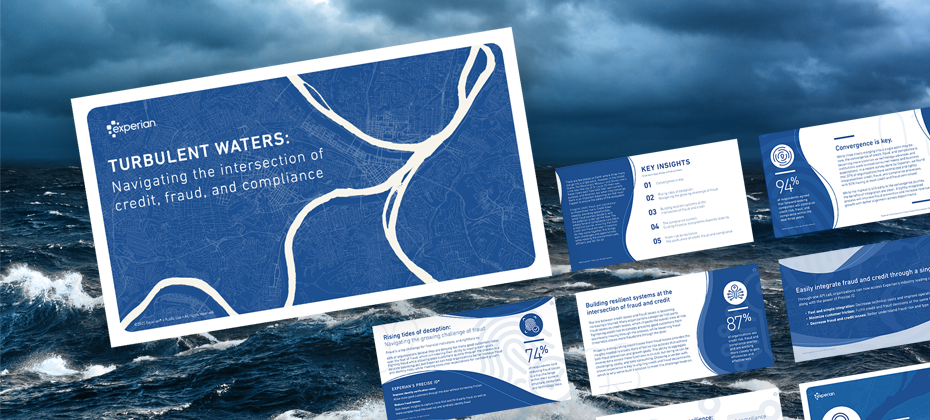
The days of managing credit risk, fraud prevention, and compliance in silos are over. As fraud threats evolve, regulatory scrutiny increases, and economic uncertainty persists, businesses need a more unified risk strategy to stay ahead. Our latest e-book, Navigating the intersection of credit, fraud, and compliance, explores why 94% of forward-looking companies expect credit, fraud, and compliance to converge within the next three years — and what that means for your business.1 Key insights include: The line between fraud and credit risk is blurring. Many organizations classify first-party fraud losses as credit losses, distorting the true risk picture. Fear of fraud is costing businesses growth. 68% of organizations say they’re denying too many good customers due to fraud concerns. A unified approach is the future. Integrating risk decisioning across credit, fraud, and compliance leads to stronger fraud detection, smarter credit risk assessments, and improved compliance. Read the full e-book to explore how an integrated risk approach can protect your business and fuel growth. Download e-book 1Research conducted by InsightAvenue on behalf of Experian

As we step into 2025, the convergence of credit and fraud risk has become more pronounced than ever. With fraudsters leveraging emerging technologies and adapting rapidly to new defenses, risk managers need to adopt forward-thinking strategies to protect their organizations and customers. Here are the top fraud trends and actionable resolutions to help you stay ahead of the curve this year. 1. Combat synthetic identity fraud with advanced AI models The trend: Synthetic identity fraud is surging, fueled by data breaches and advanced AI tooling. Fraudsters are combining genuine credentials with fabricated details, creating identities that evade traditional detection methods. Resolution: Invest in sophisticated identity validation tools that leverage advanced AI models. These tools can differentiate between legitimate and fraudulent identities, ensuring faster and more accurate creditworthiness assessments. Focus on integrating these solutions seamlessly into your customer onboarding process to enhance both security and user experience. 2. Strengthen authentication against deepfakes The trend: Deepfake technology is putting immense pressure on existing authentication systems, particularly in high-value transactions and account takeovers. Resolution: Adopt a multilayered authentication strategy that combines voice and facial biometrics with ongoing transaction monitoring. Dynamic authentication methods that evolve based on user behavior and fraud patterns can effectively counter these advanced threats. Invest in solutions that ensure digital interactions remain secure without compromising convenience. 3. Enhance detection of payment scams and APP fraud The trend: Authorized Push Payment (APP) fraud and scams are increasingly difficult to detect because they exploit legitimate customer behaviors. Resolution: Collaborate with industry peers and explore centralized consortia to share insights and develop robust detection strategies. Focus on monitoring both inbound and outbound transactions to identify anomalies, particularly payments to mule accounts. 4. Optimize Your Fraud Stack for Efficiency and Effectiveness The trend: Outdated device and network solutions are no match for GenAI-enhanced fraud tactics. Resolution: Deploy a layered fraud stack with persistent device ID technology, behavioral analytics, and GenAI-driven anomaly detection. Begin with frictionless first-tier tools to filter out low-hanging fraud vectors, reserving more advanced and costly tools for sophisticated threats. Regularly review and refine your stack to ensure it adapts to evolving fraud patterns. 5. Build collaborative relationships with fraud solution vendors The trend: Vendors offer unparalleled industry insights and long-tail data to help organizations prepare for emerging fraud trends. Resolution: Engage in reciprocal knowledge-sharing with your vendors. Leverage advisory boards and industry insights to stay informed about the latest attack vectors. Choose vendors who provide transparency and are invested in your fraud mitigation goals, turning product relationships into strategic partnerships. Turning resolutions into reality Fraudsters are becoming more ingenious, leveraging GenAI and other technologies to exploit vulnerabilities. To stay ahead of fraud in 2025, let us make fraud prevention not just a resolution but a commitment to safeguarding trust and security in a rapidly evolving landscape. Learn more
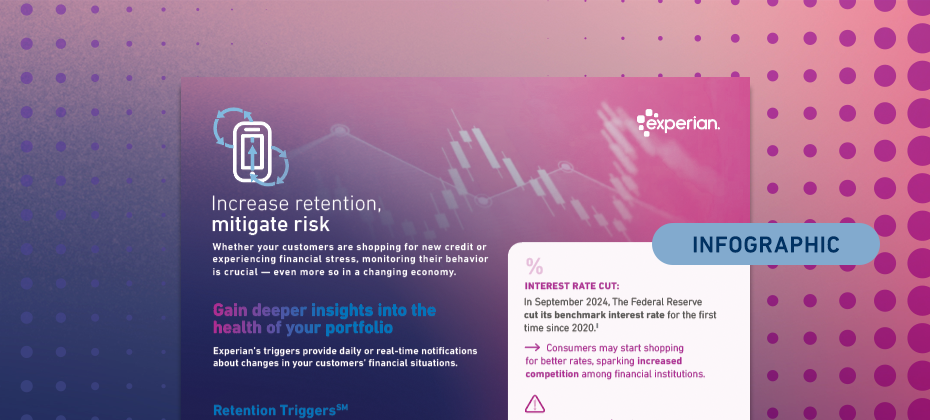
Whether consumers are shopping for new credit or experiencing financial stress, monitoring their behavior is crucial — even more so in an ever-changing economy. Our latest infographic explores economic trends impacting consumers’ financial behaviors and how Experian’s Risk and Retention TriggersSM enable lenders to detect early signs of risk or churn. Key highlights include: Credit card balances climbed to $1.17 trillion in Q3 2024. As prices of goods and services remain elevated, consumers may continue to experience financial stress, potentially leading to higher delinquency rates. Increasing customer retention rates by 5% can boost profits by 25% to 95%. View the infographic to learn how Risk and Retention Triggers can help you advance your portfolio management strategy. Access infographic

How can lenders ensure they’re making the most accurate and fair lending decisions? The answer lies in consistent model validations. What are model validations? Model validations are vital for effective lending and risk-based pricing programs. In addition to helping you determine which credit scoring model works best on your portfolio, the performance (odds) charts from validation results are often used to set score cutoffs and risk-based pricing tiers. Validations also provide the information you need to implement a new score into your decisioning process. Factors affecting model validations Understanding how well a score predicts behavior, such as payment delinquency or bankruptcy, enables you to make more confident lending decisions. Model performance and validation results can be impacted by several factors, including: Dynamic economic environment – Shifts in unemployment rates, interest rate hikes and other economic indicators can impact consumer behavior. Regulatory changes affecting consumers – For example, borrowers who benefited from a temporary student loan payment pause may face challenges as they resume payments. Scorecard degradation – A model that performed well several years ago may not perform as well under current conditions. When to perform model validations The Office of the Comptroller of the Currency’s Supervisory Guidance on Model Risk Management states model validations should be performed at least annually to help reduce risk. The validation process should be comprehensive and produce proper documentation. While some organizations perform their own validations, those with fewer resources and access to historical data may not be able to validate and meet the guidance recommendations. Regular validations support compliance and can also give you confidence that your lending strategies are built on solid, current data that drive better outcomes. Good model validation practices are critical if lenders are to continue to make data-driven decisions that promote fairness for consumers and financial soundness for the institution. Make better lending decisions If you’re a credit risk manager responsible for the models driving your lending policies, there are several things you can do to ensure that your organization continues to make fair and sound lending decisions: Assess your model inventory. Ensure you have comprehensive documentation showing when each model was developed and when it was last validated. Validate the scores you are using on your data, along with those you are considering, to compare how well each model performs and determine if you are using the most effective model for your needs. Produce validation documentation, including performance (odds) charts and key performance metrics, which can be shared with regulators. Utilize the performance charts produced from the validation to analyze bad rates/approval rates and adjust cutoff scores as needed. Explore alternative credit scoring models to potentially enhance your scoring process. As market conditions and regulations continue to evolve, model validations will remain an essential tool for staying competitive and making sound lending decisions. Ready to ensure your lending decisions are based on the latest data? Learn more about Experian’s flexible validation services and how we can support your ongoing success. Contact us today to schedule a consultation. Learn more

Rising balances and delinquency rates are causing lenders to proactively minimize credit risk through pre-delinquency treatments. However, the success of these types of account management strategies depends on timely and predictive data. Credit attributes summarize credit data into specific characteristics or variables to provide a more granular view of a consumer’s behavior. Credit attributes give context about a consumer’s behavior at a specific point in time, such as their current revolving credit utilization ratio or their total available credit. Trended credit attributes analyze credit history data for consumer behavior patterns over time, including changes in utilization rates or how often a balance exceeded an account’s credit limit during the previous 12 months. In a recent analysis, we found that credit attributes related to utilization were highly predictive of future delinquencies in bankcard accounts, with many lenders better managing their credit risk when incorporating these attributes into their account management processes. READ: Find out how custom attributes and models can help you stay ahead of your competitors in the "Build a profitable portfolio with credit attributes" e-book. Using attributes to manage credit risk An enhanced understanding of credit attributes can be leveraged to manage risk throughout the customer lifecycle. They can be important when you want to: Improve credit strategies and efficiencies: Overlay attributes and incorporate them into credit policy rules, such as knockout criteria, to expand your lending population and increase automation without taking on more credit risk. Better understand customers' credit trends: Experian’s wide range of credit data, including trended credit attributes, can help you quickly understand how consumers are faring off-book for visibility into other lending relationships and if they’ll likely experience financial stress in the future. Credit attributes can also help precisely segment populations. For example, attributes can help you distinguish between two people who have similar credit risk scores — but very different trajectories — and will better determine who's the least risky customer. Predicting 60+ day delinquencies with credit attributes To evaluate the effectiveness of credit attributes during account review, we looked at 2.9 million open and active bankcard accounts to see which attributes best predicted the likelihood of an account reaching 60 days past due. For this analysis, we used snapshots of bankcard accounts that were reported in October 2022 and April 2023. Additionally, we analyzed the predictive power of over 4,000 attributes from Experian Premier AttributesSM and Trended 3DTM. Key findings Nine of the top 20 most predictive credit attributes were related to credit utilization rates. Delinquency-related attributes were predictive but weren’t part of the top 10. Three of the top 10 attributes were related to available credit. Turning insight into action While we analyzed credit attributes for account review, determining attribute effectiveness for other use cases will depend on your own portfolio and goals. However, you can use a similar approach to finding the predictive power of attributes. Once you identify the most predictive credit attributes for your population, you can also create an account review program to track these metrics, such as changes in utilization rates or available credit balances. Using Experian’s Risk and Retention Triggers℠ can immediately notify you of customers' daily credit activity to monitor those changes. Ongoing monitoring of attributes and triggers can help you identify customers who are facing financial stress and are headed toward delinquency. You can then proactively take steps to reduce your risk exposure, prioritize accounts, and modify pre-collections strategy based on triggering events. Experian offers credit attributes and the tools to use them Creating and managing credit attributes can be a complex and never-ending task. You need to regularly monitor attributes for performance drift and to address changing regulatory requirements. You may also want to develop new attributes based on expanding data sources and industry trends. Many organizations don’t have the resources to create, manage, and update credit attributes on their own. That’s where Experian’s 4,500+ attributes and tools can help to save time and money. Premier Attributes includes our core attributes and subsets for over 50 industries. Trended 3D attributes can help you better understand changes in consumer behavior and creditworthiness. Clear View AttributesTM offers insights from expanded FCRA data* that generally isn’t reported to consumer credit bureaus. You can easily review and manage your portfolios with Experian’s Ascend Quest™ platform. The always-on access allows you to request thousands of data elements, including credit attributes, risk scores, income models, segmentation data, and payment history, at any time. Use insights from the data and leverage Ascend Quest to quickly identify accounts that may be experiencing financial stress to limit your credit risk — and target others with retention and up-selling opportunities. Watch the Ascend Quest demo to see it in action, or contact us to learn more about Experian’s credit attributes and account review solutions. Watch demo Contact us

In this article...What is fair lending?Understanding machine learning modelsThe pitfalls: bias and fairness in ML modelsFairness metricsRegulatory frameworks and complianceHow Experian® can help As the financial sector continues to embrace technological innovations, machine learning models are becoming indispensable tools for credit decisioning. These models offer enhanced efficiency and predictive power, but they also introduce new challenges. These challenges particularly concern fairness and bias, as complex machine learning models can be difficult to explain. Understanding how to ensure fair lending practices while leveraging machine learning models is crucial for organizations committed to ethical and compliant operations. What is fair lending? Fair lending is a cornerstone of ethical financial practices, prohibiting discrimination based on race, color, national origin, religion, sex, familial status, age, disability, or public assistance status during the lending process. This principle is enshrined in regulations such as the Equal Credit Opportunity Act (ECOA) and the Fair Housing Act (FHA). Overall, fair lending is essential for promoting economic opportunity, preventing discrimination, and fostering financial inclusion. Key components of fair lending include: Equal treatment: Lenders must treat all applicants fairly and consistently throughout the lending process, regardless of their personal characteristics. This means evaluating applicants based on their creditworthiness and financial qualifications rather than discriminatory factors. Non-discrimination: Lenders are prohibited from discriminating against individuals or businesses on the basis of race, color, religion, national origin, sex, marital status, age, or other protected characteristics. Discriminatory practices include redlining (denying credit to applicants based on their location) and steering (channeling applicants into less favorable loan products based on discriminatory factors). Fair credit practices: Lenders must adhere to fair and transparent credit practices, such as providing clear information about loan terms and conditions, offering reasonable interest rates, and ensuring that borrowers have the ability to repay their loans. Compliance: Financial institutions are required to comply with fair lending laws and regulations, which are enforced by government agencies such as the Consumer Financial Protection Bureau (CFPB) in the United States. Compliance efforts include conducting fair lending risk assessments, monitoring lending practices for potential discrimination, and implementing policies and procedures to prevent unfair treatment. Model governance: Financial institutions should establish robust governance frameworks to oversee the development, implementation and monitoring of lending models and algorithms. This includes ensuring that models are fair, transparent, and free from biases that could lead to discriminatory outcomes. Data integrity and privacy: Lenders must ensure the accuracy, completeness, and integrity of the data used in lending decisions, including traditional credit and alternative credit data. They should also uphold borrowers’ privacy rights and adhere to data protection regulations when collecting, storing, and using personal information. Understanding machine learning models and their application in lending Machine learning in lending has revolutionized how financial institutions assess creditworthiness and manage risk. By analyzing vast amounts of data, machine learning models can identify patterns and trends that traditional methods might overlook, thereby enabling more accurate and efficient lending decisions. However, with these advancements come new challenges, particularly in the realms of model risk management and financial regulatory compliance. The complexity of machine learning models requires rigorous evaluation to ensure fair lending. Let’s explore why. The pitfalls: bias and fairness in machine learning lending models Despite their advantages, machine learning models can inadvertently introduce or perpetuate biases, especially when trained on historical data that reflects past prejudices. One of the primary concerns with machine learning models is their potential lack of transparency, often referred to as the "black box" problem. Model explainability aims to address this by providing clear and understandable explanations of how models make decisions. This transparency is crucial for building trust with consumers and regulators and for ensuring that lending practices are fair and non-discriminatory. Fairness metrics Key metrics used to evaluate fairness in models can include standardized mean difference (SMD), information value (IV), and disparate impact (DI). Each of these metrics offers insights into potential biases but also has limitations. Standardized mean difference (SMD). SMD quantifies the difference between two groups' score averages, divided by the pooled standard deviation. However, this metric may not fully capture the nuances of fairness when used in isolation. Information value (IV). IV compares distributions between control and protected groups across score bins. While useful, IV can sometimes mask deeper biases present in the data. Disparate impact (DI). DI, or the adverse impact ratio (AIR), measures the ratio of approval rates between protected and control classes. Although DI is widely used, it can oversimplify the complex interplay of factors influencing credit decisions. Regulatory frameworks and compliance in fair lending Ensuring compliance with fair lending regulations involves more than just implementing fairness metrics. It requires a comprehensive end-to-end approach, including regular audits, transparent reporting, and continuous monitoring and governance of machine learning models. Financial institutions must be vigilant in aligning their practices with regulatory standards to avoid legal repercussions and maintain ethical standards. Read more: Journey of a machine learning model How Experian® can help By remaining committed to regulatory compliance and fair lending practices, organizations can balance technological advancements with ethical responsibility. Partnering with Experian gives organizations a unique advantage in the rapidly evolving landscape of AI and machine learning in lending. As an industry leader, Experian offers state-of-the-art analytics and machine learning solutions that are designed to drive efficiency and accuracy in lending decisions while ensuring compliance with regulatory standards. Our expertise in model risk management and machine learning model governance empowers lenders to deploy robust and transparent models, mitigating potential biases and aligning with fair lending practices. When it comes to machine learning model explainability, Experian’s clear and proven methodology assesses the relative contribution and level of influence of each variable to the overall score — enabling organizations to demonstrate transparency and fair treatment to auditors, regulators, and customers. Interested in learning more about ensuring fair lending practices in your machine learning models? Learn More This article includes content created by an AI language model and is intended to provide general information.

For lenders, first payment default (FPD) is more than just financial jargon; it's a crucial metric in assessing credit risk. This blog post will walk you through the essentials of FPD, from defining the term to exploring how you can prevent and mitigate its potential impact. What Is FPD (First Payment Default)? FPD occurs when a consumer fails to make their initial payment on a loan or credit agreement, which is often perceived as an early signal of a potential cascade of risky behavior. Recognizing FPD is the starting point for lenders to address potential issues with new borrowers before they escalate. One important aspect to grasp is the timeline of FPD. It’s not just about missing the first payment; it's about "early" missing. The timing of defaults is often critical in assessing the overall risk profile of a borrower or group of borrowers. The earlier a borrower starts to miss payments, the riskier they tend to be. In some cases, early default may signal deeper issues such as misrepresented income, overextension across multiple credit lines, or synthetic identity and first-party fraud that slipped through origination controls. Examining the causes of FPD The roots of FPD are diverse and can be classified into two broad categories: External factors: These include sudden financial crises, changes in employment status, or unforeseen expenses. Such factors are often beyond the borrower's immediate control. Internal factors: This category covers more deliberate or chronic financial habits, such as overspending, lack of savings, or overleveraging on credit. It's often indicative of longer-term financial instability. In higher-risk scenarios, internal drivers may also include intentional default behavior or “bust-out” fraud schemes. Understanding the causes of early payment default is the first step in effective risk management and customer engagement strategies. Distinguishing between temporary hardship and structural or fraudulent risk is critical to determining the appropriate response. Implications of FPD for lenders FPD doesn't just signal immediate financial loss for lenders in terms of the missed installment. It sets off a cascade of consequences that affect the bottom line and the reputation of the institution. Financial loss. Lenders incur direct financial losses when a payment is missed, but the implications go beyond the missed payment amount. There are immediate costs associated with servicing, collections, and customer support. In the longer term, repeated defaults can lead to write-offs, impacting the institution's profitability and regulatory standing. Regulatory scrutiny. Repeated instances of FPD can also draw the attention of regulators, leading to scrutiny and potentially increased compliance costs. Mitigating first payment default Mitigating FPD requires a multifaceted approach that blends data, advanced analytics, customer engagement, and agile risk management. Lenders need to adopt strategies that can detect early signs of potential FPD and intervene preemptively. Data-driven decision-making. Leveraging advanced analytics and credit risk modeling is crucial. By incorporating transactional and behavioral data, lenders can make more accurate assessments of a borrower's risk profile. Utilizing predictive models can help forecast which borrowers are likely to default on their first payment, allowing for early intervention. Proactive customer engagement. Initiatives that revolve around education, personalized financial planning advice, and flexible payment arrangements can help borrowers who might be at risk of FPD. Proactive outreach can engage customers before a default occurs, turning a potential negative event into a positive experience. Agile risk management. Risk management strategies should be dynamic and responsive to changing market and customer conditions. Regularly reviewing and updating underwriting criteria, credit policies, and risk assessment tools ensures that lenders are prepared to tackle FPD challenges as they arise. Using FPD as a customer management tool Lastly, and perhaps most importantly, lenders can use FPD as a tool to foster better customer management. Every FPD is a data point that can provide insights into customer behavior and financial trends. By studying the causes and outcomes of FPD, lenders can refine their risk mitigation tools and improve their customer service offerings. Building trust through handling defaults. How lenders handle defaults, specifically the first ones, can significantly impact customer trust. Transparent communication, fair and considerate policies, and supportive customer service can make a difference in retaining customers and improving the lender's brand image. Leveraging data for personalization. The increasing availability of data means lenders can offer more personalized services. By segmenting customers based on payment behavior and response to early interventions, lenders can tailor offerings that meet the specific financial needs and challenges of individual borrowers. How Experian® can help First payment default is a critical aspect of credit risk management that requires attention and proactive strategies. By understanding the causes, implications, and mitigation strategies associated with FPD, financial institutions can not only avoid potential losses but also build stronger, more enduring relationships with their customers. Learn more about Experian’s credit risk modeling solutions. Learn more

Developing machine learning (ML) credit risk models can be more challenging than traditional credit risk modeling approaches. But once deployed, ML models can increase automation and expand a lender’s credit universe. For example, by using ML-driven credit risk models and combining traditional credit data with transactional bank data, a type of alternative credit data* , some lenders see a Gini uplift of 60 to 70 percent compared to a traditional credit risk model.1 New approaches to model operations are also helping lenders accelerate their machine learning model development processes and go from collecting data to deploying a new model in days instead of months. READ MORE: Getting AI-driven decisioning right in financial services What is machine learning model development? Machine learning model development is what happens before the model gets deployed. It's often broken down into several steps. Define the problem: If you’re building an ML credit risk model, the problem you may be trying to solve is anticipating defaults, improving affordability for borrowers or expanding your lending universe by scoring more thin-file and previously unscorable consumers. Gather, clean and stage data: Identify helpful data sources, such as internal, credit bureau and alternative credit data. The data will then need to be consolidated, structured, labeled and categorized. Machine learning can be useful here as well, as ML models can be trained to label and categorize raw data. Feature engineering: The data is then analyzed to identify the individual variables and clusters of variables that may offer the most lift. Features that may directly or unintentionally create bias should be removed or limited. Create the model: Deciding which algorithms and techniques to use when developing a model can be part art and part science. Because lenders need to be able to explain the decisions they make to consumers and regulators, many lenders build model explainability into new ML-driven credit risk models. Validate and deploy: New models are validated and rigorously tested, often as challengers to the existing champion model. If the new model can consistently outperform, it may move on to production. The work doesn’t stop once a model is live — it needs to be continuously monitored for drift, and potentially recalibrated or replaced with a new model. About 10 percent of lenders use tools to automatically alert them when their models start to drift. But around half make a point of checking deployed models for drift every month or quarter.3 READ MORE: Journey of an ML Model What is model deployment? Model deployment is one of the final steps in the model lifecycle — it’s when you move the model from development and validation to live production. New models can be deployed in various ways, including via API integration and cloud service deployment using public, private or hybrid architecture. However, integrating a new model with existing systems can be challenging. About a third (33 percent) of consumer lending organizations surveyed in 2023 said it took them one to two months for model deployment-related activities. A little less (29 percent) said it took them three to six months. Overall, it often takes up to 15 months for the entire development to deployment process — and 55 percent of lenders report building models that never get deployed.2 READ MORE: Accelerating the Model Development and Deployment Lifecycle Benefits of deploying machine learning credit risk models Developing, deploying, monitoring and recalibrating ML models can be difficult and costly. But financial institutions have a lot to gain from embracing the future of underwriting. Improve credit risk assessment: ML-driven models can incorporate more data sources and more precisely assess credit risk to help lenders price credit offers and decrease charge-offs. Expand automation: More precise scoring can also increase automation by reducing how many applications need to go to manual review. Increase financial inclusion: ML-models may be able to evaluate consumers who don’t have recent credit information or thick enough credit files to be scorable by traditional models. In short, ML models can help lenders make better loan offers to more people while taking on less risk and using fewer internal resources to review applications. CASE STUDY: Atlas Credit, a small-dollar lender, partnered with Experian® to develop a fully explainable machine learning credit risk model that incorporated internal data, trended data, alternative financial services data and Experian’s attributes. Atlas Credit can use the new model to make instant decisions and is expected to double its approvals while decreasing losses by up to 20 percent. How we can help Experian offers many machine learning solutions for different industries and use cases via the Experian Ascend Technology Platform™. For example, with Ascend ML Builder™, lenders can access an on-demand development environment that can increase model velocity — the time it takes to complete a new model’s lifecycle. You can configure Ascend ML Builder based on the compute you allocate and your use cases, and the included code templates (called Accelerators) can help with data wrangling, analysis and modeling. There’s also Ascend Ops™, a cloud-based model operations solution. You can use Ascend Ops to register, test and deploy custom features and models. Automated model monitoring and management can also help you track feature and model data drift and model performance to improve models in production. Learn more about our machine learning and model deployment solutions *When we refer to “Alternative Credit Data,” this refers to the use of alternative data and its appropriate use in consumer credit lending decisions, as regulated by the Fair Credit Reporting Act. Hence, the term “Expanded FCRA Data” may also apply and can be used interchangeably. 1. Experian (2023). Raising the AI Bar 2. Experian (2023). Accelerating Model Velocity in Financial Institutions 3. Ibid.

Today's lenders use expanded data sources and advanced analytics to predict credit risk more accurately and optimize their lending and operations. The result may be a win-win for lenders and customers. What is credit risk? Credit risk is the possibility that a borrower will not repay a debt as agreed. Credit risk management encompasses the policies, tools and systems that lenders use to understand this risk. These can be important throughout the customer lifecycle, from marketing and sending preapproved offers to underwriting and portfolio management. Poor risk management can lead to unnecessary losses and missed opportunities, especially because risk departments need to manage risk with their organization's budgetary, technical and regulatory constraints in mind. How is it assessed? Credit risk is often assessed with credit risk analytics — statistical modeling that predicts the risk involved with credit lending. Lenders may create and use credit risk models to help drive decisions. Additionally (or alternatively), they rely on generic or custom credit risk scores: Generic scores: Analytics companies create predictive models that rank order consumers based on the likelihood that a person will fall 90 or more days past due on any credit obligation in the next 24 months. Lenders can purchase these risk scores to help them evaluate risk. Custom scores: Custom credit risk modeling solutions help organizations tailor risk scores for particular products, markets, and customers. Custom scores can incorporate generic risk scores, traditional credit data, alternative credit data* (or expanded FCRA-regulated data), and a lender's proprietary data to increase their effectiveness. About 41 percent of consumer lending organizations use a model-first approach, and 55 percent use a score-first approach to credit decisioning.1 However, these aren't entirely exclusive groupings. For example, a credit score may be an input in a lender's credit risk model — almost every lender (99 percent) that uses credit risk models for decisioning also uses credit scores.2 Similarly, lenders that primarily rely on credit scores may also have business policies that affect their decisions. What are the current challenges? Risk departments and teams are facing several overarching challenges today: Staying flexible: Volatile market conditions and changing consumer preferences can lead to unexpected shifts in risk. Organizations need to actively monitor customer accounts and larger economic trends to understand when, if, and how they should adjust their risk policies. Digesting an overwhelming amount of data: More data can be beneficial, but only if it offers real insights and the organization has the resources to understand and use it efficiently. Artificial intelligence (AI) and machine learning (ML) are often important for turning raw data into actionable insights. Retaining IT talent: Many organizations are trying to figure out how to use vast amounts of data and AI/ML effectively. However, 82 percent of lenders have trouble hiring and retaining data scientists and analysts.3 Separating fraud and credit losses: Understanding a portfolio's credit losses can be important for improving credit risk models and performance. But some organizations struggle to properly distinguish between the two, particularly when synthetic identity fraud is involved. Best practices for credit risk management Leading financial institutions have moved on from legacy systems and outdated risk models or scores. And they're looking at the current challenges as an opportunity to pull away from the competition. Here's how they're doing it: Using additional data to gain a holistic picture: Lenders have an opportunity to access more data sources, including credit data from alternative financial services and consumer-permissioned data. When combined with traditional credit data, credit scores, and internal data, the outcome can be a more complete picture of a consumer's credit risk. Implementing AI/ML-driven models: Lenders can leverage AI/ML to analyze large amounts of data to improve organizational efficiency and credit risk assessments. 16 percent of consumer lending organizations expect to solely use ML algorithms for credit decisioning, while two-thirds expect to use both traditional and ML models going forward.4 Increasing model velocity: On average, it takes about 15 months to go from model development to deployment. But some organizations can do it in less than six.5 Increasing model velocity can help organizations quickly respond to changing consumer and economic conditions. Even if rapid model creation and deployment isn't an option, monitoring model health and recalibrating for drift is important. Nearly half (49 percent) of lenders check for model drift monthly or quarterly — one out of ten get automated alerts when their models start to drift.6 WATCH: Accelerating Model Velocity in Financial Institutions Improving automation and customer experience Lenders are using AI to automate their application, underwriting, and approval processes. Often, automation and ML-driven risk models go hand-in-hand. Lenders can use the models to measure the credit risk of consumers who don't qualify for traditional credit scores and automation to expedite the review process, leading to an improved customer experience. Learn more by exploring Experian's credit risk solutions. Learn more * When we refer to “Alternative Credit Data," this refers to the use of alternative data and its appropriate use in consumer credit lending decisions as regulated by the Fair Credit Reporting Act (FCRA). Hence, the term “Expanded FCRA Data" may also apply in this instance and both can be used interchangeably. 1-6. Experian (2023). Accelerating Model Velocity in Financial Institutions

If you’re a manager at a business that lends to consumers or otherwise extends credit, you certainly are aware that 10-15% of your current customers and prospective future customers are among the approximately 27 million consumers who are now – or will soon be -- fitting another bill into their monthly budgets. Early in the COVID-19 pandemic, the government issued a pause on federal student loan payments and interest. Now that the payment pause has expired, millions of Americans face a new bill averaging more than $200. Will they pay you first? If this is your concern, you aren’t alone: Experian recently held a webinar that discussed how the end of the student loan pause might affect businesses. When we surveyed the webinar attendees, nearly 3 out of 4 responses included Risk Management as a main concerns now. Another top concern is about credit scores. Lenders and investors use credit scores – bureau scores such FICO® or VantageScore® credit score or custom credit scores proprietary to their institution – to predict credit default risk. The risk managers at those companies want to know to what extent they can continue to rely on those scores as Federal student loan payments come due and consumers experience payment shock. I’ve analyzed a large and statistically meaningful sample (10% of the US consumer population in Experian’s Ascend Sandbox) to shed some light on that question. As background information, the average consumer with student loans had lower scores before the pandemic than the average of the general population. One of my Experian colleagues has explored some of the reasons at https://www.experian.com/blogs/ask-experian/research/average-student-loan-payments). Here are some of the things we can learn from comparing the credit data of the two groups of people. I looked at a period from 2019 and from 2023 to see how things have changed: Average credit scores increased during the pandemic, continuing a long-term trend during which more Americans have been willing and able to meet all their obligations. During the COVID Public Health Emergency, consumers with student loans brought up their scores by an average of 25 points; that was 7 points more than consumers without student loans. Another way to look at it: in 2019, consumers with student loans had credit scores 23 points lower than consumers without. By 2023, that difference had shrunk to 16 points. Experian research shows that there will be little immediate impact on credit scores when the new bills come due. Time will tell whether these increased credit scores accurately reflect a reduction in the risk that consumers will default on other bills such as auto loans or bankcards soon, even as some people fit student loan bills into their budgets. It is well-known that many people saved money during the public health emergency. Since then, the personal savings rate has fallen from a pandemic high of 32% to levels between 3% and 5% this year – lower than at any point since the 2009 recession. In an October 2023 Experian survey, only 36% of borrowers said they either set aside funds or they planned using other financial strategies specifically for the resumption of their student loan payments. Additional findings from that study can be found here. Furthermore, there are changes in the way your customers have used their credit cards over the last four years: Consumers’ credit card balances have increased over the last four years. Consumers with student loans have balances that are on average $282 (4%) more now than in 2019. That is a significantly smaller increase than for consumers without student loans, whose total credit card debt increased by an average of $1,932 (26%). Although their balances increased, the ratio of consumers’ total revolving debt balances to their credit limits (utilization) changed by less than 1% for both consumers with student loans and consumers without. In 2019, the utilization ratio was 9.8 percentage points lower for consumers with student loans than consumers without. Four years later, the difference is nearly the same (9.6 points). We can conclude that many student loan borrowers have been very responsible with credit during the Public Health Emergency. They may have been more mindful of their credit situation, and some may have planned for the day when their student loan payments will be due. As the student loan pause come to an end, there are a few things that lenders and other businesses should be doing to be ready: Even if you are not a student loan lender, it is important to stay on top of the rapidly evolving student loan environment. It affects many of your customers, and your business with them needs to adapt. Anticipate that fraudsters and abusers of credit will be creative now: periods of change create opportunities for them and you should be one step ahead. Build optimized strategies in marketing, account opening, and servicing. Consider using machine learning to make more accurate predictions. Those strategies should reflect trends in payments, balances, and utilization; older credit scores look at a single point in time. Continually refresh data about your customers—including their credit scores and important attributes related to payments, balances, and utilization patterns. Look for alternative data that will give you a leg up on the competition. In the coming weeks and months, Experian’s data scientists will monitor measures of performance of the scores and attributes that you depend on in your data-driven strategies — particularly focusing on the Kolmogorov-Smirnov (KS) statistics that will show changes in the predictive power of each score and attribute. (If you are a data-driven business, your data science team or a trusted partner should be doing the same thing with a more specific look at your customer base and business strategies.) In future reports and blog posts, we’ll shed light on the impact student loans are having on your customers and on your business. In the meantime, for more information about how to use data and advanced analytics to grow while controlling costs and risks, all while staying in compliance and providing a good customer experience, visit our website.

Credit risk refers to the likelihood that a borrower will fail to repay a debt as agreed. Credit risk management is the art and science of utilizing risk mitigation tools to minimize losses while maximizing profits from lending activities. Lenders can establish credit underwriting criteria for each of their products and utilize risk-based pricing to adjust the terms of a loan or line of credit based on the risk associated with the product and borrower. Credit portfolio management extends beyond originations and individual decisions to encompass portfolios as a whole. Why is credit risk management important? Continuously managing credit risk matters because there's always a balancing act. Tightening a credit box – using more restrictive underwriting criteria – might reduce credit losses. However, it can also decrease approval rates, excluding borrowers who would have repaid as agreed. Expanding a credit box might increase approval rates, but it is only beneficial if the profit from good new loans exceeds credit losses. Fraud is also on the rise and becoming increasingly complex, making fraud management a crucial part of understanding risk. For instance, with synthetic identity fraud, fraudsters might “age an account" or make on-time payments before “busting out” or maxing out a credit card, and then abandoning the account. If you examine payment activity alone, it may be challenging to classify the loss as either a fraud loss or a credit loss. Additionally, external economic forces and consumer behavior are constantly in flux. Financial institutions need effective consumer risk management and to adjust their strategies to minimize losses. And they must dynamically adjust their underwriting criteria to account for these changes. You could be pushed off balance if you don't react in time. What does managing credit risk entail? Lenders have used the five C’s of credit to measure credit risk and make lending decisions for decades: Character: The likelihood a borrower will repay the loan as agreed, often measured by analyzing their credit report and a credit risk score. Capacity: The borrower's ability to pay, which lenders might measure by reviewing their outstanding debt, income, and debt-to-income ratio. Capital: The borrower's commitment to the purchase, such as their down payment when buying a vehicle or home. Collateral: The value of the collateral, such as a vehicle or home, for an auto loan or mortgage. Conditions: The external conditions that can impact a borrower's ability to afford payments, such as broader economic trends. Credit risk management considers these within the context of a lender’s goals and its specific lending products. For example, capital and collateral aren't relevant for unsecured personal loans, which makes character and capacity the primary drivers of a decision. Credit risk management best practices at origination Advances in analytics, computing power and real-time access to additional data sources are helping lenders better measure some of the C’s. For example, credit risk scores can more precisely assess character for a lender's target market than generic risk scores. Open banking data enables lenders to more accurately assess a borrower's capacity by directly analyzing their cash flows. With these advances in mind, leading lenders: View underwriting as a dynamic process: Lenders have always had to respond to changing forces, and the pandemic highlighted the need to be nimble. Consider how you can utilize analytical insights to quickly adjust your strategies. Test the latest credit risk modeling techniques: Artificial intelligence (AI) and machine learning (ML) techniques can improve credit risk model performance and drive automated credit risk decisioning. Use multiple data sources: Alternative credit data and consumer-permissioned data offer increased and real-time visibility into borrowers' creditworthiness to help lenders more accurately assess credit risk. These additional data sources can score those who are unscoreable by conventional models and help fuel ML credit risk models. Experian helps lenders measure and manage credit risk Experian is a leading provider of traditional credit data, alternative credit data and credit risk analytics. For those who want to quickly benefit from the latest technological advancements, our Lift Premium credit risk model utilizes both traditional and alternative data to score up to 96 percent of U.S. consumers — compared to the 81 percent that conventional models can score.¹ Experian’s Ascend Platform and Ascend Intelligence Services™ can help lenders develop, deploy and monitor custom credit risk models to optimize their decisions. With end-to-end platforms, our account and portfolio management services can help you limit risk, detect fraud, automate underwriting and identify opportunities to grow your business. Learn more about credit risk management ¹Experian (2023). Lift Premium™ and Lift Plus™