Latest Posts

Explore what multi-factor authentication is, how it works, and why it’s crucial for enhancing your digital security against data breaches.

Managing digital identities is a necessity, responsibility and privilege. When done right, digital identity management solutions can help consumers feel recognized and safe. In turn, companies can build strong and personalized relationships with their customers while complying with regulatory requirements and combating hydra-like fraud attacks. What is digital identity? The concept and definition of a digital identity have expanded as everyday interactions increasingly happen in digital realms. Today, a digital identity is more than an online account. Identities can be created and depend on all the digital information associated with a unique entity, which may be a person, business or device. A person's digital identity often includes online and offline attributes that fall into one of three categories: Something a user knows, such as a username, password or PIN. Something a user has, such as a mobile phone or security token. Something that's part of the user, such as a fingerprint, iris, voice pattern, behavior or preferences. People are increasingly open to sharing this type of personal information if it serves a purpose. Our Global Identity and Fraud Report found that 57 percent of consumers are willing to share data if it ensures greater security or prevents fraud, and 63 percent of consumers think sharing data is beneficial (up from 51 percent in 2021).1 People can also use these identifiers to verify their identity at a later point. But digital identity verification tools should rely on more than user-provided verification alone. A person may have hundreds or thousands of digital interactions every day, and these can leave digital footprints that you can use to create or expand digital identities. These types of identifiers — such as search queries, geotags, behaviors and device information — can also help you authenticate a user and offer a more customized and seamless experience. However, when focusing on consumers' digital identities, it's important to remember that their identity is more than the sum of data points. A person's digital identity is unique and personal, and it should be managed accordingly. The business side's challenges A discussion of what makes up an identity can quickly turn philosophical. For instance, you can't authenticate identical twins based on a face scan or DNA test, so what is it that makes them unique? In some ways, the example gets to the heart of businesses' challenges today. To create a safe and enjoyable online identity verification experience, you need to be able to distinguish between a real person and an imitator, even when the two look nearly identical. Access to more information can make this easier, but you then need to ensure that you can keep this information secure. It can be a tricky balance, but if you get it right, your efforts will be rewarded. People want to be recognized as they move across channels and devices, and organizations want to be able to quickly and accurately identify users with a friction-right experience that also helps prevent fraud. However, while 84 percent of businesses say recognizing customers is "very" or "extremely" important, only about 33 percent of consumers are confident that they'll be repeatedly recognized online.1 There's a clear gap — and an opportunity to better meet customers' desires. Organizations across industries know they need a customer recognition strategy and 82% already have one in place.2 Some businesses address this challenge with identity platforms that are standardized and interoperable. Standardization allows the platform to gather and store the growing influx of data that it can use as part of a digital identity strategy. Interoperability allows the platform to match different types of data, including physical data, with a person to verify their digital identity and avoid the creation of duplicate identities. In short, the platforms can make sense of increasingly large amounts of internal and external data and easily incorporate new data sources as they become available. Regulatory compliance and digital identity Navigating the regulatory landscape is a significant challenge for organizations dealing with digital identities. Compliance is not only necessary for legal reasons but also critical to maintaining customer trust and safeguarding institutional reputation. Organizations must stay informed about the regulatory frameworks that affect digital identity, such as the General Data Protection Regulation (GDPR) in the European Union, the California Consumer Privacy Act (CCPA), and other pertinent laws in jurisdictions they operate. These regulations dictate how personal data can be collected, stored, used and shared. Staying ahead of regulatory changes: Regulatory landscapes are dynamic, particularly concerning digital data. Organizations should engage with policymakers and participate in industry forums to stay ahead of changes. By proactively managing compliance, organizations can avoid costly penalties, operational disruptions and reputational damage. The consumer's perspective Some organizations are adopting a consumer-centric approach to digital identity that puts consumers' needs and desires first. These can broadly be broken into four categories: Security: While people want a seamless and personalized experience, security and privacy are listed as top concerns year after year.1 That might not be surprising given that data breaches continually make headlines and there are growing concerns over identity theft. Privacy: Security is related to privacy, but privacy means more than keeping consumers' information safe from hackers. Our April 2022 Global Insight Report found that 90 percent of consumers want some or complete control over how their personal data is used. 3 Recognition: People want to be continually recognized once they share and verify their identity, even if they move between devices or channels. And nearly 70 percent of consumers say it's important for businesses to recognize them across multiple visits.1 Inclusion: Consumers may have varying levels of access to technology, comfort with technology and access to physical identifiers. Creating digital identity solutions for these potential barriers can also increase financial inclusion. While these are all areas of focus, organizations also need to find the right fit for each person and interaction. For instance, consumers may expect and even appreciate a robust verification process when they're opening a new financial account. But they could quickly be turned off by a similar process if they're making a small purchase or trying to play a new online game. What to look for in a digital identity partner Digital identity solutions and services have grown increasingly sophisticated to meet today's challenges. Identity hubs and data orchestration engines can connect with multiple services to help create, resolve, verify and authenticate identities. By moving away from a siloed approach, businesses can offer customers a better experience while minimizing their risk throughout the customer journey. When comparing potential partners, look for a company that: Has a customer-first approach: If your business is customer-first, then you need a partner who has a similar view. Uses multidimensional data: The partner should be able to offer and use offline and digital data sources to resolve, verify and authenticate digital identities. Its capabilities may become increasingly important as new data sources emerge. Isn't afraid to innovate: Look into how the partner is testing and using the latest advancements, such as artificial intelligence, in its digital identity solutions. Protects your brand: Understand how the partner helps detect and prevent fraud while creating a seamless experience for your customers and protecting their data. The right partner can increase your bottom line, help you build trust and improve your brand's reputation. Learn more about Experian Identity, an integrated approach to digital identity that builds on Experian's decades of experience managing and securing identifying information. Learn more 1“2022 Global Identity and Fraud Report: Building digital consumer trust amidst rising fraud activity and concerns," Experian, June 2022 2“2021 Global Identity and Fraud Report: Protecting and enabling customer engagements in the new digital era," Experian, April 2021. https://www.experian.com/content/dam/marketing/na/global-da/pdfs/GIDFR_2022.pdf https://www.experian.co.th/wp-content/uploads/2021/04/Experian-Global-Identity-Fraud-Report-2021.pdf 3"Global Insights Report: April 2022," Experian, April 2022. https://www.experian.com/blogs/global-insights/wp-content/uploads/2022/04/WaveReportApril2022.pdf *This article includes content created by an AI language model and is intended to provide general information.

Third-party fraud involves an identifiable victim that is willing to collaborate in the investigation and resolution.

Account takeover fraud can be costly, but is preventable with the right account takeover fraud prevention solution.

For companies that regularly engage in financial transactions, having a customer identification program (CIP) is mandatory to comply with the regulations around identity verification requirements across the customer lifecycle. In this blog post, we will delve into the essentials of a customer identification program, what it entails, and why it is important for businesses to implement one. What is a customer identification program? A CIP is a set of procedures implemented by financial institutions to verify the identity of their customers. The purpose of a CIP is to be a part of a financial institution’s fraud management solutions, with similar goals as to detect and prevent fraud like money laundering, identity theft, and other fraudulent activities. The program enables financial institutions to assess the risk level associated with a particular customer and determine whether their business dealings are legitimate. An effective CIP program should check the following boxes: Confidently verify customer identities Seamless authentication Understand and anticipate customer activities Where does Know Your Customer (KYC) fit in? KYC policies must include a robust CIP across the customer lifecycle from initial onboarding through portfolio management. KYC solutions encompass the financial institution’s customer identification program, customer due diligence and ongoing monitoring. What are the requirements for a CIP? Customer identification program requirements vary depending on the type of financial institution, the type of account opened, and other factors. However, the essential components of a CIP include verifying the customer's identity using government-issued identification, obtaining and verifying the customer's address, and checking the customer against a list of known criminals, terrorists, or suspicious individuals. These measures help detect and prevent financial crimes. Why is a CIP important for businesses? CIP helps businesses mitigate risk by ensuring they have accurate and up-to-date information about their customers. This also helps financial institutions comply with laws and regulations that require them to monitor financial transactions for any suspicious activities. By having a robust CIP in place, businesses can establish trust and rapport with their customers. According to Experian’s 2024 U.S. Identity and Fraud Report, 63% of consumers say it's extremely or very important for businesses to recognize them online. Having an effective CIP in place is part of financial institutions showing their consumers that they have their best interests top of mind. Finding the right partner It’s important to find a partner you trust when working to establish processes and procedures for verifying customer identity, address, and other relevant information. Companies can also utilize specialized software that can help streamline the CIP process and ensure that it is being carried out accurately and consistently. Experian’s proprietary and partner data sources and flexible monitoring and segmentation tools allow you to resolve CIP discrepancies and fraud risk in a single step, all while keeping pace with emerging fraud threats with effective customer identification software. Putting consumers first is paramount. The security of their identity is priority one, but financial institutions must pay equal attention to their consumers’ preferences and experiences. It is not just enough to verify customer identities. Leading financial institutions will automate customer identification to reduce manual intervention and verify with a reasonable belief that the identity is valid and eligible to use the services you provide. Seamless experiences with the right amount of friction (I.e., multi-factor authentication) should also be pursued to preserve the quality of the customer experience. Putting it all together As cybersecurity threats are becoming more sophisticated, it is essential for financial institutions to protect their customerinformation and level up their fraud prevention solutions. Implementing a customer identification program is an essential component in achieving that objective. A robust CIP helps organizations detect, prevent, and deter fraudulent activities while ensuring compliance with regulatory requirements. While implementing a CIP can be complex, having a solid plan and establishing clear guidelines is the best way for companies to safeguard customer information and maintain their reputation. CIPs are an integral part of financial institutions security infrastructures and must be a business priority. By ensuring that they have accurate and up-to-date data on their customers, they can mitigate risk, establish trust, and comply with regulatory requirements. A sound CIP program can help financial institutions detect and prevent financial crimes and cyber threats while ensuring that legitimate business transactions are not disrupted, therefore safeguarding their customers' information and protecting their own reputation. Learn more

Fraud analytics can help your business keep up with sophisticated fraud attempts and provide expert security.

Using financial management services to drive user engagement can be an effective strategy to win the race for consumer attention.
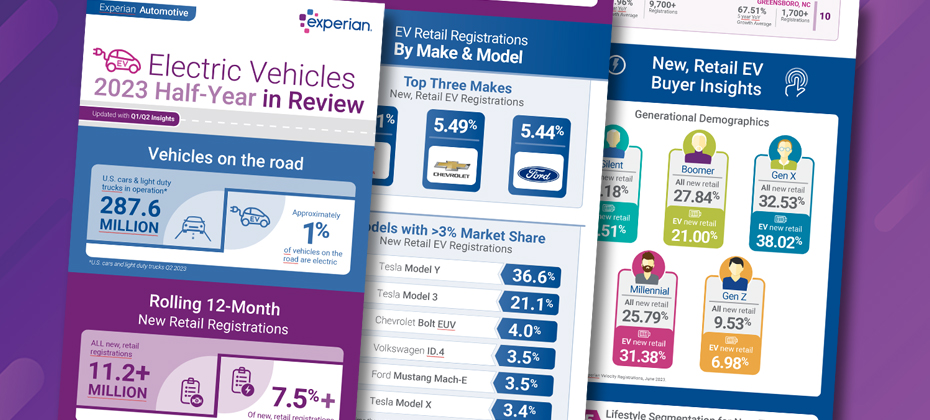
Experian Automotive has updated our Electric Vehicles 2022 Year-in-Review Infographic Report with new 2023 Half-Year insights. In the previous report, we shared that over 6% of new, retail registrations were for electric vehicles. As we evaluated the current state of the Electric Vehicle Market for the first half of 2023 (January-June registrations), the percentage of new, retail registrations for electric vehicles has increased to over 7.5%. There are several factors driving consumer adoption of electric vehicles in the United States, including: Environmental concerns: Consumers are increasingly concerned about the environmental impact of transportation, and EVs produce zero emissions at the tailpipe. Government incentives: Many state and federal governments offer incentives for the purchase of electric vehicles, such as tax credits and rebates. Falling battery costs: The cost of lithium-ion batteries, the key component of EVs, has fallen in recent years, making EVs more affordable for consumers. Increasing availability of EV models: Automakers are releasing a growing number of EV models, giving consumers more choices to fit their needs and budgets. Despite the progress that has been made, there are still some challenges that need to be addressed to accelerate EV adoption in the United States. These challenges include: Lack of charging infrastructure: There is a need for more public charging stations, especially in rural areas and along major highways. High upfront cost: EVs can still be more expensive to purchase than gasoline-powered vehicles, even after factoring in government incentives. Range anxiety: Some consumers are concerned about the range of EVs, which can be limited compared to gasoline-powered vehicles. Despite the challenges, the future of electric vehicles in the United States is bright. Automakers are investing heavily in EV development, and the number of EV models available to consumers is expected to continue to grow. Additionally, state and federal governments are taking steps to support EV adoption, such as investing in charging infrastructure and offering incentives for consumers and businesses to purchase If you’d like to learn more about the current state of the Electric Vehicle market and buyer and how that market is growing and changing, check out our Updated Electric Vehicles Year in Review Infographic.

First-party fraud can be detected and prevented by using robust fraud risk management strategies and solutions.

Providing identity protection services alongside your existing offerings can help your business attract more new customers.

With the rise of digital services, the telecom industry faces the need to mitigate fraud while streamlining the onboarding process.

Authorized push payment fraud is a growing threat. Learn how to detect and prevent it in our latest blog article. Read more!

Model governance is growing increasingly important as more companies implement machine learning model deployment and AI analytics solutions into their decision-making processes. Models are used by institutions to influence business decisions and identify risks based on data analysis and forecasting. While models do increase business efficiency, they also bring their own set of unique risks. Robust model governance can help mitigate these concerns, while still maintaining efficiency and a competitive edge. What is model governance? Model governance refers to the framework your organization has in place for overseeing how you manage your development, model deployment, validation and usage.1 This can involve policies like who has access to your models, how they are tested, how new versions are rolled out or how they are monitored for accuracy and bias.2 Because models analyze data and hypotheses to make predictions, there's inherent uncertainty in their forecasts.3 This uncertainty can sometimes make them vulnerable to errors, which makes robust governance so important. Machine learning model governance in banks, for example, might include internal controls, audits, a thorough inventory of models, proper documentation, oversight and ensuring transparent policies and procedures. One significant part of model governance is ensuring your business complies with federal regulations. The Federal Reserve Board and the Office of the Comptroller of the Currency (OCC) have published guidance protocols for how models are developed, implemented and used. Financial institutions that utilize models must ensure their internal policies are consistent with these regulations. The OCC requirements for financial institutions include: Model validations at least once a year Critical review by an independent party Proper model documentation Risk assessment of models' conceptual soundness, intended performance and comparisons to actual outcomes Vigorous validation procedures that mitigate risk Why is model governance important — especially now? More and more organizations are implementing AI, machine learning and analytics into their models. This means that in order to keep up with the competition's efficiency and accuracy, your business may need complex models as well. But as these models become more sophisticated, so does the need for robust governance.3 Undetected model errors can lead to financial loss, reputation damage and a host of other serious issues. These errors can be introduced at any point from design to implementation or even after deployment via inappropriate usage of the model, drift or other issues. With model governance, your organization can understand the intricacies of all the variables that can affect your models' results, controlling production closely with even greater efficiency and accuracy. Some common issues that model governance monitors for include:2 Testing for drift to ensure that accuracy is maintained over time. Ensuring models maintain accuracy if deployed in new locations or new demographics. Providing systems to continuously audit models for speed and accuracy. Identifying biases that may unintentionally creep into the model as it analyzes and learns from data. Ensuring transparency that meets federal regulations, rather than operating within a black box. Good model governance includes documentation that explains data sources and how decisions are reached. Model governance use cases Below are just three examples of use cases for model governance that can aid in advanced analytics solutions. Credit scoring A credit risk score can be used to help banks determine the risks of loans (and whether certain loans are approved at all). Governance can catch biases early, such as unintentionally only accepting lower credit scores from certain demographics. Audits can also catch biases for the bank that might result in a qualified applicant not getting a loan they should. Interest rate risk Governance can catch if a model is making interest rate errors, such as determining that a high-risk account is actually low-risk or vice versa. Sometimes changing market conditions, like a pandemic or recession, can unintentionally introduce errors into interest rate data analysis that governance will catch. Security challenges One department in a company might be utilizing a model specifically for their demographic to increase revenue, but if another department used the same model, they might be violating regulatory compliance.4 Governance can monitor model security and usage, ensuring compliance is maintained. Why Experian? Experian® provides risk mitigation tools and objective and comprehensive model risk management expertise that can help your company implement custom models, achieve robust governance and comply with any relevant federal regulations. In addition, Experian can provide customized modeling services that provide unique analytical insights to ensure your models are tailored to your specific needs. Experian's model risk governance services utilize business consultants with tenured experience who can provide expert independent, third-party reviews of your model risk management practices. Key services include: Back-testing and benchmarking: Experian validates performance and accuracy, including utilizing statistical metrics that compare your model's performance to previous years and industry benchmarks. Sensitivity analysis: While all models have some degree of uncertainty, Experian helps ensure your models still fall within the expected ranges of stability. Stress testing: Experian's experts will perform a series of characteristic-level stress tests to determine sensitivity to small changes and extreme changes. Gap analysis and action plan: Experts will provide a comprehensive gap analysis report with best-practice recommendations, including identifying discrepancies with regulatory requirements. Traditionally, model governance can be time-consuming and challenging, with numerous internal hurdles to overcome. Utilizing Experian's business intelligence and analytics solutions, alongside its model risk management expertise, allows clients to seamlessly pass requirements and experience accelerated implementation and deployment. Experian can optimize your model governance Experian is committed to helping you optimize your model governance and risk management. Learn more here. References 1Model Governance," Open Risk Manual, accessed September 29, 2023. https://www.openriskmanual.org/wiki/Model_Governance2Lorica, Ben, Doddi, Harish, and Talby, David. "What Are Model Governance and Model Operations?" O'Reilly, June 19, 2019. https://www.oreilly.com/radar/what-are-model-governance-and-model-operations/3"Comptroller's Handbook: Model Risk Management," Office of the Comptroller of the Currency. August 2021. https://www.occ.treas.gov/publications-and-resources/publications/comptrollers-handbook/files/model-risk-management/pub-ch-model-risk.pdf4Doddi, Harish. "What is AI Model Governance?" Forbes. August 2, 2021. https://www.forbes.com/sites/forbestechcouncil/2021/08/02/what-is-ai-model-governance/?sh=5f85335f15cd

Ghost student fraud is a serious and alarming issue in the educational sector. Learn how to spot it and safeguard your institution.

The 2023 hurricane season is upon us. This year, over 21 named storms were predicted for this year, and we have already seen storms make landfall. One of the biggest dangers that hurricanes pose to the automobile industry is vehicle water and/or flood damage. In 2022, FEMA paid out over $1 billion for flood damage to automobiles in the United States. This damage can have a significant impact on businesses in the automobile industry, including: New car dealerships: Flood damage can destroy new cars and trucks, forcing dealerships to replace them. This can be a costly proposition, especially in a time when supply chains are already disrupted. Used car dealerships: Flood damage can also damage used cars, making them less valuable or even unsalable. This can lead to lost revenue for used car dealerships. Auto repair shops: Auto repair shops may be called upon to repair flood-damaged vehicles. However, some flood-damaged vehicles may be beyond repair. This can lead to lost revenue for auto repair shops. Auto parts suppliers: Auto parts suppliers may also be impacted by flood damage. If factories that produce auto parts are flooded, it can disrupt the supply of auto parts to dealerships and repair shops. In addition, it is important to note that flooded cars may still be on the road. And these vehicles may not be in operation in the geography where the reported water and/or flood damage occurred. To help you stay up to date on the latest insights into flood damaged vehicles we’ve put together a complimentary Vehicle Insights: Water and Flood Reported Events Infographic. You’ll learn: • What percentage of owners repurchase a different vehicle after water or flood damage for their current vehicle • Where was the damage originally reported? • Where are vehicles with water or flood damage currently located? Download the Vehicle Insights: Water and Flood Reported Events Infographic Now! Here is another resource you may find useful to help mitigate the risk of purchasing flood damaged vehicles. Check out our Free AutoCheck Flood Risk Check.