Data & Analytics

Today's lenders are using traditional and alternative credit data, including consumer permissioned data, to enhance their credit decisioning.

When your marketing strategies don’t go as planned, don’t you wish you could have taken a “mulligan?” In today’s marketing world, it’s normal and critical to measure marketing effectiveness.

Earlier this year, I explored the potential impact of the end of the current Public Health Emergency (PHE). The U.S. federal government has been operating under a PHE for COVID-19 for more than 30 consecutive months since it was initially announced in January 2020. On July 15, 2022, this PHE was renewed for a tenth time. Following this latest extension, the Centers for Medicare & Medicaid Services (CMS) has released a roadmap for the end of the COVID-19 PHE. In a related blog, they reiterate the commitment to provide a 60-day notice prior to the end of the PHE, but urge states and healthcare providers to prepare for the end “as soon as possible.” With these upcoming changes in mind, I wanted to review key areas for providers to consider as they prepare for the end of the PHE. Enrollments continue to increase, putting state budgets at risk From the start of the PHE in February 2020 through April 2022, Medicaid/Children’s Health Insurance Plan (CHIP) enrollment has increased by more than 17M people and this is affecting every state. Nearly half of all states have experienced an increase of more than 25% during this time period, with some experiencing increases of more than 40%. Given an average Medicaid cost to states of more than $8.4K per capita, that translates to an increase of billions of dollars. Once the PHE expires, states will have 12 months to redetermine eligibility for continued enrollment in the program, or risk bearing 100% of the associated cost. Preparing for the end of the PHE To avoid unnecessary expenditures and ensure that citizens are receiving access to the correct services, states will have to conduct a holistic review of their Medicaid rolls to confirm eligibility. In CMS’s guidance for states to prepare for the end of the PHE, they recommend creating an automated process to handle this unprecedented review. With the right partner, agencies can perform redeterminations of their existing registration rolls, and prepare for future services requests. The right solution can allow citizens to easily apply for benefits, triggering the automatic, real-time pull of income and employment information so that the agency can verify eligibility. Experian is a trusted government partner that is ready to assist states with preparing and automating the process for redetermination of benefits. To learn more about how Experian can assist with citizen benefit redetermination and registration efforts, visit us or request a call. Learn more

“As an industry, fintech is known for creating compelling and personalized online journeys. But that experience can suffer if the fraud-prevention routines are perceived as burdensome by consumers,” said Kathleen Peters, Chief Innovation Officer for Experian’s Decision Analytics business, in a recent Q&A article with Finovate. With the proliferation of the digital world, managing digital identity and “getting it right” is crucial. However, as much as it is an opportunity, leveraging consumer identity data can also create a stumbling block for some organizations. Peters cited Experian’s annual Global Identity and Fraud Report, specifically, the consumer concern around online security and the need for industry players to find the right balance between security and a frictionless experience. “In short, we need the right fraud-prevention treatment for the right transaction; it is not a one-size-fits-all exercise,” Peters said. The interview also covered the importance of knowing a customer’s identity for compliance reasons and business use cases, dispelling the myth that banks’ efforts around personalization are considered “creepy” by consumers, and the best ways for banks and fintechs to build trust among their consumers. According to Experian’s Global Identity and Fraud Report, consumers are willing to give entities they trust more data, particularly if they feel they are receiving value. And it’s undeniable that data is at the heart of personalization and building better relationships. “It comes down to identifying and understanding consumers and their needs. The best way to do that is with a lot of data,” Peters said. To read the full article, visit Finovate’s website. Finovate: Experian CIO on Digital Identity, Personalization and Building Trust with Consumer Data Learn more about Experian Identity

As competition for used vehicles remains fierce, dealers must make quick decisions on whether to acquire a potential vehicle—or someone else will. Whether you need to evaluate a trade-in or want to make a flat-out offer on a vehicle, quickly accessing the vehicle’s history is only the first step. What if you could determine the likelihood that a vehicle will be on the road in five years and compare it to other similar vehicles? Would this help in your decision-making? Use the AutoCheck Score to evaluate vehicles for your lot The patented AutoCheck ScoreSM was developed to help dealers determine the likelihood that a vehicle will be on the road in five years. The AutoCheck Score summarizes vehicle history data into an easy-to-understand “score” and provides an equivalent score range. Understanding the likelihood that a unit will still be on the road in five years gives dealers more perspective on a vehicle’s desirability and can help you accurately price it. Use the AutoCheck Score to more accurately merchandise vehicles The AutoCheck Score range will give you similarly aged and classed vehicles for comparison that you can use to help merchandise the vehicle for market and help manage consumer conversations regarding the vehicle’s price. How does the AutoCheck Score work? The AutoCheck Score analyzes various characteristics, including age, segment, mileage, number of owners, vehicle use, vehicle events, accidents, theft, and title brands. Essentially, this score summarizes the AutoCheck Vehicle History Report fields and delivers a “score range” that allows you to compare the actual vehicle (score) to other similarly aged and classed vehicles. The score is based on a scale of 1 to 100, but reading the score in conjunction with the score range is essential since looking at the score without knowing the range will reveal only half the story. Check out the example below. Car #1 has a lower score than Car #2. However, look at the score ranges (73-86). For Car #1, other comparable vehicles should fall into a range from 73 to 86, and this car scored an 84. That means the vehicle is within the AutoCheck Score range compared to other similar cars of the same age and class. Car #2 has a score of 89. Because this is higher than Car #1’s score, you might assume this car has a more favorable vehicle history, but that’s not entirely accurate. Comparable vehicles should score in a range from 90 to 95, and this car falls short. That means the car’s history is slightly less favorable compared to similar vehicles of the same age and class. In today’s competitive environment though, dealers may decide to take in both trades, and the AutoCheck Score can also help make decisions on how to price the vehicles for market. Become an AutoCheck member today As an AutoCheck subscriber, you’ll have access to the AutoCheck Score. Between the large graphic display and the simple number comparison, the AutoCheck Score can help you make decisions on vehicle acquisition much quicker and easier!

These days, the call for financial inclusion is being answered by a disruptive force of new financial products and services. Read more!

Last month my blog discussed how Building the Perfect Audience is Like Building the Perfect Burger! It was National Hamburger Month, so it seemed apropos! We offered marketers insight into building better audiences to help run more strategic marketing campaigns. This month, I am keeping with the monthly ‘holiday’ theme. June 20th was National American Eagle Day and being so close to our 4th of July holiday, I thought this was a perfect tie-in this month! You are probably wondering how I am going to tie in National American Eagle Day with another marketing strategy, but I promise you, I can! It’s all about having strategic insight into your customers and using an “eagle eye” to learn what you can about them to obtain better results from your marketing efforts. An eagle's-eye approach to finding and reaching the right consumers Here are a few fun facts about the great American Bald Eagle. Bald Eagles were placed at the center of the Great Seal of the United States in 1782! “Bald” in Bald Eagle refers to an old English word that means “white-headed.” We’ve all heard people talk about having an “eagle eye.” It’s true—this comes from the eagle’s astonishing eyesight. Eagles can see clearly and about eight times as far as humans can, allowing them to spot and focus on a rabbit or other prey at a distance of about two miles. Can you imagine? They can also look ahead and to the side simultaneously with a 340-degree visual field! Imagine if you had an eagle-eye, 340-degree view of your customers or prospects before running a marketing campaign. Well, you can. Experian data insights offers an eagle-eye approach to finding and reaching the right consumers at the right time in the buying journey to help you eliminate marketing waste and deliver a more significant return on your marketing spend. Understanding your customers is key With Experian’s Insights solution, as part of our comprehensive Experian Marketing Engine, we offer OEM marketers, agencies, and larger dealer groups access to multiple Insight categories to learn more about your customers. Understanding your current customers or the segment of prospects you would like to target allows for a more strategic approach to marketing campaigns. Our brand, model, registration, title, finance, market analysis, lifestyle, and household insights can help you take a 360-degree view of your customer (that's right, 360 degrees, 20 degrees more than an eagles eye!) There’s a lot of discuss here, so we’ve put together a complimentary resource, Understand Your Customer Before Choosing Your Audience that explains all the ways you can use Insights to learn more about your customers. What is the Experian Marketing Engine? Insights is part of the Experian Marketing Engine marketing solution that helps automotive marketers, manufacturers, advertisers, agencies, and platforms identify the right audience, uncover the most appropriate communication channels, develop messages that resonate, and measure the effectiveness of marketing activities.

Today’s OEM marketers, agencies and large dealer groups are under tremendous pressure to connect with consumers across multiple marketing channels. Finding a wide variety of relevant audiences is critical to campaign success. Because May is National Hamburger Month (yep, it’s a real thing), I will compare building the perfect burger to building the ideal automotive audience. Here we go. First, imagine your favorite burger joint (or gourmet burger eatery). You start by opening the menu and likely seeing some of the house “standards.” These are the traditional favorites available “off the menu” with little fuss. Burger with American cheese, Burger with lettuce, onion and tomato. Easy peasy. These types of offerings are similar to what we call our Syndicated audiences. Experian has more than 600 syndicated audiences that are readily available and on the shelf of most trusted platforms. More Choices and Options After that, things get interesting with lots of options to make your burger exactly how you want it. Do you want beef, veggie, portobello mushroom or maybe even bison as your “burger” choice? Cheese? Sure, but what kind? American, cheddar, swiss, blue, pepper jack? And what about toppings? Fried onion strings, raw, cooked? Mushrooms? Jalapenos? Ketchup, mustard, hot sauce, chipotle? Don’t even get me started about your bun choices! You see where I am going with this. With Experian’s Audiences, we have four more levels after our Syndicated Audiences that can help you create the targeted audiences you need based on your specific strategy. From Syndicated to Premium to Custom: Build the Perfect Audience For example, do you need to target in-market customers for a new or used vehicle? Equity positioning? End of term? Alternate fuels? A specific make and/or model? Do you need to target consumers by a particular price range? We can also build custom audiences based on your first-party data coupled with our data resources to help with vehicle launches, services campaigns and any unique audience need you have. We don’t expect you to understand all of this in a short blog, so we’ve written a complimentary resource, Automotive Audience Choices are Key to Ever-Changing Strategies, explaining each of the five categories of audiences. Download it to learn how to build the perfect burger—I mean audience. By the way, as a Midwestern girl, my favorite burger is a traditional cheeseburger with all the fixins—so bring on the sharp cheddar, lettuce, tomatoes, pickles and fried onions. What’s yours? Feel free to email me about burgers or audiences! Audiences is part of the Experian Marketing Engine marketing solution that helps automotive marketers, manufacturers, advertisers, agencies, and platforms identify the right audience, uncover the most appropriate communication channels, develop messages that resonate, and measure the effectiveness of marketing activities.

With used vehicle sales up 13% from 2020 to 2021, and auction volumes at historic lows, obtaining vehicles directly from consumers offers an opportunity for dealers to maintain a profitable sales pipeline. The key for dealers is to understand how their sales stack up against other local dealers — and more specifically, what types of vehicles those competitive dealers are selling. Dealers should take advantage of market visibility Experian’s marketing solution, the Automotive Intelligence Engine (AIE), offers dealers market visibility of pre-owned sales trends and recommends marketing strategies to help acquire used vehicle inventory. AIE provides specific strategies to help dealers acquire the most desired units and reach/resonate with consumers who are most likely to bring those units in on trade. Dealers can view: Who owns desirable vehicles the dealer would like to purchase Strategies to acquire and sell used units Sales trends such as segment, class, model, make and model Financing trends such as credit score, term, and lender Audience makeup: demographic and psychographic characteristics, who owns what type of vehicle, and where they live. By understanding the used owner, dealers can use messaging that resonates to help upsell them into a newer vehicle they desire—helping dealers stay competitive in today’s market. Dealers should also look at lending trends Exploring the world of used vehicle sales should also extend into lending trends. Since used vehicles are not included in OEM lending incentives, understanding trends helps dealers make more informed decisions. Used vehicles can qualify for special OEM sponsored CPO financing. With AIE, dealers have visibility into the amount financeable percentages, APR trends, terms, and tiers for lenders within their market. This benefits dealers to know which lenders are covering more significant percentages like 140% of NADA and what lenders are covering lower credit tiers. Knowing options on the lending side of the transaction empowers dealers to expand their financing options to work with lenders who facilitate lower credit scores or cover higher percentages. Learn how Experian’s Automotive Intelligence Engine can help you make more informed decisions about used car inventory acquisition. You may also be interested in reading more about audience segmentation and AIE in our blog, Data-Driven Audience Segmentation Empowers More Effective Omnichannel Marketing. 1US Used Car Market Finishes Strong in 2021: What's Up for 2022? | Nasdaq
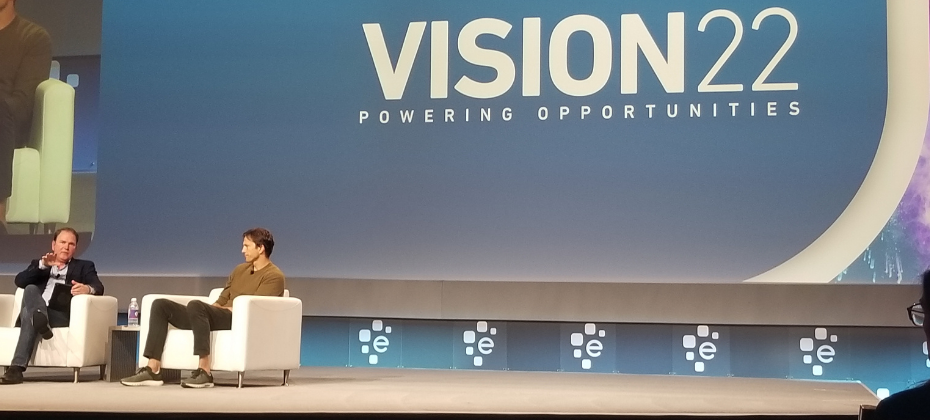
“I saw an opportunity to create change instead of asking for it.” Day 2 was charged up with new technology; new ideas; and new, clearer visions of where we can drive change across our industries. Jeff Softley, President, Direct to Consumer, Experian Consumer Services, illustrated how the consumer is at the center of Experian’s business with countless statistics and how our consumer advocacy drives our focus, growth and mission. Wil Lewis, Global Chief of Diversity, Equity and Inclusion; Hiq Lee, President of Business Information Services; and Alex Lintner, Group President, Consumer Information Services, engaged in a panel discussion centered on reimagining inclusion. Keynote: Allyson Felix Allyson Felix, five-time Olympian and most decorated Track & Field athlete, kicked off the day with an inspiring keynote touching on her athletic career, taking challenges head-on and using our platforms to make an impact. Felix, who is racing in the first race of her final season this weekend, is a tireless advocate, life-long learner, who seeks to empower others. “We can all start where we are,” she said. “Small things turn into big things.” Day 2 session highlights From the breakout sessions, the theme of disruption was evident. We dove into how prescreen and prequalification have evolved, a demand that many must adapt to deliver in the post-pandemic world. Financial inclusion was a topic covered across the board, as were the strategies to be enacted to bolster these financial inclusion drivers. One such area addressed was how the rapidly growing buy now, pay later industry advances financial access and inclusion efforts. And speaking of evolution, retention must evolve as well — we heard how retention, recapture and risk strategies are transforming, particularly in the mortgage servicing space. Rapid Model Development and Deployment - Feedback from businesses reflects organizations’ desires for flexible deployment options, flexible integration with existing tech stacks, open source technology and the ability to incorporate multiple data providers. Today’s solutions address that feedback as well as solve for the most rampant market challenges in new, innovative ways. Strategy optimization with Artificial Intelligence and Machine Learning - Over 50% of financial institutions surveyed are using AI/ML in at least one department. Challenges include data management, operation, evolving the analytics program. ML/AI starts with proper data management. For optimization, templatizing ML frameworks is a necessity. ID Verification, Authentication and Fraud - There were $56B in identity fraud losses in 2020, $13B of which were traditional identity fraud losses and $43B related to identity fraud scams. Leveraging strategies is necessary to maintain the critical balance required for identity verification and fraud – mitigating losses and risk exposure, drive optimal customer experience, maintain regulatory compliance. Maximizing Customer Value - The monthly data refresh is a thing of the past. When reimagining account review for risk and marketing purposes, remaining agile is key with increased data freshness for operational efficiency. Keynote: Ashton Kutcher The energy, insights and ideas have been reverberating throughout the venue for the past 48 hours, which set the stage for Ashton Kutcher’s closing keynote. The Chicago Bears fan talked about his career, how hard work wasn’t an option when he was growing up and how part of his assessment process for potential investments – determining whether they create efficiencies in the market – he sometimes thinks of a long-standing, personal benchmark – the air nailer. He talked about his philanthropy efforts, the mission behind his company Thorn, and the ability for people to impact change and achieve "a sense of agency" over the outcome of the future. “That’s the human spirit. That’s the spark that exists – that people understand that you can sit in despair, or you can do something,” he said. It has been an amazing two days – we can’t wait for Vision 2023!
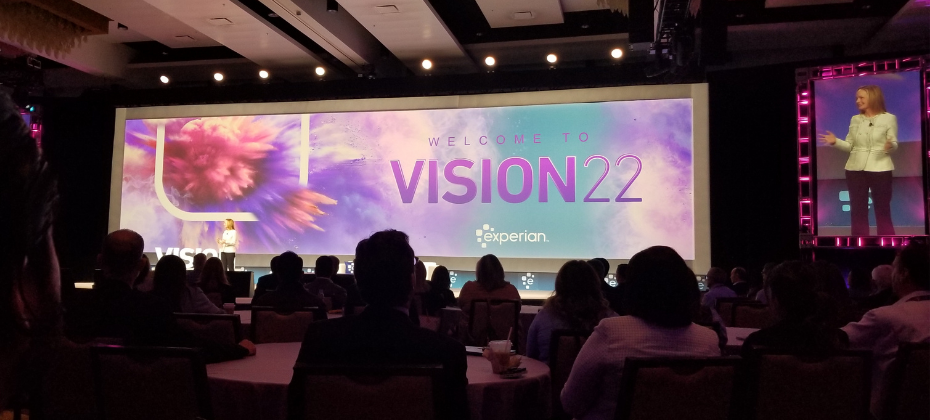
“Disruption has caused enormous amounts of innovation,” said Jennifer Schulz, CEO of Experian, North America. “We must continue to be the disruptors in our industry which takes effort, data, technology, bright minds and vision for what the future will be.” Schulz kicked off the 39th Vision conference with a future-focused keynote delivered to a crowd of more than 400 attendees. Alex Lintner, Group President, Experian Consumer Information Services, talked about the next phase of great, highlighting the digital transformation that has taken place in the generations of the past and the disruption and innovation happening today and in the future. Keynote speaker: Dr. Mohamed A. El-Erian Dr. Mohamed A. El-Erian, renowned economist and author, President of Queens’ College, Cambridge, Chief Economic Advisor at Allianz, Chair of President Obama’s Global Development Council and Former CEO and Co-Chief Investment Officer of PIMCO, spoke about the Fed, inflation, negative interest rates and the labor market, as well as the importance of inclusion. El-Erian, who said he reads the Financial Times religiously, acknowledged that we will make mistakes on the journey as we work to be even more inclusive. To navigate what’s ahead, he said we will need resilience, optionality and agility. “It’s important to connect with information, acknowledge the insecurity, in a language people understand, in order to connect,” he said. Session highlights – day 1 The conference hall was buzzing with conversations, discussions and thought leadership. Buy Now Pay Later A large audience was in attendance for a session that introduced Experian’s Buy Now Pay Later Bureau™ and explored how it’s the first and only solution of its kind — serving consumers, BNPL providers, financial institutions and regulators. Identity Identity is constantly evolving, and while biometrics and authentication may have become ubiquitous, there is much activity around the concepts of eIDs, identity wallets and identity networks. Experian is making identities personal and helping businesses to recognize, manage and connect customer identities in new ways using data, analytics and technology. Marketing In today’s hypercompetitive world, businesses need to engage the freshest data and increase velocity when it comes to time to market. An average of 120 days won’t cut it. Ascend Marketing speeds time to market and helps achieve higher ROI. Regulatory Landscape With so much happening at Capitol Hill, a panel of experts from DC discussed a number of topics and proposals (and their impacts), including the defense for risk-based pricing, the impact of suppressing negative data, and trending topics like Buy Now Pay Later and data portability. All the while, the tech showcase had a constant flow of attendees with demos ranging from data and decisioning to financial inclusion and technology. This is just the beginning. And as Schulz said, “There’s more to do.” More insights from Vision to come. Follow @ExperianVision to see more of the action.

Vehicle History and Automotive Intelligence Engine marketing capabilities.

Experian’s in-person Vision conference returns next Monday, April 11 in Los Angeles, Calif. The event is known for premier thought leadership, net-new insights and the latest and greatest in technology, innovation and data science. This year’s agenda promises to have intentional discussions around tomorrow’s trending topics including financial inclusion, buy now pay later, open banking, the future of fraud, alternative data strategies, and much more. A few spotlight sessions include: Top trends including the future application of the cloud and emerging technologies, emerging regulatory legislation and the broader implications and opportunities of DeFi. A deep dive into strategies around the targeting/marketing revolution and how to deliver in the post-COVID-19 market environments and bolster financial inclusion decisions. An introduction to Experian’s Buy Now Pay Later BureauTM, the industry’s first and only solution designed to address the needs of consumers, BNPL providers, financial institutions and regulators alike. A roundup of sessions addressing innovation in action spanning from real-time verifications, to data-driven automation, and unified platforms from data to deployment to decisioning. Several sessions highlighting future-looking strategies and solutions that leverage alternative data that can increase conversion rates while concurrently reducing risk. Multiple sessions centered on the rapidly changing identity environment and combatting emerging fraud threats. The event will also include a Tech Showcase, where attendees can get a taste of tomorrow today with more than 20 demos and the latest innovations at their fingertips. And, as always, the event features marquee keynote speakers sure to inspire. This year’s featured speakers are Dr. Mohamed A. El-Erian, President of Queens’ College, Cambridge, Chief Economic Advisor at Allianz, and Former CEO and Co-Chief Investment Officer of PIMCO; Allyson Felix, Olympic Gold Medalist, co-founder of Saysh, a footwear and lifestyle brand for women, and Right to Play and Play Works ambassador; and the closing keynote will feature actor, investor, entrepreneur and philanthropist, Ashton Kutcher. Stay tuned for additional highlights and insights on our social media platforms throughout the course of the conference. Follow Experian Insights on Twitter and LinkedIn.
Experian’s Ascend Intelligence Service platform has been named “Best Consumer Lending Product” in the sixth annual FinTech Breakthrough Awards.

In today’s evolving and competitive market, the stakes are high to deliver both quantity and quality. That is, to deliver growth goals while increasing customer satisfaction. OneAZ Credit Union is the second largest credit union in Arizona, serving over 157,000 members across 21 branches. Wanting to fund more loans faster and offer a better member experience through their existing loan origination system (LOS), OneAZ looked to improve their decisioning system and long-standing underwriting criteria. They partnered with Experian to create an automated underwriting strategy to meet their aggressive approval rate and loss rate goals. By implementing an integrated decisioning system, OneAZ had flexible access to data credit attributes and scores, resulting in increased automation through their existing LOS – meaning they didn’t have to completely overhaul their decisioning systems. Additionally, they leveraged software that enabled champion/challenger strategies and the flexibility to manage their decision criteria. Within one month of implementation, OneAZ saw a 26% increase in loan funding rates and a 25% decrease in manual reviews. They can now pivot quickly to respond to continuously evolving conditions. “The speed at which we can return a decision and our better understanding of future performance has really propelled us in being able to better serve our members,” said John Schooner, VP Credit Risk Management at OneAZ. Read our case study for more insight on how automation and Experian Decisioning can move the needle for your organization, including: Streamlined strategy development and execution to minimize costly customizations and coding Comprehensive data assets across multiple sources to ensure ID verification and a holistic view of your prospect Proactive monitoring and real-time visibility to challenge and rapidly adjust strategies as needed Download the full case study