Data & Analytics
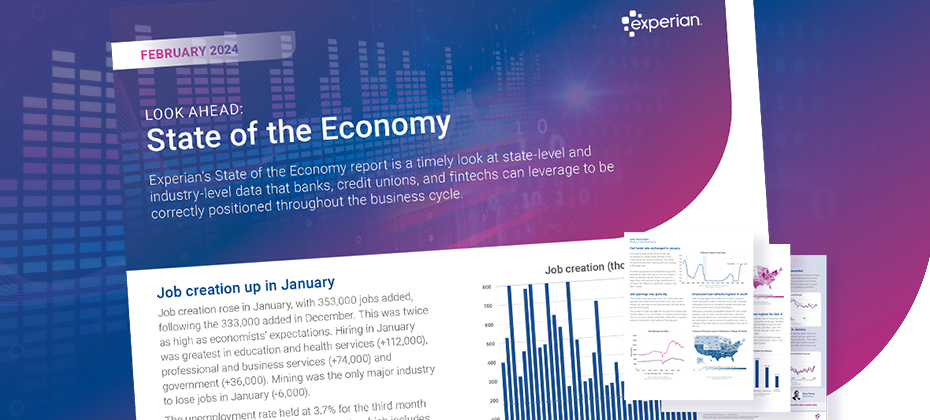
This report provides a snapshot of the top monthly economic and credit data, including inflation, the housing marketing, and card balances.

Credit risk analytics can help financial institutions quantify the risk that a borrower won't repay a loan as agreed.

New approaches to model operations are also helping lenders accelerate their machine learning model development processes.

In this blog post, we explore the empowering impact of income and employment verification on financial institutions.

Companies depend on quality information to make decisions that move their business objectives forward while minimizing risk exposure. And in today’s modern, tech-driven, innovation-led world, there’s more information available than ever before. Expansive datasets from sources, both internal and external, allow decision-makers to leverage a wide range of intelligence to fuel how they plan, forecast and set priorities. But how can business leaders be sure that their data is as robust, up-to-date and thorough as they need — and, most importantly, that they’re able to use it to its fullest potential? That’s where the power of advanced analytics comes in. By making use of cutting-edge datasets and analytics insights, businesses can stay on the vanguard of business intelligence and ahead of their competitors. What is advanced analytics? Advanced analytics is a form of business intelligence that takes full advantage of the most modern data sources and analytics tools to create forward-thinking analysis that can help businesses make well-informed, data-driven decisions that are tailored to their needs. Simply put, advanced analytics is an essential component of any proactive business strategy that aims to maximize the future potential of both customers and campaigns. These advanced business intelligence and analytics solutions help leaders make profitable decisions no matter the state of the current economic climate. They use both traditional and non-traditional data sources to provide businesses with actionable insights in the formats best suited to their needs and goals. One key aspect of advanced analytics is the use of AI analytics solutions. These efficient and effective tools help businesses save time and money by harnessing the power of cutting-edge technologies and deploying them in optimal use-case scenarios. These AI and machine-learning solutions use a wide range of tools, such as neural network methodologies, to help organizations optimize their allocation of resources, expediting and automating some processes while creating valuable insights to help human decision-makers navigate others. Benefits of advanced analytics Traditional business intelligence tends to be limited by the scope and quality of available data and ability of analysts to make use of it in an effective, comprehensive way. Modern business intelligence analytics, on the other hand, integrates machine learning and analytics to maximize the potential of data sets that, in today's technology-driven world, are often overwhelmingly large and complex: think not just databases of customer decisions and actions but behavioral data points tied to online and offline activity and the internet of things. What's more, advanced analytics does this in a way that's accessible to an entire organization — not just those who know their way around data, like IT departments and trained analysts. With the right advanced analytics solution, decision-makers can access convenient cloud-based dashboards designed to give them the information they want and need — with no clutter, noise or confusing terminology. Another key advantage of advanced analytics solutions is that they don't just analyze data — they optimize it, too. Advanced analytics offers the ability to clean up and integrate multiple data sets to remove duplicates, correct errors and inaccuracies and standardize formats, leading to high-quality data that creates clarity, not confusion. The result? By analyzing and identifying relationships across data, businesses can uncover hidden insights and issues. Advanced analytics also automate some aspects of the decision-making process to make workflows quicker and nimbler. For example, a business might choose to automate credit scoring, product recommendations for existing customers or the identification of potential fraud. Reducing manual interventions translates to increased agility and operational efficiency and, ultimately, a better competitive advantage. Use cases in the financial services industry Advanced analytics gives businesses in the financial world the power to go deeper into their data — and to integrate alternative data sources as well. With predictive analytics models, this data can be transformed into highly usable, next-level insights that help decision-makers optimize their business strategies. Credit risk, for instance, is a major concern for financial organizations that want to offer customers the best possible options while ensuring their credit products remain profitable. By utilizing advanced analytics solutions combined with a broad range of datasets, lenders can create highly accurate credit risk scores that forecast future customer behavior and identify and mitigate risk, leading to better lending decisions across the credit lifecycle. Advanced analytics solutions can also help businesses problem-solve. Let's say, for instance, that uptake of a new loan product has been slower than desired. By using business intelligence analytics, companies can determine what factors might be causing the issue and predict the tweaks and changes they can make to improve results. Advanced analytics means better, more detailed segmentation, which allows for more predictive insights. Businesses taking advantage of advanced analytics services are simply better informed: not only do they have access to more and better data, but they're able to convert it into actionable insights that help them lower risk, better predict outcomes, and boost the performance of their business. How we can help Experian offers a wide range of advanced analytics tools aimed at helping businesses in all kinds of industries succeed through better use of data. From custom machine learning models that help financial institutions assess risk more accurately to self-service dashboards designed to facilitate more agile responses to changes in the market, we have a solution that's right for every business. Plus, our advanced analytics offerings include a vast data repository with insights on 245 million credit-active individuals and 25 million businesses, as well as the industry's largest alternative data set from non-traditional lenders. Ready to explore? Click below to learn about our advanced analytics solutions. Learn more
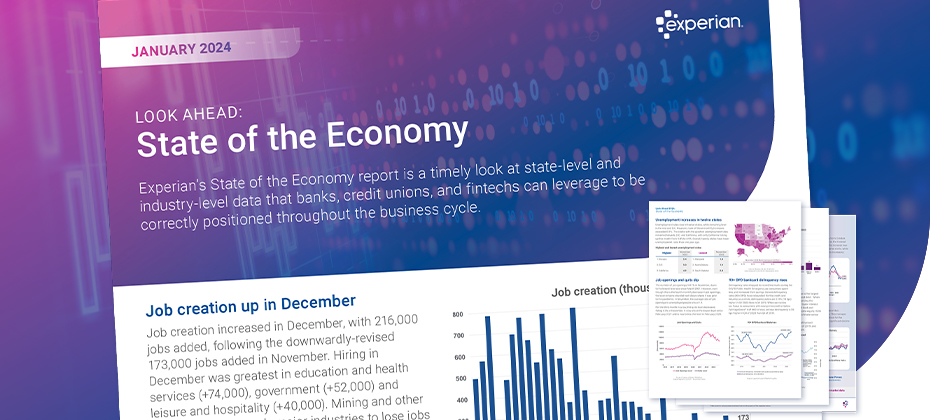
This report provides a snapshot of the top monthly economic and credit data, including student loans, consumer spending, and delinquencies.

Automate your credit limit management process to better serve your customers and quickly respond to the volatile market.
Experian's Residential Property Attributes helps mortgage lenders enhance their marketing and lead generation strategies.

Being able to explain how an ML model works and what drives its decisions is important if you want to use ML-powered models for underwriting.
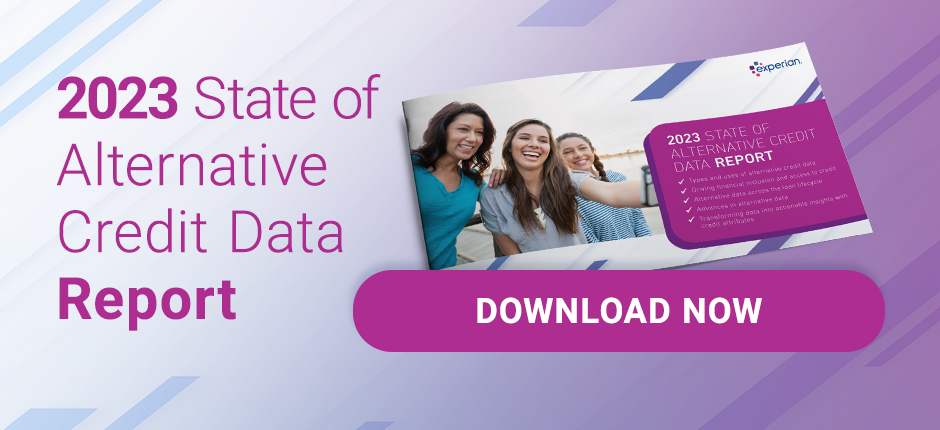
Our State of Alternative Data Report provides insight into the alternative lending market, new data sources and growth opportunities.

With great risk comes great reward, as the saying goes. But when it comes to business, there's huge value in reducing and managing that risk as much as possible to maximize benefits — and profits. In today's high-tech strategic landscape, financial institutions and other organizations are increasingly using risk modeling to map out potential scenarios and gain a clearer understanding of where various paths may lead. What is a risk model? A risk model is a representation of a particular situation that's created specifically for the purpose of assessing risk. That risk model is then used to evaluate the potential impacts of different decisions, paths and events. From assigning interest rates and amortization terms to deciding whether to begin operating in a new market, risk models are a safe way to analyze data, test assumptions and visualize potential scenarios. Risk models are particularly valuable in the credit industry. Credit risk models and credit risk analytics allow lenders to evaluate the pluses and minuses of lending to clients in specific ways. They are able to consider the larger economic environment, as well as relevant factors on a micro level. By integrating risk models into their decision-making process, lenders can refine credit offerings to fit the assessed risk of a particular situation. It goes like this: a team of risk management experts builds a model that brings together comprehensive datasets and risk modeling tools that incorporate mathematics, statistics and machine learning. This predictive modeling tool uses advanced algorithmic techniques to analyze data, identify patterns and make forecasts about future outcomes. Think of it as a crystal ball, but with science behind it. Your team can then use this risk model for a wide range of applications: refining marketing targets, reworking product offerings or reshaping business strategies. How can risk models be implemented? Risk models consolidate and utilize a wide variety of data sets, historical benchmarks and qualitative inputs to model risk and allow business leaders to test assumptions and visualize the potential results of various decisions and events. Implementing risk modeling means creating models of systems that allow you to adjust variables to imitate real-world situations and see what the results might be. A mortgage lender, for example, needs to be able to predict the effects of external and internal policies and decisions. By creating a risk model, they can test how scenarios such as falling interest rates, rising unemployment or a shift in loan acceptance rates might affect their business, and make moves to adjust their strategies accordingly. One aspect of risk modeling that can't be underestimated is the importance of good data, both quantitative and qualitative. Efforts to implement or expand risk modeling should begin with refining your data governance strategy. Maximizing the full potential of your data also requires integrating data quality solutions into your operations in order to ensure that the building blocks of your risk model are as accurate and thorough as possible. It's also important to ensure your organization has sufficient model risk governance in place. No model is perfect, and each comes with its own risks. But these risks can be mitigated with the right set of policies and procedures, some of which are part of regulatory compliance. With a comprehensive model risk management strategy, including processes like back testing, benchmarking, sensitivity analysis and stress testing, you can ensure your risk models are working for your organization — not opening you up to more risk. How can risk modeling be used in the credit industry? Risk modeling isn't just for making credit decisions. For instance, you might model the risk of opening or expanding operations in an underserved country or the costs and benefits of an existing one that is underperforming. In information technology, a critical branch of virtually every modern organization, risk modeling helps security teams evaluate the risk of malicious attacks.Banking and financial services is one industry for which understanding and planning for risk is key, not only for business reasons but to align with relevant regulations. The mortgage lender mentioned above, for example, might use credit risk models to better predict risk, enhance the customer journey and ensure transparency and compliance.It's important to highlight that risk modeling is a guide, not a prophecy. Datasets can contain flaws or gaps, and human error can happen at any stage. It's also possible to rely too heavily on historical information, and while they say history repeats itself, they don't mean it repeats exactly. That's especially true in the face of novel challenges, such as the rise of artificial intelligence. Making the best use of risk modeling tools involves not just optimizing software and data but using expert insight to interpret predictions and recommendations so that decision-making comes from a place of breadth and depth. Why are risk models important for banks and financial institutions? In the world of credit, optimizing risk assessment has clear ramifications when meeting overall business objectives. By using risk modeling to better understand your current and potential clients, you are positioned to offer the right credit products to the right audience and take action to mitigate risk. When it comes to portfolio risk management, having adequate risk models in place is paramount to meet targets. And not only does implementing quality portfolio risk analytics help maximize sales opportunities, but it can also help you identify risk proactively to avoid costly mistakes down the road. Risk mitigation tools are a key component of any risk modeling strategy and can help you maintain compliance, expose potential fraud, maximize the value of your portfolio and create a better overall customer experience. Advanced risk modeling techniques In the realm of risk modeling, the integration of advanced techniques like machine learning (ML) and artificial intelligence (AI) is revolutionizing how financial institutions assess and manage risk. These technologies enhance the predictive power of risk models by allowing for more complex data processing and pattern recognition than traditional statistical methods.Machine learning in risk modeling: ML algorithms can process vast amounts of unstructured data – such as market trends, consumer behavior and economic indicators — to identify patterns that may not be visible to human analysts. For instance, ML can be used to model credit risk by analyzing a borrower’s transaction history, social media activities and other digital footprints to predict their likelihood of default beyond traditional credit scoring methods.Artificial intelligence in decisioning: AI can automate the decisioning process in risk management by providing real-time predictions and risk assessments. AI systems can be trained to make decisions based on historical data and adjust them as they learn from new data. This capability is particularly useful in credit underwriting where AI algorithms can make rapid decisions based on market conditions.Financial institutions looking to leverage these advanced techniques must invest in robust data infrastructure, skilled personnel who can bridge the gap between data science and financial expertise, and continuous monitoring systems to ensure the models perform as expected while adhering to regulatory standards. Challenges in risk model validation Validating risk models is crucial for ensuring they function appropriately and comply with regulatory standards. Validation involves verifying both the theoretical foundations of a model and its practical implementation. Key challenges in model validation Model complexity: As risk models become more complex, incorporating elements like ML and AI, they become harder to validate. Complex models can behave in unpredictable ways, making it difficult to understand why they are making certain decisions (the so-called "black box" issue).Data quality and availability: Effective validation requires high-quality, relevant data. Issues with data completeness, accuracy or relevance can lead to incorrect model validations. Best practices in model validation Regulatory compliance: With regulations continually evolving, maintaining compliance with risk models can be challenging. Different jurisdictions may have varying requirements, further complicating validation processes.Regular reviews: Continuous monitoring and periodic reviews help ensure that models remain accurate over time and adapt to changing market conditions.Third-party audits: Independent reviews by external experts can provide an unbiased assessment of the risk model’s performance and compliance.These practices help institutions maintain the reliability and integrity of their risk models, ensuring that they continue to function as intended and comply with regulatory requirements. How Experian can help Risk is inherent to business, and there's no avoiding it entirely. But integrating credit risk modeling into your operations can ensure stability and profitability in a rapidly evolving business landscape. Start with Experian's credit modeling services, which use expansive data, analytical expertise and the latest credit risk modeling methodologies to better predict risk and accelerate growth. Learn more

Model governance is growing increasingly important as more companies implement machine learning model deployment and AI analytics solutions into their decision-making processes. Models are used by institutions to influence business decisions and identify risks based on data analysis and forecasting. While models do increase business efficiency, they also bring their own set of unique risks. Robust model governance can help mitigate these concerns, while still maintaining efficiency and a competitive edge. What is model governance? Model governance refers to the framework your organization has in place for overseeing how you manage your development, model deployment, validation and usage.1 This can involve policies like who has access to your models, how they are tested, how new versions are rolled out or how they are monitored for accuracy and bias.2 Because models analyze data and hypotheses to make predictions, there's inherent uncertainty in their forecasts.3 This uncertainty can sometimes make them vulnerable to errors, which makes robust governance so important. Machine learning model governance in banks, for example, might include internal controls, audits, a thorough inventory of models, proper documentation, oversight and ensuring transparent policies and procedures. One significant part of model governance is ensuring your business complies with federal regulations. The Federal Reserve Board and the Office of the Comptroller of the Currency (OCC) have published guidance protocols for how models are developed, implemented and used. Financial institutions that utilize models must ensure their internal policies are consistent with these regulations. The OCC requirements for financial institutions include: Model validations at least once a year Critical review by an independent party Proper model documentation Risk assessment of models' conceptual soundness, intended performance and comparisons to actual outcomes Vigorous validation procedures that mitigate risk Why is model governance important — especially now? More and more organizations are implementing AI, machine learning and analytics into their models. This means that in order to keep up with the competition's efficiency and accuracy, your business may need complex models as well. But as these models become more sophisticated, so does the need for robust governance.3 Undetected model errors can lead to financial loss, reputation damage and a host of other serious issues. These errors can be introduced at any point from design to implementation or even after deployment via inappropriate usage of the model, drift or other issues. With model governance, your organization can understand the intricacies of all the variables that can affect your models' results, controlling production closely with even greater efficiency and accuracy. Some common issues that model governance monitors for include:2 Testing for drift to ensure that accuracy is maintained over time. Ensuring models maintain accuracy if deployed in new locations or new demographics. Providing systems to continuously audit models for speed and accuracy. Identifying biases that may unintentionally creep into the model as it analyzes and learns from data. Ensuring transparency that meets federal regulations, rather than operating within a black box. Good model governance includes documentation that explains data sources and how decisions are reached. Model governance use cases Below are just three examples of use cases for model governance that can aid in advanced analytics solutions. Credit scoring A credit risk score can be used to help banks determine the risks of loans (and whether certain loans are approved at all). Governance can catch biases early, such as unintentionally only accepting lower credit scores from certain demographics. Audits can also catch biases for the bank that might result in a qualified applicant not getting a loan they should. Interest rate risk Governance can catch if a model is making interest rate errors, such as determining that a high-risk account is actually low-risk or vice versa. Sometimes changing market conditions, like a pandemic or recession, can unintentionally introduce errors into interest rate data analysis that governance will catch. Security challenges One department in a company might be utilizing a model specifically for their demographic to increase revenue, but if another department used the same model, they might be violating regulatory compliance.4 Governance can monitor model security and usage, ensuring compliance is maintained. Why Experian? Experian® provides risk mitigation tools and objective and comprehensive model risk management expertise that can help your company implement custom models, achieve robust governance and comply with any relevant federal regulations. In addition, Experian can provide customized modeling services that provide unique analytical insights to ensure your models are tailored to your specific needs. Experian's model risk governance services utilize business consultants with tenured experience who can provide expert independent, third-party reviews of your model risk management practices. Key services include: Back-testing and benchmarking: Experian validates performance and accuracy, including utilizing statistical metrics that compare your model's performance to previous years and industry benchmarks. Sensitivity analysis: While all models have some degree of uncertainty, Experian helps ensure your models still fall within the expected ranges of stability. Stress testing: Experian's experts will perform a series of characteristic-level stress tests to determine sensitivity to small changes and extreme changes. Gap analysis and action plan: Experts will provide a comprehensive gap analysis report with best-practice recommendations, including identifying discrepancies with regulatory requirements. Traditionally, model governance can be time-consuming and challenging, with numerous internal hurdles to overcome. Utilizing Experian's business intelligence and analytics solutions, alongside its model risk management expertise, allows clients to seamlessly pass requirements and experience accelerated implementation and deployment. Experian can optimize your model governance Experian is committed to helping you optimize your model governance and risk management. Learn more here. References 1Model Governance," Open Risk Manual, accessed September 29, 2023. https://www.openriskmanual.org/wiki/Model_Governance2Lorica, Ben, Doddi, Harish, and Talby, David. "What Are Model Governance and Model Operations?" O'Reilly, June 19, 2019. https://www.oreilly.com/radar/what-are-model-governance-and-model-operations/3"Comptroller's Handbook: Model Risk Management," Office of the Comptroller of the Currency. August 2021. https://www.occ.treas.gov/publications-and-resources/publications/comptrollers-handbook/files/model-risk-management/pub-ch-model-risk.pdf4Doddi, Harish. "What is AI Model Governance?" Forbes. August 2, 2021. https://www.forbes.com/sites/forbestechcouncil/2021/08/02/what-is-ai-model-governance/?sh=5f85335f15cd

Data-driven machine learning model development is a critical strategy for financial institutions to stay ahead of their competition, and according to IDC, remains a strategic priority for technology buyers. Improved operational efficiency, increased innovation, enhanced customer experiences and employee productivity are among the primary business objectives for organizations that choose to invest in artificial intelligence (AI) and machine learning (ML), according to IDC’s 2022 CEO survey. While models have been around for some time, the volume of models and scale at which they are utilized has proliferated in recent years. Models are also now appearing in more regulated aspects of the business, which demand increased scrutiny and transparency. Implementing an effective model development process is key to achieving business goals and complying with regulatory requirements. While ModelOps, the governance and life cycle management of a wide range of operationalized AI models, is becoming more popular, most organizations are still at relatively low levels of maturity. It's important for key stakeholders to implement best practices and accelerate the model development and deployment lifecycle. Read the IDC Spotlight Challenges impeding machine learning model development Model development involves many processes, from wrangling data, analysis, to building a model that is ready for deployment, that all need to be executed in a timely manner to ensure proper outcomes. However, it is challenging to manage all these processes in today’s complex environment. Modeling challenges include: Infrastructure: Necessary factors like storage and compute resources incur significant costs, which can keep organizations from evolving their machine learning capabilities. Organizational: Implementing machine learning applications requires talent, like data scientists and data and machine learning engineers. Operational: Piece meal approaches to ML tools and technologies can be cumbersome, especially on top of data being housed in different places across an organization, which can make pulling everything together challenging. Opportunities for improvement are many While there are many places where individuals can focus on improving model development and deployment, there are a few key places where we see individuals experiencing some of the most time-consuming hang-ups. Data wrangling and preparation Respondents to IDC's 2022 AI StrategiesView Survey indicated that they spend nearly 22% of their time collecting and preparing data. Pinpointing the right data for the right purpose can be a big challenge. It is important for organizations to understand the entire data universe and effectively link external data sources with their own primary first party data. This way, stakeholders can have enough data that they trust to effectively train and build models. Model building While many tools have been developed in recent years to accelerate the actual building of models, the volume of models that often need to be built can be difficult given the many conflicting priorities for data teams within given institutions. Where possible, it is important for organizations to use templates or sophisticated platforms to ease the time to build a model and be able to repurpose elements that may already be working for other models within the business. Improving Model Velocity Experian’s Ascend ML BuilderTM is an on-demand advanced model development environment optimized to support a specific project. Features include a dedicated environment, innovative compute optimization, pre-built code called ‘Accelerators’ that simply, guide, and speed data wrangling, common analyses and advanced modeling methods with the ability to add integrated deployment. To learn more about Experian’s Ascend ML Builder, click here. To read the full Technology Spotlight, download “Accelerating Model Velocity with a Flexible Machine Learning Model Development Environment for Financial Institutions” here. Download spotlight *This article includes content created by an AI language model and is intended to provide general information.

To accelerate growth while proactively identifying risk, you’ll need a well-informed portfolio risk management strategy.

Dive into the differences between instant, permissioned, and manual income and employment verification, and their benefits, and drawbacks. Read more!