Latest Posts

The Evolving Tenant Screening Practices: New Methods for Verifying Income and Employment
Data & AnalyticsTenant screening fraud is rising fast. Discover how income verification tools, Experian income verification, and AI-powered document upload strengthen fraud detection and streamline employment checks.

Why More Borrowers Are Refinancing Their Vehicles, and How Lenders Are Playing a Role in These Changes
Apply Automotive TagIn an ever-evolving automotive landscape, where shifting consumer behavior meets fluctuating market dynamics, Experian’s State of the Automotive Finance Market Report: Q2 2025 delivers key insights into how both consumers and professionals are adapting to the changes. This quarter’s report revealed a sharp increase in vehicle refinancing—up nearly 70% from Q2 2024—as consumers capitalized on the more stable rate environment. In fact, after refinancing, the average interest rate went from 10.45% to 8.45%. That shift resulted in their monthly payment dropping by an average of $71. Interestingly, credit unions played a significant role in the refinance surge, increasing their market share from 63.22% last year to 68.33% this quarter, and borrowers who refinanced through credit unions saw their monthly payments decrease by $87 on average. Banks saw a slight dip in their share of the refinancing market year-over-year, going from 22.71% to 21.45%, and borrowers who refinanced through them saved an average of $46 a month. New leaders emerge as the lender market share continues to evolve Taking a deeper dive into the automotive finance market share, banks reclaimed their leading position for total vehicle financing, rising to 27.50% in Q2 2025, from 24.50% in Q2 2024. Meanwhile, captives declined from 30.17% to 26.63% year-over-year, and credit unions slightly increased from 20.35% to 21.04% during the same period. For new vehicles, captives continued to lead at 52.39% this quarter, though it was a drop from 60.74% last year. On the other hand, banks grew from 21.12% to 25.91% and credit unions went from 9.99% to 12.24% in the same time frame. On the used side, banks edged ahead, increasing their share to 28.59% in Q2 2025, from 26.80% last year. Credit unions saw slight growth from 27.59% to 27.63%, while captives declined from 7.83% to 6.40% year-over-year. As affordability remains a key priority, consumers seem to be exploring financing options that offer more favorable terms. While Experian Automotive’s report continues to illustrate the evolving dynamics, these data-driven insights can empower both consumers and industry professionals to make smarter financial decisions. To learn more about automotive finance trends, view the full State of the Automotive Finance Market Report: Q2 2025 presentation on demand.
Tenant screening fraud is rising, with falsified paystubs and AI-generated documents driving risk. Learn how income and employment verification tools powered by observed data improve fraud detection, reduce costs, and streamline tenant screening.

In today’s digital lending landscape, fraudsters are more sophisticated, coordinated, and relentless than ever. For companies like Terrace Finance — a specialty finance platform connecting over 5,000 merchants, consumers, and lenders — effectively staying ahead of these threats is a major competitive advantage. That is why Terrace Finance partnered with NeuroID, a part of Experian, to bring behavioral analytics into their fraud prevention strategy. It has given Terrace’s team a proactive, real-time defense that is transforming how they detect and respond to attacks — potentially stopping fraud before it ever reaches their lending partners. The challenge: Sophisticated fraud in a high-stakes ecosystem Terrace Finance operates in a complex environment, offering financing across a wide range of industries and credit profiles. With applications flowing in from countless channels, the risk of fraud is ever-present. A single fraudulent transaction can damage lender relationships or even cut off financing access for entire merchant groups. According to CEO Andy Hopkins, protecting its partners is a top priority for Terrace:“We know that each individual fraud attack can be very costly for merchants, and some merchants will get shut off from their lending partners because fraud was let through ... It is necessary in this business to keep fraud at a tolerable level, with the ultimate goal to eliminate it entirely.” Prior to NeuroID, Terrace was confident in its ability to validate submitted data. But with concerns about GenAI-powered fraud growing, including the threat of next-generation fraud bots, Terrace sought out a solution that could provide visibility into how data was being entered and detect risk before applications are submitted. The solution: Behavioral analytics from NeuroID via Experian After integrating NeuroID through Experian’s orchestration platform, Terrace gained access to real-time behavioral signals that detected fraud before data was even submitted. Just hours after Terrace turned NeuroID on, behavioral signals revealed a major attack in progress — NeuroID enabled Terrace to respond faster than ever and reduce risk immediately. “Going live was my most nerve-wracking day. We knew we would see data that we have never seen before and sure enough, we were right in the middle of an attack,” Hopkins said. “We thought the fraud was a little more generic and a little more spread out. What we found was much more coordinated activities, but this also meant we could bring more surgical solutions to the problem instead of broad strokes.” Terrace has seen significant results with NeuroID in place, including: Together, NeuroID and Experian enabled Terrace to build a layered, intelligent fraud defense that adapts in real time. A partnership built on innovation Terrace Finance’s success is a testament to what is possible when forward-thinking companies partner with innovative technology providers. With Experian’s fraud analytics and NeuroID’s behavioral intelligence, they have built a fraud prevention strategy that is proactive, precise, and scalable. And they are not stopping there. Terrace is now working with Experian to explore additional tools and insights across the ecosystem, continuing to refine their fraud defenses and deliver the best possible experience for genuine users. “We use the analogy of a stream,” Hopkins explained. “Rocks block the flow, and as you remove them, it flows better. But that means smaller rocks are now exposed. We can repeat these improvements until the water flows smoothly.” Learn more about Terrace Finance and NeuroID Want more of the story? Read the full case study to explore how behavioral analytics provided immediate and long-term value to Terrace Finance’s innovative fraud prevention strategy. Read case study
Executive Summary The July 2025 housing market reveals a landscape of shifting consumer behaviors, evolving lender strategies, and continued strength in borrower performance—especially within home equity. Origination volumes have dipped slightly, but direct marketing, particularly through Invitation to Apply (ITA) campaigns, is accelerating. As key players exit the space, gaps are opening across both marketing and origination, creating clear opportunities for agile institutions. This phase signals both caution and potential. The winners will be those who refine their marketing, sharpen segmentation, and deploy smarter risk monitoring in real time. TL;DR Risk Profile: Mortgage and HELOC delinquencies remain low. Slight increases in 90+ DPD are not yet cause for concern. Mortgage Originations: Modestly down, but marketing remains aggressive. Invitation to Apply (ITA) volumes outpacing prescreen. Home Equity Originations: Stable originations, competitive marketing volumes. ITA volumes outpacing prescreen similar to mortgage. Opportunity: Targeted direct mail and refined segmentation are growth levers in both mortgage and home equity. Risk Environment: Resilient Yet Watchful Experian’s July data shows both mortgage and home equity delinquencies hovering at historically low levels. Early-stage delinquencies dropped in June, while late-stage (90+ days past due) nudged upward—still below thresholds signaling broader distress. HELOCs followed a similar path. Early-stage movement was slightly elevated but well within acceptable ranges, reinforcing borrower stability even in a high-rate, high-tariff environment. Takeaway: Creditworthiness remains strong, especially for real estate–backed portfolios, but sustained monitoring of 90+ DPD trends is smart risk management. Home Equity: Volume Holds, Competition Resets Home equity lending is undergoing a major strategic reshuffle. With a key market participant exiting the space, a significant share of both marketing and originations is now in flux. What’s happening: Direct mail volumes in home equity nearly match those in first mortgages—despite the latter holding larger balances. ITA volumes alone topped 8 million in May 2025. Total tappable home equity stands near $29.5 trillion, underscoring a massive opportunity.(source: Experian property data.) Lenders willing to recalibrate quickly can unlock high-intent borrowers—especially as more consumers seek cash flow flexibility without refinancing into higher rates. Direct Mail and Offer Channel Trends The continued surge in ITA campaigns illustrates a broader market pivot. Lenders are favoring: Controlled timing and messaging Multichannel alignment Improved compliance flexibility May 2025 Mail Volumes: Offer Type Mortgage Home Equity ITA 29.2M 25.8M Prescreen 15.6M 19.0M Strategic Insights for Lenders 1. Invest in Personalized Offers Drive better response rates with prescreen or ITA campaigns. Leverage data assets like Experian ConsumerView for ITA’s for robust behavioral and lifestyle segmentation. For prescreen, achieve pinpoint-personalization with offers built on propensity models, property attributes, and credit characteristics. 2. Seize the Home Equity Opening Use urgency-based messaging to attract consumers searching for fast access to equity—without the complexity of a full refi. Additionally, as mentioned above, leverage propensity, credit, and property (i.e. equity) data to optimize your marketing spend. 3. Strengthen Risk Controls Even in a low-delinquency environment, vigilance matters. Account Review campaigns, custom scorecards, and real-time monitoring help stay ahead of rising 90+ DPD segments. 4. Benchmark Smarter Competitive intelligence is key. Evaluate offer volumes, audience segmentation, and marketing timing to refine your next campaign. FAQ Q: What does the exit of a major home equity player mean? A: It leaves a significant gap in both marketing activity and borrower targeting. Lenders able to act quickly can capture outsized share in a category rich with equity and demand. Q: How should lenders respond to the evolving risk profile? A: Continue to monitor performance closely, but focus on forward-looking indicators like trended data, income verification, and alternative credit signals. Conclusion The housing market in July 2025 presents a clear message: the fundamentals are sound, but the strategies are shifting. Those ready to optimize outreach by making smarter use of data will seize a disproportionate share in both mortgage and home equity. Want to stay ahead? Connect with Experian Mortgage Solutions for the insights, tools, and strategies to grow in today’s evolving lending environment.

Discover how streamlining the verification process helps mortgage lenders serve more borrowers without sacrificing accuracy.

BIN attacks are a growing threat in today’s digital payments ecosystem. Learn how to mitigate these attacks to reduce losses.

Mid-sized banks should take a data-driven approach to implementing credit risk strategies if they want to expand their loan portfolios.
This is the first in a series that will highlight auto marketing trends to help you drive more effective marketing campaigns. With the second half of the year underway, one theme continues to prevail in conversations among auto marketers: measurement. With more focus to prove ROI, optimize campaigns in real time, and understand the full consumer journey, marketers are doubling down on attribution while sharpening their analytics tools. One of the most widely adopted platforms in this space is Google Analytics 4 (GA4). Since its full rollout, GA4 has replaced Universal Analytics for digital measurement. Its event-based model offers new ways to track behavior and measure performance, especially in complex, multi-touch journeys like auto shopping. Let’s break down four quick tips to help you unlock the full potential of GA4—plus a quick summary to dial in this type of measurement. GA4 Tune-Up Tips for Smarter Auto Marketing: 1. Event-Based Tracking Offers Full-Funnel Visibility Unlike Universal Analytics, GA4 focuses on events (rather than sessions) by tracking actions such as scroll depth, video views, CTA clicks, and more, giving you detailed insights into how users engage with your site. It’s especially helpful for A/B testing and understanding micro-conversions across the buyer’s online journey. 2. Use Clean, Consistent UTM Parameters UTM parameters tell GA4 “where” your traffic comes from. However, if they’re inconsistent or overly complex, your reports will be too. Use a simple naming convention for channels and campaigns so you can easily see what’s working. See example chart below: 3. Set Up GTM to Capture the Key Events Google Tag Manager (GTM) tells GA4 “what” happens once a consumer arrives to your website. Ensure GTM is set up to record important on-site actions—including page views, form submissions, phone clicks, or test drive bookings. Start with GTM testing by using Preview Mode and Tag Assistant. 4. Extend Your Data Retention Window By default, GA4 only stores user-level data for 2 months. If you want to track long buying cycles or compare year-over-year trends, go into your GA4 settings and extend the retention period to 14 months. GA4 Tune-Up Tips Summary: GA4 is Google’s enhanced analytics platform, built to give marketers a more flexible, cross-platform view of user behavior by using an event-based model designed for the future of measurement. With industries like automotive — offline interactions, third-party sites, and long purchase paths are common. GA4 often needs to be supplemented with additional tools or CRM integration to capture the full buying journey. According to Neilsen, measurement of ROI across channels is more important than ever and marketers have an opportunity to fine tune it. Discover how Experian Automotive can help measure your marketing performance with solutions like OmniImpact for Automotive™ and an Auto Response Analysis. Next Up... From personalized follow-ups to omnichannel messaging, forward-thinking retailers are evolving how they communicate with today’s car shoppers, and measurement is just one piece of the puzzle. In our series, we’ll explore another focus for Auto Marketers in the latter half of 2025: Messaging and Communication with your consumers.

Download our infographic to learn how cashflow underwriting is reshaping lending — and how you can lead the change.

As financial behavior becomes more dynamic, real-time data is emerging as a powerful tool in reshaping how lenders assess risk.

Learn what lending fraud is, what you can do to safeguard your organization and consumers and how we can help. Read more!

Home equity lending has re-emerged as a central theme in the U.S. financial landscape, driven by economic realities and consumer behavior.
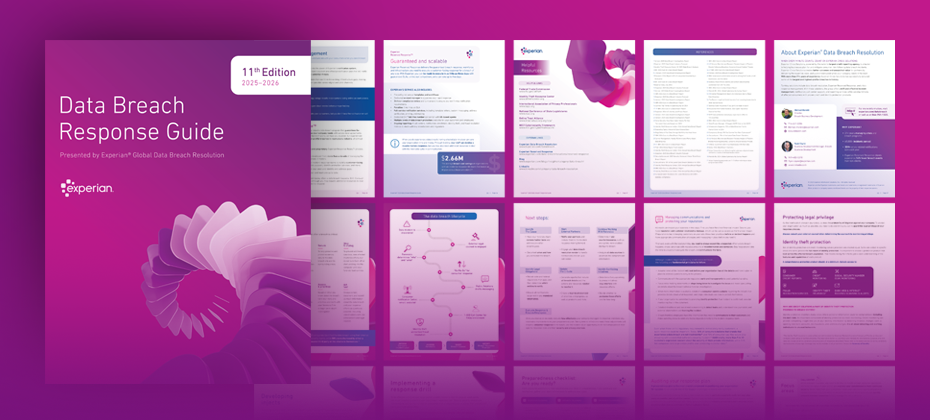
Data breaches continue to be a reality for organizations across industries, and the complexity of responding to them is only increasing. From AI-driven fraud to third-party exposures, the risk landscape is shifting fast. Having a modern and tested response plan is essential to containing the damage, protecting your customers, and preserving your organization’s reputation when a breach occurs. Experian’s eleventh annual Data Breach Response Guide draws on decades of breach support experience. It offers practical strategies and insights for navigating the moments that matter most: the first hours after a breach and the days that follow. The 2025–2026 guide explores: How AI is shaping new breach and fraud patterns Where organizations are most vulnerable, including third-party and supply chain weak points Consumer expectations and how they influence crisis response How prepared organizations are reducing impact and protecting trust What is required to build a modern, effective breach response plan Organizations with a tested plan can potentially reduce the cost, impact, and long-term consequences of a breach. From real-world case insights to crisis communication templates, this guide is designed to help teams act quickly and confidently. Download the 2025–2026 Data Breach Response Guide to learn how you can strengthen your breach preparedness, reduce risk exposure, and build resilience against the next wave of cybersecurity threats. Download guide

Experian is proud to be a Thought Leadership Sponsor at this year’s Federal Identity Forum & Expo. Meet us on site at FedID!