Market Trends
Despite an unprecedented 18 months since the pandemic was in full force and many Americans were sent home, financial wellness continues to be on the up and up. Consumers continue to manage credit well and the average credit score climbed seven points since 2020 to 695, the highest point in more than 13 years. In Experian’s 12th annual State of Credit report, the headlines are hopeful regarding how Americans are managing personal finances in the face of the pandemic. The report provides a comprehensive look at the credit performance of consumers across America by highlighting consumer credit scores and borrowing behaviors. This year’s report features data from 2019 pre-pandemic, the 2020 pandemic year, and the start of 2021. “The findings from this year’s report show something I’ve always believed: Americans are resilient, for the most part they make smart decisions in the face of adversity and they are agile in adjusting their financial habits when the environment or circumstances change,” said Alex Lintner, President, Experian Consumer Information Services. Highlights of Experian’s State of Credit report: 2021 State of Credit Report 2019 2020 2021 Average VantageScore® credit score [1] 682 688 695 Median VantageScore® credit score 687 697 707 Average number of credit cards 3.0 3.0 3.0 Average credit card balance $6,494 $5,897 $5,525 Average revolving utilization rate 30% 26% 25% Average number of retail credit cards 2.50 2.42 2.33 Average retail credit card balance $1,930 $2,044 $1,887 Average nonmortgage debt $25,057 $25,483 $25,112 Average mortgage debt $210,263 $215,655 $229,242 Average auto loan or lease $19,034 $19,462 $20,505 Average 30–59 days past due delinquency rates 3.8% 2.4% 2.3% Average 60–89 days past due delinquency rates 1.9% 1.3% 1.0% Average 90–180 days past due delinquency rates 6.6% 3.8% 2.5% We asked Joseph Mayans, Principal Economist at Advantage Economics, LLC, for his reactions to the findings: “The State of Credit Report captures the three central themes of the pandemic. First, it shows the overwhelming success of the fiscal support packages. By far, the most striking example of this is the broad based and significant decline in delinquencies during a time when millions of people were out of work. Second, the report showcases the resiliency of American households. People used their stimulus dollars to stay on top of their bills and pay down debt, which boosted average credit scores across all generations. And third, it highlights the unique behavioral shifts brought on by the pandemic. We can see these changes in the rise of housing and auto debt as people bought larger homes and sought to drive rather than ride public transportation.” Generational Trends As indicated in the findings, consumers across all generations except Gen Z saw decreased utilization rates and decreased credit card balances year over year. Consumers are also missing fewer payments with notable improvements seen among the youngest consumers. Mortgage debt was up across every generation, which may correlate with the record low interest rates on mortgages, refinances and moves. According to the CBRE, “the pandemic accelerated several long-standing American migration patterns” as evidenced by more than 15.9 million people filing change-of-address requests with the United States Postal Service. Compared with 2019, 2020 change-of-address requests show a 4% increase in total movers, 2% increase in permanent movers and 27% increase in temporary movers, according to a study by MyMove. Mayans also made note of the mortgage trends. “It’s becoming clearer that millennials are stepping into the homebuying phase in a big way. Once thought to be the generation of apartments and urban revival, many older millennials are now buying homes and moving to the suburbs much like their parents before them,” Mayans said. “This will have significant implications for the post-pandemic world, especially as work from home becomes more prevalent.” State Trends The states with the highest and lowest average credit score remained unchanged from last year with the highest average score of 726 held by Minnesota and an average score of 666 held by Mississippi. New Jersey had the highest number of credit cards and retail cards at 3.37 and 2.54 respectively, and Alaska had the highest credit card debt at $7,089 (U.S. average is $5,525) and Texas had the highest retail debt at $2,248 (U.S. average is $1,888). What Lies Ahead Some have argued that the past year of the pandemic and quarantine forced a lot of time for reflection. The continued positive trends of consumer behavior seem to indicate some of that effort was put toward better financial health practices. That said, like any sourdough bread recipe or DIY home glow-up, there’s always more to learn and opportunities to seize when it comes to financial health. “We are committed to working with lenders and the industry to help consumers gain access to credit, driving broader financial inclusion, while also teaching consumers how to responsibly build and use credit responsibly,” Lintner said. In addition to the free weekly credit report at AnnualCreditReport.com, Experian also offers consumers free access to their credit report and ongoing credit monitoring at Experian.com. Additional credit education resources and tools Join Experian’s #creditchat hosted by @Experian on Twitter with financial experts every Wednesday at 3 p.m. Eastern time. Bilingual and Spanish speakers are also invited to join Experian’s monthly #ChatdeCredito hosted on Twitter at 3 p.m. Eastern time beginning September 16. Visit the Ask Experian blog for answers to common questions, advice and education about credit. Add positive telecom, utility and streaming service payments to your Experian credit report for an opportunity to improve your credit scores by visiting experian.com/boost[2] For additional resources, visit https://www.experian.com/consumereducation To see all the findings, download the 2021 State of Credit Report. Download the full report [1] VantageScore® is a registered trademark of VantageScore Solutions, LLC. VantageScore® credit score range is 300 to 850. [2] Results may vary. See Experian.com for details

The automotive finance market is beginning to level out to pre-pandemic trends in Q2 2021.

Over the last year and a half, strong trends emerged in how businesses and consumers interact online - specifically when validating identities and preventing fraud. We initially explored these trends at a global level, and now we've explored U.S.-specific insights into online security, the customer experience, and digital activities and operations. Download the North America findings report to learn more about business and consumer fraud and identity trends impacting the way we live, work, and interact. Review your fraud strategy

Millions of consumers lack credit history and/or have difficulty obtaining credit from mainstream financial institutions. As a result, the use of expanded Fair Credit Reporting Act (FCRA) – or alternative – data has continued to gain popularity among lenders and financial intuitions to enrich decisions across the entire lending lifecycle to meet the financial needs of their consumers. Experian presented in a recent webinar hosted by AFSA, where Alpa Lally, Vice President of Product Management, and David Elmore, Automotive Solutions Consultant, had a chance to speak about the benefits of FCRA data, and ways lenders can leverage this data to ease access to credit for “invisible” and below prime consumers. Watch the full webinar, “FCRA Data: The Key to Unlocking Credit Universe” and learn more about: How expanded FCRA data is being used throughout the lending lifecycle The benefits of leveraging FCRA data including providing a more holistic view of a consumer’s credit profile and behavior beyond financial services, leading to smarter, more informed lending decisions The lift FCRA data can offer when augmented with traditional credit data This webinar is a part of AFSA’s partner webinar series. To learn more about FCRA data and explore related content, please visit our FCRA Alternative Credit Data Resources Page. Learn More About FCRA-Alternative Credit Data

As lenders and consumers emerge from the pandemic, predicting the attributes of the “new normal” will be difficult. Consumer demand, credit characteristics and economic conditions have all been affected by the pandemic – changing the way we think about doing business. Regulators and legislators have also developed new priorities and expectations for financial institutions. Clint Ivester, Experian’s Solutions Consultant and VP of Sales, joined Lee Gilley and Jonathan Kkolodziej, Partners for Bradley, to share their observations from the past year at AFSA’s 2021 Independents Conference. They also discussed recommendations financial institutions should consider to achieve the best possible posture with respect to compliance and business readiness. Here are a few Q&A highlights: Q: How are stimulus packages and increased government spending affecting economic conditions? A: [Ivester]: Our Experian forecast shows that the economy will grow 6% in 2021. That is well above the 2.5% average we have seen over the last four decades and highest rate since 1983. While the economy is oriented toward growth, how strong that growth is going to be will really depend on how well things go when the “training wheels” are taken off, how robust the recovery is for lower-income workers, and how consumer spending habits have been altered by the pandemic. *Data sources include Bureau of Economic Analysis and Experian’s “COVID-19 Economics Scenarios” April 2021 Report Q: How should businesses be assessing future consumer demand, conditions, and broader economic conditions over the next few quarters? A: [Ivester]: To answer this question, we should consider some factors including unemployment. What happens with lower income workers will have a big impact on where consumer spending goes post-stimulus. While the overall economy is set for solid growth there are still 8 million people out of work with the vast majority being lower income workers. Employment for lower income workers is still down more than 20%. These workers are set to lose the most by the phase out of the federal pandemic unemployment programs and are the highest risk to lose all unemployment benefits. However, if we see a strong jobs recovery – as is very possible – in bars, restaurants, hotels and other industries, these individuals will return to more normal spending habits and consumer spending should remain robust. *Data source includes Opportunity Insights Economic Tracker Watch the full session to hear more about the discussion. For more resources and content on this topic, please visit our Look Ahead Resources page or contact us for more information.

If it looks like a bank and acts like a bank, there’s a good chance the company behind that financial services transaction may not actually be a bank – but a fintech. Born out of Silicon Valley, New York and tech hubs in between, fintechs have been categorically unfettered from regulation and driven by a focus on customer acquisition and revenue growth. Today, the fintech market represents hundreds of billions of dollars globally and has been disrupting financial services with the goal of delightful customer experiences and democratizing access to credit and banking. Their success has led many fintechs to update their strategy and growth targets and set their sites outside of core banking to other sectors including payments, alternative lending, insurance, capital markets, personal wealth management, alternative lending and others. Depending on the strategy, many are seeking a bank charter, or a partnership with a chartered financial institution to accomplish their new growth goals. Meanwhile, all this disruption has caught the attention of banks and credit unions who are keen to work with these marketplace lenders to grow deposits and increase fee-revenue streams. Historically, obtaining a bank charter was an onerous process, which led many fintechs to actively seek out partnerships with financial institutions in order to leverage their chartered status without the regulatory hurdles of becoming a bank. In fact, fintech and FI partnerships have boomed in the last few years, growing more than five times over the past decade. Gone are the days of the zero-sum game that benefits solely the bank or the fintech. Today, there are more than 30 partner banks representing hundreds of fintech relationships and financial services. These partnerships vary in size and scope from household names like Goldman Sachs, which powers the Apple credit card, to Hatch Bank, which has $68 million in assets and started with a single fintech partner, HM Bradley.[1] But which scenario is right for your fintech? Much of that depends on which markets and lines of business round out your growth strategy and revenue goals. Regardless of what framework you determine is right for your fintech, you need to work with partners who have access to the freshest data and models and a firm handle on the regulatory and compliance landscape. Experian can help you navigate the fintech regulatory environment and think through if partnering with a bank or seeking your own fintech charter is the best match for your growth plan. In the meantime, check out this new eBook for more information on the bank charter process and benefits, fintech-FI partnerships and the implications of the Office of the Comptroller of the Currency (OCC) new fintech charter. Read now Explore Fintech solutions [1] https://a16z.com/2020/06/11/the-partner-bank-boom/

The pandemic changed nearly everything – and consumer credit is no exception. Data, analytics, and credit risk decisioning are gaining an even more significant role as we grow closer to the end of the global crisis. Consumers face uneven roads to recovery, and while some are ready to spend again, others are still dealing with pandemic-related financial stress. We surveyed nearly 9,000 consumers and 2,700 businesses worldwide about how consumers are stabilizing their finances and businesses are returning to growth for our new Global Decisioning Report. In this report, we dive into: Key business priorities in 2021 Financial concerns for consumers How to navigate an uneven recovery Business priorities for the year ahead The importance of the online experience As we begin to near the end of the pandemic, businesses need to prioritize technology that enables a responsive, flexible, efficient and confident approach. This can be done by leveraging advanced data and analytics and integrating machine learning tools into model development. By investing in the right credit risk decisioning tools now, you can help ensure your future. Download the report

The surge in digital demand over the past year reinforced the deep connection between recognition, fraud prevention and the online customer experience. As businesses transformed their operations to accommodate the rapidly growing volume of digital transactions, consumer expectations for easy, secure interactions increased at an even faster pace. That meant less tolerance for the interruptions caused by security and risk controls. We surveyed more than 9,000 consumers and 2,700 businesses worldwide about this connection for our 2021 Global Identity and Fraud Report. This year’s report dives into: Business priorities for the year ahead Why the digital customer experience remains siloed Consumer preferences that impact the digital customer journey Pandemic-era digital activities that have changed consumer expectations As we move forward into the rest of 2021 it’s crucial that businesses continue to focus on fraud prevention. In order to implement an effective fraud strategy that also makes it easier for customers to engage, businesses need to move away from a one-size-fits-all approach and focus on applying the right level of protection to each and every transaction. Download the report Review your fraud strategy

Digitalization, also known as the process of using digital technology to provide new opportunities for revenue and growth, continues to remain a top priority for many organizations in 2021. In fact, IDC predicts that by 2024, “over 50% of all IT spending will be directly for digital transformation and innovation (up from 31% in 2018).”[1] By combining data and analytics, companies can make better and more instant decisions, meet customer expectations, and automate for greater efficiency. Advances in AI and machine learning are just a few areas where companies are shifting their spend. Download our new white paper to take a deep dive into other ongoing analytics trends that seem likely to gain even greater traction in 2021. These trends will include: Increased digitalization – Data is a company’s most valuable asset. Companies will continue utilizing the information derived from data to make better data-driven decisions. AI for credit decisioning and personalized banking – Artificial intelligence will play a bigger role in the world of lending and financial services. By using AI and custom machine learning models, lending institutions will be able to create new opportunities for a wider range of consumers. Chatbots and virtual assistants – Because customers have come to expect excellent customer services, companies will increase their usage of chatbots and virtual assistants to facilitate conversations. Cloud computing – Flexible, scalable, and cost-effective. Many organizations have already seen the benefits of migrating to the cloud – and will continue their transition in the next few years. Biometrics – Physical and behavioral biometrics have been identified as the next big step for cybersecurity. By investing in these new technologies, companies can create seamless interactions with their consumers. Download Now [1] Gens, F., Whalen, M., Carnelley, P., Carvalho, L., Chen, G., Yesner, R., . . . Wester, J. (2019, October). IDC FutureScape: Worldwide IT Industry 2020 Predictions. Retrieved January 08, 2021, from https://www.idc.com/getdoc.jsp?containerId=US45599219

According to Experian’s latest Global Insights Report, 38% of consumers expect to increase their online activity in the next 12 months. The report also found that consumers continue to have high expectations for their online experience, and businesses are re-imagining the customer journey to reflect that need. This January, Experian surveyed 3,000 consumers and 900 businesses to explore the changes in consumer behavior and business strategy pre- and post-COVID-19. As consumers have embraced life online, they’ve continued to emphasize their feelings regarding the importance of protecting their information. More than half of consumers still consider security to be the most important factor in their digital experience – the same experience they have such high expectations of. Business are acting in turn, with more than half investing in fraud detection methods or software to reduce friction in the customer experience. Digital transformation is also highlighting the need to: Manage regulatory compliance Integrate security measures Ensure access to AI models Attract and manage customers Integrate automation solutions Download the report to get all the latest insights into consumer desires and business behaviors, and keep visiting the Insights blog for a deeper dive into US-specific findings. Download report

Over the last several weeks, I’ve shared articles about the problems surrounding third-party, first-party and synthetic identity fraud. To wrap up this series, I’d like to talk about account takeover fraud and how digital transformation has impacted it over the last year. What is account takeover fraud? Account takeover fraud is a form of identity theft that involves unauthorized access to a user’s online accounts to enable financial crimes. Criminals can obtain information in a number of ways, including the dark web, spyware and malware, and phishing to allow them to make unauthorized transactions with the user’s account. Fraudsters have made efforts to also gain control of mobile or email accounts so they can intercept one-time passwords or password change instructions to retain control of the account. Once fraudsters have control of one account, they can use it to access other personal information to breach additional accounts and graduate to full-scale identity theft. How does account takeover fraud impact me? Account takeover fraud is damaging to businesses and consumers. It leads to losses and well as resources invested to confirm fraud. The potential losses from account takeover fraud have spiked over the last year, in large part due to the opportunities created by the rapid increase of digital interactions and the influx of users interacting with merchants and financial institutions online for the first time. Aite research shows that 64% of financial institutions are seeing higher rates of ATO fraud attacks now than prior to the pandemic. – Trace Fooshee, Senior Analyst, Aite Group1 Account takeover can also be difficult to detect. Unlike credit card fraud where the true owner might quickly notice suspicious charges, an account takeover attack can go undetected for long periods of time. That’s because the criminal can change login and contact information, ensuring that the real accountholder doesn’t realize they’ve been compromised immediately. Solving the account takeover fraud problem A good account takeover fraud prevention strategy requires two things: frictionless customer experience and robust risk management. It’s clear that customers expect seamless interactions with merchants and lenders. At the same time, businesses need to be able to spot risky or suspicious behavior before a bad transaction occurs. That’s where a layered fraud management solution comes into play. With the right tools—including risk-based identity and device authentication and targeted step-up authentication—businesses can provide a good customer experience and only pull in staff for deeper investigations where necessary. With this strategy in place, businesses can easily recognize good customers and provide a more personalized experience, while at the same time combatting fraud – boosting growth and minimizing losses in the long run. I hope this series has helped provide insights into the different types of fraud and why each of them requires different treatment. To learn more about the risks of account takeover and how a layered fraud management solution can help protect your business and your customers, feel free to contact us. 1Key Trends Driving Fraud Transformation in 2021 and Beyond, Aite Group, December 2020
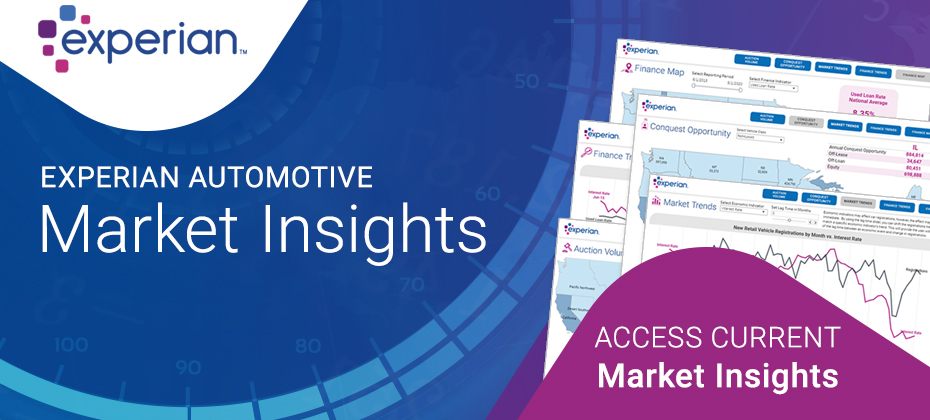
Experian Automotive Market Insights dashboard provides a variety of insights to help dealers tackle their biggest challenges.

Small SUVs became the most financed vehicle segment in Q3 2020, making up 26.01% of all financed vehicles during the quarter.

2020 is finally over – been there, done that. And while it seems safe to say most everyone is all too eager to kick off a new calendar year, the reality is we’re still reeling – and will continue to reel – through the economic impacts of the COVID-19 global pandemic. As we inch closer to the one year marker of when many businesses were sent home – across all industries, including those tech-inclined and those less so – the understatement of the year is that the world has since changed as have consumer communication preferences, how businesses and customers interact, tweaked definitions of privacy, and new (heightened) expectations of evolving a positive customer experience with minimal friction and maximum security. While last year’s predictions of entering a new set of Roaring 20’s may not have panned out the way we had initially imagined, many of the trends thought to evolve over the last 365 days did. As we all look toward a post-pandemic world, here are six top trends to keep tabs on throughout 2021. 1. Data Data as a commodity and as a business differentiating factor has reached an all-time high. It’s doing more across the entire customer lifecycle and can elevate businesses to best prep for growth, especially as consumers begin to look for more financial products (whether looking for financial assistance as the CARES Act accommodation period ends, or to take advantage of the booming mortgage industry, etc.). Data can also give more insights into consumers than ever before. Far beyond just credit scores and financial data, today’s data sets can reveal consumers’ lifestyle preferences, their preferred communication channels, their rental histories, and so much more. With alternative credit data and non-traditional data (including consumer-permissioned data), businesses can get a holistic picture of their customers’ payment behaviors. That streaming media service monthly payment may seem minimal, but now could increase your credit score through Experian Boost. Experian is still making big strides in all efforts to use data for good. As of December 31, 2020, Experian Boost has “boosted” Americans’ credit scores nearly 47 million points. Additionally, throughout 2020, Experian worked with financial institutions and credit furnishers to continue to put consumers first and serve as the consumer’s bureau. Coming up in 2021? Using data for differentiation, which can ultimately drive business growth. From instant prescreens to identifying your best customers (and offering them cross-sell and upsell opportunities to increase retention and customer loyalty) to helping customers that may be on the brink of financial distress and connecting them with management solutions to help them get back on their feet, data can help businesses – and their customers – get there. 2. Fraud and Friction (And the Reduction of Both) With the pandemic, fraud saw increases across the board. Here are just some quick stats: 200% increase in first-time online banking usage immediately following shelter-in-place orders (Aite Group, “Workplace Distancing: Adapting Fraud and AML Operations to COVID-19,” April 2020) 652% year-over-year increase in records found on the dark web (Experian CyberAgent technology) 50% increase in human farming – real people being hired for purposes of fraud – month-over-month in March 2020 (Arkose Labs) And, unsurprisingly, consumer and business sentiments toward fraud are also evolving with these increasing trends. For example, according to Experian’s North America Trends Report, half of consumers continue to site security as the most important factor of their online experience. Additionally, there’s been an increase in the percentage of businesses who have recently increased or are planning to increase fraud budget from 76% in 2019 to 89% as of Sept. 2020. More complex phishing schemes and increased fraudster activity is due in part to numerous industries having to shift to online processes and business transactions overnight. Adoption for mobile wallets has jumped 11% since July 2020, according to the 2020 Global Insights Report. Systems and technology that were not ready or not armed with the necessary infrastructure left critical access points open that could be exploited by fraudsters. Fraud exists across the customer lifecycle, at every access point. And while fraud is complex, with Experian as your partner, solving it isn’t. Innovative technology enables businesses to prevent fraud by identifying credible customers and applying the correct treatment to the riskiest consumer and business accounts. We can help you develop a layered risk management strategy so you can focus resources on growing and protecting your customer relationships. 3. A New Administration – Changing of the Guards on the Regulatory Front With the new year enters the inauguration of a new president and administration. Though there is still much to be determined, certain areas are drawing a lot of attention with this changing of the guards. The highlights? The CFPB. Priorities and leadership could change. With COVID-19 top of mind, it is likely there will be aggressive agendas put forth to help protect the millions of consumers who have suffered economic distress and harm as a result of the pandemic. Data Portability. With an increased consumer appetite to port their data, questions and concerns around data security – and how to verify for a third party asking for the data – are also on the rise. There are a number of issues facing financial institutions around data portability, one of the largest being defining the line between consumer account information and proprietary data. All things privacy – state vs. national bills. The debate continues on how to move forward (whether privacy legislation will be handled by the states or at the national level), but for now it seems there is more progress at the state level. California was the first state to push through state-level privacy legislation in the form of the California Consumer Privacy Act of 2018. Twenty-four states are considering legislation that would require consent before collecting or disclosing personal information with third parties. 4. Analytics + Digitalization – Smarter, Better, Faster COVID-19 accelerated digital transformation for many. Some companies were ready, having already started making the headway in years prior, while others struggled – and some continue to struggle. The pandemic – and its corresponding recovery – is reason now, more than ever, to get some of your digital transformation priorities checked off of your list. Your customers demand it and your business needs it. Tackling analytics and digitalization not only brings your business up to speed, but improves your decisioning, enhances your offerings, and enables better platforms and data usage. In addition to digitalization, artificial intelligence for credit decisioning and personalized banking can also be expected to be a top trend, especially AI that is ethical and explainable, as will the increasing adoption and implementation of cloud computing. As consumer experience continues to reign supreme, any and all technology to enhance and improve that experience – think chatbots and virtual assistants – will also likely increase in presence. 5. Verification & Identity Identity has been a trending topic over the last few years, brought on by increasingly digital lifestyles and the intersection of personalization, frictionless transactions and adequate security. Identity verification and verification of other information such as income, employment and the like are increasingly needed in a today’s pandemic and tomorrow’s post-pandemic world. Leveraged across the lifecycle and during critical customer interactions, the need is especially heightened for insights, data accuracy, and diversification of data sets – to name a few. And while it was already established that identity verification is not just for marketing services, there are now even greater needs for financial institutions to be able to confidently know that their customers are who they say they are. Some areas to keep your eye on in 2021? Identity, income, assets and employment. 6. Redefining the Modern Mortgage As has been a common trend, spurred by the disruption caused by COVID-19, the mortgage industry is one of the many to have a magnifying glass brought to its areas for improvement. Some of those areas include operational efficiency, digital adoption and transparency. In line with the better and faster needs that lenders are continually trying to pace with, the need for speed is hitting mortgage originations, with an ideal situation outlined as closing in 30 days or less. Creating operational efficiencies through faster, fresher data can be the key for lenders to more accurately assess a borrower’s ability to pay upfront. Additionally, now, as most mortgage lenders are breaking previous origination records by a landslide (thanks pandemic), there’s new focus on other performance indicators. With such impetus, the modern mortgage is constantly evolving, incorporating customer-centric facets including a seamless digital process, providing meaningful customer experiences and leveraging the latest and greatest technology to better future-proof the industry through scalable technology, while aiming to reduce costs. For all your needs in 2021 and beyond, Experian has you covered. Learn More

No two customers are the same. That’s why it’s important to go beyond the traditional credit score for a closer look at each consumer’s individual circumstance and create personalized response plans. Learn more about some of the many different customers you’ll encounter and download our guide to get recommendations for every stage of the lifecycle. Get the Guide