
Housing

Mortgage lenders looking to attract first-time homebuyers must understand their needs, wants, and finances, especially as the economic environment and evolving generational trends shift. Understanding who this buyer segment is and what they buy unlocks growth potential for today’s attentive mortgage lenders. Financial diversity defines first-time homebuyers First-time homebuyers are searching for the attainable, which is not easy today. High interest rates, low housing inventory, and individual financial circumstances contribute to the hardships the housing market presents. Even with ups and downs and difficulties in the marketplace, first-time homebuyers continue to show their grit. Over two-thirds of first-time homebuyers have an annual household income over $90k, with 27% having household income over $180k. Additionally, Experian Housing research shows that 85% of first-time homebuyers have prime or super-prime credit scores. While credit and income play critical roles in evaluating borrower risk, they're not the only factors. The mortgage lending market is slowly leaning into the use of alternative credit data, such as rental payment information, to determine a borrower's creditworthiness. These changes are crucial in our industry's effort to support consumers on their journey towards homeownership. Financial realities impact property choices Experian Housing’s recent white paper looking at first-time purchasers shows over 85% buying single-family homes, with roughly 70% of these buyers belonging to Generation Y (Gen Y) and Generation Z (Gen Z). While starter homes suggest impermanence, Gen Y and Gen Z buying habits reflect their values and overall desire for stability. These motivated buyers that understand the economic woes, are adjusting and looking for options. More than three-fourths of first-time purchases are older homes, built before 2000. However, Experian’s same research showed sales of new construction homes (2021-2023) increased over the prior two years, particularly among first-time buyers. Builder credits and other incentives make new builds more appealing, and lenders leveraging their mortgage market expertise will be able to discuss options customized to the borrower, helping them make the decision best fitting their needs. Especially among younger generations, first-time homebuyers are considering different housing options in their path to homeownership. From multigenerational housing and co-owning a home with friends and family to smaller homes and moving further away for affordability reasons, options are on the table.1 Untapped potential for savvy lenders The modern mortgage landscape offers thoughtful lenders opportunities to drive growth. Diversity in the first-time homebuyer profiles means that lenders who distinguish themselves by tailoring their services to the borrower’s needs. This may include, but is certainly not limited to: Drawing on their knowledge of first-time homebuyer programs, grants and loans appropriate to the borrower. Improving their overall financial well-being with financial literacy education. Expertly guiding them through the complex lending process. Ensuring as swift and smooth a transaction as possible with timely and responsive communications. For more information about the lending possibilities for first-time homebuyers, download our white paper and visit us online. Download white paper Learn more 1 “Several Generations Under One Roof,” census.gov; “What to Know About Co-Buying A House,” myhome.freddiemac.com

In the previous episode of “The Chrisman Commentary” podcast, Joy Mina, Director of Product Commercialization at Experian, talked about the misconceptions associated with verifications and what organizations can do to enhance their strategies. In the latest episode, Experian's Ken Tromer and Jamie Norris discuss ways mortgage companies can optimize their business expenses and protect prospects. "The market has been asking for solutions to help with cost mitigation and lead protection for quite some time," said Jamie. "We've listened to the market and Power Profile Plus™ does just that." Listen to the full episode for all the details and learn more about Power Profile Plus™ for Mortgage. Listen to podcast Learn more
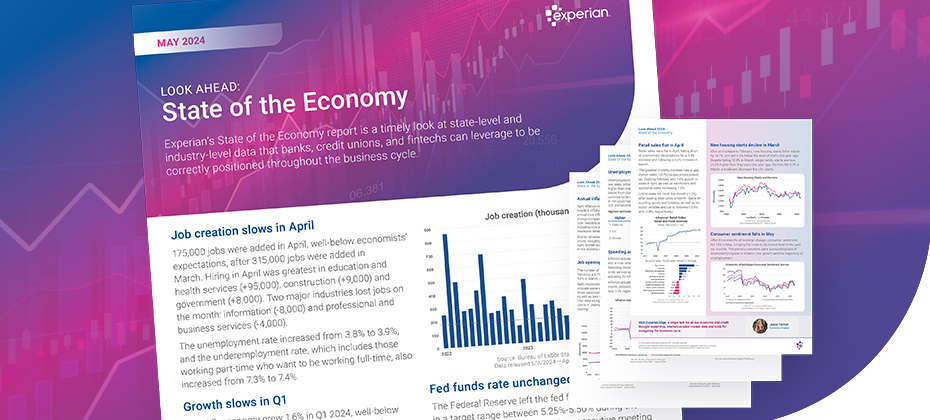
This series will dive into our monthly State of the Economy report, providing a snapshot of the top monthly economic and credit data for those in financial services to proactively shape their business strategies. After again announcing no change in the target fed funds rate during their May meeting, the Federal Reserve continues to face the decision of when to begin cutting rates. The economic data released this month only complicated this decision, as growth came in well-below expectations and the labor market seemed to ease on several fronts. However, there was only minimal downward progress in inflation, especially considering the high prices seen over the past few months. In this month’s report, we dive into the data developments that comprise this economic story. Data highlights from this month’s report include: Economic growth in Q1 came in at 1.6%, under economists’ expectations. Underlying components of consumer spending and business investment remained solid. Inflation cooled in April, with annual headline inflation down from 3.5% to 3.4% and annual core inflation down from 3.8% to 3.6%. Consumer sentiment fell 13% in May, due to stubborn inflation, low growth, and easing in the labor market. Check out our report for a deep dive into the rest of this month’s data, including the latest trends in job creation, spending, and the fed funds rate. Download May's State of the Economy report To have a holistic view of our current environment, it’s important to view the economy from different angles and through different lenses. Watch our team of experts discuss the latest economic and credit trends in the recording of our latest macroeconomic forecasting webinar, download our latest forecast scenario report, or listen to our latest Econ to Action podcast for views on the economic environment in different market segments. For more economic trends and market insights, visit Experian Edge.

“Learn how to learn.” One of Zack Kass’, AI futurist and one of the keynote speakers at Vision 2024, takeaways readily embodies a sentiment most of us share — particularly here at Vision. Jennifer Schulz, CEO of Experian, North America, talked about AI and transformative technologies of past and present as she kicked off Vision 2024, the 40th Vision. Keynote speaker: Dr. Mohamed El-Erian Dr. Mohamed El-Erian, President of Queens’ College, Cambridge and Chief Economic Advisor at Allianz, returned to the Vision stage to discuss the labor market, “sticky” inflation and the health of consumers. He emphasized the need to embrace and learn how to talk to AI engines and that AI can facilitate content, creation, collaboration and community Keynote speaker: Zack Kass Zack Kass, AI futurist and former Head of Go-To-Market at OpenAI, spoke about the future of work and life and artificial general intelligence. He said AI is aiding in our entering of a superlinear trajectory and compared the thresholds of technology versus those of society. Sessions – Day 1 highlights The conference hall was buzzing with conversations, discussions and thought leadership. Some themes definitely rose to the top — the increasing proliferation of fraud and how to combat it without diminishing the customer experience, leveraging AI and transformative technology in decisioning and how Experian is pioneering the GenAI era in finance and technology. Transformative technologiesAI and emerging technologies are reshaping the finance sector and it's the responsibility of today's industry leaders to equip themselves with cutting-edge strategies and a comprehensive understanding to master the rapidly evolving landscape. That said, transformation is a journey and aligning with a partner that's agile and innovative is critical. Holistic fraud decisioningGenerative AI, a resurgence of bank branch transactions, synthetic identity and pig butchering are all fraud trends that today's organizations must be acutely aware of and armed to protect their businesses and customers against. Leveraging a holistic fraud decisioning strategy is important in finding the balance between customer experience and mitigating fraud. Unlocking cashflow to grow, protect and reduce riskCash flow data can be used not only across the lending lifecycle, but also as part of assessing existing portfolio opportunities. Incorporating consumer-permissioned data into models and processes powers predicatbility and can further assess risk and help score more consumers. Navigating the economyAmid a slowing economy, consumers and businesses continue to struggle with higher interest rates, tighter credit conditions and rising delinquencies, creating a challenging environment for lenders. Experian's experts outlined their latest economic forecasts and provided actionable insights into key consumer and commercial credit trends. More insights from Vision to come. Follow @ExperianVision and @ExperianInsights to see more of the action.

Where in the U.S. would you guess first-time homebuyers are having the most success securing a mortgage? The answer may surprise you. While over one-third of first-time homebuyers reside in our most populous states, California, Texas, Florida, and New York, research from Experian Mortgage reveals they are having greater success securing a mortgage in more affordable locations, such as Minnesota, Iowa, and Indiana. Understanding who is buying properties around the nation and what drives their decision provides insight into where they are buying and why. This knowledge paves the way for mortgage lenders to create more targeted and effective marketing strategies to gain trust and win loyal borrowers. As discussed in a recent blog post on generational behaviors, Generation Z (Gen Z) and Generation Y (Gen Y) account for a sizeable majority of first-time homebuyers and nearly half of repeat buyers. Mortgage lenders who understand what motivates these young buyers and meet them where they are will be better positioned to win. Why understanding buyer traits and their motivations matters Nearly 70% of all renters are in their early 40s or younger. With rents up more than 30% since before the COVID-19 pandemic, many Americans yearn for the stability that homeownership brings to their financial well-being. Younger buyers are increasingly focusing on their overall financial health. Experian's survey of more than 2,000 millennial and Gen Z consumers across the United States revealed: ‘Better understanding personal finance’ is a goal for most consumers within both groups. Nearly 70% are actively searching for a trusted source for personal finance information. Over 30% of first-time homebuyers have a household income under $90,000 annually. They want to make decisions that align with their financial goals and position themselves well for the future, which is likely why we are seeing a higher concentration of first-time homebuyers converting in lower cost of living areas, such as the mid-west. Even for a mortgage lender outside of the geographically preferred states, those who understand their areas with minute specificity and know where opportunity and affordability meet will be best positioned for these buyers. Why strategically positioned lenders will win the day Affordability remains the operative word. The housing supply shortage heavily impacts affordability. A lack of new housing construction and limited existing home sale inventory contributed largely to the limited for sale stock. Lower interest rates can influence the affordability outlook, but rising inflation and the Federal Reserve not yet moving to lower rates has resulted in mortgage interest rates creeping upward this year.1 Additionally, overall economic indicators influence the housing market. While the Federal Reserve does not directly dictate mortgage interest rates, mortgage rates are influenced by the actions they take. Federal Reserve Chairman Jerome Powell’s recent remarks that the Fed will not likely lower rates until much later in the year due to inflation signals mortgage rates are unlikely to decrease soon.2 Mortgage lenders who dive into buyer behaviors, geographical nuances, and truly service these potential buyers will benefit. By employing market and buyer savvy strategies that resonate, you can drive both short and longer-term business growth. For more information about the lending possibilities for first-time homebuyers, read our latest white paper and visit us online. Download white paper Learn more 1 “Mortgage Rates Move Toward Seven Percent as Markets Digest Incoming Data,” freddiemac.com 2 “Federal Reserve Issues FOMC Statement,” March 20, 2024, federalreserve.gov
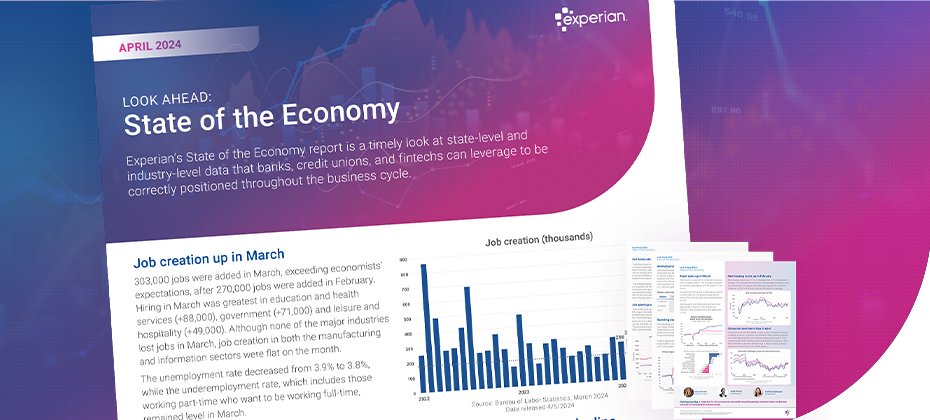
This series will dive into our monthly State of the Economy report, providing a snapshot of the top monthly economic and credit data for those in financial services to proactively shape their business strategies. During their March meeting, the Federal Reserve announced no change in the federal funds rate and released their updated Summary of Economic Projects for the remainder of 2024 and 2025. In response to slow but steady cooling inflation, they maintained projections for three rate cuts by the end of 2024. Additionally, they upgraded their growth projections and lowered their unemployment projections, signaling more optimism toward the U.S. economic trajectory. In this month's report, we dive into the data developments that are contributing to this economic story. Data highlights from this month's report include: The Federal Reserve held rates steady and maintained projections for three rate cuts by the end of the year. Inflation progress slowed, with annual headline inflation flat and annual core inflation ticking up from 3.2% to 3.5%. The median rent-to-income ratio increased 4.1% year-over-year to 37.9% nationally. Check out our report for a deep dive into the rest of April's data, including the latest trends in income, originations, and job creation. To have a holistic view of our current environment, we must understand our economic past, present, and future. Check out our annual chartbook for a comprehensive view of the past year and register for our upcoming macroeconomic forecasting webinar for a look at the year ahead. Download April's State of the Economy report Register for webinar For more economic trends and market insights, visit Experian Edge.

Click here to watch our recent webinar on first-time homebuyers. The younger generations comprise nearly 70% of first-time homebuyers, according to recent Experian Mortgage research. Understanding the generational traits of first-time homebuyers, particularly motivated younger generations, is critical to building highly targeted marketing strategies. Gen Z and Gen Y are essential in the first-time homebuyer market and represent close to 40% of repeat buyers, indicating they consider homeownership important beyond just their first purchase. Generation Y borrowers lead the pack Generation Y borrowers see homeownership as part of the American Dream but have waited longer than previous generations to purchase their first home.1 Additionally, as digital natives, they have grown up in a world with online resources and digital tools, making the home buying process more convenient for them. They can effortlessly research homes, compare mortgage rates, and even complete paperwork without leaving their home – a time and cost-saving advantage. With their desire for stability and their technological proficiency, it comes as no surprise that Gen Y borrowers are at the forefront of the homebuying market, accounting for 52% of all first-time buyers. Keep your eye on the next wave: Generation Z borrowers Although Generation Z is the youngest group with both young adults and those entering adulthood, they should not be overlooked in the real estate market. Despite their age, Gen Z possesses characteristics and tendencies that make them legitimate potential first-time homebuyers. Having grown up in an era characterized by technical advancements and economic instability, Gen Z has observed various challenges, such as the impact of the 2008 financial crisis on their families. They have also witnessed their parents and older siblings navigating student loan debt and a volatile job market. As a result, Gen Z individuals tend to approach life decisions with a cautious mindset. However, it is important to note that Gen Z is a generation known for their ambition and determination. They have an entrepreneurial spirit. A strong desire for stability. According to a recent survey conducted by Chase2, homeownership holds an important place in the dreams of nearly 90% of Generation Z individuals. This unwavering aspiration for owning a home and increasing purchasing power establishes Generation Z as a significant influence in the real estate market. Market to each generation where they are most comfortable, for Y and Z it is online and on the go To get the attention of these younger generations, mortgage lenders must understand that for these groups, digital technology is the norm, integrated into all aspects of their lives. They rely heavily on social media, online reviews, and mobile apps for research and communication. Therefore, it is crucial for lenders to implement a marketing strategy that encompasses social media platforms and personalized email, and, increasingly, text communications, to resonate with the tech savvy nature of these generations. That said, there is nuance in every population, and we see this when observing communication preferences across generations. We know, for example, that first-time homebuyers are considerably more likely than the general public to respond to e-mail offers. Understanding communication preferences for each prospect is important for tailoring your omni-channel marketing approach. Growing up in a world where technology is constantly advancing, Generations Y and Z are accustomed to having immediate access to information and services at their fingertips. As a result, they expect an efficient mortgage lending process that uses online, smartphone-enabled tools and platforms. They count on the ability to complete applications and paperwork online, receive updates and notifications via email or text, and have access to resources and tools to track and manage their mortgage journey. Lenders embracing these realities about Gen Y and Gen Z and connecting with them where they are, will be better positioned to serve this demographic and grow their own business. For more information about the lending possibilities for first-time homebuyers, download our latest white paper. Download white paper 1 “Bank of America’s 2023 Homebuyer Insights Report Explores How Hopeful Buyers are Forging Ahead,” bankofamerica.com. 2 “Millennial and Gen Z Adults Still See American Dream Within Reach Despite Challenges,” chase.com.

In the previous episode of “The Chrisman Commentary” podcast, Joy Mina, Director of Product Commercialization at Experian, talked about the benefits of a waterfall strategy for income and employment verification. In the latest episode, Joy explores common misconceptions around verifications, such as how a lender needs to put a provider with the most records first in their waterfall. "While that might feel like a sure-fire way to cut costs, it isn't necessarily the most effective," said Joy. "Instead of comparing records, I would really encourage lenders to focus on a provider's total cost to verify a consumer." Listen to the full episode to learn about more misconceptions associated with verifications and what you can do to enhance your strategies. Listen to podcast Learn more

For lenders, first payment default (FPD) is more than just financial jargon; it's a crucial metric in assessing credit risk. This blog post will walk you through the essentials of FPD, from defining the term to exploring how you can prevent and mitigate its potential impact. What Is FPD (First Payment Default)? FPD occurs when a consumer fails to make their initial payment on a loan or credit agreement, which is often perceived as an early signal of a potential cascade of risky behavior. Recognizing FPD is the starting point for lenders to address potential issues with new borrowers before they escalate. One important aspect to grasp is the timeline of FPD. It’s not just about missing the first payment; it's about "early" missing. The timing of defaults is often critical in assessing the overall risk profile of a borrower or group of borrowers. The earlier a borrower starts to miss payments, the riskier they tend to be. In some cases, early default may signal deeper issues such as misrepresented income, overextension across multiple credit lines, or synthetic identity and first-party fraud that slipped through origination controls. Examining the causes of FPD The roots of FPD are diverse and can be classified into two broad categories: External factors: These include sudden financial crises, changes in employment status, or unforeseen expenses. Such factors are often beyond the borrower's immediate control. Internal factors: This category covers more deliberate or chronic financial habits, such as overspending, lack of savings, or overleveraging on credit. It's often indicative of longer-term financial instability. In higher-risk scenarios, internal drivers may also include intentional default behavior or “bust-out” fraud schemes. Understanding the causes of early payment default is the first step in effective risk management and customer engagement strategies. Distinguishing between temporary hardship and structural or fraudulent risk is critical to determining the appropriate response. Implications of FPD for lenders FPD doesn't just signal immediate financial loss for lenders in terms of the missed installment. It sets off a cascade of consequences that affect the bottom line and the reputation of the institution. Financial loss. Lenders incur direct financial losses when a payment is missed, but the implications go beyond the missed payment amount. There are immediate costs associated with servicing, collections, and customer support. In the longer term, repeated defaults can lead to write-offs, impacting the institution's profitability and regulatory standing. Regulatory scrutiny. Repeated instances of FPD can also draw the attention of regulators, leading to scrutiny and potentially increased compliance costs. Mitigating first payment default Mitigating FPD requires a multifaceted approach that blends data, advanced analytics, customer engagement, and agile risk management. Lenders need to adopt strategies that can detect early signs of potential FPD and intervene preemptively. Data-driven decision-making. Leveraging advanced analytics and credit risk modeling is crucial. By incorporating transactional and behavioral data, lenders can make more accurate assessments of a borrower's risk profile. Utilizing predictive models can help forecast which borrowers are likely to default on their first payment, allowing for early intervention. Proactive customer engagement. Initiatives that revolve around education, personalized financial planning advice, and flexible payment arrangements can help borrowers who might be at risk of FPD. Proactive outreach can engage customers before a default occurs, turning a potential negative event into a positive experience. Agile risk management. Risk management strategies should be dynamic and responsive to changing market and customer conditions. Regularly reviewing and updating underwriting criteria, credit policies, and risk assessment tools ensures that lenders are prepared to tackle FPD challenges as they arise. Using FPD as a customer management tool Lastly, and perhaps most importantly, lenders can use FPD as a tool to foster better customer management. Every FPD is a data point that can provide insights into customer behavior and financial trends. By studying the causes and outcomes of FPD, lenders can refine their risk mitigation tools and improve their customer service offerings. Building trust through handling defaults. How lenders handle defaults, specifically the first ones, can significantly impact customer trust. Transparent communication, fair and considerate policies, and supportive customer service can make a difference in retaining customers and improving the lender's brand image. Leveraging data for personalization. The increasing availability of data means lenders can offer more personalized services. By segmenting customers based on payment behavior and response to early interventions, lenders can tailor offerings that meet the specific financial needs and challenges of individual borrowers. How Experian® can help First payment default is a critical aspect of credit risk management that requires attention and proactive strategies. By understanding the causes, implications, and mitigation strategies associated with FPD, financial institutions can not only avoid potential losses but also build stronger, more enduring relationships with their customers. Learn more about Experian’s credit risk modeling solutions. Learn more

Current economic conditions present genuine challenges for mortgage lenders. In this environment, first-time homebuyers offer exciting, perhaps unexpected, business growth potential. Market uncertainties have kept potential borrowers anxious and on the sidelines. The Federal Reserve's recent announcement that interest rates will remain steady for now has added to borrower anxiety. First-time homebuyers are no exception. They are concerned about the “right” time to jump in, buy a home, and own a mortgage. Despite worries over high interest rates and low inventory, many first-time homebuyers are tired of waiting for rates to drop and inventory to blossom. First-time buyers are eager to explore all avenues necessary to achieve homeownership. They show a willingness to be flexible when it comes to finding a house, considering options like a fixer upper or expanding their search to more affordable locations. The desire to escape the uncertainty and financial burden of renting is a strong driving force for first-time buyers. They see homeownership as a way to establish stability and build equity for their future. Despite the obstacles renters face in the competitive housing market, these potential buyers are motivated. Lenders who take time to understand who these buyers are and what matters to them will be ahead of the game. Notwithstanding stubbornly high interest rates, first-time homebuyers historically have shown remarkable resilience amid market fluctuations. According to a recent deep dive by Experian Mortgage experts into the buying patterns of first-time homebuyers, this group made 35-48% of all new purchases and 8-12% of all refinances between July 2022 and September 2023. First-time buyers represent both immediate potential and long-term client opportunities. How can lenders attract first-time homebuyers and drive growth from this market? The first-time homebuyer market largely consists of individuals in their early 40s and younger, also known as Gen Y and Gen Z. Rising costs of renting a home frustrate these individuals who are trying to save money for a down payment on a house and ultimately, buy their dream home. They want to settle down and look ahead to the future. For mortgage lenders who focus on understanding this younger first-time buyer market and developing targeted business strategies to attract them, great growth potential exists. Often, younger people feel locked out of buying opportunities, which creates uncertainty and apprehension about entering the market. This presents mortgage industry professionals with an incredible opportunity to show their value and grow their client base. To attract this market segment, lenders must adapt. Lenders must develop a comprehensive picture of this younger generation. Who are they? How do they shop? Where do they want to live? What is their financial situation? What are their financial and personal goals? Acknowledging difficulties in the housing market and showing them a well-conceived path forward to home ownership will win the day for the lender and the buyer. As interest rates are poised to decrease in 2024-2025, there is potential for a surge in demand from first-time homebuyers. Lenders should prepare for these potential buyers, now. It is crucial to reevaluate how to approach first-time buyers to identify new opportunities for expansion. Experian Mortgage examined first-time homebuyer trends to pinpoint prospects with good credit and provide analysis on potential areas of opportunity. For more information about the lending possibilities for first-time homebuyers, download our white paper. Download white paper
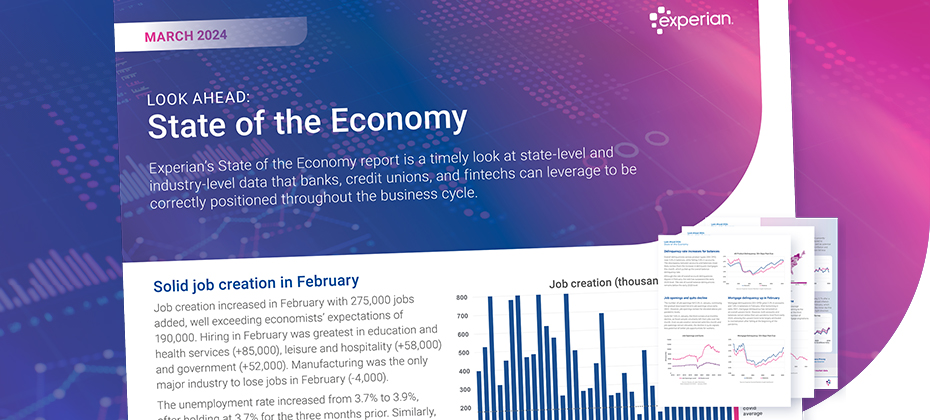
This series will dive into our monthly State of the Economy report, providing a snapshot of the top monthly economic and credit data for those in financial services to proactively shape their business strategies. As we near the end of the first quarter, the U.S. economy has maintained its solid standing. We're also starting to see some easing in a few areas. This month saw a slight uptick in unemployment, slowed spending growth, and a slight increase in annual headline inflation. At the same time, job creation was robust, incomes continued to grow, and annual core inflation cooled. In light of the mixed economic landscape, this month’s upcoming Federal Reserve meeting and their refreshed Summary of Economic Projections should shine some light on what’s in store in the coming months. Data highlights from this month’s report include: Annual headline inflation increased from 3.1% to 3.2%, while annual core inflation cooled from 3.9% to 3.8%. Job creation remained solid, with 275,000 jobs added this month. Unemployment increased to 3.9% from 3.7% three months prior. Mortgage delinquencies rose for accounts (2.3%) and balances (1.8%) in February, contributing to overall delinquencies across product types. Check out our report for a deep dive into the rest of March’s data, including consumer spending, the housing market, and originations. To have a holistic view of our current environment, we must understand our economic past, present, and future. Check out our annual chartbook for a comprehensive view of the past year and download our latest forecasting report for a look at the year ahead. Download March's State of the Economy report Download latest forecast For more economic trends and market insights, visit Experian Edge.
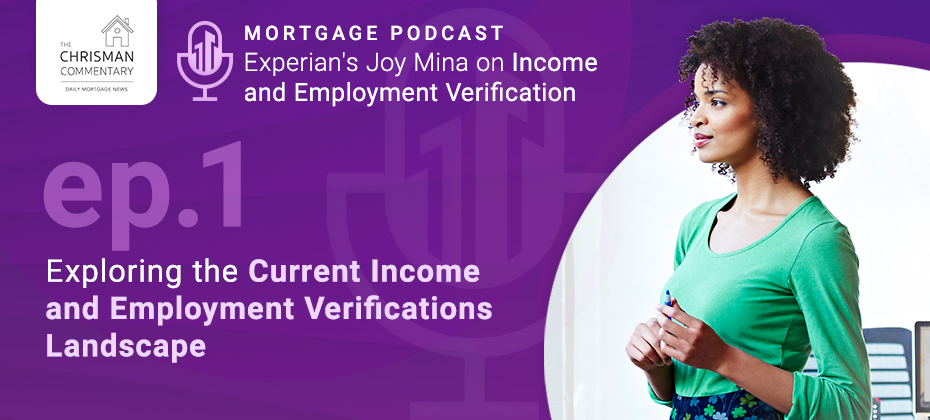
To say “yes” to consumers faster and more efficiently, financial institutions need flexible access to instant income and employment verification data. In an episode of “The Chrisman Commentary” podcast, Joy Mina, Director of Product Commercialization at Experian, talks about how income and employment verification has changed since Experian entered the market, the benefits of a waterfall strategy, and what’s next in our verifications journey. “Back then, we were hearing lenders primarily asking for more innovative solutions,” said Joy. “They wanted more flexibility without sacrificing quality of service.” Listen to the full episode to learn more about what lenders look for in an income and employment verification solution and how Experian VerifyTM is meeting these needs. Listen to podcast Learn more

Ensuring the reliability of tenant applications is paramount to running a successful property management business. But with an exponential rise in prospective residents using fake financial documents to inflate income and employment status, how do property managers navigate and detect fake paystubs without stepping on a landmine of liability? The marketplace of deception Paystub generator websites As you embrace the commitment to diligence, be aware that some legitimate websites can be unknowingly used by fraudsters to create counterfeit financial documents. Knowledge is your ally here. At the touch of a button, even the minimally tech inclined can produce pay stubs that appear convincing. There are dozens of sites that offer paystub generator software, including: Design and editing software websites that are accessible to people beyond just creative professionals. Popular e-commerce platform stores that host apps capable of creating paystubs. Mobile app stores that allow users to download apps for use on all major mobile devices. Key indicators of a fake paystub Remember, as a property manager or owner, you are responsible for scrutinizing these documents to protect your business interests. Use your awareness to be vigilant, verifying every piece of information to ensure the credibility of prospective tenants. While some of these falsified paystubs may appear to be legitimate, they are usually not perfect. Here are some quick checks which may help you spot a fake or trigger a deeper review quickly. Watch out for elusive typos Erroneous spelling, particularly in company names and financial terms, is a big red flag. Keep your eyes peeled for these unruly characters. Distorted watermarks A legitimate paystub should carry official watermarks or specific symbols that indicate its authenticity. However, be on the lookout for watermarks that seem off — sometimes, they're too conspicuous or amateurish, which can be a tell-tale sign of forgery. Authentic watermarks should be subtle and consistent with the company's brand. Crunching the numbers Inaccurate calculations can unravel a fake paystub. If the numbers just don't add up or pay dates vary inexplicably, you should investigate further. Inconsistent font Professional payroll systems stick to a consistent font. If you notice various font styles and sizes, it's worth investigating further. Authenticity lies in uniformity. Going logo-less? A missing company logo, or one that looks like it was copied from a low-resolution image on the internet, should trigger suspicion. Unusual tax deductions Abnormal tax deductions could indicate someone's fiddling with the figures. Brush up on your tax knowledge or consult with an expert if something seems off-the-wall. Final food for thought Remember, having the right knowledge and tools empowers you to make informed decisions, safeguarding your property from potential fraudsters. Be diligent, stay informed, and leverage technology to support your processes. Action steps to take today Educate your team: Make sure everyone involved in the application review process knows what to look for. Develop a standard operating procedure: Update your existing (or develop) Standard Operating Procedures: As new ways of gaming the system arise, make sure your particular procedures are keeping up with the times. For example, include steps for the following: Understand tenant screening laws in your area. Create consistent resident screening criteria. Check credit report and background. Verify employment and income. Review rental history and evictions (if any). Check criminal record with multi-state search. Interview residents before signing a lease. Follow a consistent policy when accepting or rejecting applicants. Embrace technology: Income and employment verification solutions can verify income directly from a trusted data source and avoid the paystub predicament altogether. Consider implementing a verification system that leaves no room for guesswork. Our verification solution, Experian VerifyTM, provides accurate, efficient, and compliant income and employment verification services. With Experian Verify, property managers can navigate the complexities of tenant-related income and employment verification with ease, ensuring they are adhering to Fair Housing laws and detecting fraudulent behavior. To learn more about how Experian Verify can benefit your property business, please contact us and visit us online. Learn more

In the ever-expanding financial crime landscape, envision the most recent perpetrator targeting your organization. Did you catch them? Could you recover the stolen funds? Now, picture that same individual attempting to replicate their scheme at another establishment, only to be thwarted by an advanced system flagging their activity. The reason? Both companies are part of an anti-fraud data consortium, safeguarding financial institutions (FIs) from recurring fraud. In the relentless battle against fraud and financial crime, FIs find themselves at a significant disadvantage due to stringent regulations governing their operations. Criminals, however, operate without boundaries, collaborating across jurisdictions and international borders. Recognizing the need to level the playing field, FIs are increasingly turning to collaborative solutions, such as participation in fraud consortiums, to enhance their anti-fraud and Anti-Money Laundering (AML) efforts. Understanding consortium data for fraud prevention A fraud consortium is a strategic alliance of financial institutions and service providers united in the common goal of comprehensively understanding and combatting fraud. As online transactions surge, so does the risk of fraudulent activities. However, according to Experian’s 2023 U.S. Identity and Fraud Report, 55% of U.S. consumers reported setting up a new account in the last six months despite concerns around fraud and online security. The highest account openings were reported for streaming services (43%), social media sites and applications (40%), and payment system providers (39%). Organizations grappling with fraud turn to consortium data as a robust defense mechanism against evolving fraud strategies. Consortium data for fraud prevention involves sharing transaction data and information among a coalition of similar businesses. This collaborative approach empowers companies with enhanced data analytics and insights, bolstering their ability to combat fraudulent activities effectively. The logic is simple: the more transaction data available for analysis by artificial-intelligence-powered systems, the more adept they become at detecting and preventing fraud by identifying patterns and anomalies. Advantages of data consortiums for fraud and AML teams Participation in an anti-fraud data consortium provides numerous advantages for a financial institution's risk management team. Key benefits include: Case management resolution: Members can exchange detailed case studies, sharing insights on how they responded to specific suspicious activities and financial crime incidents. This collaborative approach facilitates the development of best practices for incident handling. Perpetrator IDs: Identifying repeat offenders becomes more efficient as consortium members share data on suspicious activities. Recognizing patterns in names, addresses, device fingerprints, and other identifiers enables proactive prevention of financial crimes. Fraud trends: Consortium members can collectively analyze and share data on the frequency of various fraud attempts, allowing for the calibration of anti-fraud systems to effectively combat prevalent types of fraud. Regulatory changes: Staying ahead of evolving financial regulations is critical. Consortiums enable FIs to promptly share updates on regulatory changes, ensuring quick modifications to anti-fraud/AML systems for ongoing compliance. Who should join a fraud consortium? A fraud consortium can benefit any organization that faces fraud risks and challenges, especially in the financial industry. However, some organizations may benefit more, depending on their size, type, and fraud exposure. Some of the organizations that should consider joining a fraud consortium are: Financial institutions: Banks, credit unions, and other financial institutions are prime targets for fraudsters, who use various methods such as identity theft, account takeover, card fraud, wire fraud, and loan fraud to steal money and information from them. Fintech companies: Fintech companies are innovative and disruptive players in the financial industry, who offer new and alternative products and services such as digital payments, peer-to-peer lending, crowdfunding, and robot-advisors. Online merchants: Online merchants are vulnerable to fraudsters, who use various methods such as card-not-present fraud, friendly fraud, and chargeback fraud to exploit their online transactions and payment systems. Why partner with Experian? What companies need is a consortium that allows FIs to collaboratively research anti-fraud and AML information, eliminating the need for redundant individual efforts. This approach promotes tighter standardization of anti-crime procedures, expedited deployment of effective anti-fraud/AML solutions, and a proactive focus on preventing financial crime rather than reacting to its aftermath. Experian Hunter is a sophisticated global application fraud and risk management solution. It leverages detection rules to screen incoming application data for identifying and preventing fraudulent activities. It matches incoming application data against multiple internal and external data sources, shared fraud databases and dedicated watch lists. It uses client-flexible matching rules to crossmatch data sources for highlighting data anomalies and velocity attempts. In addition, it looks for connections to previous suspected and known fraudulent applications. Hunter generates a fraud score to indicate a fraud risk level used to prioritize referrals. Suspicious applications are moved into the case management tool for further investigation. Overall, Hunter prevents application fraud by highlighting suspicious applications, allowing you to investigate and prevent fraud without inconveniencing genuine customers. To learn more about our fraud management solutions, visit us online or request a call. Learn more This article includes content created by an AI language model and is intended to provide general information.
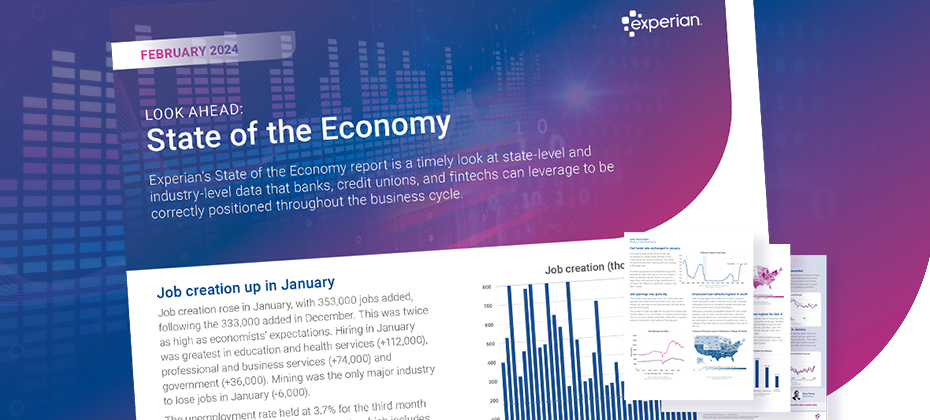
This series will dive into our monthly State of the Economy report, providing a snapshot of the top monthly economic and credit data for those in financial services to proactively shape their business strategies. In February, economic growth and job creation outperformed economists’ expectations, likely giving confirmation to the Federal Reserve that it remains too early to begin cutting rates. Data highlights from this month’s report include: U.S. real GDP rose 3.3% in Q4 2023, driven by consumer spending and bringing the average annual 2023 growth to 2.5%, the same as the five-year average growth prior to the pandemic. The labor market maintained its strength, with 353,000 jobs added this month and unemployment holding at 3.7% for the third month in a row. Consumer sentiment rose 13% in January, following a 14% increase in December, as consumers are feeling some relief from cooling inflation. Check out our report for a deep dive into the rest of February’s data, including inflation, the latest Federal Reserve announcement, the housing market, and credit card balances. To have a holistic view of our current environment, we must understand our economic past, present, and future. Check out our annual chartbook for a comprehensive view of the past year and register for our upcoming Macroeconomic Forecasting webinar for a look at the year ahead. Download report Register for webinar For more economic trends and market insights, visit Experian Edge.