Latest Posts

Model inventories are rapidly expanding. AI-enabled tools are entering workflows that were once deterministic and decisioning environments are more interconnected than ever. At the same time, regulatory scrutiny around model risk management continues to intensify. In many institutions, classification determines validation depth, monitoring intensity, and escalation pathways while informing board reporting. If classification is wrong, every downstream control is misaligned. And, in 2026, model classification is no longer just about assigning a tier, but rather about understanding data lineage, use case evolution, interdependencies, and governance accountability in a decentralized, AI-driven environment. We recently spoke with Mark Longman, Director of Analytics and Regulatory Technology, and here are some of his thoughts around five blind spots risk and compliance leaders should consider addressing now. 1. The “Set It and Forget It” Mentality The Blind Spot Model classification frameworks are often designed during a regulatory remediation effort or inventory modernization initiative. Once documented and approved, they can remain largely unchanged for years. However, model risk management is an ongoing process. “There’s really no sort of one and done when it comes to model risk management,” said Longman. Why It Matters Classification is not merely descriptive, it’s prescriptive. It drives the depth of validation, the frequency of monitoring, the intensity of governance oversight and the level of senior management visibility. As Longman notes, data fragmentation is compounding the challenge. “There’s data everywhere – internal, cloud, even shadow IT – and it’s tough to get a clear view into the inputs into the models,” he said. When inputs are unclear, tiering becomes inherently subjective and if classification frameworks are not reviewed regularly, governance intensity can become misaligned with real exposure. Therefore, static classification is a growing risk, especially in a world of rapidly expanding AI use cases. In a supervisory environment that continues to scrutinize model definitions, particularly as AI tools proliferate, a dynamic, periodically refreshed classification process can demonstrate institutional vigilance. 2. Assuming Third-Party Models Reduce Governance Accountability The Blind SpotThere is often an implicit belief that vendor-provided models carry less governance burden because they were developed externally. Why It Matters Vendor provided models continue to grow, particularly in AI-driven solutions, but supervisory expectations remain firm. “Third-party models do not diminish the responsibility of the institution for its governance and oversight of the model – whether it’s monitoring, ongoing validation, just evaluating drift model documentation,” Longman said. “The board and senior managers are responsible to make sure that these models are performing as expected and that includes third-party models.” Regulators consistently emphasize that institutions remain responsible for the outcomes produced by models used in their decisioning environments, regardless of origin. If a vendor model influences credit approvals, pricing, fraud decisions, or capital calculations, it directly affects customers, financial performance and compliance exposure. Treating third-party models as inherently lower risk can also distort internal tiering frameworks. When vendor models are under-classified, validation depth and monitoring rigor may be insufficient relative to their true impact. 3. Limited Situational Awareness of Model Interdependencies The Blind Spotfeed multiple downstream models simultaneously. Why It Matters Risk often flows across interdependencies. When upstream models degrade in performance or introduce bias, downstream models inherit that exposure. If multiple material decisions depend on the same data transformation or feature engineering process, concentration risk emerges. Without visibility into these dependencies, tiering assessments may underestimate cumulative risk, and monitoring frameworks may fail to detect systemic vulnerabilities. “There has to be a holistic view of what models are being used for – and really somebody to ensure there’s not that overlap across models,” Longman said. Supervisors are increasingly interested in understanding how model risk propagates through business processes. When institutions cannot articulate how models interact, it raises broader concerns about situational awareness and control effectiveness. Therefore, capturing interdependencies within the classification framework enhances more than documentation. It enables more accurate tiering, more targeted monitoring and more informed governance oversight. 4. Excluding Models Without Defensible Rationale The Blind SpotGray-area tools frequently sit outside formal inventories: rule-based engines, spreadsheet models, scenario calculators, heuristic decision aids, or emerging AI tools used for analysis and summarization. These tools may not neatly fit legacy definitions of a “model,” and so they are sometimes excluded without robust documentation. Why It Matters Regulatory definitions of “model” have broadened over time. What creates risk is the absence of defensible reasoning and documentation. Longman describes the risk clearly: “Some [teams] are deploying AI solutions that are sort of unbeknownst to the model risk management community – and almost creating what you might think of as a shadow model inventory.” Without visibility, institutions cannot confidently characterize use, trace inputs, or assign appropriate tiers, according to Longman. It also undermines the credibility of the official inventory during examinations. A well-governed program can articulate why certain tools fall outside model risk management scope, referencing documented criteria aligned with regulatory guidance. Without that evidence, exclusions can appear arbitrary, suggesting gaps in oversight. 5. Inconsistent or Subjective Classification Frameworks The Blind SpotAs inventories scale and governance teams expand, classification decisions are often distributed across reviewers. Over time, discrepancies can emerge. Why It Matters Inconsistency undermines both risk management and regulatory confidence. If two models with comparable use cases and impact profiles are assigned different tiers without clear justification, it signals that the framework is not being applied uniformly. AI adds even more complexity. When it comes to emerging AI model governance versus traditional model governance, there’s a lot to unpack, says Longman: “The AI models themselves are a lot more complicated than your traditional logistic or multiple regression models. The data, the prompting, you need to monitor the prompts that the LLMs for example are responding to and you need to make sure you can have what you may think of as prompt drift,” Longman said. As frameworks evolve, particularly to incorporate AI, automation, and new regulatory interpretations, institutions must ensure that changes are cascaded across the entire inventory. Partial updates or selective reclassification introduce fragmentation. Longman recommends formalizing classification through a structured decision tree embedded in policy to ensure consistent outcomes across business units. Beyond clear documentation, a strong classification program is applied consistently, measured objectively, and periodically reassessed across the full portfolio. BONUS – 6. Elevating Classification with Data-Level Visibility Some institutions are extending classification discipline beyond models to the data layer itself. Longman describes organizations that maintain not only a model inventory, but a data inventory, mapping variables to the models they influence. This approach allows institutions to quickly assess downstream effects when operational or environmental changes occur including system updates or even natural disasters affecting payment behavior. In an AI-driven environment, traceability may become a competitive differentiator. Conclusion Model classification is foundational. It determines how risk is measured, monitored, escalated, and reported. In a rapidly evolving regulatory and technological environment, it cannot remain static. Institutions that invest now in transparency, consistency, and data-level visibility will not only reduce supervisory friction – they will build a governance framework capable of supporting the next generation of AI-enabled decisioning. Learn more

Alternative fuel vehicles continued to gain momentum in the fourth quarter of 2025, driven by expiring electric vehicle (EV) tax credits and a growing preference for options that bridge the gap between full electric and traditional gasoline vehicles. According to Experian’s Automotive Consumer Trends Report: Q4 2025, alternative fuel vehicles accounted for 38.6% of new retail car registrations in the last 12 months, with 11% battery electric (BEV) and 27.6% hybrids and plug-in hybrids (PHEVs). This signals that the narrative about growth in consumer interest for alternative fuel is increasingly towards hybrids, not just full EVs. Taking a deeper dive, the Toyota Camry Hybrid led all alternative fuel car models, coming in 31.7% in Q4 2025. Rounding out the top five were Tesla Model 3 (19%), Honda Civic Hybrid (10.1%), Honda Accord Hybrid (9%), and Toyota Prius (5.3%). Interestingly, the Toyota Camry also stood out as the top model in both new and used car markets in Q4 2025, holding 12.2% of new car market share and 6.3% of used car market share. The Honda Civic ranked second in new car market share, coming in at 10.5% this quarter, while the Honda Accord secured the second spot in the used car market at 5.8%. The prominence of these vehicles leading both new and used car markets reflects a combination of strong new-vehicle sales and sustained demand in the secondary market. Data in the report also revealed strong loyalty within Toyota and Honda, with significant inflow between the two brands. For instance, 38.4% of Toyota Camry buyers replaced their vehicle with another Camry in Q4 2025, and 39.7% of Honda Civic buyers replaced it with another Civic. These trends reinforce the value of dealers monitoring evolving consumer preferences and aligning inventory with vehicles that offer fuel efficiency and flexible powertrain options as the market continues to shift. To learn more about car insights, view the full Automotive Consumer Trends Report: Q4 2025 presentation.
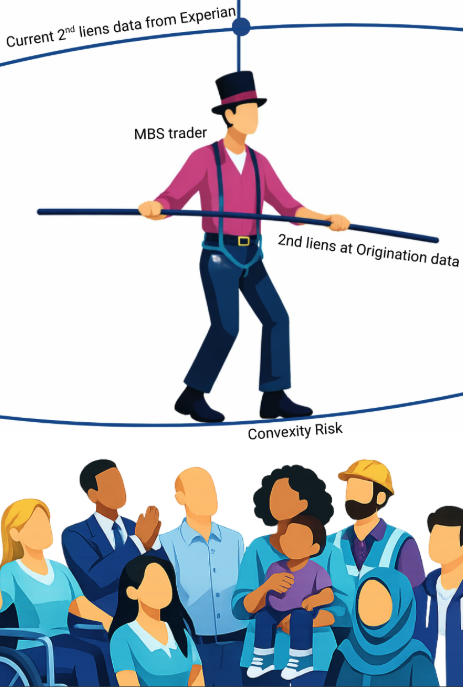
As a follow‑up to our January post on Freddie Mac’s Loan-Level Directed Collateral (LLDC) program and its use of new loan‑level data fields from Experian’s Mortgage Loan Performance (MLP) dataset, we’re highlighting another newly available field: current second lien balance. What kind of data moves markets? Before diving into the new second lien field, we’ll outline the criteria we use to determine whether a new data field has the potential to move MBS markets—and therefore warrants the time and effort required to prepare and deliver it to our institutional investor clients. These criteria will apply to all new fields discussed in future posts. Over the past decade, rapid technological innovation, combined with financial markets’ increasing focus on data and AI, has led to a steady stream of new market data and analytical products. Most of these releases don’t materially impact how MBS trade. As discussed in prior posts, two notable exceptions stand out: The introduction of pool‑level data in the 1980s enabled the rise of specified (“spec”) pools. The public release of agency MBS loan‑level data in 2013 ushered in a new era of advanced analytics and precision modeling. So, what criteria must be met for new, incremental data to change how MBS trades? We believe three requirements must be met: New: Provides information not available in existing datasets (i.e., orthogonal to currently available data). Material: Impacts a sizeable portion of the MBS universe. Significant: Differentiates collateral performance by a large enough margin to influence trading and risk management decisions. With these criteria in mind, we turn to one of several new fields from Experian’s MLP that meet all three: current second lien balance. Subsequent Second Liens: An ‘Invisible’ CPR Throttle MLP contains several fields related to open second liens, with each loan linked to both the individual borrower and the specific property. This structure allows visibility into a borrower’s full set of open second lien loans, even across multiple properties. For the illustrative exercise below, we focus on one field: the total balance on open second‑mortgage trades reported in the past three months. Does this field meet the first criteria—New? Yes, the current presence of junior liens is new information in agency MBS markets. In standard agency and Government National Mortgage Association (GNMA) disclosures, second‑lien information appears only at the time of first‑lien origination. Any subsequent second liens remain unreported, preventing accurate calculations of current combined LTV post-origination. The material blind spot: Missing junior‑lien data The absence of updated junior lien status represents a material blind spot for investors seeking to predict prepayment behavior of the associated first lien in agency MBS. Current combined LTV, inclusive of subsequently opened second liens and adjusted for home price appreciation (HPA), is one of the most important drivers of both prepayment and credit performance. Without supplementary data from MLP, information on newly originated second liens go unobserved. As a result, prepayment and credit forecasts become overly aggressive, and prepayment call protection is therefore mispriced. In addition to information regarding the junior lien loan, Experian’s MLP dataset includes a monthly refreshed AVM value for each property, ensuring an accurate current CLTV value. Having established newness, is current junior lien data material? Yes, particularly in the current environment of record-high home equity. Approximately 16% of active mortgages carry second liens, representing roughly $522 billion in outstanding balances—and growing (Source: Experian MLP dataset). In 2024 alone, second-lien originations exceeded $100 billion and continued to trend upward (Source: Experian MLP dataset). Second liens added after primary‑mortgage origination, often layered onto low‑LTV agency MBS, aren’t captured in standard GSE data. Their impact is especially pronounced in periods of moderate or negative HPA. Borrowers who take on new second liens and then experience negative HPA may be unable to refinance due to re‑subordination limits, which materially affect prepayment behavior and call protection. Investors relying on standard agency disclosure have no visibility into post‑origination junior liens. Is current junior‑lien data significant? After having established newness and materiality, is the current junior lien data significant? Yes—Figure 1 illustrates the impact of new second-lien balances on prepayments. This field is independent of other collateral characteristics available in standard GSE data, as the decision to take out a new second lien is made by the borrower after the primary mortgage has closed. As shown in Figure 1, prepayments decline materially as new second-lien balances increase. On average, if approximately 20% of mortgages carry second liens and the CPR differential for in-the-money (ITM) mortgages with and without new second liens are 10 CPR, then new second liens account for roughly 2 CPR of prepayment impact on average (10 CPR × 20%). This CPR-throttling effect is significantly more pronounced for mortgages with a current CLTV of around 80%. These loans may be effectively locked out of refinancing due to re-subordination constraints, yet they appear highly callable when evaluated using only standard GSE data, leading to materially overstated prepayment expectations. Fig 1. Prepayments S-Curve: New Second Liens Balance Source: Experian Mortgage Loan Performance Dataset, hosted on the IVolatility MBS Data-Driven Portal _____________________________________________________ Michael Pyatski advises MBS traders, portfolio managers, quants, risk managers, loan originators, and technology professionals on making informed, data-driven business decisions that drive revenue growth, enhance risk management, and reduce trading costs. With more than 15 years of experience as an Agency RMBS trader—including serving as Head of the Proprietary Trading Desk at BNP Paribas—Michael developed and successfully implemented relative-value, data-driven profitable trading strategies to capture market opportunities embedded in data but not fully priced by the market. His trading experience, combined with a Ph.D. in econometrics, led him to found the Data-Driven Portal (https://datadrivenportal.com/), a platform that provides advanced technology for MBS trading and risk management. The platform’s No-Model Data-Driven technology leverages big data, econometric analysis, and AI to help traders identify relative-value opportunities in RMBS markets and generate above-market, risk-adjusted returns. _____________________________________________________

As vehicle prices and interest rates continue to evolve, both consumers and lenders are recalibrating their approaches to affordability and long-term sustainability. This shift has resulted in the subprime segment growing to its largest share of total finance market for subprime in the fourth quarter since 2021. According to Experian’s State of the Automotive Finance Market Report: Q4 2025, subprime borrowers accounted for 15.31% of total vehicle financing, an increase from 14.54% in Q4 2024. To understand why the subprime space is evolving, we took a deeper dive into the affordability picture and how changes in pricing and interest rates are influencing both consumer decisions and lender strategies. In Q4 2025, the average loan amount for a new vehicle increased $1,882 from the prior year to $43,582, and the average interest rate for a new vehicle went from 6.34% last year to 6.37% this quarter. As a result, the average monthly payment increased from $746 to $767 in the same time frame. On the used side, the average loan amount increased $872 year-over-year, reaching $27,528 in Q4 2025. However, despite the average interest rate declining from 11.63% to 11.26% during the same time, the average monthly payment grew $9 from last year to $537 this quarter. These changes are prompting thoughtful adjustments across the automotive ecosystem. Consumers are comparing financing options more carefully and adjusting loan terms when necessary to prioritize the cost of ownership. Lenders are also focusing more on payment flexibility and how long-term borrowers are performing as they leverage it for central pillars of strategies to stay ahead of the ever-evolving market. To learn more about automotive finance trends, view the full State of the Automotive Finance Market Report: Q4 2025 presentation on demand.

The mortgage industry is adapting to a structural shift. Experian’s 2026 State of the U.S. Housing Market Report shows a market in transition. Conventional loans account for 72% of originations, FHA 17.5% and VA 10.8% with VA showing the strongest growth from 2023 to 2025. But origination mix only tells part of the story. Beneath it lies an arguably more consequential shift: borrower expectations, affordability pressures and regulatory changes are converging. On the regulatory front, the Homebuyers Privacy Protection Act (HPPA) may reduce mortgage trigger leads and limit broad competitive outreach. As competitive visibility narrows, the lender relationship becomes more central and important beyond the closing transaction. In this environment, lenders must provide value to win, and that increasingly means financial wellness. A growing trust gap Only 34% of first mortgage hard inquiries of first mortgage hard inquiries convert into funded originations, according to Experian. That means two-thirds of borrowers who initiate the process never close. External data confirms the trend as Mortgage Bankers Association reported retail mortgage pull-through rates declined to roughly 69% in early 2025 – the lowest in over a decade – and as low as 55% among depository lenders. While pull-through can be impacted by a number of factors not influenced by the lender, when borrowers abandon applications, it can be a biproduct of uncertainty – something that the lender can influence. This is where financial wellness becomes strategic and lenders can close the trust gap by providing proactive credit visibility and guidance before underwriting friction occurs. Read more in our white paper, “The New Unlock for Mortgage.” Affordability stress While rates have eased from their 2023 highs, they remain above 6%, sustaining the lock-in effect and limiting housing supply, according to Experian’s 2026 State of the U.S. Housing Market Report. Approximately 70% of homeowners are locked into sub-6% mortgages, according to Freddie Mac. Beyond mortgage rates, increases in property taxes and non-tax escrow amounts (i.e. insurance) increase affordability pressures for consumers. Financial wellness solutions that incorporate credit monitoring, budgeting insights and cashflow visibility help borrowers understand whether they are prepared. Opportunity among millennials and Gen Z Nearly 47% of U.S. renters expect to purchase a home within four years, rising to 67% within eight years, according to Experian. This signals the time to invest in financial wellness as a differentiator, and both a growth and retention driver, is now. Financial wellness as the new unlock for mortgage Financial wellness is not an ancillary service but the foundation upon which borrower confidence, long-term engagement, conversion and risk management connect. Lenders who embed solutions like credit education, score visibility, alerts, and identity protection directly into the consumer experience can differentiate themselves from the competition above and beyond rates alone. Read more in our white paper, “The New Unlock for Mortgage.” Learn more about Experian Mortgage

In May 2024, new guidelines were proposed by the Consumer Financial Protection Bureau (CFPB) that would require Buy Now, Pay Later (BNPL) providers to share consumer payment information with credit reporting agencies (CRAs). Although data reporting about BNPL activity isn’t mandated through the Fair Credit Reporting Act, issuers have begun reporting payment information to CRAs. While this proposed guidance from the CFPB focuses on BNPL activity, it signals a broader shift in how the credit landscape is evolving—particularly for lenders relying on a holistic view of consumer financial behavior. As of June 2025, the CFPB has stated it isn’t enforcing its guidance on BNPL activity and it isn’t issuing new guidance.The direction is clear: credit evaluations are moving toward a more complete picture of how people manage their everyday spending and credit obligations. This includes recognizing consistent patterns in recurring, nontraditional payments—such as BNPL installments, rent, and utilities—and ensuring these behaviors can be factored into credit-related decisioning models to afford consumers appropriate recognition of their financial handling, as well as giving credit granters a comprehensive view. BNPL reform mirrors the mortgage market’s credit overhaul BNPL activity is increasingly being evaluated using the same reporting standards as other forms of consumer credit. This shift reflects a broader transformation in how lenders assess financial behavior. Modern credit evaluations place greater emphasis on trended data that shows patterns in how consumers have used and managed credit over time. They also incorporate alternative payment history—such as rental and utility payments—creating a more complete view of a consumer’s financial habits. These approaches have demonstrated stronger predictive performance, particularly for individuals with limited traditional credit history. Overall, the direction of credit evaluation is moving toward broader data inclusion, both historical and real-time, for a more holistic, consumer‑centric assessment. Although the CFPB has delayed implementation of these models, the direction is clear. Credit scoring is moving toward broader data inclusion and more accurate, consumer-centric evaluation. Why mortgage lenders should care about BNPL rules Modern expectations for credit evaluations are shifting toward a more complete, past-and-present view of consumers’ everyday financial behaviors. This applies across lending decisions, including those made in the mortgage ecosystem. When consistent patterns—such as on‑time rent payments, responsible installment management, and steady cash‑flow habits—are visible, they can help create a clearer picture of an individual’s financial reliability. These signals are becoming increasingly important, especially as more future homebuyers have limited traditional credit histories. Consider the impact of incorporating rental payment data: More than 83% of consumers who had rental payments included in their credit files saw an improvement in their scores 15.1% of those individuals were previously unscoreable and gained a score On average, consumers saw a 3.9% score increase after rental data was added As more people use BNPL services and other nontraditional financial tools, it becomes increasingly important for mortgage lenders to evolve their evaluation inputs to reflect how consumers manage their financial lives today. How mortgage lenders can prepare With mounting regulatory and industry pressure, lenders need to move from passive observation to proactive implementation. Here’s how to begin: 1. Adopt the Experian Score Choice Bundle This solution provides both FICO 2 and VantageScore 4.0 on every mortgage transaction at no additional cost. It allows lenders to: Compare and test new models without operational disruption Maintain compliance with GSE guidelines Serve more borrowers by evaluating modern credit behaviors 2. Score cash flow with decision-grade rigor Plaid captures the data; Experian turns it into decision‑ready insight. Experian’s Cashflow Attributes and Cashflow Score provide: Decision-grade scoring built on permissioned transaction data Clear reason codes for explainability Stronger predictive lift backed by portfolio testing With a growing majority of high-volume mortgage originators now implementing digital income and employment verification tools like Experian Verify, the industry is rapidly transitioning toward automated, real-time lending. As Experian positions it: “Plaid collects the signal. Experian makes it decision-ready.” 3. Align with market and regulatory trends The FHFA’s shift to VantageScore 4.0 and FICO 10T, along with the emergence of cash flow payloads, signals that credit reporting is entering a new phase. Lenders proactively modernizing their credit strategies will be positioned to: Expand access to credit for millions of underserved but creditworthy consumers Reduce risk through more complete borrower insights Stay ahead of compliance and investor expectations With over 53% of high-volume mortgage originators already using Experian Verify, the industry is beginning to embrace this transformation. Broader adoption of inclusive scoring and permissioned data remains a critical next step. Final thought The CFPB’s action on BNPL, while not enforced at the moment, is not an isolated event—it is a preview of the future. The mortgage industry must prepare now for a world where rent, cash flow, and alternative financial behavior shape the foundation of credit scoring. Lenders who act early will not only meet regulatory expectations but will gain a strategic advantage in serving tomorrow’s homebuyers. Experian is ready to support this shift with data, tools, and scoring models built for the next era of mortgage lending. Start testing modern credit scoring strategies now—and let Experian show you the lift on your borrower population.

As the U.S. rental housing market moves through 2026, renters, landlords, and property management companies face an increasingly complex operating environment. Elevated housing costs, economic uncertainty, slowing construction activity, and a rapidly evolving fraud landscape are converging to reshape both risk and opportunity across the rental ecosystem. At the same time, advances in data, analytics, and verification technologies are equipping housing professionals with new tools to adapt — shifting decision‑making from reactive to proactive at a moment when precision matters most. Mortgage rates continue to constrain housing mobility One of the most significant structural forces supporting rental demand remains the cost of homeownership. In early 2025, the average 30‑year fixed mortgage rate hovered near 7%, with Freddie Mac’s weekly survey reporting a rate of 7.04% for the week of January 16, 2025. The report also showed the year beginning near 7% before ending at 6.15% (Freddie Mac, 2025a, 2025b). This environment has created a pronounced lock‑in effect: homeowners with pandemic‑era low fixed mortgage rates are reluctant to sell, limiting for‑sale inventory and suppressing turnover (Federal Housing Finance Agency [FHFA], 2024; Bankrate, 2025). For renters, this results in longer tenures and fewer pathways to homeownership. For landlords and lenders, it reinforces expectations that rental demand will remain elevated well into 2026, even if mortgage rates ease modestly. Rental housing supply faces structural constraints Despite strong rental demand, rental housing supply growth remains uneven. Multifamily development has slowed as financing costs and construction expenses have risen. Industry data indicate that multifamily units under construction fell roughly 20% year over year by early 2025, while completions have outpaced new starts—approximately 1.5 apartments completed for every one that begins construction on a three‑month moving‑average basis (Nanayakkara Skillington, 2025). Forecasts from Yardi Matrix pointed to elevated completions in 2025, followed by a notable slowdown in 2026, with starts continuing to slump (Dale, 2025). Absent a meaningful acceleration in new construction, these dynamics are likely to sustain pressure on rents and intensify affordability challenges, particularly in high‑growth and high‑migration markets (Joint Center for Housing Studies, 2025). Fraud risk is escalating in a digital-first rental market As rental transactions increasingly move online, fraud has become a fast‑growing operational risk for property managers and owners. The Federal Trade Commission’s Consumer Sentinel data show sustained reports of identity theft and imposter scams (Federal Trade Commission [FTC], 2024), while industry surveys identify account takeover, payment fraud, and synthetic identities as some of the most frequently encountered issues (Experian, 2023). From 2024 to 2025, housing and real estate professionals reported rising exposure to AI‑enabled schemes—including deepfake voices, manipulated documents, and increasingly sophisticated application fraud (Housing Wire, 2025; Veriff, 2025; First American, 2025). As digital leasing accelerates, robust identity verification and fraud prevention have become core components of sustainable portfolio management. FTC Consumer Sentinel data continue to highlight persistent patterns of identity theft and imposter scams (FTC, 2024), and industry research consistently shows that account takeover, payment fraud, and synthetic identities remain significant operational threats (Experian, 2023). Between 2024 and 2025, housing professionals noted a growing prevalence of AI‑enabled fraud techniques, such as deepfake audio, falsified documents, and advanced application manipulation (HousingWire, 2025; Veriff, 2025; First American, 2025). Data and analytics are becoming the defining advantage Access to high‑quality data and real‑time insights is increasingly decisive. Data‑driven solutions enable rental housing professionals to move beyond static screening and manual processes, supporting continuous risk assessment and smarter decision‑making. These capabilities allow housing providers to evaluate applicants and portfolios with greater accuracy, reduce operational friction, and respond more proactively to emerging risks—making data and analytics a defining advantage across the rental housing ecosystem. Rent reporting as a credit building and risk signal building and risk signal Rental payment history has emerged as a valuable indicator of consumer financial behavior. Surveys and evaluations show strong renter interest in having on‑time rent payments included in credit scores, and many participants experience measurable benefits. For example, Fannie Mae reports that more than 80% of renters want rent payments factored into credit scoring models (Fannie Mae, n.d.). Randomized trials also demonstrate increased credit visibility and movement into near‑prime tiers for previously unscorable consumers (Theodos, Teles, & Leiberman, 2025; Credit Builders Alliance, 2025). For property managers and owners, this creates a dual benefit: renters gain meaningful credit‑building opportunities, while housing providers gain a deeper, more reliable signal of payment behavior beyond traditional credit files. Smarter screening and verification Income and employment verification remain among the most critical—and historically inefficient—steps in the rental lifecycle. Digital verification tools that leverage payroll and employment databases, along with consent‑based bank data, significantly reduce friction, deliver faster decisions, and help mitigate fraud by validating applicant information at the source (Truework, 2024; MeasureOne, n.d.; U.S. Government Accountability Office [GAO], 2025). As application volumes rise, automated verification is becoming a baseline requirement rather than a competitive differentiator. These tools enhance accuracy, streamline workflows, and strengthen fraud prevention—capabilities that are increasingly essential as application tactics grow more advanced. What to watch as the market moves into 2026 Looking ahead, three trends are likely to shape the rental housing market over the next 12 to 18 months: Sustained rental demand amid elevated mortgage rates and constrained for‑sale inventory, as higher borrowing costs continue to limit mobility and suppress housing turnover (Freddie Mac, 2025a; Federal Housing Finance Agency [FHFA], 2024). Widening affordability gaps, with rent‑to‑income pressures intensifying—particularly in high‑cost and high‑growth regions (Joint Center for Housing Studies, 2025). Data‑driven decision‑making is becoming standard across screening, pricing, fraud prevention, and portfolio monitoring, reflecting broader industry adoption of automated tools and analytics (U.S. Government Accountability Office [GAO], 2025; Snappt, 2025). Final perspective The U.S. rental housing market in 2026 is defined by both complexity and opportunity. Success will depend on the ability to adapt quickly, manage risk proactively, and deploy data‑driven solutions with precision. For renters, tools such as rent reporting offer pathways to greater financial stability and transparency. Ultimately, this moment is about resilience, readiness, and the systems that will shape rental housing outcomes well into the next cycle. Organizations that invest now in smarter data, stronger controls, and forward‑looking strategies will be best positioned to navigate what comes next—for themselves and for the broader rental housing ecosystem.

Utilities are managing elevated arrears, expanding digital service channels and shifting grid demand patterns at the same time. These developments are appearing at key points, including service starts, billing and collections. Energy and utilities industry trends for 2026 reflect how these dynamics are surfacing across the customer lifecycle and influencing broader planning decisions. Energy and utilities trends shaping the industry The state of energy and utilities 2026 reflects a sector adapting to financial exposure, fraud risk and demand variability across both regulated and deregulated markets. Rising arrearagesArrearage levels across the utilities sector are estimated at approximately $23 billion. Economic uncertainty may be contributing to a rise in arrearages, often reflected in delayed payments, extended repayment plans or variability in monthly collections. Digital expansion introduces new risk considerationsAs utilities expand digital service channels and self-service tools, identity-based fraud risk may appear during digital service starts and account changes, particularly as more interactions shift online. Fraud behaviors are becoming more sophisticatedMore complex fraud patterns, including synthetic identities, name game fraud and prior bad debt, may span multiple points of the customer journey, making risk more difficult to detect. Grid demand uncertaintyIn certain regions, data center expansion may influence load forecasting and long-term infrastructure planning timelines. Data centers consumed approximately 4.4% of U.S. electricity in 2023 and are projected to account for between 6.7% and 12% by 2028, reflecting the potential scale of demand shifts utilities may be evaluating. What these trends signal for utility planning Together, these energy and utilities industry trends 2026 highlight where risk could first emerge. When risk indicators appear during service start, screening before service starts may help reduce downstream exposure rather than relying only on collections-based controls. As more interactions shift online, identity risk may be harder to identify without stronger verification. When fraud spans from service start through collections, visibility across systems becomes more important. As grid demand grows, planning for reliability may require adjustments to how forecasting and infrastructure decisions are informed. Enabling data-driven utility decisions To navigate these energy sector trends, utilities may benefit from a more connected view of identity, risk and customer behavior. Experian supports providers with data-driven energy and utilities solutions designed to help reduce losses, strengthen customer trust and support utility fraud prevention across the customer lifecycle. For a closer look at how these themes are unfolding across the sector, explore our 2026 State of Energy and Utilities Report, which examines each trend in greater depth through data-driven insights and industry examples. Read our first-ever State of Energy and Utilities Report examining the forces shaping the industry this year. Download now

Across agencies, decisions about digital services, staffing and oversight are often tied together. Public sector trends for 2026 reflect how these considerations are shaping modernization efforts and citizen trust today. At the federal, state and local levels, the public sector outlook 2026 highlights how modernization, program integrity, workforce resilience and citizen trust influence how services are delivered and how resources are prioritized. Four trends shaping the public sector in 2026 Agencies are navigating a set of trends that are influencing both strategic planning and day-to-day execution. Fiscal pressure and program integrityBudget volatility and increased scrutiny may elevate the importance of payment accuracy and operational consistency, particularly as eligibility rules evolve and caseloads remain high. This can surface in areas such as eligibility verifications, benefits recertifications or grant administration, where data inconsistencies may have a broader operational impact. Modernization and technology accelerationAs agencies continue public sector modernization, digital access may expand faster than existing controls can keep pace. This is often most visible in online applications, self-service portals and account management tools, where verification processes may not evolve at the same pace as access. Fraud losses across the U.S. have been estimated at approximately $160 billion, highlighting the extent of identity and payment risks present in digital environments. Decisions about identity assurance and fraud prevention can influence how agencies scale online services. Workforce resilienceStaffing constraints and skill gaps may affect processing timelines, oversight capacity and institutional knowledge, potentially contributing to longer review cycles or greater reliance on manual quality checks. Workforce data shows roughly 200,000 federal positions were reduced in the past year, which may influence how agencies approach automation and oversight. Automation and government data analytics can play a more central role in supporting consistency across programs. Citizen trust and digital experienceAs more interactions move online, citizen trust may be influenced by both security and usability. Public sector fraud prevention approaches that apply friction only when risk indicators are present can help agencies maintain accessibility while managing exposure. What these signal for agencies Together, these trends point to a shift in how agencies evaluate risk and prioritize investment. Choices about modernization, staffing and oversight may increasingly shape one another. Approaches that strengthen government program integrity, improve visibility across digital interactions and support informed decision-making may help agencies sustain service levels while managing evolving risk. For a closer look at how these trends are unfolding across agencies, explore our 2026 Public Sector Trends and Impact Report, which delves into each theme in greater depth through data-driven insights and real-world agency use cases. Read our first-annual 2026 Public Sector Trends & Impact Report to understand the forces reshaping agency operations and trust. Download now

Experian Verify is redefining how lenders streamline income and employment verification; a value clearly reflected in Marcus Bontrager’s experience at Freedom Mortgage. With access to the second-largest instant payroll network in the U.S., Experian Verify connects lenders to millions of unique employer records, including those sourced through Experian Employer Services clients, delivering instant results at scale. This reach enables lenders to reduce manual processes, accelerate loan decisions, and enhance the borrower experience from the very first touchpoint. Unlike traditional verification providers, Experian Verify offers transparent, value-driven pricing: it charges only when a consumer is successfully verified, not simply when an employer record is found. As lenders navigate increasing compliance requirements and secondary market expectations, they can also rely on Experian Verify’s FCRA-compliant framework, fully supporting both Fannie Mae and Freddie Mac. Combined with Experian’s industry-leading data governance and quality standards, lenders gain a verification partner they can trust for accuracy, security, and long-term operational efficiency. Perhaps most importantly, Experian Verify delivers 100% U.S. workforce coverage through its flexible, automated waterfall: instant verification, consumer-permissioned verification, and research verification. This multilayered approach ensures lenders meet every borrower where they are, whether they’re connected to a large payroll provider, a smaller employer, or require additional document-based validation. As Marcus highlights in the video, this comprehensive and configurable design empowers lenders to build verification workflows that truly fit their business needs while enhancing speed, completeness, and borrower satisfaction. Explore Experian Verify

Fraud is evolving faster than ever, driven by digitalization, real-time payments and increasingly sophisticated scams. For Warren Jones and his team at Santander Bank, staying ahead requires more than tools. It requires the right partner. The partnership with Santander Bank began nearly a decade ago, during a period of rapid change in the fraud and banking landscape. Since then, the relationship has grown into a long-term collaboration focused on continuous improvement and innovation. Experian products helped Santander address one of its most pressing operational challenges: a high-volume manual review queue for new account applications. While the vast majority of alerts in the queue were fraudulent and ultimately declined, a small percentage represented legitimate customers whose account openings were delayed. This created inefficiencies for staff and a poor first impression of genuine applicants. We worked alongside Santander to tackle this challenge head-on, transforming how applications were reviewed, how fraud was detected and how legitimate customers were approved. In addition to fraud prevention, implementing Experian's Ascend PlatformTM, with its intuitive user experience and robust data environment, has unlocked additional value across the organization. The platform supports multiple use cases, enabling collaboration between fraud and marketing teams to align strategies based on actionable insights. Learn more about our Ascend Platform

Mortgage rates remain elevated by historical standards: the average 30-year fixed rate ended 2025 at 6.15% (Freddie Mac’s PMMS), after spending much of the year closer to 7% (52-week high ≈ 7.04%) (Freddie Mac, 2025; Mortgage News Daily, 2025). At the same time, the Federal Reserve’s December 2025 Summary of Economic Projections signaled a modest easing path into 2026 (median fed funds projection 3.4% at end-2026), reinforcing expectations of lower borrowing costs ahead rather than an immediate return to pre-2022 conditions (Federal Reserve, 2025). Affordability pressures persist and vary widely by metro and region: rent-to-income ratios in many Midwestern markets are below 30%, while parts of the Northeast (e.g., New York City) exceed 50% of income for a typical renter household (Moody’s Analytics, 2023; 2025). Given this fragmentation, national averages no longer provide sufficient guidance. Lenders need a data-driven playbook that translates insight into action across the lending lifecycle. Pillar 1: Borrower insights Today’s renter profile skews younger: Gen Z already accounts for ~30.5% of renters and, together with younger millennials (under 35), represents over half of the rental population (Experian, 2025). Zillow’s Consumer Housing Trends Report similarly shows Gen Z makes up 25% of all renters and 47% of recent movers—evidence that the next cohort of first-time buyers is emerging from today’s rental pool (Zillow Research, 2024). Traditional credit files can miss reliable payment behavior. Both Fannie Mae and Freddie Mac now consider positive rent payment history in automated underwriting—using bank or payroll-verified data to augment limited credit histories—improving access for qualified renters (Fannie Mae, 2025; Freddie Mac, 2025). Data-driven edge: Broader borrower views—incorporating verified rent payments, student loan performance, and alternative credit signals—help identify “hidden prime” consumers and responsibly expand the addressable market. Pillar 2: Operational efficiency Margin pressure is persistent, and manual income/employment verification remains a top pain point: manual methods can take 30 minutes to several days, raise costs, and increase drop-offs (MeridianLink, 2025). Modern VOE/VOI solutions—e.g., Mastercard Open Finance (Finicity/Argyle), Truework—deliver GSE-accepted digital verifications that reduce friction, lower per-loan costs, and provide rep/warranty relief when validations succeed ( Mastercard; Business Wire/Morningstar). Data-driven edge: Verification and documentation automation enables speed, consistency, and scalability without proportional staffing or risk increases. Pillar 3: Geographic precision Affordability is deeply local. The national rent-to-income ratio has recently eased back toward ~27–30%, but disparities persist: several Midwest markets track below 30%, while New York City reaches ~67% and Miami exceeds 40% (Moody’s Analytics, 2023; 2025). Recent rent reports also show metros like Miami ranking as least affordable and others (e.g., Austin) more affordable for typical renter incomes, underscoring the need for metro-level targeting (Realtor.com, 2025). Data-driven edge: Market-level data—local affordability, migration, inventory, and labor trends—helps focus growth where demand is most likely to convert and perform over time. Pillar 4: Refinance readiness Refinance activity is muted but not gone. With rates dipping from 2025 highs, millions are positioned to benefit: as of Nov. 2025, about 4.1 million mortgage holders were “in the money” (≥ 75 bps savings), including 1.7 million highly qualified candidates; the cohort could grow toward ~5 million with small additional rate declines (ICE Mortgage Technology, 2025). Homeowners also held $11.2 trillion in tappable equity entering Q4 2025, supporting additional refinance and home-equity lending opportunities (ICE Mortgage Technology, 2025). Data-driven edge: Segment portfolios by rate sensitivity, pre-model operational capacity, and streamline digital processes to capture volume quickly while preserving experience. Bringing it together These four pillars—borrower insights, operational efficiency, geographic precision, and refinance readiness—form a unified framework for outperforming peers in today’s housing market. Lenders that operationalize this approach will be better positioned to: • Serve more borrowers responsibly by leveraging verified rent and payroll data to expand access (Fannie Mae; Freddie Mac). • Manage risk with greater precision through automated verifications and underwriting validations (Mastercard). • Build sustainable regional strength by deploying resources in metros where affordability and demand align (Moody’s; Realtor.com). • Capture refinance demand at scale as candidates and tappable equity expand when rates ease (ICE Mortgage Technology). The housing market is shifting—not back to what it was, but toward something more fragmented and data-dependent. Lenders who build strategy on insight rather than instinct will define the next generation of market leaders. References Experian. (2025, January 10). The shifting demographics of today’s renters. https://www.experian.com/blogs/insights/the-shifting-demographics-of-todays-renters/ Federal Reserve Board. (2025, December 10). Summary of Economic Projections (Table PDF). https://www.federalreserve.gov/monetarypolicy/files/fomcprojtabl20251210.pdf Freddie Mac. (2025, December 31). Primary Mortgage Market Survey® (PMMS®) weekly data. FRED series MORTGAGE30US. https://fred.stlouisfed.org/series/MORTGAGE30US/ Fannie Mae. (2025, January). FAQs: Positive rent payment history in Desktop Underwriter. https://singlefamily.fanniemae.com/originating-underwriting/faqs-positive-rent-payment-history-desktop-underwriter ICE Mortgage Technology. (2025, November 10). November 2025 Mortgage Monitor (press release & report). https://mortgagetech.ice.com/resources/data-reports/november-2025-mortgage-monitor Mastercard. (2024, June 25; updated September 23, 2024). How data-enabled income and employment verifications deliver smarter, seamless financial experiences. https://www.mastercard.com/us/en/news-and-trends/Insights/2024/data-enabled-income-and-employment-verifications-deliver-smarter,-seamless-financial-experiences.html MeridianLink. (2025, April 8). Instant verification: Rethinking income and employment tools. https://www.meridianlink.com/blog/its-time-to-take-a-new-look-at-income-and-employment-verification-tools/ Moody’s Analytics. (2023, November 27). 30% of income on rent remains the norm in U.S. metros (Data story). https://www.moodys.com/web/en/us/insights/data-stories/q3-2023-us-rental-housing-affordability.html Moody’s CRE. (2025, March 11). Q4 2024 housing affordability update. https://www.moodyscre.com/insights/cre-trends/q4-2024-housing-affordability-update/ Mortgage News Daily. (2026, January 2). Freddie Mac mortgage rates—weekly survey (historic table). https://www.mortgagenewsdaily.com/mortgage-rates/freddie-mac Realtor.com Economics. (2025, October 14). September 2025 rental report: Rental affordability improved compared to a year ago. https://www.realtor.com/research/september-2025-rent/ Zillow Research. (2024, October 14). Renters: Results from the Zillow Consumer Housing Trends Report 2024. https://www.zillow.com/research/renters-housing-trends-report-2024-34387/

For lenders, the job has never been more complex. You’re expected to protect portfolio performance, meet regulatory expectations, and support growth, all while fraud tactics evolve faster than many traditional risk frameworks were designed to handle. One of the biggest challenges of the job? The line between credit loss and fraud loss is increasingly blurred, and misclassified losses can quietly distort portfolio performance. First-party fraud can look like standard credit risk on the surface and synthetic identity fraud can be difficult to identify, allowing both to quietly slip through decisioning models and distort portfolio performance. That’s where fraud risk scores come into play. Used correctly, they don’t replace credit models; they strengthen them. And for credit risk teams under pressure to approve more genuine customers without absorbing unnecessary losses, understanding how fraud risk scores fit into modern decisioning has become essential. What is a fraud risk score (and what isn’t it) At its core, a fraud risk score is designed to assess the likelihood that an applicant or account is associated with fraudulent behavior, not simply whether they can repay credit. That distinction matters. Traditional credit scores evaluate ability to repay based on historical financial behavior. Fraud risk scores focus on intent and risk signals, patterns that suggest an individual may never intend to repay, may be manipulating identity data, or may be building toward coordinated abuse. Fraud risk scores are not: A replacement for credit scoring A blunt tool designed to decline more applicants A one-time checkpoint limited to account opening Instead, they provide an additional lens that helps credit risk teams separate true credit risk from fraud that merely looks like credit loss. How fraud scores augment decisioning Credit models were never built to detect fraud masquerading as legitimate borrowing behavior. Consider common fraud scenarios facing lenders today: First-payment default, where an applicant appears creditworthy but never intends to make an initial payment Bust-out fraud, where an individual builds a strong credit profile over time, then rapidly maxes out available credit before disappearing Synthetic identity fraud, where criminals blend real and fabricated data to create identities that mature slowly and evade traditional checks In all three cases, the applicant may meet credit criteria at the point of decision. Losses can get classified as charge-offs rather than fraud, masking the real source of portfolio degradation. When credit risk teams rely solely on traditional models, the result is often an overly conservative response: tighter credit standards, fewer approvals, and missed growth opportunities. How fraud risk scores complement traditional credit decisioning Fraud risk scores work best when they augment credit decisioning. For credit risk officers, the value lies in precision. Fraud risk scores help identify applicants or accounts where behavior, velocity or identity signals indicate elevated fraud risk — even when credit attributes appear acceptable. When integrated into decisioning strategies, fraud risk scores can: Improve confidence in approvals by isolating high-risk intent early Enable adverse-actionable decisions for first-party fraud, supporting compliance requirements Reduce misclassified credit losses by clearly identifying fraud-driven outcomes Support differentiated treatment strategies rather than blanket declines The goal isn’t to approve fewer customers. It’s to approve the right customers and to decline or treat risk where intent doesn’t align with genuine borrowing behavior. Fraud risk across the credit lifecycle One of the most important shifts for credit risk teams is recognizing that fraud risk is not static. Fraud risk scores can deliver value at multiple stages of the credit lifecycle: Marketing and prescreen: Fraud risk insights help suppress high-risk identities before offers are extended, ensuring marketing dollars are maximized by targeting low risk consumers. Account opening and originations: Real-time fraud risk scoring supports early detection of first-party fraud, synthetic identities, and identity misuse — before losses are booked. Prequalification and instant decisioning: Fraud risk scores can be used to exclude high-risk applicants from offers while maintaining speed and customer experience. Account management and portfolio review: Fraud risk doesn’t end after onboarding. Scores applied in batch or review processes help identify accounts trending toward bust-out behavior or coordinated abuse, informing credit line management and treatment strategies. This lifecycle approach reflects a broader shift: fraud prevention is no longer confined to front-end controls — it’s a continuous risk discipline. What credit risk officers should look for in a fraud risk score Not all fraud risk scores are created equal. When evaluating or deploying them, credit risk officers should prioritize: Lifecycle availability, so fraud risk can be assessed beyond originations Clear distinction between intent and ability to repay, especially for first-party fraud Adverse-action readiness, including explainability and reason codes Regulatory alignment, supporting fair lending and compliance requirements Seamless integration alongside existing credit and decisioning frameworks Increasingly, credit risk teams also value platforms that reduce operational complexity by enabling fraud and credit risk assessment through unified workflows rather than fragmented point solutions. A more strategic approach to fraud and credit risk The most effective credit risk strategies today are not more conservative, they’re more precise. Fraud risk scores give credit risk officers the ability to stop fraud earlier, classify losses accurately and protect portfolio performance without tightening credit across the board. When fraud and credit insights work together, teams can gain a clearer view of risk, stronger decision confidence and more flexibility to support growth. As fraud tactics continue to evolve, the organizations that succeed will be those that can effectively separate fraud from credit loss. Fraud risk scores are no longer a nice-to-have. They’re a foundational tool for modern credit risk strategies. How credit risk teams can operationalize fraud risk scores For credit risk officers, the challenge isn’t just understanding fraud risk, it’s operationalizing it across the credit lifecycle without adding friction, complexity or compliance risk. Rather than treating fraud as a point-in-time decision, credit risk teams should assess fraud risk where it matters most, from acquisition through portfolio management. Fraud risk scores are designed to complement credit decisioning by focusing on intent to repay, helping teams distinguish fraud-driven behavior from traditional credit risk. Key ways Experian supports credit risk teams include: Lifecycle coverage: Experian award-winning fraud risk scores are available across marketing, originations, prequalification, instant decisioning and ongoing account review. This allows organizations to apply consistent fraud strategies beyond account opening. First-party and synthetic identity fraud intelligence: Experian’s fraud risk scoring addresses first-payment default, bust-out behavior and synthetic identity fraud, which are scenarios that often bypass traditional credit models because they initially appear creditworthy. Converged fraud and credit decisioning: By delivering fraud and credit insights together, often through a single integration, Experian can help reduce operational complexity. Credit risk teams can assess fraud and credit risk simultaneously rather than managing disconnected tools and workflows. Precision over conservatism: The emphasis is not on declining more applicants, but on approving more genuine customers by isolating high-risk intent earlier. This precision helps protect portfolio performance without sacrificing growth. For lenders navigating increasing fraud pressure, Experian’s approach reflects a broader shift in the industry: fraud prevention and credit risk management are no longer separate disciplines; they are most effective when aligned. Explore our fraud solutions Contact us

For many banks, first-party fraud has become a silent drain on profitability. On paper, it often looks like classic credit risk: an account books, goes delinquent, and ultimately charges off. But a growing share of those early charge-offs is driven by something else entirely: customers who never intended to pay you back. That distinction matters. When first-party fraud is misclassified as credit risk, banks risk overstating credit loss, understating fraud exposure, and missing opportunities to intervene earlier. In our recent Consumer Banker Association (CBA) partner webinar, “Fraud or Financial Distress? How to Differentiate Fraud and Credit Risk Early,” Experian shared new data and analytics to help fraud, risk and collections leaders see this problem more clearly. This post summarizes key themes from the webinar and points you to the full report and on-demand webinar for deeper insight. Why first-party fraud is a growing issue for banks Banks are seeing rising early losses, especially in digital channels. But those losses do not always behave like traditional credit deterioration. Several trends are contributing: More accounts opened and funded digitally Increased use of synthetic or manipulated identities Economic pressure on consumers and small businesses More sophisticated misuse of legitimate credentials When these patterns are lumped into credit risk, banks can experience: Inflation of credit loss estimates and reserves Underinvestment in fraud controls and analytics Blurred visibility into what is truly driving performance Treating first-party fraud as a distinct problem is the first step toward solving it. First-payment default: a clearer view of intent Traditional credit models are designed to answer, “Can this customer pay?” and “How likely are they to roll into delinquency over time?” They are not designed to answer, “Did this customer ever intend to pay?” To help banks get closer to that question, Experian uses first-payment default (FPD) as a key indicator. At a high level, FPD focuses on accounts that become seriously delinquent early in their lifecycle and do not meaningfully recover. The principle is straightforward: A legitimate borrower under stress is more likely to miss payments later, with periods of cure and relapse. A first-party fraudster is more likely to default quickly and never get back on track. By focusing on FPD patterns, banks can start to separate cases that look like genuine financial distress from those that are more consistent with deceptive intent. The full report explains how FPD is defined, how it varies by product, and how it can be used to sharpen bank fraud and credit strategies. Beyond FPD: building a richer fraud signal FPD alone is not enough to classify first-party fraud. In practice, leading banks are layering FPD with behavioral, application and identity indicators to build a more reliable picture. At a conceptual level, these indicators can include: Early delinquency and straight-roll behavior Utilization and credit mix that do not align with stated profile Unusual income, employment, or application characteristics High-risk channels, devices, or locations at application Patterns of disputes or behaviors that suggest abuse The power comes from how these signals interact, not from any one data point. The report and webinar walk through how these indicators can be combined into fraud analytics and how they perform across key banking products. Why it matters across fraud, credit and collections Getting first-party fraud right is not just about fraud loss. It impacts multiple parts of the bank. Fraud strategy Well-defined quantification of first-party fraud helps fraud leaders make the case for investments in identity verification, device intelligence, and other early lifecycle controls, especially in digital account opening and digital lending. Credit risk and capital planning When fraud and credit losses are blended, credit models and reserves can be distorted. Separating first-party fraud provides risk teams a cleaner view of true credit performance and supports better capital planning. Collections and customer treatment Customers in genuine financial distress need different treatment paths than those who never intended to pay. Better segmentation supports more appropriate outreach, hardship programs, and collections strategies, while reserving firmer actions for abuse. Executive and board reporting Leadership teams increasingly want to understand what portion of loss is being driven by fraud versus credit. Credible data improves discussions around risk appetite and return on capital. What leading banks are doing differently In our work with financial institutions, several common practices have emerged among banks that are getting ahead of first-party fraud: 1. Defining first-party fraud explicitly They establish clear definitions and tracking for first-party fraud across key products instead of leaving it buried in credit loss categories. 2. Embedding FPD segmentation into analytics They use FPD-based views in their monitoring and reporting, particularly in the first 6–12 months on book, to better understand early loss behavior. 3. Unifying fraud and credit decisioning Rather than separate strategies that may conflict, they adopt a more unified decisioning framework that considers both fraud and credit risk when approving accounts, setting limits and managing exposure. 4. Leveraging identity and device data They bring in noncredit data — identity risk, device intelligence, application behavior — to complement traditional credit information and strengthen models. 5. Benchmarking performance against peers They use external benchmarks for first-party fraud loss rates and incident sizes to calibrate their risk posture and investment decisions. The post is meant as a high-level overview. The real value for your teams will be in the detailed benchmarks, charts and examples in the full report and the discussion in the webinar. If your teams are asking whether rising early losses are driven by fraud or financial distress, this is the moment to look deeper at first-party fraud. Download the report: “First-party fraud: The most common culprit” Explore detailed benchmarks for first-party fraud across banking products, see how first-payment default and other indicators are defined and applied, and review examples you can bring into your own internal discussions. Download the report Watch the on-demand CBA webinar: “Fraud or Financial Distress? How to Differentiate Fraud and Credit Risk Early” Hear Experian experts walk through real bank scenarios, FPD analytics and practical steps for integrating first-party fraud intelligence into your fraud, credit, and collections strategies. Watch the webinar First-party fraud is likely already embedded in your early credit losses. With the right analytics and definitions, banks can uncover the true drivers, reduce hidden fraud exposure, and better support customers facing genuine financial hardship.

Financial security has become one of the most pressing concerns in today’s workforce. Rising living costs, higher debt, market volatility and an ever-growing threat of identity theft are putting pressure on employees across every income level. For employers, this shift presents both a challenge and an opportunity: how to meaningfully support employees’ financial well-being in a way that drives engagement, loyalty and long-term success. The reality is clear. Traditional benefits alone are no longer enough. While a steady paycheck, insurance coverage, and retirement plans remain essential, employees increasingly expect their employers to play a more active role in helping them manage day-to-day finances, build credit confidence and protect their identities. When financial stress goes unaddressed, it impacts productivity, mental health and retention, and employers feel the effects just as strongly as their people do. Why fragmented benefits fall short Many organizations offer pieces of financial protection, but those offerings are often disconnected. Identity protection may stop at basic monitoring and alerts. Credit education is frequently limited to static resources that don’t reflect real-life financial behavior. Financial wellness tools, when available, are often treated as optional perks rather than foundational benefits. The problem isn’t a lack of tools; it’s a lack of connection. Employees don’t need more standalone solutions; they need integrated support that meets them where they are and evolves with their financial lives. The rise of all-in-one financial protection Forward-thinking employers are redefining their benefits strategies by adopting a holistic approach to financial well-being. The new standard combines three essential pillars into a single, cohesive experience: Credit education helps employees understand their credit profiles, build healthier habits and make informed financial decisions that unlock better opportunities. Financial wellness tools provide personalized guidance for budgeting, saving, managing debt and planning for the future, reducing stress and improving confidence along the way. Identity protection safeguards employees against fraud and cyber threats with proactive monitoring, alerts and hands-on recovery support when it matters most. When these elements work together, employees are better equipped to protect their paychecks, secure their identities and plan for long-term stability. The result is a workforce that feels supported, empowered and engaged. Turning financial well-being into a strategic advantage At Experian®, we believe financial well-being should be a strategic advantage, not an afterthought. Our all-in-one employee benefits solutions are designed to deliver measurable impact, from improved credit outcomes and reduced financial stress to stronger engagement and retention. By partnering with us, employers can offer a seamless, scalable and trusted experience that supports employees through every stage of their financial journey, while reinforcing their commitment to employee well-being. Download the full report Want to learn more about how credit education, financial wellness and identity protection come together to create a stronger benefits strategy? Download our report to explore the data, insights and strategies shaping the future of employee financial benefits and how your organization can lead the way. Download now