Tag: EVs

From the vehicles we drive to the way we purchase them, everything in the automotive industry is evolving as new technologies, shifting incentives, and changing consumer expectations continue to develop. As electrified vehicles continue to grow their presence on the road, Experian’s Automotive Market Trends Report: Q3 2025 took a deep dive into this segment and found that 5.5 million electric vehicles (EVs) and 11.7 million hybrids were in operation this quarter. Furthermore, data through the third quarter of this year found that 73.8% of EV owners returning to market replaced their EV with another EV and only 16.5% switched to a gas-powered vehicle. The significant EV loyalty among consumers signals that the ownership experience is delivering on core expectations. While some owners continued to opt for an EV because they’ve grown accustomed to certain conveniences such as charging stations at home or workplace to avoid traditional fueling and the perks of lower maintenance needs, others took advantage of the EV tax credits before they expired at the end of September. However, as these motivations shift, it will be important to monitor how the EV market unfolds over the next six months. Notably, 11.7% of gas-powered vehicle owners replaced their vehicle with a gas-hybrid vehicle this quarter, suggesting that hybrids are acting as an effective bridge toward deeper electrification. In fact, drivers may see hybrids as the ‘happy medium’ vehicle that offers improved fuel efficiency without requiring full reliance on charging infrastructure. Why this matters for the aftermarket As the majority of consumers replace their EVs with another one and some switch their gas-powered vehicle for an electrified one, these trends signal potential long-term commitment to alternative fuel segments. This is important to monitor for aftermarket professionals as the EV service volume continues to grow, requiring different parts and technician training. With consumers increasingly turning to the aftermarket for cost-effective support, professionals who adapt to diverse powertrains will be best positioned to navigate this evolving wave of post-warranty demand. To learn more about EVs and other vehicle market trends, view the full Automotive Market Trends Report: Q3 2025 presentation on demand.
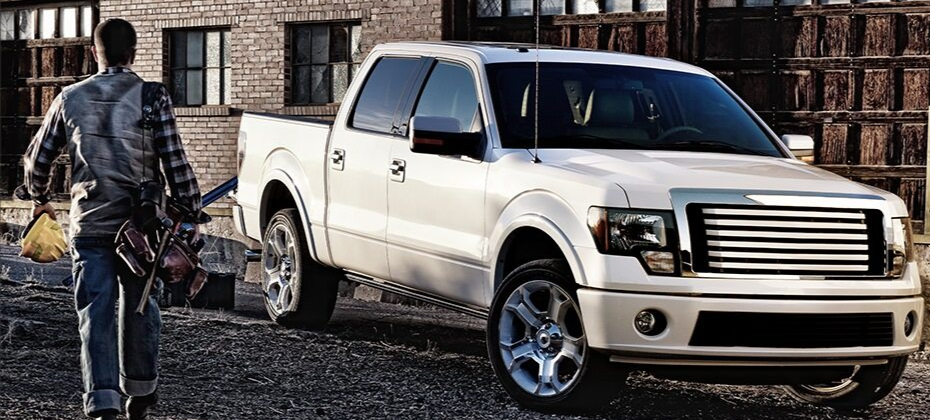
The pickup truck market is shifting gears, and hybrids are emerging as a driving force behind the change. As more drivers prioritize fuel efficiency while still expecting towing power, hybrid models are stepping in to redefine the segment. According to Experian’s Automotive Consumer Trends Report: Q3 2025, gas-hybrid and plug-in hybrid pickup trucks accounted for nearly one-in-five new light-duty trucks sold, coming in at 17.8% this quarter. This signals a major shift in a historically ICE-dominated category. Hybrids are likely gaining traction because they offer the best of both worlds. While their systems provide fuel efficiency by combining gas or diesel engines with electric motors to avoid range anxiety, they’re also meeting most towing and hauling requirements that accompany the traditional gas-powered trucks. Overall pickup truck market trends fueling hybrid growth When looking at the market from a broader perspective, there were 55.3 million light-duty trucks on U.S. roads in the third quarter of 2025, representing 20.10% of all vehicles in operation. Furthermore, as of Q3 2025, 34% of U.S. households with one-or-more vehicles also own a light-duty pickup truck, giving this segment a strong foothold in transportation options. The widespread presence underscores the pickup truck’s influence in the automotive industry as they set the pace for consumer expectations and steer market trends. The increased momentum for hybrid trucks can also help OEMs and dealers capitalize on growing their presence in an increasingly competitive space. It’s important for automotive professionals to consider aligning sales strategies with evolving buyer preference to elevate consumer engagement as this trend offers benefits today and even greater potential ahead. To learn more about pickup truck insights, view the full Automotive Consumer Trends Report: Q3 2025 presentation.
Many across the industry have been waiting to learn how EV activity has changed now that the EV tax credit has been eliminated. According to Experian’s State of the Automotive Finance Market Report: Q3 2025, the EV market saw a sharp uptick in transactions as many locked in these benefits before they disappeared, though it remains to be seen what the market will look like in the fourth quarter. With the EV market expanding and more models entering the lineup, shoppers also benefited from various options across a wider range of price points within their budget. Even so, many opted to lease a new EV rather than purchase it. More than 56% of consumers leased an EV in Q3 2025, up from 46.43% last year. The gap between the number of EV leases and purchases reflects several underlying factors, one of them being this option likely offered lower upfront costs and monthly payments. For instance, the average monthly payment for a lease was $172 lower than a loan for an EV in Q3 2025. Where EV performance stands in the broader market When looking at the data from a larger perspective, EVs made up 25.31% of the total new lease market, compared to 17.69% a year ago. The alternative fuel type also comprised four of the top ten leased models, with Tesla Model Y (4.35%) and Tesla Model 3 (2.58%) as the top two. They were followed by the Honda Prologue (1.78%) as the fifth most leased model and the Hyundai IONIQ 5 (1.49%) as the ninth. EVs making up nearly half of the top ten leased models in the overall market underscores how quickly consumer preferences can shift and how incentives play a role in purchasing behavior. Consumers’ comfort with EV technology continuing to grow paired with the steady expansion of compelling models across segments also highlights the momentum that is being brought to the overall automotive industry. As the market continues to move forward, the interplay of expiring incentives, more model availability, and a strong desire for leasing shows how EVs have steadily become a more prominent consideration. Leveraging these insights will help automotive professionals best position themselves to support consumers navigating an increasingly dynamic landscape. To learn more about EVs and other automotive finance trends, view the full State of the Automotive Finance Market Report: Q3 2025 presentation on demand.

While the dynamics of the electric vehicle (EV) market continue to drive headlines, recent data reveals that although EV registrations remain steady, hybrids are becoming a practical bridge between gas-powered vehicles and EVs. Experian’s Automotive Consumer Trends Report: Q2 2025 found EVs accounted for 9.2% of new retail registrations, down from 10.5% in Q2 2024, and gas-powered vehicles declined from 73.7% to 71.9% year-over-year. Meanwhile, hybrids jumped from 15.8% to 18.9% in the same time frame. Digging a bit deeper, one of the most telling insights from the data was the apparent transition that consumers make when returning to the market for another vehicle purchase. The data shows that as consumers become familiar with alternative fuel types, some “graduate” into more electrified vehicles. For example, nearly 13% of gas-powered vehicle owners replaced their vehicle with a hybrid (10.8% for hybrids and 2.0% for plug-in hybrids [PHEV], respectively). Meanwhile, 52.2 % of hybrid owners returned to the market to purchase another hybrid and 5.0% returned to purchase a PHEV. Further along in the electrified vehicle funnel, we’re seeing 11.0% of PHEV owners returning to market to purchase a hybrid, while 31.7% returned to purchase another PHEV and 22.2% purchase an EV. Most EV households are not exclusively electric Data in the second quarter of this year found 80% of EV-owning households also have a gas-powered vehicle and 14.9% also own a hybrid, demonstrating that consumers are looking for ways to accommodate their diverse driving needs. While the interest in EVs remains strong, many consumers still rely on more traditional fuel types for various reasons. Though, hybrids are notably becoming a middle ground solution as they offer fuel efficiency without the other concerns that can accompany an EV. As alternative fuel types continue to create a household name in the automotive industry, hybrids are starting to play a notable role in the transition to electrification. Data from this quarter not only shows that consumers are experimenting with alternative fuel types, but they’re also integrating them into multi-vehicle households. With their growing popularity reflects a pragmatic approach to balancing the latest innovation with everyday practicality, hybrids may be the key steppingstone that brings mainstream consumers closer to the electrified space. To learn more about alternative fuel type insights, view the full Automotive Consumer Trends Report: Q2 2025 presentation.

In an ever-evolving automotive landscape, where shifting consumer behavior meets fluctuating market dynamics, Experian’s State of the Automotive Finance Market Report: Q2 2025 delivers key insights into how both consumers and professionals are adapting to the changes. This quarter’s report revealed a sharp increase in vehicle refinancing—up nearly 70% from Q2 2024—as consumers capitalized on the more stable rate environment. In fact, after refinancing, the average interest rate went from 10.45% to 8.45%. That shift resulted in their monthly payment dropping by an average of $71. Interestingly, credit unions played a significant role in the refinance surge, increasing their market share from 63.22% last year to 68.33% this quarter, and borrowers who refinanced through credit unions saw their monthly payments decrease by $87 on average. Banks saw a slight dip in their share of the refinancing market year-over-year, going from 22.71% to 21.45%, and borrowers who refinanced through them saved an average of $46 a month. New leaders emerge as the lender market share continues to evolve Taking a deeper dive into the automotive finance market share, banks reclaimed their leading position for total vehicle financing, rising to 27.50% in Q2 2025, from 24.50% in Q2 2024. Meanwhile, captives declined from 30.17% to 26.63% year-over-year, and credit unions slightly increased from 20.35% to 21.04% during the same period. For new vehicles, captives continued to lead at 52.39% this quarter, though it was a drop from 60.74% last year. On the other hand, banks grew from 21.12% to 25.91% and credit unions went from 9.99% to 12.24% in the same time frame. On the used side, banks edged ahead, increasing their share to 28.59% in Q2 2025, from 26.80% last year. Credit unions saw slight growth from 27.59% to 27.63%, while captives declined from 7.83% to 6.40% year-over-year. As affordability remains a key priority, consumers seem to be exploring financing options that offer more favorable terms. While Experian Automotive’s report continues to illustrate the evolving dynamics, these data-driven insights can empower both consumers and industry professionals to make smarter financial decisions. To learn more about automotive finance trends, view the full State of the Automotive Finance Market Report: Q2 2025 presentation on demand.

While Experian is known as a trusted source for credit insights, we have built a reputation for helping car shoppers, dealers, and lenders make informed decisions with confidence in the automotive space. Leveraging the value of data is key for identifying the latest trends in markets, behaviors, and industry changes. In fact, Experian’s Automotive Market Trends Report: Q1 2025 revealed the latest shifts in alternative fuel type registrations. Through the first quarter of this year, data found that growth in retail registrations for electric vehicles (EVs) is slowing compared to previous years, reaching 7.8%, down from 7.9% last year and 7.1% the year prior. Meanwhile, hybrids increased to 13.6% of new retail registrations through Q1 2025, from 11.3% through Q1 2024 and 8.8% through Q1 2023. Some of the uptick in hybrids may be attributed to consumers’ concerns with EV charging infrastructure and range anxiety. Hybrids are known to offer practical middle grounds—with the convenience of refueling and not having to plan longer trips around charging availability, this fuel type is becoming a more ideal choice for some. Vehicle preferences continue to vary by age group Through Q1 2025, Gen Z accounted for 14.8% of new retail hybrid registrations and 8.4% of EV registrations, while Millennials made up 15.9% for hybrid and 11.4% for EVs. On the other hand, Baby Boomers were at 16.3% for hybrids and 5.9% for EVs this quarter. Younger generations have naturally gravitated towards the gas-alternative fuel types as it aligns with their current lifestyle, including everyday commuting and the tech-forward features that these vehicles offer. As the automotive industry continues to evolve, staying attuned to the shifting landscape is essential. We’re committed to delivering insights that will help professionals make forward-looking decisions and stay ahead of the curve. To learn more about vehicle market trends, view the full Automotive Market Trends Report: Q1 2025 presentation on demand.

While many view Experian as a credit bureau, we have a rich history in identifying and analyzing emerging market shifts and consumer behaviors across industries, particularly automotive. In fact, Experian’s Automotive Consumer Trends Report: Q1 2025 is one of our many reports that provide essential intel for automotive professionals navigating today’s competitive landscape. And this quarter’s report sheds light on SUVs (including SUVs and CUVs)—a segment that continues to pique consumers’ interest. Data in the first quarter of this year found 62.8% of new retail registrations were SUVs, accounting for the largest portion of market share over the last 12 months—compared to sedans (18.4%), pickup trucks (16.6%), and vans (2.2%). While overall SUV registrations highlight the growing dominance in this sector, a closer look at the data revealed that electric SUVs are emerging as a contributor to this momentum. In Q1 2025, electric SUVs accounted for 10.5% of new retail SUV registrations—and within that group, 30.7% were registered in the state of California. It’s crucial for automotive professionals to monitor these trends and prepare accordingly as the fuel type continues to grow. Which electric SUV models are catching buyers’ attention? Knowing which types of electric SUVs are attracting consumer interest can enable professionals to align their offerings with market demand. The Tesla Model Y made up nearly half of the new retail SUV registrations for exotic and luxury in the last 12 months, coming in at 40.5%. Interestingly, the next closest model, Ford Mustang Mach-E, trailed behind at 5.8%. Rounding out the top five were the Hyundai IONIQ 5 (5.5%), Honda Prologue (4.9%), and Chevrolet Equinox EV (4.3%). Understanding SUV registrations goes beyond data—it’s about spotting the shift in consumer behavior as this segment as well as the EV fuel type continues to break ground in the automotive landscape. This insight gives professionals the leverage they need to adapt and refine their strategies in the next era of mobility. To learn more about SUV insights, view the full Automotive Consumer Trends Report: Q1 2025 presentation.

Without data, anticipating buyer behavior in the months ahead can be challenging. While some OEMs had record sales¹ this spring, it remains critical to identify who’s in the market—whether to purchase or service their vehicle. With tax refund season in the rearview mirror and summer promotions approaching, consumers may be weighing their next move. Some could have “one foot in the showroom door” while others are waiting to see which dealer delivers the most compelling offer. Meanwhile, 41% of drivers choosing to keep their vehicles longer² are likely focused on maintaining them. So how can you best position yourself? Explore These 3 Strategic Moves to Navigate This Summer: Firm up your Service Marketing Plan: With summer road trips on the horizon, your customers may be in the market for services like A/C repair, wheel alignment, tire rotation, engine cooling, oil changes, multi-point inspections, and more. Discover who’s most likely to need service in the next 30–60 days with Experian Automotive’s AutoAudiences. Understand Customers’ Communication Preference: To effectively target your audience, start by understanding how they would prefer to communicate. As Car Dealership Guy puts it, “The shift in consumer preferences is undeniable and generational.”³ Experian Automotive’s Product Management Director, Kirsten Von Busch echoes this, adding, “Understanding generational differences is crucial to developing effective marketing strategies that resonate with each group’s unique preferences”. Experian’s Automotive Consumer Insights support this approach with data-driven messaging and communication channel recommendations. Focus on Growing Market Share with Mid-Year Auto Trends: Two purchase types that are trending in the beginning half of the year include Leasing⁴ and Trade-In. Whether you have EVs or AWD vehicles on your lot, consider (A)ll (W)eather (D)eals that can (1) Supersede those in your backyard as part of your Conquest strategy and (2) Build upon your “Why Buy” dealer loyalty. Experian Marketing Engine powers automotive marketing by helping automotive marketers identify the right audience, uncover the most appropriate communication channels, develop messages that resonate and measure the effectiveness of their marketing activities. Timing is everything, so start Targeting and Conquesting in your Market today! Sources: http://www.autonews.com/retail/sales/an-april-us-sales-2025-0501/ https://news.dealershipguy.com/p/3-real-time-shifts-in-car-buying-behavior-post-tariff-announcements-2025-05-01 https://news.dealershipguy.com/p/dealers-are-saving-thousands-in-labor-in-fixed-ops-2025-05-30 https://www.experian.com/blogs/insights/auto-the-current-state-of-ev-financing-why-more-consumers-are-choosing-leasing/

Amid interest rates leveling out and some lenders reassessing go-to-market strategies, the automotive finance landscape is experiencing notable shifts in market share. According to Experian’s State of the Automotive Finance Market Report: Q1 2025, banks recouped some of their total finance market share for the first time in several years, reaching 26.6% during the quarter, up from 24.8% a year ago. On the other hand, captives’ total market share declined from 31.3% to 29.8% year-over-year and credit unions experienced a modest increase from 20.2% to 20.6%. Despite the overall market share shifts, captives continue to lead in new vehicle financing at 57.1% in Q1 2025, although down from 62.1% the year prior. Meanwhile, banks increased to 24.1% this quarter, from 20.4% in Q1 2024 and credit unions went from 9.6% to 10.9% during the same period. On the used side, banks and credit unions were grouped much closer together. Banks led the way with 28.4% of the used finance market in Q1 2025, up from 27.9% last year, while credit unions went from 27.7% to 28.2% year-over-year and captives declined from 8.5% to 7.4%. As market share movement continues to be a valuable indicator of shifting strategies and consumer behavior, it’s important for automotive professionals to keep a close eye on these shifts to uncover new opportunities while looking for ways to stay ahead of the rapidly evolving industry. Breaking down the latest finance trends Data in the first quarter of 2025 shows the automotive finance market continues to stabilize as automotive professionals gain clearer visibility into lender behavior and consumer demand. For example, the average loan amount for a new vehicle increased $1,110 year-over-year to $41,720 in Q1 2025. However, the average interest rate dropped from 6.9% to 6.7%, and the average monthly payment went from $737 last year to $745 this quarter. For used vehicles, the average loan amount saw a slight uptick of $90 year-over-year, reaching $26,144 this quarter. Meanwhile, the average interest rate declined from 12.4% last year to 11.9% this quarter and the average monthly payment trended lower at $521, from $524 in Q1 2024. Monitoring and leveraging market share shifts and financing trends can support strategic planning while empowering automotive professionals to anticipate consumer purchasing patterns and tailor conversations more effectively to meet buyers where they are during their car buying journey. To learn more about automotive finance trends, view the full State of the Automotive Finance Market: Q1 2025 presentation on demand.
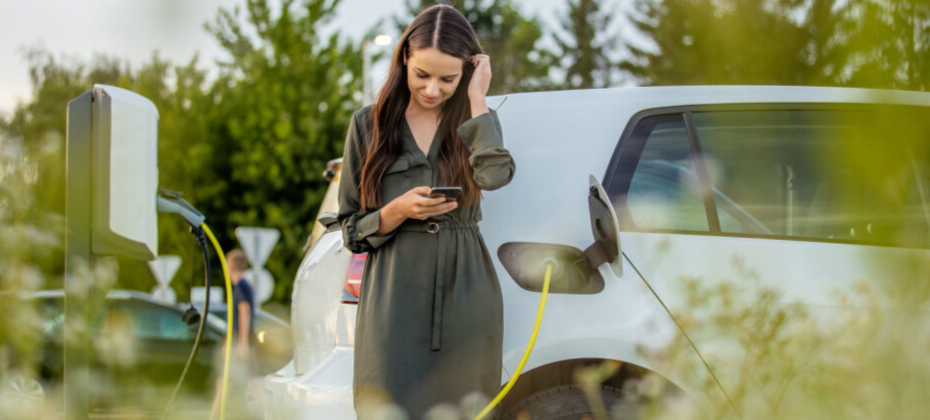
Electric vehicles (EVs) continue to gain traction in certain markets. In fact, at the end of 2024, 9.2% of all new retail registrations were electric, up from 8%+ in 2023 and 6%+ in 2022. Clearly, more and more in-market shoppers are leaning towards EVs, but what is actually a determining factor in their decision? A recent Experian survey [1] found 65% of respondents said they prioritize battery life, while 62% consider price, 58% are concerned with range on a full battery and 53% are focused on infrastructure and maintenance. It’s not just EVs, hybrids are getting into the mix While EVs certainly are the buzzword in the industry, it’s not the only alternative fuel type consumers are opting for. For instance, 55% of respondents said they’d consider a new hybrid and 50% said they’d consider a new EV for their next vehicle purchase. On the used side, 38% of respondents said they’d consider an EV and 42% would consider a hybrid. More granularly, the survey revealed 67% of Gen Z and 61% of Millennials are likely to buy a new EV, while 62% and 63% of these groups, respectively, expressed similar intentions for purchasing new hybrid. Gen Z and Millennials also showed a stronger-than-average interest on the used side, with 57% and 49% opting for EVs, and 57% and 52% choosing hybrids. With the younger generations gravitating towards these fuel types, it’s likely going to influence adoption rates down the road, a trend that should be watched closely as manufacturers roll out more models to meet the growing demand. However, when assessing the viewpoints of other generations, some are less likely to purchase an alternative fuel type. Two-in-five, albeit still a healthy percentage, of Gen X respondents said they’re likely to purchase a new EV and only 25% of Baby Boomers shared a similar sentiment. Meanwhile, 27% of Gen X and 12% of Baby Boomers say they’re likely to purchase a used EV. Furthermore, 46% of Gen X and 43% of Baby Boomers indicated they are likely to buy a new hybrid, while 33% and 21% of these groups, respectively, conveyed similar thoughts towards purchasing used hybrids. It’s crucial for professionals to stay attuned to shifting trends and concerns among consumers, as these factors play a role in consumer decision-making. By addressing potential setbacks and knowing where their target audience is, they can better align their strategies with consumer needs as these fuel types continue to move up on the list for everyday commuters. To learn more about EV insights, visit Experian Automotive’s EV Resource Center. [1] Experian commissioned Atomik Research to conduct an online survey of 2,005 adults throughout the United States. The sample consists of adults who estimate they will purchase or lease their next vehicle within the next 24 months or sooner. The margin of error is +/- 2 percentage points with a confidence level of 95 percent. Fieldwork took place between March 24 and March 27, 2025.

While many industry pundits are assessing how macroeconomic changes may impact the future of the automotive market, recent data suggests consumers tend to stick to specific fuel types. According to Experian’s Automotive Market Trends Report: Q4 2024, over the last 12 months, 77.5% of electric vehicle (EV) owners replaced their EV with another one, with 15.6% returning to gas-powered vehicles. Meanwhile, 82.2% of gas vehicle owners replaced it with the same fuel type, while only 4.7% made the switch to electric. It’s important for professionals to recognize that most consumers tend to replace their vehicles with the same fuel type. Additionally, knowing who is making these purchases and the types of vehicles being registered allows better anticipation for consumer needs and ultimately enhances the buying experience while fostering consumer loyalty. Breaking down fuel types by generation Through Q4 2024, Baby Boomers predominantly registered new gasoline vehicles, accounting for 74.7% of their choices, while 15.9% opted for hybrids and 6.6% chose EVs. Millennials showed a similar trend, with 69.2% registering gas vehicles, followed by 15.1% selecting hybrids and 12.5% choosing EVs. Gen Z also favored gasoline vehicles at 74.0%, with hybrids making up 14.3% and EVs at 9.1% of their registrations. Although gasoline vehicles account for the majority of new registrations, EVs and hybrids are steadily gaining ground, particularly among the younger generations who are drawn to advanced features that align with their preferences. This will likely play a role in shaping the future of vehicle registrations as more gas alternative models hit the market and consumers make the switch. To learn more about vehicle market trends, view the full Automotive Market Trends Report: Q4 2024 presentation on demand.
The electric vehicle (EV) market continues to see remarkable growth as both new and used registrations rise year-over-year. For the first time, new EVs accounted for 9.2% of all retail vehicle registrations across the U.S. in 2024, according to Experian’s 2024 EV Year in Review Report, and used EV registrations climbed to just over 1%, from 0.7% the year prior. As we dove into the data, we found that Tesla remains the dominant player in both new and used sectors; however, the shift in consumer preferences is extending across various manufacturers with more models hitting the market. For instance, Tesla accounted for 50.7% of new retail registrations in 2024, from 60.6% in 2023. Meanwhile, Ford increased from 4.7% to 6.2% year-over-year and Hyundai went from 4.2% to 5.4%. On the used side, Tesla made up 59% of retail registrations, from 60% in 2023, while Chevrolet grew from 7.1% to 9% and Nissan was at 5.4%, from 8.3%. As the EV market continues to grow, it’s not just the various manufacturers making waves; geographical trends are also coming into play in shaping how these vehicles are being embraced nationwide. While EV adoption is expanding well beyond the traditional EV strongholds, California still holds the highest number of registrations, with Los Angeles accounting for more than 180,000 new retail EV registrations, followed by San Francisco at 91,000+ and San Diego with more than 31,000. Hartford and New Haven, Connecticut experienced the highest growth in new retail EV registrations over the last five years, reaching 110.5% in 2024. Close behind were El Paso, Texas (with a 99% increase), and Colorado Springs, Colorado (with an 85.7% spike). These shifts highlight the rapid expansion of EV adoption across the country as we see more consumers in diverse areas opting for the fuel type. Analyzing and leveraging the broader range of registrations will help automotive professionals as they identify emerging markets to effectively tailor their strategies. To learn more about EV insights, visit Experian Automotive’s EV Resource Center.

With the National Automobile Dealers Association (NADA) Show set to kickoff later this week, it seemed fitting to explore how the shifting dynamics of the used vehicle market might impact dealers and buyers over the coming year. Shedding light on some of the registration and finance trends, as well as purchasing behaviors, can help dealers and manufacturers stay ahead of the curve. And just like that, the Special Report: Automotive Consumer Trends Report was born. As I was sifting through the data, one of the trends that stood out to me was the neck-and-neck race between Millennials and Gen X for supremacy in the used vehicle market. Five years ago, in 2019, Millennials were responsible for 33.3% of used retail registrations, followed by Gen X (29.5%) and Baby Boomers (26.8%). Since then, Baby Boomers have gradually fallen off, and Gen X continues to close the already minuscule gap. Through October 2024, Millennials accounted for 31.6%, while Gen X accounted for 30.4%. But trends can turn on a dime if the last year offers any indication. Over the last rolling 12 months (October 2023-October 2024), Gen X (31.4%) accounted for the majority of used vehicle registrations compared to Millennials (30.9%). Of course, the data is still close, and what 2025 holds is anyone’s guess, but understanding even the smallest changes in market share and consumer purchasing behaviors can help dealers and manufacturers adapt and navigate the road ahead. Although there are similarities between Millennials and Gen X, there are drastic differences, including motivations and preferences. Dealers and manufacturers should engage them on a generational level. What are they buying? Some of the data might not come as a surprise but it’s a good reminder that consumers are in different phases of life, meaning priorities change. Over the last rolling 12 months, Millennials over-indexed on used vans, accounting for more than one-third of registrations. Meanwhile, Gen X over-indexed on used trucks, making up nearly one-third of registrations, and Gen Z over-indexed on cars (accounting for 17.1% of used car registrations compared to 14.6% of overall used vehicle registrations). This isn’t surprising. Many Millennials have young families and may need extra space and functionality, while Gen Xers might prefer the versatility of the pickup truck—the ability to use it for work and personal use. On the other hand, Gen Zers are still early in their careers and gravitate towards the affordability and efficiency of smaller cars. Interestingly, although used electric vehicles only make up a small portion of used retail registrations (less than 1%), Millennials made up nearly 40% over the last rolling 12 months, followed by Gen X (32.2%) and Baby Boomers (15.8%). The market at a bird’s eye view Pulling back a bit on the used vehicle landscape, over the last rolling 12 months, CUVs/SUVs (38.9%) and cars (36.6%) accounted for the majority of used retail registrations. And nearly nine-in-ten used registrations were non-luxury vehicles. What’s more, ICE vehicles made up 88.5% of used retail registrations over the same period, while alternative-fuel vehicles (not including BEVs) made up 10.7% and electric vehicles made up 0.8%. At the finance level, we’re seeing the market shift ever so slightly. Since the beginning of the pandemic, one of the constant narratives in the industry has been the rising cost of owning a vehicle, both new and used. And while the average loan amount for a used non-luxury vehicle has gone up over the past five years, we’re seeing a gradual decline since 2022. In 2019, the average loan amount was $22,636 and spiked $29,983 in 2022. In 2024, the average loan amount reached $28,895. Much of the decline in average loan amounts can be attributed to the resurgence of new vehicle inventory, which has resulted in lower used values. With new leasing climbing over the past several quarters, we may see more late-model used inventory hit the market in the next few years, which will most certainly impact used financing. The used market moving forward Relying on historical data and trends can help dealers and manufacturers prepare and navigate the road ahead. Used vehicles will always fit the need for shoppers looking for their next vehicle; understanding some market trends will help ensure dealers and manufacturers can be at the forefront of helping those shoppers. For more information on the Special Report: Automotive Consumer Trends Report, visit Experian booth #627 at the NADA Show in New Orleans, January 23-26.

Electric vehicles (EVs) are the topic of conversation in the automotive industry, but we’re continuing to see another fuel type pick up speed. With consumer demand shifting and drivers exploring more fuel-efficient options, the automotive market is leaning back into hybrids. In fact, new retail hybrid registrations grew to 11.5% through Q3 2024, from 9.5% through Q3 2023, according to Experian’s Automotive Market Trends Report: Q3 2024. Meanwhile, EVs increased from 7.7% to 8.2% year-over-year and gasoline vehicles declined to 70.4% this year, from 72.7% last year. Despite EVs gaining notable attention over recent years, some consumers may be factoring in the benefits of opting for a hybrid, such as the convenience of driving a longer distance without facing challenges as charging stations remain limited. As more manufacturers adapt to consumer needs and roll out additional vehicles, data shows 9.1% of 2024 model year vehicles in operation were attributed to hybrids, while 6.2% of 2024 model years were EVs through Q3 2024. Having more models enter the market has shifted the hybrid and plug-in hybrid electric vehicle (PHEV) market share, with the Toyota Camry making up 12.5% of the market share this quarter, a notable increase from 2.4% last year. On the other hand, the Jeep Wrangler 4xe went from having 4.5% of market share last year to 2.4% through Q3 2024. With many consumers continuing to have some concerns around EVs such as range anxiety and charging times, they’re seeking a more practical solution for their daily driving needs. The balance of fuel options provides more convenience—making hybrids an appealing choice for those wanting an EV alternative. It’s important for manufacturers to stay ahead of the competitive market as it’s constantly evolving. Leveraging the most current data can provide solutions that address both feasibility and consumer preference. To learn more about vehicle market trends, view the full Automotive Market Trends Report: Q3 2024 presentation on demand.

Pickup trucks are a staple of the automotive industry. Their utility and versatility allow consumers to haul heavy loads or tow large trailers, making them ideal for blue-collar workers. At the same time, pickup trucks offer a sleek appearance that can be aesthetically appealing. And now, we’re seeing the next evolution of the pickup truck: EVs. According to Experian’s Automotive Consumer Trends Report: Q3 2024, of the 292.1 million vehicles in operation, more than 54 million were pickup trucks. Furthermore, 17.4% of new retail registrations this quarter were pickup trucks, while pickup trucks made up 19.2% of used retail registrations. Interestingly, we’re seeing more consumer demand for EV pickup trucks. Over the last 12 months, the Ford F-150 Lightening made up 42.2% of the EV pickup truck market share, closely followed by the Tesla Cybertruck at 37.9%. Rounding out the top five were the Rivian R1T (14.2%), GMC Hummer EV (4.8%) and Chevrolet Silverado EV (0.9%). Still room for the ICE pickup Although we’re beginning to see EV pickup trucks gain some prominence, the overwhelming majority of pickups on the road are gas-powered. In fact, over the last 12 months, 14.5% of new retail pickup truck registrations were attributed to the Chevrolet Silverado 1500, followed by the Ford-150 at 13.4% and the GMC Sierra 1500 (9.1%). Though, data found the preference flipped for the used side, with the Ford F-150 leading at 18.1% of retail pickup registrations and the Chevrolet Silverado 1500 at 13.9%, followed by the GMC Sierra 1500 (6.2%). With more consumers not only maintaining a keen interest in gasoline pickup trucks, but also moving into the EV space, the current data can be leveraged in more ways than one as professionals diversify their sales strategies while optimizing dealership inventory. To learn more about pickup truck insights, view the full Automotive Consumer Trends Report: Q3 2024 presentation or The Trade Desk Brochure.