Q&A with Marine Credit Union on Growth and Honing Your Focus

by Guest Contributor 6 min read October 1, 2018

Shawn Hanson, CEO of Marine Credit Union in Wisconsin, knows a thing or two about growth. Over the past 18 years as CEO, Shawn and his team have the grown the credit union significantly, both organically and through acquisitions. In addition, he has developed a clear vision to reach the underserved.

I spoke with Shawn to get his perspective and insights about growth, risk and the underserved.

Here’s what he had to say:

Marine Credit Union has grown from $120M to $789M over the past 18 years under your leadership. What have been the top 2-3 actions you’ve taken to fuel this growth?

The past two decades of growth have included a lot of successes, but also some key failures. Failures that taught us some hard lessons in who we are – and who we are not. If I can point to one action that has had the most impact on our growth, it is the refinement of our focus. We clarified our mission, vision and strategy and aligned our business decisions accordingly.

Over the past 18 years as CEO, what has been your proudest moment? (Or proudest moments?)

I reach out to employees on a regular basis and ask them to share with me a story of how they impacted a member’s life. I hear stories of people who never thought they would dig themselves out of a financial hole, and people we are helping to save thousands of dollars each month in bill payments. I feel so fortunate that I get to hear these stories every day. So, to answer your question, my proudest moment will happen today when I hear that next story. Then again tomorrow. And again, the next day.

What drove Marine’s decision to focus on serving the underserved?

I started my career in the consumer finance industry, so it is where my roots lie. Over time, we have come to discover that serving the underserved is not only a good business to be in, it is a business that is good. A business that is doing well while doing good – performing financially while giving back to its communities – is a business that people want to be around.

How does your credit union define underserved? What services does your staff offer members that are unique?

We define the underserved as people who cannot typically get help down the block. While this most often means individuals, who are credit-challenged, it is more than that. Our underserved can be an overleveraged borrower who needs some help simplifying their life and streamlining bill payments. We have a debt consolidation product that’s a perfect fit for that situation. Our underserved can be a self-employed borrower whose income statements don’t fit inside a neat box, a homebuyer with an unconventional property. or an immigrant with alternative documentation. Our in-house underwriting and decentralized decision-making structure give us more flexibility to serve our underserved.

Given your credit union’s history of growth through acquisitions, how have you preserved the culture of reaching the underserved?

We are experienced, but we are not perfect. When it comes to the integration of employees, we learn through each acquisition. Our strategy is very different from other financial institutions, and we know this creates a learning curve for merging employees. Cultural integration is incredibly important to us. We have taken this too slow, too fast and everywhere in between. What we know for certain is that one size does not fit all. Whatever approach we decide on for a cultural integration, we do it with intention and two key principles in mind: do what’s best for the employees and the members.

Why do you think credit unions are uniquely positioned to reach & serve the underserved?

Talk about roots; this is where we were born. Serving the underserved is in our credit union DNA. Beyond our history, it is what we are known for: people helping people. Credit unions have built a legacy of trust with the communities we serve. Trust has become a coveted commodity.

What is the biggest misperception among credit unions regarding the topic of serving the underserved?

It’s too risky.

One of the underpinnings of the credit union movement is providing a path to affordable credit. What should risk-adverse credit unions think about when evaluating their mission?

Think about the role you play in your community; how would the world be poorer, but for your presence? If you can answer with clarity, you’re serving a need. Everybody seems to be chasing the most qualified borrowers today. We’re focused on being there for the rest.

Marine’s mission is to “create a better future for themselves and their families”. What has been the biggest surprise for you serving the underserved?

We call it “the snowball effect.” Repeatedly, we have seen one small “yes” turn into a remarkably different life for a member we have helped. A car loan led to transportation to work, which led to a steady job, which led to a promotion, which led to buying a home. I never underestimate the power of a chance.

How has your board helped to accelerate the mission to reach the underserved? What advice do you have for boards who are concerned of taking on more perceived risk?

I feel very fortunate to work with a Board of Directors who has accelerated our mission in many ways, but most importantly, by having an open mind and allowing themselves to think differently. Our Board is always learning and always pushing me, one another and the credit union to be better.

Strategic planning season is upon us. What advice do you have for credit unions looking to lend deeper?

Hone your focus. Know who you are and who you are not. Know who you serve and who you do not. Get aligned on where you want to be 5, 10 and 20 years from now, and work backward. What do you need to be focusing on in 2019 to achieve your long-term goals, and what do you need to stop wasting energy on?

Ensure your people, products and processes are aligned and scaled to support a diversification or transition. This can take years to build or evolve. Walk, don’t run.

About Shawn Hanson
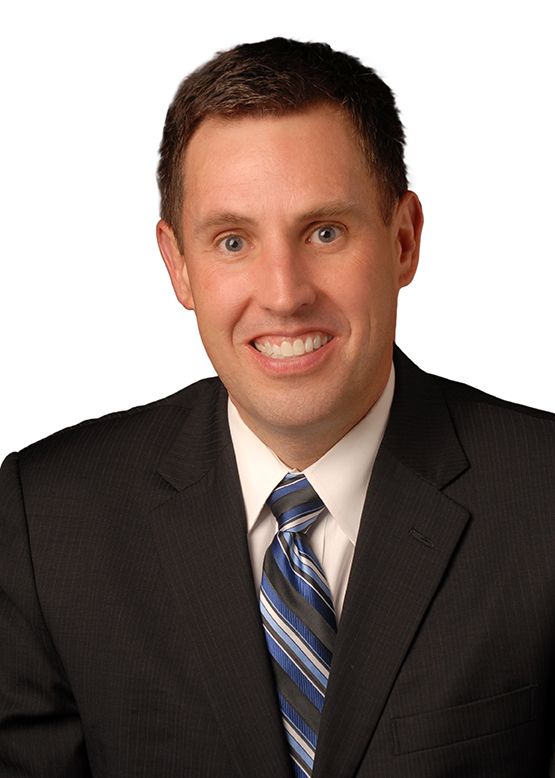
Shawn Hanson is the CEO of Marine Credit Union. He has been with the credit union since April 2000 when the credit union had two offices and $37 million in assets. Hanson’s vision for the future is a differentiated financial institution that provides services to a broad geographic base with the best service. Hanson has also held positions at Citizens Community Federal Credit Union and AVCO Financial Services.

Learn more about the array of alternative credit data sources available to financial institutions to reach your underserved populations.

Related Posts

Empowering merchants to reduce first-party fraud and chargebacks

When disputes become a fraud strategy  First-party fraud is quietly reshaping the risk landscape for merchants. Unlike third-party fraud, it originates from the consumer, often through a dispute that triggers a chargeback. Mastercard’s research highlights a shift in consumer dispute behavior: when consumers dispute a transaction and later realize it was a mistake, many do not rectify their error and reverse the dispute. Across 4,500 surveyed consumers, 775 admitted to disputing a transaction, and up to 37% admitted to not correcting a mistaken dispute (consumer fraud originates with). Convenience remains the driving force for consumers, who increasingly turn to their bank first when a transaction looks questionable rather than contacting the merchant. In fact, 76% of consumers prefer resolving disputes through their bank rather than the merchant. This removes the merchant’s ability to resolve the issue and avoid costly chargebacks, creating higher operational costs and risk exposure. This is especially problematic considering ClearSale estimates that 40% of consumers who request a chargeback will do so again within 90 days.  What could be causing more consumers to use the dispute process?  Mastercard’s consumer research sheds light into the shift of behavior. Among Gen Z, 26% admitted they did not contact the merchant or app to return funds after realizing the dispute was wrong, compared with 22% of Millennials and 18% of Gen X. What’s driving this trend? Globally, chargebacks are on the rise, projected to reach 324 million transactions by 2028, a 24% increase over 2025 estimates, according to Mastercard. So, what is driving this trend? Economic pressure  U.S. household debt reached $18.39 trillion in Q2 2025, with credit card balances at $1.21 trillion (up $27 billion in a quarter). At the same time, 39% of households report declining income, and 70% expect a recession within 12 months. These pressures make short-term financial relief, even through disputes — tempting.  BNPL and buyer’s remorse  Buy now,pay later (BNPL) usage is surging 52% of U.S. consumers have used BNPL in 2025, and Gen Z leads the trend, with 59% opting for BNPL. The average BNPL borrower originated 9.5 loans in a year, often stacking multiple loans across providers. This creates a cycle of deferred pain and buyer remorse, which can lead to disputes. Lack of transparency and complex subscription models   One of the most significant accelerators of first-party fraud is the ease with which consumers can file disputes today. According to Mastercard's 2025 State of Chargeback Report, mobile banking apps and digital wallets have transformed dispute initiation from a multistep process into something that can be completed in seconds. If the consumer doesn’t recognize a transaction or the name of the merchant, they are able to raise a dispute in a couple of taps. Recurring billing models and complex subscription models also amplifies the problem. If a consumer forgets about a subscription service or doesn’t recognize a billing descriptor, this can lead to a dispute that could have been avoided with better transparency.  “Disputes are no longer just a backend operational issue — they’re becoming a frontline fraud vector. When consumers default to their bank instead of the merchant, context is lost, resolution slows, and chargebacks escalate. The opportunity now is to reintroduce transparency and collaboration earlier in the journey, so issues are resolved before they turn into costly disputes.” Gaurav Mittal, Executive Vice President of Ethoca at Mastercard Dispute systems designed for consumer protection can sometimes be misused, increasing the frequency of disputes. As card-not-present transactions grow, protecting against both third-party fraud and first-party fraud is essential.   The solution: tools consumers want — and merchants need Consumers aren’t opposed to security. In fact, 85% prioritize security over convenience, and 83% expect businesses to address their security and privacy concerns. They want visible and invisible protections that make them feel safe without slowing them down.  Merchants can meet this expectation, and reduce fraud, by adding intelligent safeguards at checkout: Behavioral biometrics: In Experian’s consumer survey, consumers ranked behavioral biometrics among the most trusted methods (72% feel it’s secure). These tools analyze typing speed, mouse movement, and hesitation patterns to distinguish genuine users from bots or fraudsters, invisibly and in real time. Physical biometrics: 76% of consumers trust physical biometrics (fingerprint, facial recognition) more than passwords. Offering biometric login or checkout options gives consumers confidence while reducing reliance on vulnerable credentials.  Passive identity verification: Experian’s patented account ownership verification matches payment card numbers to identity attributes without requiring extra input. This protects merchants from stolen card fraud while keeping checkout friction low. Device and network intelligence: Secondary device checks and network analysis can silently validate identity during guest checkout or BNPL flows, reducing risk without slowing conversion.   Enhancing transaction clarity: Consumers are open to sharing more data for security: 77% would share more when shopping online, and 76% with financial institutions. Secure, real-time data exchange between merchants and issuers, such as through Mastercard’s First-Party Trust program, can strengthen fraud detection and reduce false declines.  Better purchase recognition: Improving purchase recognition in digital banking apps can help reduce disputes caused by consumers confusing their own transactions. Providing clear purchase descriptors, itemized receipts and better subscription management gives users the details they need to understand their purchase history and prevent first-party fraud.  “Reducing first-party fraud isn’t about adding friction; it’s about adding clarity. When merchants can surface the right information at the right moment, they not only prevent disputes, but they also strengthen trust and protect long-term customer relationships.” Gaurav Mittal, Executive Vice President of Ethoca at Mastercard Closing thought  First-party fraud’s impact extends beyond operations, affecting profitability, customer trust and brand reputation. Merchants that act now to strengthen checkout security with visible and invisible protections will reduce losses, protect trust and deliver the seamless experiences consumers expect. Learn more Read part 1

Published: June 15, 2026 by Charles Hunter
Fuel Type Choices Continue to Reshape Vehicle Registration Trends

Electric vehicle (EV) registration growth has become a common topic of discussion throughout the automotive industry for the last few years, but the bigger story may lie in what consumers are choosing when they return to market for their next vehicle. According to Experian’s Automotive Market Trends Report: Q1 2026, the bulk of EV owners (72.6%) purchased another EV, while 17.7% replaced their EV with a gas-powered vehicle and 5.6% switched to a hybrid this quarter. A similar trend was seen in hybrid owners, as 54.9% remained loyal to the fuel type through the quarter, while 32.7% replaced their hybrid with a gas-powered vehicle and 7.5% switched to an EV. Notably, 78.2% of consumers with gas-powered vehicles stayed with the same fuel type, with 5.6% swapping their gas vehicle for a hybrid and only 4.5% transitioning to an EV through Q1 2026. These purchase styles suggest that while most consumers are not making a direct leap from gasoline to fully electric vehicles, some are beginning their electrified journey through hybrid ownership. At the same time, the high rate of fuel-type loyalty across all powertrain categories highlights the importance of the ownership experience. Consumers who are satisfied with their current vehicle can often be inclined to remain with the same segment rather than exploring alternative fuel types. New vehicle registration trends reflect changing consumer preferences Looking at the new vehicle registration data from a broader level, gas-powered vehicles experienced a slight uptick, coming in at 69.5% through Q1 2026, from 67.3% last year. Meanwhile, hybrids continue to grow, going from 12.1% to 13.5% year-over-year while EVs steadily decline from 7.8% last year to 5.6% this quarter. As consumers weigh their next vehicle purchase, many seem to be sticking with the standard gas-powered choice, and others are finding a happy medium in hybrid vehicles. And while EVs receive much of the industry’s attention, buyers are exploring alternatives that allow them to adopt the electrified vehicles incrementally rather than all at once. To learn more about vehicle market trends, view the full Automotive Market Trends Report: Q1 2026 presentation on demand.

Published: June 12, 2026 by John Howard
Rewriting the Road Ahead with Longer Loan Terms and Increased Refinancing Options

The automotive market is entering a new phase defined not just by what consumers are buying, but by how they’re choosing to finance it. According to Experian Automotive’s State of the Automotive Finance Market Report: Q1 2026, nearly one-third (35.55%) of all new vehicle loans now stretch more than six years, up from 30.83% in Q1 2025. Similarly on the used side, 31.54% of loans extended more than six years, an increase from 28.60% last year. The shift highlights why affordability is reshaping how consumers are financing their vehicles, particularly in larger and higher-priced vehicles. Refinancing gains traction as interest rates stabilize In addition to longer-term loans, consumers are becoming increasingly deliberate with their financing decisions and managing monthly payments as refinancing activity has gained momentum. For instance, consumers who refinanced this quarter lowered their interest rate by 2.2% and saved an average of $81 on their monthly payment. Credit unions, in particular, continued to play a major role in helping consumers secure more affordable payment options. In Q1 2025, credit unions accounted for the lion’s share of automotive refinancing at 63.43%, from 62.31% a year ago. By comparison, banks went from 23.51% to 22.59% year-over-year. Furthermore, those who refinanced with a credit union saved an average of $101 this quarter, whereas those who refinanced with banks saved $60. Expanding credit access through flexible financing Another notable trend this quarter was the incessant growth in subprime financing as credit accessibility across the market continues to increase. In the first quarter of this year, subprime borrowers made up 15.75% of total vehicle financing, from 14.40% last year. For new vehicles in particular, the subprime market went from 5.61% to 6.88% year-over-year, while subprime in used vehicle financing grew to 20.60% this quarter, from 19.36% a year ago. Increased activity in the subprime segment highlights continued confidence in the automotive market and underscores the importance of expanded financing options. As consumers seek greater flexibility with financing decisions that fit their lifestyle, lenders and dealers have the opportunity to approach them with more personalized solutions. These trends are helping keep both new and used vehicle markets moving forward, while creating new opportunities for consumers to manage payments and purchase confidently. To learn more about automotive finance trends, view the full State of the Automotive Finance Market Report: Q1 2026 presentation on demand.

Published: June 2, 2026 by Melinda Zabritski