Latest Posts

In this article...What is credit card fraud?Types of credit card fraudWhat is credit card fraud prevention and detection?How Experian® can help with card fraud prevention and detection With debit and credit card transactions becoming more prevalent than cash payments in today’s digital-first world, card fraud has become a significant concern for organizations. Widespread usage has created ample opportunities for cybercriminals to engage in credit card fraud. As a result, millions of Americans fall victim to credit card fraud annually, with 52 million cases reported last year alone.1 Preventing and detecting credit card fraud can save organizations from costly losses and protect their customers and reputations. This article provides an overview of credit card fraud detection, focusing on the current trends, types of fraud, and detection and prevention solutions. What is credit card fraud? Credit card fraud involves the unauthorized use of a credit card to obtain goods, services or funds. It's a crime that affects individuals and businesses alike, leading to financial losses and compromised personal information. Understanding the various forms of credit card fraud is essential for developing effective prevention strategies. Types of credit card fraud Understanding the different types of credit card fraud can help in developing targeted prevention strategies. Common types of credit card fraud include: Card not present fraud occurs when the physical card is not present during the transaction, commonly seen in online or over-the-phone purchases. In 2023, card not present fraud was estimated to account for $9.49 billion in losses.2 Account takeover fraud involves fraudsters gaining access to a victim's account to make unauthorized transactions. In 2023, account takeover attacks increased 354% year-over-year, resulting in almost $13 billion in losses.3,4 Card skimming, which is estimated to cost consumers and financial institutions over $1 billion per year, occurs when fraudsters use devices to capture card information from ATMs or point-of-sale terminals.5 Phishing scams trick victims into providing their card information through fake emails, texts or websites. What is credit card fraud prevention and detection? To combat the rise in credit card fraud effectively, organizations must implement credit card fraud prevention strategies that involve a combination of solutions and technologies designed to identify and stop fraudulent activities. Effective fraud prevention solutions can help businesses minimize losses and protect their customers' information. Common credit card fraud prevention and detection methods include: Fraud monitoring systems: Banks and financial institutions employ sophisticated algorithms and artificial intelligence to monitor transactions in real time. These systems analyze spending patterns, locations, transaction amounts, and other variables to detect suspicious activity. EMV chip technology: EMV (Europay, Mastercard, and Visa) chip cards contain embedded microchips that generate unique transaction codes for each purchase. This makes it more difficult for fraudsters to create counterfeit cards. Tokenization: Tokenization replaces sensitive card information with a unique identifier or token. This token can be used for transactions without exposing actual card details, reducing the risk of fraud if data is intercepted. Multifactor authentication (MFA): Adding an extra layer of security beyond the card number and PIN, MFA requires additional verification such as a one-time code sent to a mobile device, knowledge-based authentication or biometric/document confirmation. Transaction alerts: Many banks offer alerts via SMS or email for every credit card transaction. This allows cardholders to spot unauthorized transactions quickly and report them to their bank. Card verification value (CVV): CVV codes, typically three-digit numbers printed on the back of cards (four digits for American Express), are used to verify that the person making an online or telephone purchase physically possesses the card. Machine learning and AI: Advanced algorithms can analyze large datasets to detect unusual patterns that may indicate fraud, such as sudden large transactions or purchases made in different geographic locations within a short time frame. Advanced algorithms can analyze large datasets to detect unusual patterns that may indicate fraud, such as sudden large transactions or purchases made in different geographic locations within a short time frame. Behavioral analytics: Monitoring user behavior to detect anomalies that may indicate fraud. Education and awareness: Educating consumers about phishing scams, identity theft, and safe online shopping practices can help reduce the likelihood of falling victim to credit card fraud. Fraud investigation units: Financial institutions have teams dedicated to investigating suspicious transactions reported by customers. These units work to confirm fraud, mitigate losses, and prevent future incidents. How Experian® can help with card fraud prevention and detection Credit card fraud detection is essential for protecting businesses and customers. By implementing advanced detection technologies, businesses can create a robust defense against fraudsters. Experian® offers advanced fraud management solutions that leverage identity protection, machine learning, and advanced analytics. Partnering with Experian can provide your business with: Comprehensive fraud management solutions: Experian’s fraud management solutions provide a robust suite of tools to prevent, detect and manage fraud risk and identity verification effectively. Account takeover prevention: Experian uses sophisticated analytics and enhanced decision-making capabilities to help businesses drive successful transactions by monitoring identity and flagging unusual activities. Identifying card not present fraud: Experian offers tools specifically designed to detect and prevent card not present fraud, ensuring secure online transactions. Take your fraud prevention strategies to the next level with Experian's comprehensive solutions. Explore more about how Experian can help. Learn More Sources 1 https://www.security.org/digital-safety/credit-card-fraud-report/ 2 https://www.emarketer.com/chart/258923/us-total-card-not-present-cnp-fraud-loss-2019-2024-billions-change-of-total-card-payment-fraud-loss 3 https://pages.sift.com/rs/526-PCC-974/images/Sift-2023-Q3-Index-Report_ATO.pdf 4 https://www.aarp.org/money/scams-fraud/info-2024/identity-fraud-report.html 5 https://www.fbi.gov/how-we-can-help-you/scams-and-safety/common-scams-and-crimes/skimming This article includes content created by an AI language model and is intended to provide general information.

With the advent of AI and ML, optimizing credit prescreen campaigns has never been easier or more efficient.
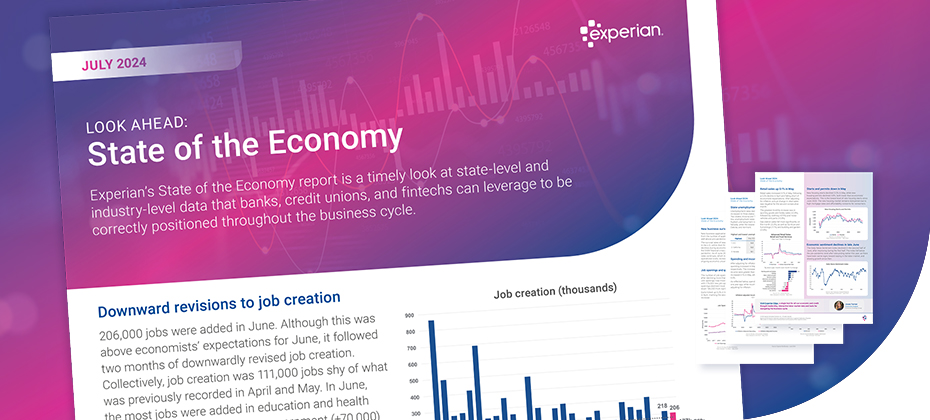
Check out July's report for a deep dive into the latest market trends, including those around job openings and bankcard delinquency rates.

For car dealers, the holy grail isn't a flashy sports car or a top-selling SUV. It's a simple whisper: "I'm thinking about getting a new car." Imagine if you could hear that murmur from every potential customer walking through your doors, online, or even driving down the street. That's the power of knowing who's in the market for a new car, and it's a game-changer for dealerships. Go beyond the cookie and website tracking and leverage the power of psychographic data and predictive analytics to know who is coming into the market in the next 30, 60, 90 days with the Experian Marketing Engine’s Affinity AutoAudiences. Boost Efficiency and ROI: Targeted Sales: No more shotgun blasts of marketing campaigns! Precisely target consumers considering a new car with personalized offers and incentives. Imagine tailoring financing proposals based on their budget and desired features, not guesswork. Inventory Optimization: Say goodbye to dusty lots filled with unsold models. Knowing market trends and individual preferences allows you to stock in-demand vehicles, maximizing sales and minimizing depreciation costs. Streamlined Sales Process: When a customer walks in already open to buying, the entire process becomes smoother. Focus on addressing their specific needs and preferences, leading to quicker deals and happier customers. Build Stronger Customer Relationships: Proactive Engagement: Instead of waiting for leads, reach out at the perfect moment. A friendly call or email during their research phase demonstrates attentiveness and builds trust, setting you apart from the competition. Personalized Recommendations: Forget one-size-fits-all pitches. Recommend models based on their lifestyle, budget, and driving habits. This shows genuine interest and builds rapport, increasing the likelihood of conversion. Enhanced Customer Experience: Cater to their specific needs before they even step onto the lot. Offer virtual test drives, online financing options, and even home delivery – all tailored to their preferences. This level of personalized service fosters loyalty and repeat business. Leverage the Power of Data: Knowing when a consumer is in the market for a new car isn't just about a head start, it's about building trust, offering convenience, and tailoring the entire experience to their needs. In a competitive market, this inside knowledge is the key to unlocking increased sales, stronger customer relationships, and ultimately, a thriving dealership. So, what are you waiting for? Start listening and turn those whispers into deals! Or

In this blog post, we'll explore skip-tracing best practices, offering valuable insights and practical tips and tools. Read more!

Open Banking use cases are extensive and will continue to expand as access to permissioned data becomes more common. Learn more.

Explore the essentials of identity authentication, its importance for financial institutions, and what effective solutions look like.

According to Experian’s Automotive Market Trends Report: Q1 2024, hybrids accounted for 11.8% of new vehicle registrations, an increase from 8.8% last year.

Learn about why businesses and consumers are moving to Texas, the state's affordability, and how you can attract first-time homebuyers here.

Explore what email account takeover is and why it's more important than ever for organizations to prevent it now.

Learn how leveraging credit attributes can help you reduce your risk exposure, prioritize accounts, and modify your pre-collections strategy.
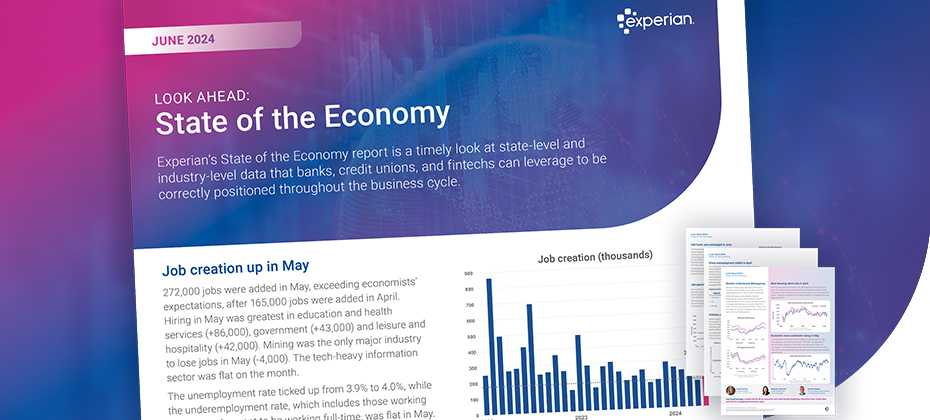
Check out June's report for a deep dive into the latest market trends, including those around delinquencies and the new housing market.

Explore key takeaways and highlights from three Vision 2024 sessions focused on housing topics.

As more consumers lean towards adaptable and efficient vehicles that fit their everyday lifestyle, it’s no surprise to see the nuanced shifts in consumer preferences over recent years. For instance, compact utility vehicles (CUVs) have resonated with those seeking versatility—emerging as the most registered new vehicle segment in the first quarter of 2024 at 51.1%, according to Experian’s Automotive Consumer Trends Report. When exploring the depths of CUV registrations, data showed Toyota led the market share for the non-luxury segment at 14.9% in Q1 2024. They were followed by Chevrolet (12.1%), Honda (11.4%), Subaru (10.4%), and Hyundai (10.0%). On the luxury side, Tesla accounted for 28.0% of the market share this quarter and Lexus trailed behind at 14.1%. Rounding out the top five were BMW (12.2%), Audi (8.6%), and Volvo (6.2%). CUV registration trends by generations It’s notable that different generations are drawn to CUVs for a multitude of personal preferences that align with their respective lifestyles. For example, Baby Boomers made up 32.3% of new retail registrations for CUVs and Gen X was close behind at 30.4% in Q1 2024. They were followed by Millennials (23.6%), Gen Z (7.9%), and the Silent Generation (5.4%). While some generations seek a vehicle that strikes a balance between practicality and comfort, others may prefer smaller and more maneuverable vehicles. Nonetheless, CUVs making up just over half of new retail registrations is something that should be watched closely. By leveraging multiple data points such as who is in the market for a CUV as well as the types of makes and models they’re interested in, professionals have the opportunity to strategize new ways to effectively reach shoppers. To learn more about CUVs, view the full report at Automotive Consumer Trends Report: Q1 2024. Or

Dealing with delinquent debt is a challenging task.Thankfully, advanced analytics offers a promising solution. Learn more!