Uncategorized

Our national survey found that consumers struggle to find a credit card that meets their needs. They say there are too many options and it’s too time-consuming to research. Here's what they want:

National Hispanic Heritage Month Sept. is 15 - Oct. 15. With 1 in 6 U.S. residents being Hispanic, now is a great time for financial institutions to reflect on their largest growth opportunity.

APIs--Application Programming Interfaces--are the hidden backbone of our modern world which allow software programs to communicate with one another.
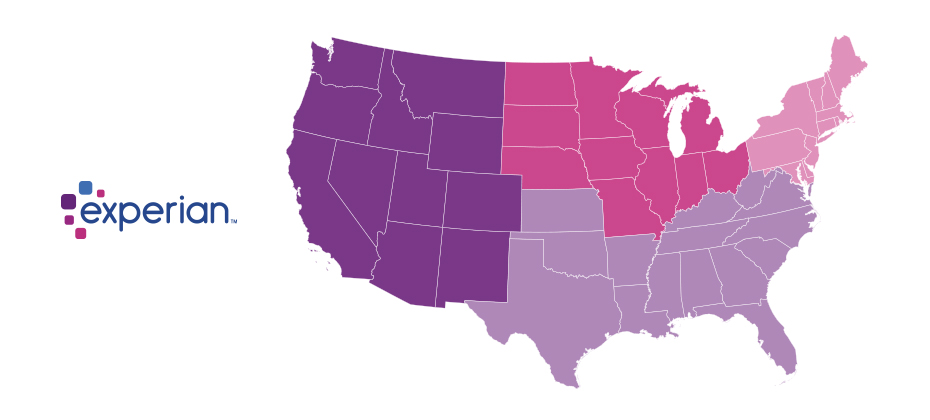
E-commerce fraud continues to be an area of concern — just look to the West and the South
UncategorizedWith minimal risk and high reward at stake, e-commerce fraud attacks have increased dramatically over the last few years, with no signs of slowing down.

Multiple studies suggest many executives aren’t as engaged as they should be when ensuring their organizations are prepared to mitigate and manage cybersecurity risks. Insights from our Fourth Annual Data Breach Preparedness Survey, conducted by the Ponemon Institute, support this sentiment.

Successful data migration depends on attention to detail, no matter how small. Here are 3 items essential to a successful data migration:

Debt collections - Create a better consumer experience during the debt collection process.

Student loan debt — outstanding debt grew 21 percent since 2013 to reach a high of $1.49 trillion in the fourth quarter of 2016.

Experian’s annual Vision Conference, a four-day event designed to bring business leaders together to discuss the latest ideas and solutions surrounding targeting new markets, growing customer bases and profitability, reducing fraud and more, begins Sunday evening in Orlando, Florida. Over the course of the week, a total of 65 sessions will touch on newsworthy and breaking trends. Attendees will discover: The latest generational insights – including a first look at the coming-of-age Gen Z crowd – regarding credit scores, spend patterns and digital behaviors Multiple presentations on the economy, the mortgage market, student lending, small business forecasts and new developments in online marketplace lending Deep dives on fraud in relation to the epidemic of synthetic IDs, Know Your Customer (KYC) compliance strategies, maturing your organization to defeat fraud, and the dark web Regulatory round-ups touching on everything from the Military Lending Act (MLA), the Telephone Consumer Protection Act (TCPA), Current Expected Credit Loss (CECL) and what is emerging from the new administration Best-in-class sessions on data and analytics, modeling, virtual collections, trended data and credit marketing Intel on the state of commercial lending, the rise of the mircopreneur and the business credit profile across various life stages. Beyond a jam-packed schedule of breakout sessions, the conference will additionally host a series of general session speakers sure to educate and entertain. On Monday, Steve Wozniak, also known as “The Woz” takes the stage to talk about his experiences as co-founder of Apple Computer Inc. and his years in the emerging technology space. Diane Swonk, CEO of DS Economics, will address the crowd on Tuesday to provide details and analysis on the state of the global and U.S. economies. Finally, legendary quarterback and recent Super Bowl MVP and winner Tom Brady will speak on Wednesday to close out the event. Conference attendees can follow everything utilizing their Experian Vision app. Hot stats, pictures and event news will also be shared on multiple social handles using #ExperianVision.

There has been a lot of discussion around the auto loan market regarding delinquency rates in the past year. It is a topic Experian is asked about frequently from clients in regard to what particular economic market behaviors mean for the overall consumer lending. To understand this issue more clearly, I ran a deeper dive on the data from our Q3 Experian-Oliver Wyman Market Intelligence report. There are some interesting, and perhaps concerning, trends in the data for automotive loans and leases. Want Insights on the latest consumer credit trends? Register for our 2016 year-end review webinar. Register now Auto loan delinquency rates are at their highest mark since 2008 The findings indicate that the performance of the most recent loans opened from Q4 2015 are now performing as poorly as the loans from the credit crisis back in 2008. In fact, you have to go back to 2008, and in some cases, 2007, to see loan default rates as poorly as the Q4 2015 auto loans originated in the last year. Below we have the auto loan vintage performance for loans originated in Q4 of the last 8 years — going back to 2008. The lines on the chart each represent 60 days late or more (60+) delinquency rates over specific time period grades. For these charts, I analyzed the first three, six, and nine months from the loan origination date. As you can see, the rates of delinquency have steadily increased in recent years, with the increase in the Q4 2015 loans opened equaling or even surpassing 2008 levels. The above chart reflects all credit grades, so one might think that this change is a result of the change in the credit origination mix. By digging a little deeper into the data, we can control for the VantageScore® credit score at the loan opening, or origination date, and review performance by looking at two different score segments separately. Is there concern for Superprime and Prime consumers auto loans? In the chart immediately below, the same analysis as above has been conducted, but only for trades originated by Superprime and Prime consumers at the time of origination. You can see that although the trend is not as pronounced as when all grades are considered, even these tiers of consumers are showing significant increases in their 60+ days past due (DPD) rates in recent vintages. Separately, looking at the Subprime and Deep Subprime segments, you can really see the dramatic changes that have occurred in the performance of recent auto vintages. Holding score segments constant, the data indicates a rate of credit deterioration in the Subprime and Deep Subprime segments that we have not observed since at least 2008 — back to when we started tracking this data. What’s concerning here is not only the absolute values of the vintage delinquencies but also the trend, which is moving upward for all three time periods. Where does the risk fall? Now that we see the evidence of the deterioration of credit performance across the credit spectrum, one might ask – who is bearing the risk in these recent vintages? Taking a closer look at the chart below, you can see the significant increase in the volumes of loans across lender type, but particularly interesting to me is the increase in 2016 for the Captive Auto lenders and Credit Unions, who are hitting highs in their lending volumes in recent quarters. If the above trend holds and the trajectory continues, this suggests exposure issues for those lenders with higher volumes in recent months. What does this mean for your business? Speak to Experian's global consulting practice to learn more. Learn more Just to be thorough, let's continue and look at the relative amounts of loans going to the different score segments by each of the lender types. Comparing the lender type and the score segments (below) reveals that finance lenders have a greater than average exposure to the Subprime and Deep Subprime segments. To summarize, although auto lending has recently been viewed as a segment where loan performance is good, relative to historical levels, I believe, the above data signals a striking change in that perspective. Recent loan performance has weakened to a point where comparing the 2008 vintage with 2015 vintage, one might not be able to distinguish between the two. // <![CDATA[ var elems={'winWidth':window.innerWidth,'winTol':600,'rotTol':800,'hgtTol':1500}, updRes=function(){var xAxislabelSize=function(){if(elems.winWidth<elems.winTol){return'12px'}else{return'14px'}},xAxislabelRotation=function(){if(elems.winWidth<elems.rotTol){return-90}else{return 0}},seriesLabelSize=function(){if(elems.winWidth<elems.winTol){return'12px'}else{return'16px'}},legenLabelSize=function(){if(elems.winWidth<elems.winTol){return'12px'}else{return'16px'}},chartHeight=function(){if(elems.winWidth<elems.rotTol){return 600}else{return 400}},labelInside=function(){if(elems.winWidth<elems.rotTol){return false}else{return true}},chartStack=function(){if(elems.winWidth<elems.rotTol){return null}else{return'normal'}};this.sourceRef=function(){return['Source: Experian.com']};this.seriesColor=function(){return['#982881','#0d6eb6','#26478D','#d72b80','#575756','#b02383']};this.chartFontFamily=function(){return'"Roboto",Helvetica,Arial,sans-serif'};this.xAxislabelSize=function(){return xAxislabelSize()};this.xAxislabelOverflow=function(){return'none'};this.xAxislabelRotation=function(){return xAxislabelRotation()};this.seriesLabelSize=function(){return seriesLabelSize()};this.legenLabelSize=function(){return legenLabelSize()};this.chartHeight=function(){return chartHeight()};this.labelInside=function(){return labelInside()};this.chartStack=function(){return chartStack()}}(), updY=function(chart){var points=chart.series[0].points;for(var i=0;i elems.rotTol){if(thisWidth<20){var y=points[i].dataLabel.y;y-=10;points[i].dataLabel.css({color:'#575756'}).attr({y:y-thisWidth})}}}},updX=function(chart){var points=chart.series[0].points;for(var i=0;i elems.rotTol){if(thisWidth

Under the updated requirements for Customer Due Diligence, financial institutions must expand programs.

Prescriptive solutions can synthesize big data, analytics, and business strategies to provide businesses an optimized workflow to reach a final decision.

We are excited to announce that Experian Fraud and Identity Solutions will be presenting at Finovate Fall 2016!

In an attempt to stay ahead of the speed of fraud, systems have become more complex, more expensive and even more difficult to manage.

Definition of first-party versus third-party fraud trends and shared actual case study of a first-party fraud scheme.