Financial Services
In this blog post, we explore the empowering impact of income and employment verification on financial institutions.

Companies depend on quality information to make decisions that move their business objectives forward while minimizing risk exposure. And in today’s modern, tech-driven, innovation-led world, there’s more information available than ever before. Expansive datasets from sources, both internal and external, allow decision-makers to leverage a wide range of intelligence to fuel how they plan, forecast and set priorities. But how can business leaders be sure that their data is as robust, up-to-date and thorough as they need — and, most importantly, that they’re able to use it to its fullest potential? That’s where the power of advanced analytics comes in. By making use of cutting-edge datasets and analytics insights, businesses can stay on the vanguard of business intelligence and ahead of their competitors. What is advanced analytics? Advanced analytics is a form of business intelligence that takes full advantage of the most modern data sources and analytics tools to create forward-thinking analysis that can help businesses make well-informed, data-driven decisions that are tailored to their needs. Simply put, advanced analytics is an essential component of any proactive business strategy that aims to maximize the future potential of both customers and campaigns. These advanced business intelligence and analytics solutions help leaders make profitable decisions no matter the state of the current economic climate. They use both traditional and non-traditional data sources to provide businesses with actionable insights in the formats best suited to their needs and goals. One key aspect of advanced analytics is the use of AI analytics solutions. These efficient and effective tools help businesses save time and money by harnessing the power of cutting-edge technologies and deploying them in optimal use-case scenarios. These AI and machine-learning solutions use a wide range of tools, such as neural network methodologies, to help organizations optimize their allocation of resources, expediting and automating some processes while creating valuable insights to help human decision-makers navigate others. Benefits of advanced analytics Traditional business intelligence tends to be limited by the scope and quality of available data and ability of analysts to make use of it in an effective, comprehensive way. Modern business intelligence analytics, on the other hand, integrates machine learning and analytics to maximize the potential of data sets that, in today's technology-driven world, are often overwhelmingly large and complex: think not just databases of customer decisions and actions but behavioral data points tied to online and offline activity and the internet of things. What's more, advanced analytics does this in a way that's accessible to an entire organization — not just those who know their way around data, like IT departments and trained analysts. With the right advanced analytics solution, decision-makers can access convenient cloud-based dashboards designed to give them the information they want and need — with no clutter, noise or confusing terminology. Another key advantage of advanced analytics solutions is that they don't just analyze data — they optimize it, too. Advanced analytics offers the ability to clean up and integrate multiple data sets to remove duplicates, correct errors and inaccuracies and standardize formats, leading to high-quality data that creates clarity, not confusion. The result? By analyzing and identifying relationships across data, businesses can uncover hidden insights and issues. Advanced analytics also automate some aspects of the decision-making process to make workflows quicker and nimbler. For example, a business might choose to automate credit scoring, product recommendations for existing customers or the identification of potential fraud. Reducing manual interventions translates to increased agility and operational efficiency and, ultimately, a better competitive advantage. Use cases in the financial services industry Advanced analytics gives businesses in the financial world the power to go deeper into their data — and to integrate alternative data sources as well. With predictive analytics models, this data can be transformed into highly usable, next-level insights that help decision-makers optimize their business strategies. Credit risk, for instance, is a major concern for financial organizations that want to offer customers the best possible options while ensuring their credit products remain profitable. By utilizing advanced analytics solutions combined with a broad range of datasets, lenders can create highly accurate credit risk scores that forecast future customer behavior and identify and mitigate risk, leading to better lending decisions across the credit lifecycle. Advanced analytics solutions can also help businesses problem-solve. Let's say, for instance, that uptake of a new loan product has been slower than desired. By using business intelligence analytics, companies can determine what factors might be causing the issue and predict the tweaks and changes they can make to improve results. Advanced analytics means better, more detailed segmentation, which allows for more predictive insights. Businesses taking advantage of advanced analytics services are simply better informed: not only do they have access to more and better data, but they're able to convert it into actionable insights that help them lower risk, better predict outcomes, and boost the performance of their business. How we can help Experian offers a wide range of advanced analytics tools aimed at helping businesses in all kinds of industries succeed through better use of data. From custom machine learning models that help financial institutions assess risk more accurately to self-service dashboards designed to facilitate more agile responses to changes in the market, we have a solution that's right for every business. Plus, our advanced analytics offerings include a vast data repository with insights on 245 million credit-active individuals and 25 million businesses, as well as the industry's largest alternative data set from non-traditional lenders. Ready to explore? Click below to learn about our advanced analytics solutions. Learn more

Enterprise identity management helps companies manage their customers' digital identities and information.

Learn how third-party collections can benefit from modern technology to improve recovery rates and compliance.

With automated income verification, lenders can approve more applicants quickly and provide exceptional digital experiences. Learn more!
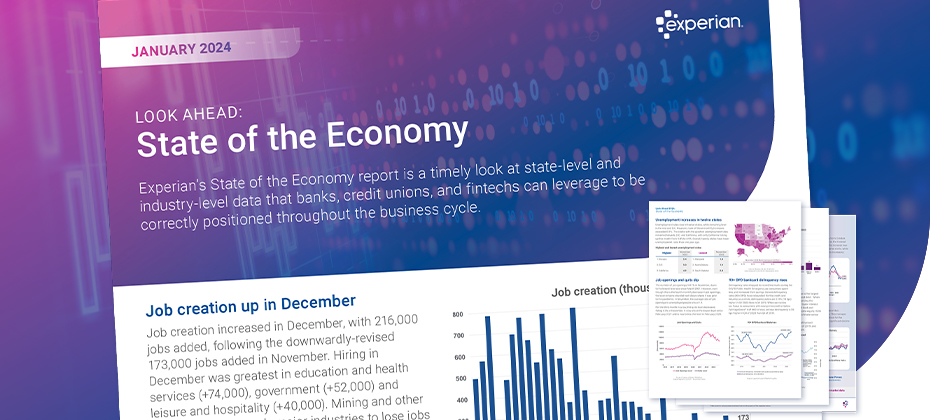
This report provides a snapshot of the top monthly economic and credit data, including student loans, consumer spending, and delinquencies.

Effective online identity verification can help improve your customers' experiences while preventing fraud.

Automate your credit limit management process to better serve your customers and quickly respond to the volatile market.

Approaches to payment fraud detection and prevention have evolved over time. Many organizations are now using AI and machine learning models.

The rise of remote work has significantly increased the prevalence of employment fraud. Learn how to safeguard your organization.

Meeting Know Your Customer (KYC) regulations and staying compliant is paramount to running your business with ensured confidence in who your customers are, the level of risk they pose, and maintained customer trust. What is KYC?KYC is the mandatory process to identify and verify the identity of clients of financial institutions, as required by the Financial Conduct Authority (FCA). KYC services go beyond simply standing up a customer identification program (CIP), though that is a key component. It involves fraud risk assessments in new and existing customer accounts. Financial institutions are required to incorporate risk-based procedures to monitor customer transactions and detect potential financial crimes or fraud risk. KYC policies help determine when suspicious activity reports (SAR) must be filed with the Department of Treasury’s FinCEN organization. According to the Federal Financial Institutions Examinations Council (FFIEC), a comprehensive KYC program should include:• Customer Identification Program (CIP): Identifies processes for verifying identities and establishing a reasonable belief that the identity is valid.• Customer due diligence: Verifying customer identities and assessing the associated risk of doing business.• Enhanced customer due diligence: Significant and comprehensive review of high-risk or high transactions and implementation of a suspicious activity-monitoring system to reduce risk to the institution. The following organizations have KYC oversight: Federal Financial Institutions Examinations Council (FFIEC), Federal Reserve Board, Federal Deposit Insurance Corporation (FDIC), national Credit Union Administration (NCUA), Office of the Comptroller of the Currency (OCC) and the Consumer Financial Protection Bureau (CFPB). How to get started on building your Know Your Customer checklist 1. Define your Customer Identification Program (CIP) The CIP outlines the process for gathering necessary information about your customers. To start building your KYC checklist, you need to define your CIP procedure. This may include the documentation you require from customers, the sources of information you may use for verification and the procedures for customer due diligence. Your CIP procedure should align with your organization’s risk appetite and be comply with regulations such as the Patriot Act or Anti-money laundering laws. 2. Identify the customer's information Identifying the information you need to gather on your customer is key in building an effective KYC checklist. Typically, this can include their first and last name, date of birth, address, phone number, email address, Social Security Number or any government-issued identification number. When gathering sensitive information, ensure that you have privacy and security controls such as encryption, and that customer data is not shared with unauthorized personnel. 3. Determine the verification method There are various methods to verify a customer's identity. Some common identity verification methods include document verification, facial recognition, voice recognition, knowledge-based authentication, biometrics or database checks. When selecting an identity verification method, consider the accuracy, speed, cost and reliability. Choose a provider that is highly secure and offers compliance with current regulations. 4. Review your checklist regularly Your KYC checklist is not a one and done process. Instead, it’s an ongoing process that requires periodic review, updates and testing. You need to periodically review your checklist to ensure your processes are up to date with the latest regulations and your business needs. Reviewing your checklist will help your business to identify gaps or outdated practices in your KYC process. Make changes as needed and keep management informed of any changes. 5. Final stage: quality control As a final step, you should perform a quality control assessment of the processes you’ve incorporated to ensure they’ve been carried out effectively. This includes checking if all necessary customer information has been collected, whether the right identity verification method was implemented, if your checklist matches your CIP and whether the results were recorded correctly. KYC is a vital process for your organization in today's digital age. Building an effective KYC checklist is essential to ensure compliance with regulations and mitigate risk factors associated with fraudulent activities. Building a solid checklist requires a clear understanding of your business needs, a comprehensive definition of your CIP, selection of the right verification method, and periodic reviews to ensure that the process is up to date. Remember, your customers' trust and privacy are at stake, so iensuring that your security processes and your KYC checklist are in place is essential. By following these guidelines, you can create a well-designed KYC checklist that reduces risk and satisfies your regulatory needs. Taking the next step Experian offers identity verification solutions as well as fully integrated, digital identity and fraud platforms. Experian’s CrossCore & Precise ID offering enables financial institutions to connect, access and orchestrate decisions that leverage multiple data sources and services. By combining risk-based authentication, identity proofing and fraud detection into a single, cloud-based platform with flexible orchestration and advanced analytics, Precise ID provides flexibility and solves for some of financial institutions’ biggest business challenges, including identity and fraud as it relates to digital onboarding and account take over; transaction monitoring and KYC/AML compliance and more, without adding undue friction. Learn more *This article includes content created by an AI language model and is intended to provide general information.

The online gaming industry has experienced tremendous growth. This surge in popularity has also sparked an increase in online gaming fraud.

To stay competitive and engage high-value customers, you’ll need to optimize your customer acquisition process.

. As we reflect on 2023, let’s look at the biggest fraud trends and their continued potential impact on your business.
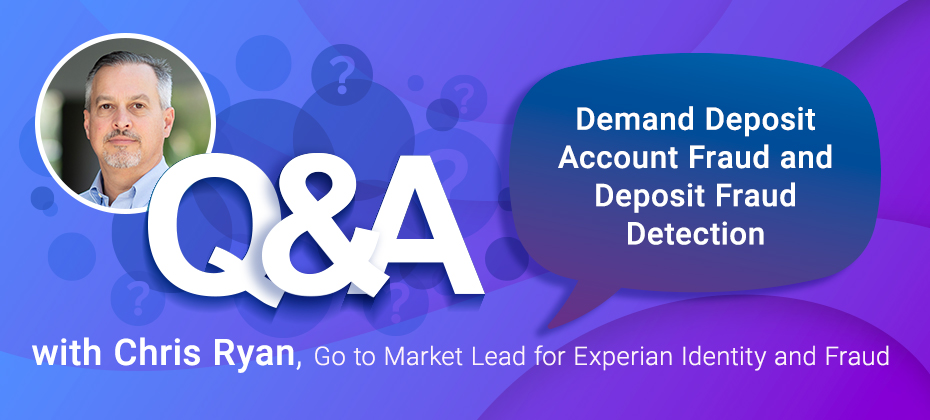
Cris Ryan, Go to Market Lead for Experian Identity and Fraud, shares his thoughts on demand deposit account fraud and how to combat it.