Tag: fraud
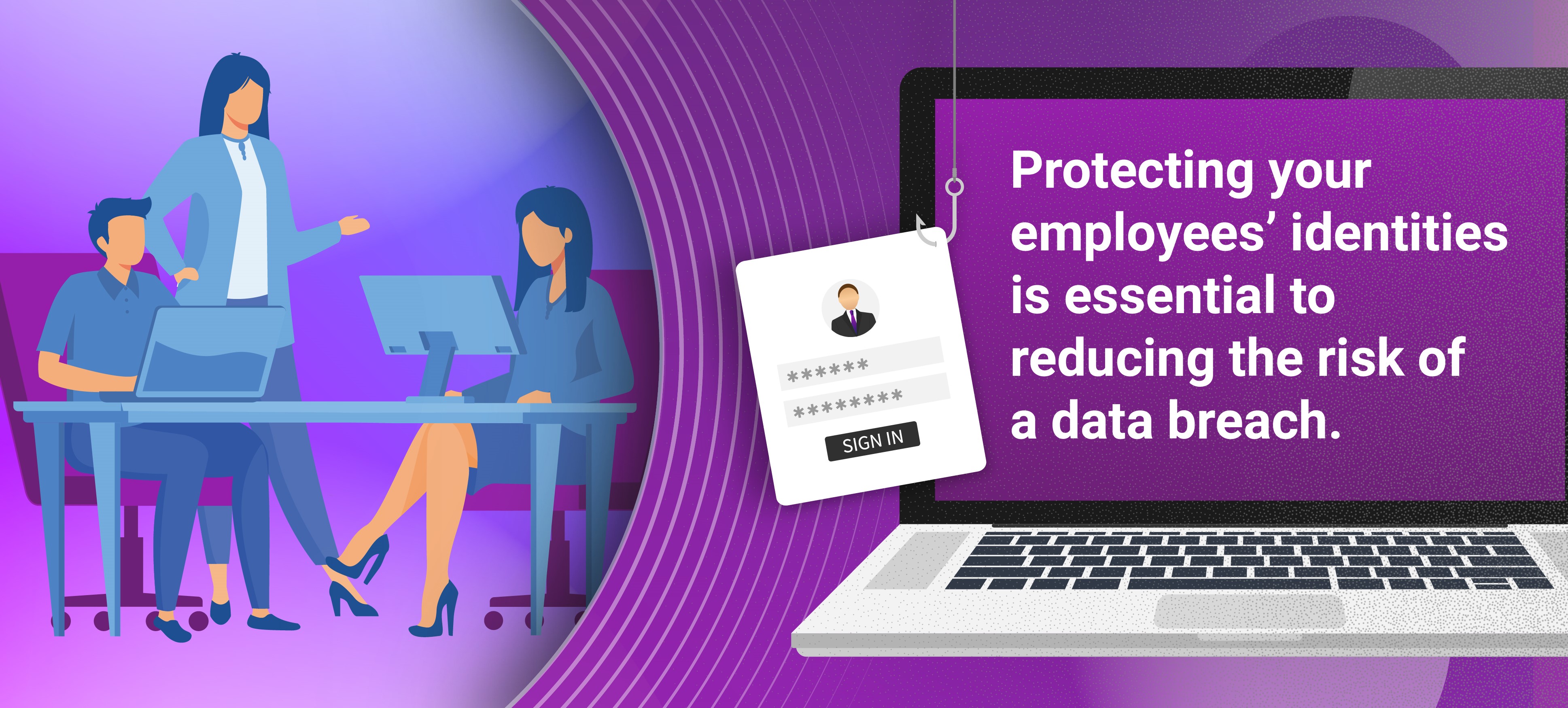
As data breaches become an ever-growing threat to businesses, the role of employees in maintaining cybersecurity has never been more critical. Did you know that 82% of data breaches involve the human element1 , such as phishing, stolen credentials, or social engineering tactics? These statistics reveal a direct connection between employee identity theft and business vulnerabilities. In this blog, we’ll explore why protecting your employees’ identities is essential to reducing data breach risk, how employee-focused identity protection programs, and specifically employee identity protection, improve both cybersecurity and employee engagement, and how businesses can implement comprehensive solutions to safeguard sensitive data and enhance overall workforce well-being. The Rising Challenge: Data Breaches and Employee Identity Theft The past few years have seen an exponential rise in data breaches. According to the Identity Theft Resource Center, there were 1,571 data compromises in the first half of 2024, impacting more than 1.1 billion individuals – a 490% increase year over year2. A staggering proportion of these breaches originated from compromised employee credentials or phishing attacks. Explore Experian's Employee Benefits Solutions The Link Between Employee Identity Theft and Cybersecurity Risks Phishing and Social EngineeringPhishing attacks remain one of the top strategies used by cybercriminals. These attacks often target employees by exploiting personal information stolen through identity theft. For example, a cybercriminal who gains access to an employee's compromised email or social accounts can use this information to craft realistic phishing messages, tricking them into divulging sensitive company credentials. Compromised Credentials as Entry PointsCompromised employee credentials were responsible for 16% of breaches and were the costliest attack vector, averaging $4.5 million per breach3. When an employee’s identity is stolen, it can give hackers a direct line to your company’s network, jeopardizing sensitive data and infrastructure. The Cost of DowntimeBeyond the financial impact, data breaches disrupt operations, erode customer trust, and harm your brand. For businesses, the average downtime from a breach can last several weeks – time that could otherwise be spent growing revenue and serving clients. Why Businesses Need to Prioritize Employee Identity Protection Protecting employee identities isn’t just a personal benefit – it’s a strategic business decision. Here are three reasons why identity protection for employees is essential to your cybersecurity strategy: 1. Mitigate Human Risk in Cybersecurity Employee mistakes, often resulting from phishing scams or misuse of credentials, are a leading cause of breaches. By equipping employees with identity protection services, businesses can significantly reduce the likelihood of stolen information being exploited by fraudsters and cybercriminals. 2. Boost Employee Engagement and Financial Wellness Providing identity protection as part of an employee benefits package signals that you value your workforce’s security and well-being. Beyond cybersecurity, offering such protections can enhance employee loyalty, reduce stress, and improve productivity. Employers who pair identity protection with financial wellness tools can empower employees to monitor their credit, secure their finances, and protect against fraud, all of which contribute to a more engaged workforce. 3. Enhance Your Brand Reputation A company’s cybersecurity practices are increasingly scrutinized by customers, stakeholders, and regulators. When you demonstrate that you prioritize not just protecting your business, but also safeguarding your employees’ identities, you position your brand as a leader in security and trustworthiness. Practical Strategies to Protect Employee Identities and Reduce Data Breach Risk How can businesses take actionable steps to mitigate risks and protect their employees? Here are some best practices: Offer Comprehensive Identity Protection Solutions A robust identity protection program should include: Real-time monitoring for identity theft Alerts for suspicious activity on personal accounts Data and device protection to protect personal information and devices from identity theft, hacking and other online threats Fraud resolution services for affected employees Credit monitoring and financial wellness tools Leading providers like Experian offer customizable employee benefits packages that provide proactive identity protection, empowering employees to detect and resolve potential risks before they escalate. Invest in Employee Education and Training Cybersecurity is only as strong as your least-informed employee. Provide regular training sessions and provide resources to help employees recognize phishing scams, understand the importance of password hygiene, and learn how to avoid oversharing personal data online. Implement Multi-Factor Authentication (MFA) MFA adds an extra layer of security, requiring employees to verify their identity using multiple credentials before accessing sensitive systems. This can drastically reduce the risk of compromised credentials being misused. Partner with a Trusted Identity Protection Provider Experian’s suite of employee benefits solutions combines identity protection with financial wellness tools, helping your employees stay secure while also boosting their financial confidence. Only Experian can offer these integrated solutions with unparalleled expertise in both identity protection and credit monitoring. Conclusion: Identity Protection is the Cornerstone of Cybersecurity The rising tide of data breaches means that businesses can no longer afford to overlook the role of employee identity in cybersecurity. By prioritizing identity protection for employees, organizations can reduce the risk of costly breaches and also create a safer, more engaged, and financially secure workforce. Ready to protect your employees and your business? Take the next step toward safeguarding your company’s future. Learn more about Experian’s employee benefits solutions to see how identity protection and financial wellness tools can transform your workplace security and employee engagement. Learn more 1 2024 Experian Data Breach Response Guide 2 Identity Theft Resource Center. H1 2024 Data Breach Analysis 3 2023 IBM Cost of a Data Breach Report

A spoofing attack occurs when a threat actor impersonates a trusted source to gain access to sensitive information, disrupt operations or manipulate systems.

Financial identity theft is one of the biggest threats to consumer’s financial wellness in today’s age. Learn how you can help prevent it.

Industry-leading institutions apply a layered approach to solving fraud that starts with a fraud risk assessment. Learn more!
Here are the top fraud trends and actionable resolutions to help risk managers stay ahead of fraud in 2025.

Learn four capabilities to consider when building out an ID verification strategy and next steps to take. Read more!

Learn how you can proactively fight credential stuffing attacks and protect your organization and customers.

Bots have been a consistent thorn in fraud teams’ side for years. But since the advent of generative AI (genAI), what used to be just one more fraud type has become a fraud tsunami. This surge in fraud bot attacks has brought with it: A 108% year-over-year increase in credential stuffing to take over accounts1 A 134% year-over-year increase in carding attacks, where stolen cards are tested1 New account opening fraud at more than 25% of businesses in the first quarter of 2024 While fraud professionals rush to fight back the onslaught, they’re also reckoning with the ever-evolving threat of genAI. A large factor in fraud bots’ new scalability and strength, genAI was the #1 stress point identified by fraud teams in 2024, and 70% expect it to be a challenge moving forward, according to Experian’s U.S. Identity and Fraud Report. This fear is well-founded. Fraudsters are wasting no time incorporating genAI into their attack arsenal. GenAI has created a new generation of fraud bot tools that make bot development more accessible and sophisticated. These bots reverse-engineer fraud stacks, testing the limits of their targets’ defenses to find triggers for step-ups and checks, then adapt to avoid setting them off. How do bot detection solutions fare against this next generation of bots? The evolution of fraud bots The earliest fraud bots, which first appeared in the 1990s2 , were simple scripts with limited capabilities. Fraudsters soon began using these scripts to execute basic tasks on their behalf — mainly form spam and light data scraping. Fraud teams responded, implementing bot detection solutions that continued to evolve as the threats became more sophisticated. The evolution of fraud bots was steady — and mostly balanced against fraud-fighting tools — until genAI supercharged it. Today, fraudsters are leveraging genAI’s core ability (analyzing datasets and identifying patterns, then using those patterns to generate solutions) to create bots capable of large-scale attacks with unprecedented sophistication. These genAI-powered fraud bots can analyze onboarding flows to identify step-up triggers, automate attacks at high-volume times, and even conduct “behavior hijacking,” where bots record and replicate the behaviors of real users. How next-generation fraud bots beat fraud stacks For years, a tried-and-true tool for fraud bot detection was to look for the non-human giveaways: lightning-fast transition speeds, eerily consistent keystrokes, nonexistent mouse movements, and/or repeated device and network data were all tell-tale signs of a bot. Fraud teams could base their bot detection strategies off of these behavioral red flags. Stopping today’s next-generation fraud bots isn’t quite as straightforward. Because they were specifically built to mimic human behavior and cycle through device IDs and IP addresses, today’s bots often appear to be normal, human applicants and circumvent many of the barriers that blocked their predecessors. The data the bots are providing is better, too3, fraudsters are using genAI to streamline and scale the creation of synthetic identities.4 By equipping their human-like bots with a bank of high-quality synthetic identities, fraudsters have their most potent, advanced attack avenue to date. Skirting traditional bot detection with their human-like capabilities, next-generation fraud bots can bombard their targets with massive, often undetected, attacks. In one attack analyzed by NeuroID, a part of Experian, fraud bots made up 31% of a business's onboarding volume on a single day. That’s nearly one-third of the business’s volume comprised of bots attempting to commit fraud. If the business hadn’t had the right tools in place to separate these bots from genuine users, they wouldn’t have been able to stop the attack until it was too late. Beating fraud bots with behavioral analytics: The next-generation approach Next-generation fraud bots pose a unique threat to digital businesses: their data appears legitimate, and they look like a human when they’re interacting with a form. So how do fraud teams differentiate fraud bots from an actual human user? NeuroID’s product development teams discovered key nuances that separate next-generation bots from humans, and we’ve updated our industry-leading bot detection capabilities to account for them. A big one is mousing patterns: random, erratic cursor movements are part of what makes next-generation bots so eerily human-like, but their movements are still noticeably smoother than a real human’s. Other bot detection solutions (including our V1 signal) wouldn’t flag these advanced cursor movements as bot behavior, but our new signal is designed to identify even the most granular giveaways of a next-generation fraud bot. Fraud bots will continue to evolve. But so will we. For example, behavioral analytics can identify repeated actions — down to the pixel a cursor lands on — during a bot attack and block out users exhibiting those behaviors. Our behavior was built specifically to combat next-gen challenges with scalable, real-time solutions. This proactive protection against advanced bot behaviors is crucial to preventing larger attacks. For more on fraud bots’ evolution, download our Emerging Trends in Fraud: Understanding and Combating Next-Gen Bots report. Learn more Sources 1 HUMAN Enterprise Bot Fraud Benchmark Report 2 Abusix 3 NeuroID 4 Biometric Update

There’s a common saying in the fraud prevention industry: where there’s opportunity, fraudsters are quick to follow. Recent advances in technology are providing ample new opportunities for cybercriminals to exploit. One of the most prevalent techniques being observed today is password spraying. From email to financial and health records, consumers and businesses are being impacted by this pervasive form of fraud. Password spraying attacks often fly under the radar of traditional security measures, presenting a unique and growing threat to businesses and individuals. What is password spraying? Also known as credential guessing, password spraying involves an attacker applying a list of commonly used passwords against a list of accounts in order to guess the correct password. When password spraying first emerged, an individual might hand key passwords to try to gain access to a user’s account or a business’s management system. Credential stuffing is a similar type of fraud attack in which an attacker gains access to a victim’s credentials in one system (e.g., their email, etc.) and then attempts to apply those known credentials via a script/bot to a large number of sites in order to gain access to other sites where the victim might be using the same credentials. Both are brute-force attack vectors that eventually result in account takeover (ATO), compromising sensitive data that is subsequently used to scam, blackmail, or defraud the victim. As password spraying and other types of fraud evolved, fraud rings would leverage “click farms” or “fraud farms” where hundreds of workers would leverage mobile devices or laptops to try different passwords in order to perpetrate fraud attacks on a larger scale. As technology has advanced, bot attacks fueled by generative AI (Gen AI) have taken the place of humans in the fraud ring. Now, instead of hand-keying passwords into systems, workers at fraud farms are able to deploy hundreds or thousands of bots that can work exponentially faster. The rise and evolution of bots Bots are not necessarily new to the digital experience — think of the chatbot on a company’s support page that helps you find an answer more quickly. These automated software applications carry out repetitive instructions mimicking human behavior. While they can be helpful, they can also be leveraged by fraudsters, to automate fraud on a brute-force attack, often going undetected resulting in substantial losses. Generation 4 bots are the latest evolution of these malicious programs, and they’re notoriously hard to detect. Because of their slow, methodical, and deliberate human-like behavior, they easily bypass network-level controls such as firewalls and popular network-layer security. Stopping Gen4 bots For any company with a digital presence or that leverages digital networks as part of doing business, the threat from Gen AI enabled fraud is paramount. The traditional stack for fighting fraud including firewalls, CAPTCHA and block lists are not enough in the face of Gen4 bots. Companies at the forefront of fighting fraud are leveraging behavioral analytics to identify and mitigate Gen AI-powered fraud. And many have turned to industry leader, Neuro ID, which is now part of Experian. Watch our on-demand webinar: The fraud bot future-shock: How to spot & stop next-gen attacks Behavioral analytics is a key component of passive and continuous authentication and has become table stakes in the fraud prevention space. By measuring how a user interacts with a form field (e.g., a website, mobile app, etc.) our behavioral analytics solutions can determine if the user is: a potential fraudster, a bot, or a genuine user familiar with the PII entered. Because it’s available at any digital engagement, behavioral data is often the most consistent signal available throughout the customer lifecycle and across geographies. It allows risky users to be rejected or put through more rigorous authentication, while trustworthy users get a better experience, protecting businesses and consumers from Gen AI-enabled fraud. As cyber threats evolve, so must our defenses. Password spraying exemplifies the sophisticated methods and technologies attackers now employ to scale their fraud efforts and gain access to sensitive information. To fight next-generation fraud, organizations must employ next-generation technologies and techniques to better defend themselves against this and other types of cyberattacks. Experian’s approach embodies a paradigm shift where fraud detection increases efficiency and accuracy without sacrificing customer experience. We can help protect your company from bot attacks, fraudulent accounts and other malicious attempts to access your sensitive data. Learn more about behavioral analytics and our other fraud prevention solutions. Learn more

Organizations must stay ahead of fraudsters by leveraging technology, training, and collaboration to combat synthetic ID fraud.

We are squarely in the holiday shopping season. From the flurry of promotional emails to the endless shopping lists, there are many to-dos and even more opportunities for financial institutions at this time of year. The holiday shopping season is not just a peak period for consumer spending; it’s also a critical time for financial institutions to strategize, innovate, and drive value. According to the National Retail Federation, U.S. holiday retail sales are projected to approach $1 trillion in 2024, , and with an ever-evolving consumer behavior landscape, financial institutions need actionable strategies to stand out, secure loyalty, and drive growth during this period of heightened spending. Download our playbook: "How to prepare for the Holiday Shopping Season" Here’s how financial institutions can capitalize on the holiday shopping season, including key insights, actionable strategies, and data-backed trends. 1. Understand the holiday shopping landscape Key stats to consider: U.S. consumers spent $210 billion online during the 2022 holiday season, according to Adobe Analytics, marking a 3.5% increase from 2021. Experian data reveals that 31% of all holiday purchases in 2022 occurred in October, highlighting the extended shopping season. Cyber Week accounted for just 8% of total holiday spending, according to Experian’s Holiday Spending Trends and Insights Report, emphasizing the importance of a broad, season-long strategy. What this means for financial institutions: Timing is crucial. Your campaigns are already underway if you get an early start, and it’s critical to sustain them through December. Focus beyond Cyber Week. Develop long-term engagement strategies to capture spending throughout the season. 2. Leverage Gen Z’s growing spending power With an estimated $360 billion in disposable income, according to Bloomberg, Gen Z is a powerful force in the holiday market. This generation values personalized, seamless experiences and is highly active online. Strategies to capture Gen Z: Offer digital-first solutions that enhance the holiday shopping journey, such as interactive portals or AI-powered customer support. Provide loyalty incentives tailored to this demographic, like cash-back rewards or exclusive access to services. Learn more about Gen Z in our State of Gen Z Report. To learn more about all generations' projected consumer spending, read new insights from Experian here, including 45% of Gen X and 52% of Boomers expect their spending to remain consistent with last year. 3. Optimize pre-holiday strategies Portfolio Review: Assess consumer behavior trends and adjust risk models to align with changing economic conditions. Identify opportunities to engage dormant accounts or offer tailored credit lines to existing customers. Actionable tactics: Expand offerings. Position your products and services with promotional campaigns targeting high-value segments. Personalize experiences. Use advanced analytics to segment clients and craft offers that resonate with their holiday needs or anticipate their possible post-holiday needs. 4. Ensure top-of-mind awareness During the holiday shopping season, competition to be the “top of wallet” is fierce. Experian’s data shows that 58% of high spenders shop evenly across the season, while 31% of average spenders do most of their shopping in December. Strategies for success: Early engagement: Launch educational campaigns to empower credit education and identity protection during this period of increased transactions. Loyalty programs: Offer incentives, such as discounts or rewards, that encourage repeat engagement during the season. Omnichannel presence: Utilize digital, email, and event marketing to maintain visibility across platforms. 5. Combat fraud with multi-layered strategies The holiday shopping season sees an increase in fraud, with card testing being the number one attack vector in the U.S. according to Experian’s 2024 Identity and Fraud Study. Fraudulent activity such as identity theft and synthetic IDs can also escalate. Fight tomorrow’s fraud today: Identity verification: Use advanced fraud detection tools, like Experian’s Ascend Fraud Sandbox, to validate accounts in real-time. Monitor dormant accounts: Watch these accounts with caution and assess for potential fraud risk. Strengthen cybersecurity: Implement multi-layered strategies, including behavioral analytics and artificial intelligence (AI), to reduce vulnerabilities. 6. Post-holiday follow-up: retain and manage risk Once the holiday rush is over, the focus shifts to managing potential payment stress and fostering long-term relationships. Post-holiday strategies: Debt monitoring: Keep an eye on debt-to-income and debt-to-limit ratios to identify clients at risk of defaulting. Customer support: Offer tailored assistance programs for clients showing signs of financial stress, preserving goodwill and loyalty. Fraud checks: Watch for first-party fraud and unusual return patterns, which can spike in January. 7. Anticipate consumer trends in the New Year The aftermath of the holidays often reveals deeper insights into consumer health: Rising credit balances: January often sees an uptick in outstanding balances, highlighting the need for proactive credit management. Shifts in spending behavior: According to McKinsey, consumers are increasingly cautious post-holiday, favoring savings and value-based spending. What this means for financial institutions: Align with clients’ needs for financial flexibility. The holiday shopping season is a time that demands precise planning and execution. Financial institutions can maximize their impact during this critical period by starting early, leveraging advanced analytics, and maintaining a strong focus on fraud prevention. And remember, success in the holiday season extends beyond December. Building strong relationships and managing risk ensures a smooth transition into the new year, setting the stage for continued growth. Ready to optimize your strategy? Contact us for tailored recommendations during the holiday season and beyond. Download the Holiday Shopping Season Playbook

Account farming is the process of creating and cultivating multiple user accounts, often using fake or stolen identities.

By implementing effective identity risk management, financial institutions can protect themselves and their consumers from identity fraud.

Mobile identity verification confirms the legitimacy of users accessing services via their mobile device.

Bot attacks are plaguing financial institutions. The risks are significant, weakening both security and financial stability.