Latest Posts

This month, it’s all about parties and gift giving and holiday traditions. Fast forward a month, however, and consumers will be in a different place. Today, they are spending. In a few weeks, the focus will be on paying down bills, or perhaps seeking solutions to consolidate or transfer balances. The good news for the economy is consumers are expected to spend more this holiday season – $830 on average, a huge jump from last year’s $720. Total retail is expected to increase 5.6 percent, while ecommerce (thanks Amazon Prime) should rise 13.9 percent. Credit card originations are also trending up more than 1 percent year-over-year as of the end of the third quarter of 2015. So what does this mean for lenders? Card utilization is peaking, creating the perfect scenario for many consumers to seek balance transfers, consolidate debt and search for competitive rates, especially if they’ve been leveraging high-interest cards. A recent analysis by NerdWallet revealed consumers are more interested in shopping with store credit cards than with traditional cards this season, putting them at particular risk of sky-high rates. A deeper look at utilization revealed super-prime consumers use less than 6 percent of their available credit limits, while consumers in the deep-subprime tier use nearly every dollar allotted. “Consumers spend billions during the holidays on high-interest credit cards,” said Kyle Matthies, Experian product manager. “Many of them have excellent credit, but struggle juggling multiple payments, which can lead to delinquencies. Credit card consolidation can provide relief by lowering interest rates and simplifying repayment.” Card issuers that remain passive during this window may find their portfolios at-risk as customers take advantage of seasonal offers. Competitors who capitalize on this peak season of balance transfers will likely be mailing out offers to acquire and grow their card portfolio, as well as protect their current card base. “As banks and credit unions finish out the calendar year, they might seek one last marketing push, so a balance-transfer campaign might be the ideal play,” said Matthies. “Still, to avoid blowing the budget, it helps to leverage data to know exactly who to target – both within and outside the card portfolio.” Specific models and/or tools can identify who to try to retain, as well as provide insights on whom to conquest from the outside. An index can additionally offer guidance on when to lower APRs, sweeten rewards and increase credit limits for specific consumers. The post-holiday balance-transfer wave is coming. The question is which lenders will be best prepared to protect and grow their respective card portfolios.
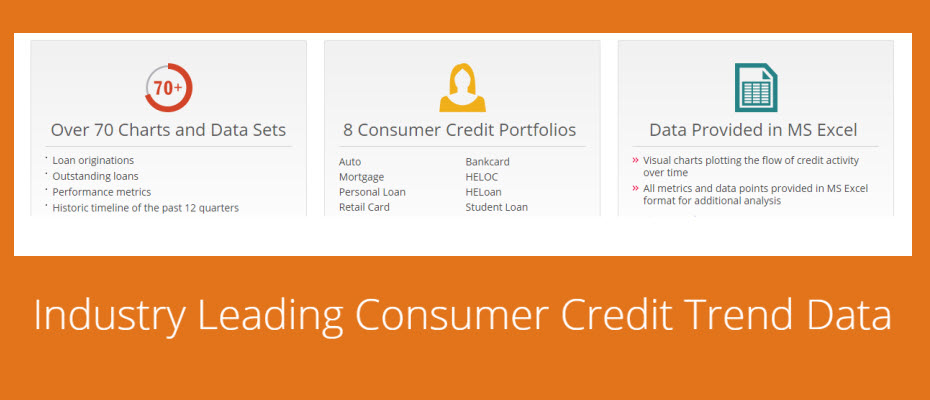
Hello from the other side ... While Adele scores big on the Billboard Hot 100 by crooning of coming to terms with a lover from the past, a new Experian “State of Credit” reveals we are officially on the “other side” of the recession – at least if you’re looking at the nation’s credit scores. While the bottom of the Great Recession was reached in the second quarter of 2009, steady job growth was not seen until 2011, and even since, some economists claim it has been a "Tortoise Recovery.” But key findings from Experian’s 6th annual study, ranking top and bottom cities across the nation in regards to credit, suggests the U.S. is strong. “If I were to give a grade to the overall picture of credit in the United States, I would give it an A minus,” said Michele Raneri, Experian’s vice president of analytics and new business development. “I’m optimistic about the state of credit as we are seeing more loans being extended, late payments are decreasing and consumers are continuing to gain more confidence in originating loans. There definitely is growth and momentum — we’re back to prerecession levels in nearly every category, which means lenders are in a prime position to capitalize on this market and foster business growth.” Which states topped the credit charts? As in previous years, Minnesota continues to shine with three of its cities — Mankato, Rochester and Minneapolis — leading with credit scores of 706, 705 and 704, respectively. Greenwood, Miss. and Albany, Ga. ranked the lowest with scores of 612 and 622. While still at the bottom of the list with a score of 612, Greenwood, Miss., residents did improve their score by three points, more than any other city in the bottom 10. Overall, the report reveals the national credit score increased by three points over the last year (and by five points since 2013) and the 10 cities with the highest credit scores in the nation increased their scores by an average of 1.8 points. Additionally, bankcards, retail cards and mortgage lending showed significant growth, making this year’s study an indicator of the nation’s confidence in the credit market. Just in time for the election year, this year’s study includes insight into how residents of these top and bottom metropolitan statistical areas (MSAs) identify politically. The study found that half of the highest-scoring cities have residents whose views skew more middle of the road, while residents of lower-scoring cities are more likely to lean conservative. The full lists of the top 10 and bottom 10 cities are featured (scores are rounded to the nearest whole number). Detailed study highlights include the following changes over the last year: The national VantageScore® credit score is up by three points, from 666 to 669. Bankcard lending continues to increase, with new bankcards up 7.7 percent. The average number of bankcards per consumer is up 2.8 percent to 2.24 cards. Retail card lending also is on the rise, with a 10.8 percent increase in new originations. The average number of retail cards per consumer is up 0.3 percent to 1.55 cards from last year and up by 7 percent since 2013. Instances of late payments (includes bankcard and retail) decreased by 4.4 percent over the last year and by 17.3 percent since the height of the recession in 2010. Average debt2 is up 2.1 percent to $29,093 per consumer. Mortgage originations increased by 42.5 percent. For a more complete look at the above cities as well as the other MSAs studied, visit http://www.livecreditsmart.com to view a fully interactive map and infographic. Purchase The Experian Market Intelligence Brief, a quarterly report that includes more than 70 charts and data trends on loan originations, outstanding loans and delinquency performance metrics spanning three years.
With Black Friday quickly approaching, a recent Experian study shows online Black Friday searches are already tracking ahead of last year. This October, the weekly search share for Black Friday averaged 12% higher than October 2014 and is expected to increase dramatically between now and Thanksgiving week. Top product searches for the week ending October 31, 2015 include: Marketers can design more successful campaigns and maximize rewards for both consumers and brands by staying on top of the latest search trends. >> Holiday Hot Sheet

I recently read a study about the profile of an online Fraudster. One may jump to conclusions about what is a good indicator for catching cybercriminals.
The online marketplace lending sector’s growth is prompting regulators, raising questions about the safety of financial systems and risks associated.

According to a recent survey commissioned by VantageScore® Solutions, millennials cite being unscoreable as the main obstacle to credit access. Among the findings: One-third of millennials cannot obtain the credit they need Of those unable to obtain credit, 34% attribute it to lack of a credit score 49% of millennials agree that competition in the credit-scoring marketplace is beneficial Lenders can help this segment and open the gateway of credit by using advanced risk models that can accurately score consumers considered unscoreable by conventional risk models. >> Infographic: The Giant Credit Gap VantageScore® is a registered trademark of VantageScore Solutions, LLC.
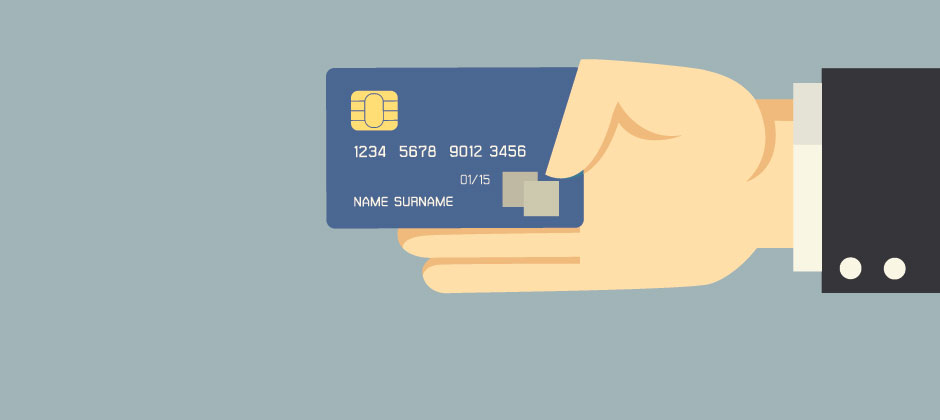
I recently facilitated a Webinar looking at myths and truths in the market regarding the EMV shift and what it means for both merchants and issuers.
The Responsible Business Lending Coalition, a group of nonbank small-business lenders, recently announced a regulatory program designed to bring greater clarity to the industry’s pricing and consumer protections, including: The right to transparent pricing and terms The right to non-abusive products The right to responsible underwriting The right to fair treatment from brokers The right to inclusive credit access The right to fair collection practices Industry self-regulation is a good way for market leaders to demonstrate self-discipline and is preferable to legislative or regulatory changes because of its flexibility and ability to accommodate evolving market trends. >> Webinar: Online Marketplace Lending

Will the U.S. consumer spend more this holiday season? One way to measure this behavior is through bankcard utilization rates.

The themes of the game of Risk are relevant to the world of real-life fraud risk prevention. The difference is that the stakes are real and much higher.

Winning the loyalty of millennials continues to be a key area of opportunity for financial institutions.

While marketers typically begin deploying Halloween emails in September, last-minute mailings receive the highest response.

What will the EMV shift really mean for consumers and businesses here in the U.S.? Businesses and consumers across the U.S. are still adjusting to their new EMV credit cards. The new credit cards are outfitted with computer chips in addition to the magnetic strips to help prevent point-of-sale (POS) fraud. The new system, called EMV (which stands for Europay, MasterCard and Visa), requires signatures for all transactions. EMV is a global standard for credit cards. In the wake of the rising flood of large-scale data breaches at major retailers – and higher rates of counterfeit credit card fraud – chip-and-signature, as it is also called, is designed to better authenticate credit card transactions. Chip-and-signature itself is not new. It has been protecting consumers and businesses in Europe for several years and now the U.S. is finally catching up. But what will the EMV system really mean for consumers and businesses here in the U.S.? There is the potential for businesses that sell both offline and online, to see an increase in fraud that takes place online called Card Not Present (CNP) fraud. Will credit card fraud ever really be wiped out? Can we all stop worrying that large-scale point-of-sale breaches will happen again? Will the EMV shift affect holiday shopping and should retailers be concerned? Join us as we explore these questions and more on an upcoming Webinar, Chipping Away at EMV Myths. Our panel of experts includes: David Britton, Vice President, Industry Solutions, Experian Julie Conroy, Research Director, Aite Group Mike Klumpp, Director of Fraud Prevention, Citibank Moderated by: Keir Breitenfeld, Vice President, Product Management, Experian

Small Business Fraud When you hear the word “fraud” it’s unlikely that small business fraud comes to mind. However, in terms of potential losses, business identity theft could be considered as big if not a larger threat than consumer identity theft. Just like consumers, businesses face a broad- range of first- and third-party fraud behaviors, varying significantly in frequency, severity and complexity. Small businesses are especially vulnerable, because they typically do not have the layers of security and oversight, an alert accounting or I.T. department, or the sophisticated security technology that larger businesses may have. Over $8 billion is lost or stolen from small businesses each year and 60% of businesses who suffer business identity fraud close their doors within one year. A first-party, or victim-less, fraud profile is characterized by having some form of material misrepresentation (for example, manipulation or falsification of business filings and records) by the business owner without that owner’s intent or immediate capacity to pay the loan item. Historically, during periods of economic downturn or misfortune, this type of fraud is more common. This intuitively makes sense — individuals under extreme financial pressure are more likely to resort to desperate measures, such as misstating financial information on an application to obtain credit. Third-party commercial fraud occurs when a third party steals the identification details of a known business or business owner in order to open credit in the business victim’s name. With creditors becoming more stringent with credit-granting policies on new accounts, we’re seeing seasoned fraudsters shift their focus on taking over existing business or business owner identities. The rising trend of commercial fraud is illustrated by several key reasons including: One of the most common reasons for this is that commercial fraud doesn’t receive the same amount of attention as consumer fraud. Thus, it’s become easier for fraudsters to slip under the radar by perpetrating their crimes through the commercial channel. Keep in mind that businesses are often not seen as victims in the same way that consumers are. For example, victimized businesses aren’t afforded the protections that consumers receive under identity theft laws, such as access to credit information. Another factor is that most businesses are eager to open a new account for a business, after all businesses spend more than consumers. In some cases, opening a new business account can be even easier than opening a new consumer account. Business also have higher credit limits and the invoicing and payment terms allows identity thieves the opportunity to receive products and services without early detection. Finally, it is much easier to get information on a business versus a consumer. Unlike the protections provided to consumers to protect their identity, their credit information much of a business’s information is public record. Armed with the just a business name, address and EIN (employer identification number) fraudulent accounts can be opened and the game of theft begins. These factors, coupled with the fact that business-to-business fraud is approximately three-to-ten times more “profitable” per occurrence than consumer fraud, play a role in leading fraudsters increasingly toward commercial fraud. To learn more about how to protect your business view our interactive Fraud e-book.
According to the latest State of the Automotive Finance Market report, a record 55.5% of all used vehicles were financed in Q2 2015, compared to 53.8% the previous year.