
Alternative fuel vehicles continued to gain momentum in the fourth quarter of 2025, driven by expiring electric vehicle (EV) tax credits and a growing preference for options that bridge the gap between full electric and traditional gasoline vehicles. According to Experian’s Automotive Consumer Trends Report: Q4 2025, alternative fuel vehicles accounted for 38.6% of new retail car registrations in the last 12 months, with 11% battery electric (BEV) and 27.6% hybrids and plug-in hybrids (PHEVs). This signals that the narrative about growth in consumer interest for alternative fuel is increasingly towards hybrids, not just full EVs. Taking a deeper dive, the Toyota Camry Hybrid led all alternative fuel car models, coming in 31.7% in Q4 2025. Rounding out the top five were Tesla Model 3 (19%), Honda Civic Hybrid (10.1%), Honda Accord Hybrid (9%), and Toyota Prius (5.3%). Interestingly, the Toyota Camry also stood out as the top model in both new and used car markets in Q4 2025, holding 12.2% of new car market share and 6.3% of used car market share. The Honda Civic ranked second in new car market share, coming in at 10.5% this quarter, while the Honda Accord secured the second spot in the used car market at 5.8%. The prominence of these vehicles leading both new and used car markets reflects a combination of strong new-vehicle sales and sustained demand in the secondary market. Data in the report also revealed strong loyalty within Toyota and Honda, with significant inflow between the two brands. For instance, 38.4% of Toyota Camry buyers replaced their vehicle with another Camry in Q4 2025, and 39.7% of Honda Civic buyers replaced it with another Civic. These trends reinforce the value of dealers monitoring evolving consumer preferences and aligning inventory with vehicles that offer fuel efficiency and flexible powertrain options as the market continues to shift. To learn more about car insights, view the full Automotive Consumer Trends Report: Q4 2025 presentation.
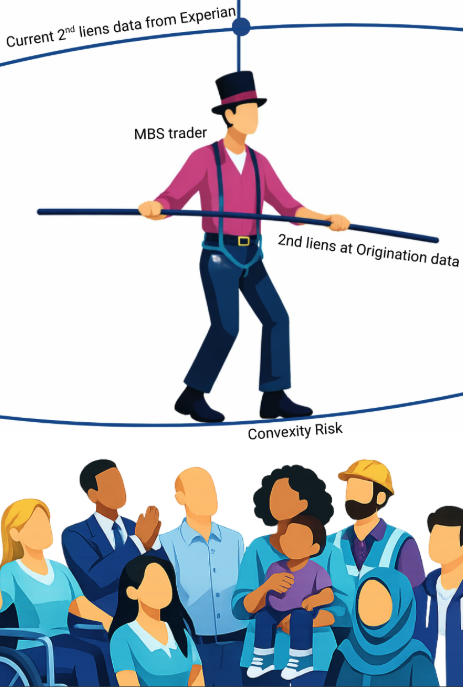
Discover how Experian’s Mortgage Loan Performance dataset reveals current second lien balances that materially impact MBS prepayment speeds, CLTV accuracy, and call protection. Learn why this new loan-level data meets the New, Material, and Significant criteria to move agency MBS markets and improve investor modeling precision.

As vehicle prices and interest rates continue to evolve, both consumers and lenders are recalibrating their approaches to affordability and long-term sustainability. This shift has resulted in the subprime segment growing to its largest share of total finance market for subprime in the fourth quarter since 2021. According to Experian’s State of the Automotive Finance Market Report: Q4 2025, subprime borrowers accounted for 15.31% of total vehicle financing, an increase from 14.54% in Q4 2024. To understand why the subprime space is evolving, we took a deeper dive into the affordability picture and how changes in pricing and interest rates are influencing both consumer decisions and lender strategies. In Q4 2025, the average loan amount for a new vehicle increased $1,882 from the prior year to $43,582, and the average interest rate for a new vehicle went from 6.34% last year to 6.37% this quarter. As a result, the average monthly payment increased from $746 to $767 in the same time frame. On the used side, the average loan amount increased $872 year-over-year, reaching $27,528 in Q4 2025. However, despite the average interest rate declining from 11.63% to 11.26% during the same time, the average monthly payment grew $9 from last year to $537 this quarter. These changes are prompting thoughtful adjustments across the automotive ecosystem. Consumers are comparing financing options more carefully and adjusting loan terms when necessary to prioritize the cost of ownership. Lenders are also focusing more on payment flexibility and how long-term borrowers are performing as they leverage it for central pillars of strategies to stay ahead of the ever-evolving market. To learn more about automotive finance trends, view the full State of the Automotive Finance Market Report: Q4 2025 presentation on demand.