Loading...

How Credit Unions Can Improve Financial Inclusion

by Corliss Hill 6 min read October 20, 2022

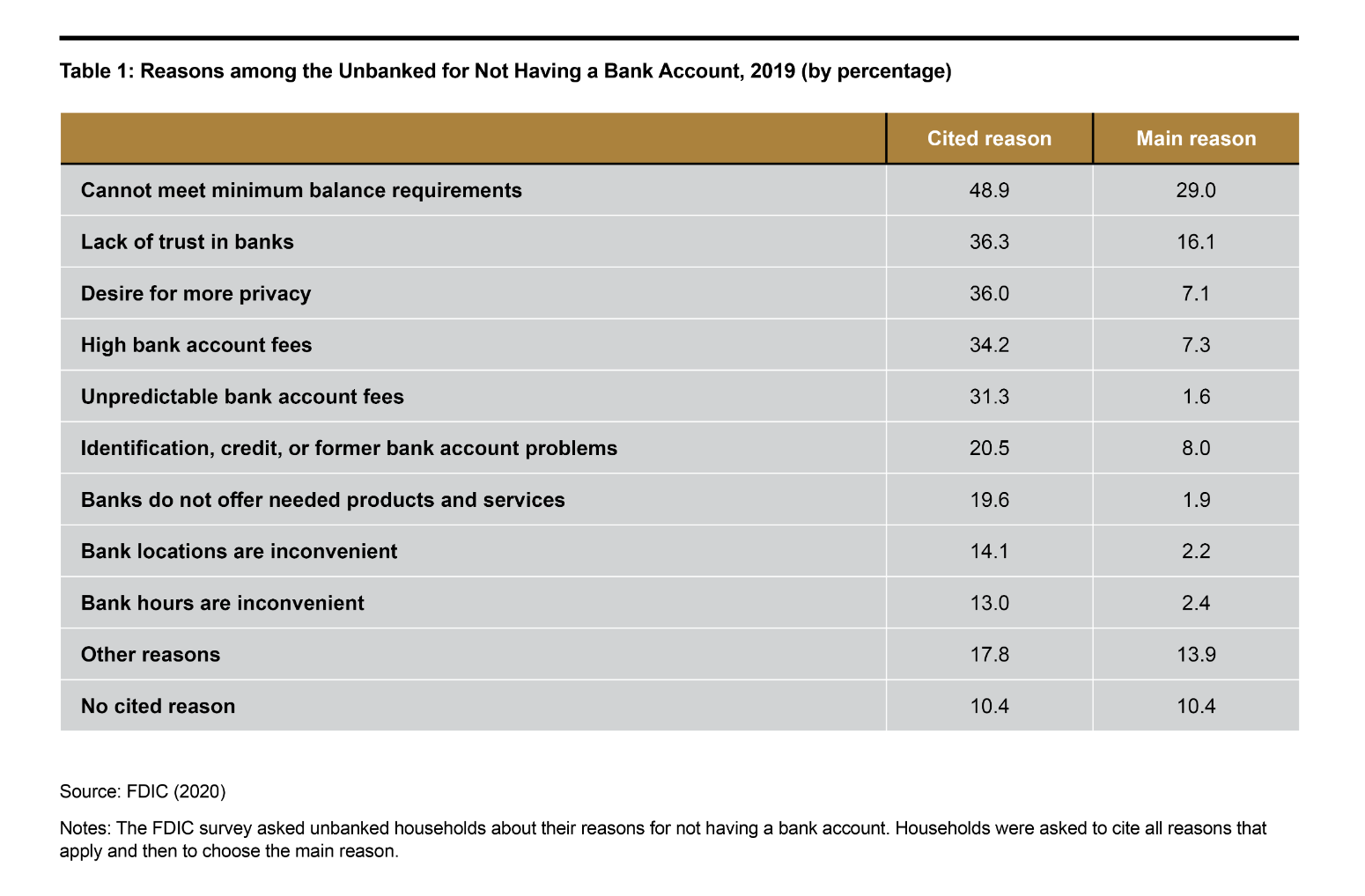
More than seven million Americans who are unbanked cite high account fees, insufficient funds to meet minimum balances and a lack of needed products and services as the main reasons for not having a checking or savings account.1

Credit unions understand that being unbanked comes at a steep cost and have turned their focus to developing products and strategies that prioritize financial inclusion — a movement to combat inequities in banking and better serve the financial needs of marginalized communities.

In 2022, the House passed Expanding Financial Access for Underserved Communities Act to allow federal credit unions to add underserved areas to their fields of membership as a means of improving financial inclusion. “We believe diversity, inclusion, equity, belonging and accessibility has to be weaved into the strategic fabric of an organization [and its] culture,” says Max Villaronga, President and Chief Executive Officer of Raiz Federal Credit Union. “When we don’t participate in [diversity, equity and inclusion], we are complicit in essentially keeping people out of the banking system.”

For credit unions, driving financial inclusion starts with setting a vision that will leave a lasting legacy that includes fostering financial empowerment, closing the credit gap and building generational wealth among the communities they serve. Here’s a roadmap for getting started.

Best practices for engagement

Establishing a set of best practices is the essential starting point for improving financial inclusion. The process begins with the mission statement and extends to all aspects of operations from hiring procedures to sponsorships and donations. Villaronga advocates three strategies for engagement:

Engage the leadership team

Conversations about financial inclusion need to start at the top. The C-suite must be willing to be honest about the barriers and willing to adopt changes that will make credit unions more inclusive.

“[T]hese systemic barriers will exist until somebody deliberately moves them out of the way,” Villaronga says. “The people who are feeling those barriers are not in the position to do the moving it’s up to [CEOs and CFOs] to decide to do something to make a difference.”

Making a difference starts with choosing a leadership team that reflects the demographics of local communities. Case in point: At Raiz Federal Credit Union in El Paso, Texas, senior management and the board have LGBTQIA+ representation and include members from diverse racial and ethnic identities. The board of directors has also prioritized creating a pipeline that will attract more diverse talent to the board.

“Many of [our board members] come from underserved backgrounds in our border community,” Villaronga says. “This is a very personal journey for them because they can see themselves in the lives of the people we’re serving.”

Build trust in underserved communities

According to an FDIC Survey, “unbanked” U.S. households listed a lack of trust in financial institutions as a top reason for not having a bank account. And lack of access to a checking or savings account is most prominent among racial and ethnic minorities and low-income communities.2
Actions speak louder than words, according to Villaronga. Raiz Federal Credit Union uses diverse images in its advertising and provides information in both English and Spanish. The credit union was also awarded the Juntos Avanzamos (Together We Advance) designation from Inclusiv for its commitment to serving and empowering Hispanic communities by providing safe, affordable and relevant financial services.

Villaronga believes that a designation like Juntos Avanzamos sends the message to the community that the credit union is committed to improving general financial literacy and pre-loan education, as well as reducing higher charge-offs and other barriers to accessing financial services that exist in lending and serving underserved communities.

Dispel financial inclusion myths

Among traditional financial institutions, myths about financial inclusion are widespread and include falsehoods that pricing products for marginalized communities are too challenging, reaching out is not profitable, and providing financial products to underserved markets is too risky.

“Credit unions were really built to extend credit [and] were also originally established to serve consumers that were being ignored by the existing systems that were in place but those consumers are still being ignored today,” Villaronga says. “Are those communities too risky to serve? Some companies are serving them [and] they would not be doing so if it was not profitable.”

Raiz Federal Credit Union offers several affordable loan products — from credit builder loans to citizenship loans and payday lender payoff loans along with credit cards — that allow members to build their credit scores and establish positive credit histories.

Rather than pricing loans based on what the competition is charging, Villaronga calculates the fixed and variable costs, failure fraction and target return on assets to get a floor pricing per unit. The approach, he adds, allowed Raiz Federal Credit Union to report earnings of over 150 basis points in 2021 while maintaining a 12 percent capital ratio, proving that financial inclusion is good for the bottom line.

“THE IDEA THAT YOU CANNOT [ACHIEVE FINANCIAL INCLUSION] IN A WAY THAT’S SAFE AND SOUND AND SATISFIES THE [NATIONAL CREDIT UNION ADMINISTRATION] IS TRULY A MYTH.”

– Max Villaronga, President and CEO, Raiz Federal Credit Union

Partner for Success

For credit unions, an important part of achieving financial inclusion goals is identifying partners that can help.

Raiz Federal Credit Union set a goal to increase automated lending from 20 percent to 60 percent, but using a traditional loan origination program was insufficient to hit that target. A partnership with Experian allowed the credit union to access tools that allowed it to better identify non-traditional risks and opportunities, as well as develop more robust lending and optimized decision strategies.

Experian launched Inclusion ForwardTM, an initiative to help boost financial inclusion and close the wealth gap, and support financial institutions by enhancing their inclusion approach by leveraging FCRA-regulated data sources (otherwise known as alternative data).3

In addition to providing a deeper view of unbanked and underbanked consumers and reducing friction and speed of decisioning through increased automation, Experian Lift PremiumTM uses income and employer data, social security and financial management insights — transaction behaviors that were historically credit invisible or unscorable — to help credit unions meet the needs of underserved markets and increase opportunities for inclusion.

“This automation also allows us to reduce our fixed cost per unit — [and] it’s a really big deal because this is not by little, but a lot,” Villaronga says. “This lower cost to produce [a loan] allows us to improve our interest rates to underserved members, further creating an appealing value proposition that’s in line with our financial inclusion strategy.”

Access our case study to learn more about how Experian can help grow your business with a frictionless digital prequalification experience.

1Federal Reserve Bank of Cleveland (May 2022). Unbanked in America: A Review of Literature
2 Federal Deposit Insurance Corporation (December 2021). American Banks: Household use of Banking and Financial Services
3When we refer to “Alternative Credit Data,” this refers to the use of alternative data and its appropriate use in consumer credit lending decisions, as regulated by the Fair Credit Reporting Act. Hence, the term “Expanded FCRA Data” may also apply in this instance and both can be used interchangeably


Related Posts

Financial services leaders are dealing with numerous pressures at the same time. These growing challenges for financial services organizations include sophisticated fraud, rapid Artificial Intelligence (AI) adoption without clear regulatory direction, rising customer expectations and the need for compliant, sustainable growth. Businesses are rethinking how they manage risk, growth and customer trust. These financial industry challenges are no longer confined to internal risk teams. They directly impact long-term customer loyalty. How organizations navigate these challenges will determine how effectively they deliver value to their customers. We’ve outlined the six challenges for financial services oranizations that consistently rank highest among industry leaders today. Challenge 1: Fraud is becoming harder to detect and eroding customer trust 72% of business leaders expect AI-generated fraud and deepfakes to be major challenges by 20261 As fraud tactics evolve quickly, driven in part by AI, customers are being targeted through identity-based attacks from account takeovers to synthetic identities and misuse of personal information. When these threats go undetected, or when legitimate activity is incorrectly flagged, the result isn’t just financial loss. It’s a breakdown of trust. Organizations that want to stay ahead must move beyond isolated fraud controls. By embedding identity management and monitoring into the customer experience, organizations can move from reactive fraud response to proactive identity protection. Identity theft protection and monitoring help organizations turn fraud prevention into a visible, trust-building experience for customers — offering early alerts, guidance, and peace of mind when identity risks arise. Challenge 2: AI decisions must be trusted by customers, not just regulators 76% of businesses say implementing responsible AI is one of their biggest challenges2 As AI becomes more embedded in financial services, it shapes the experiences customers see every day. From credit decisions to eligibility outcomes and personalized offers. While AI can drive faster and more inclusive decisions, it also introduces a new expectation: customers want to understand why a decision was made. Responsible AI is no longer just about regulatory compliance. It’s about delivering outcomes that feel fair, consistent and easy to understand. When decisions appear unclear, confidence erodes. When organizations can clearly explain outcomes, not just internally, they build confidence across regulators, partners and customers. This allows AI to scale responsibly while reinforcing trust in every interaction. Financial wellness tools such as credit scores, reports and education help make AI-driven decisions more transparent, giving customers clarity into outcomes and confidence in how their financial health is assessed. Challenge 3: Digital experiences are failing to deliver clarity and confidence 57% of U.S. consumers remain concerned about conducting activities online3 Customer confidence is affected by day-to-day interactions such as onboarding, payments and issue resolution. Inconsistent decisions, unclear outcomes and friction in digital journeys can quickly erode confidence and increase confusion, disengagement and abandonment. Financial services leaders will need to rebuild and strengthen confidence. Improving key decision points with better data and analytics helps ensure customers receive timely insights, understandable outcomes and meaningful guidance, turning everyday interactions into opportunities to build stronger relationships. By delivering ongoing financial wellness insights and education, organizations can replace confusion with clarity — helping consumers better understand their financial standing and stay engaged over time. Challenge 4: Gen Z continues to raise the bar It's no secret that Gen Z stands out for its strong preference for digital financial services and digital interactions, but Gen Z is also pushing the envelope on financial wellness. 48% of Gen Z report that they do not feel financially secure, indicating strong demand for financial support and tools4 Their expectations for instant decisions, seamless digital experiences, transparency and tools that help them manage their financial lives are quickly becoming the baseline. To meet and exceed these expectations, financial institutions will need to support real-time, data-driven decisioning that adapt to individual needs. Delivering modern, app-like financial experiences, without compromising risk management. Increasingly, organizations are meeting Gen Z expectations by offering financial wellness and protection tools through employee benefits, supporting everyday financial confidence beyond traditional compensation. Challenge 5: Limited data limits meaningful consumer engagement 62 million U.S. consumers are thin-file or credit invisible under traditional credit scoring.5 Growth will always be a priority, but it must be responsible and inclusive. Traditional credit data alone often provides an incomplete picture of consumer financial behavior, limiting visibility and making it harder to confidently expand access. By incorporating alternative and expanded data, organizations can gain a more holistic view of consumers. This broader perspective supports smarter decisions, personalized insights and more inclusive engagement, which enables growth while maintaining compliance and managing risk responsibly. Expanded data supports more personalized financial wellness experiences, enabling organizations to provide relevant insights, responsible access and guidance tailored to individual consumer needs. Challenge 6: Disconnected decisions create inconsistent customer experiences Increasingly, fintech leaders are moving toward unified risk and decisioning strategies to deliver more personalized experiences6 While customers interact with a single institution, decisions are often made across disconnected data sources, systems and teams. These silos create inconsistent experiences, slow responses and operational complexities that customers feel directly through conflicting messages and uneven outcomes. Experian helps organizations break down these silos by unifying data, analytics and decisioning across the enterprise. When data incidents occur, integrated experiences enable faster data breach resolution, helping consumers understand what happened, take action, and recover with confidence. Looking ahead These challenges for financial services organizations are not emerging; they’re already here and reshaping how financial institutions engage with consumers. Leaders who proactively address financial industry challenges by connecting data, analytics, and responsible AI are better positioned to deliver trusted, transparent and meaningful experiences. Learn More References:1. https://www.experian.com/blogs/insights/2025-identity-fraud-report2. https://www.techradar.com/pro/businesses-are-struggling-to-implement-responsible-ai-but-it-could-make-all-the-difference3. https://www.experian.com/blogs/insights/2025-identity-fraud-report4. https://www.deloitte.com/global/en/issues/work/genz-millennial-survey.html5. https://www.experian.com/thought-leadership/business/the-roi-of-alternative-data6. https://us-go.experian.com/2025-state-of-fintech-report?cmpid=IM-2025-state-of-fintech-report-livesocial-share

by Zohreen Ismail 6 min read February 9, 2026

Since 1996, The Internal Revenue Service (IRS) has issued more than 27 million individual taxpayer identification numbers (ITINs) –⁠ a 9-digit number used by individuals who are required to file or report taxes in the United States but are not eligible to obtain a Social Security number (SSN). Across the country, ITIN holders are actively contributing to their communities and the U.S. financial system. They pay bills, build businesses, contribute billions in taxes and manage their finances responsibly. Yet despite their clear engagement, many remain underrepresented within traditional lending models.  Lenders have a meaningful opportunity to bridge the gap between intention and impact. By rethinking how ITIN consumers are evaluated and supported, financial institutions can: Reduce barriers that have historically held capable borrowers back Build products that reflect real borrower needs Foster trust and strengthen community relationships Drive sustainable, responsible growth Our latest white paper takes a more holistic look at ITIN consumers, highlighting their credit behaviors, performance patterns and long-term growth potential. The findings reveal a population that is not only financially engaged, but also demonstrating signs of ongoing stability and mobility. A few takeaways include: ITIN holders maintain a lower debt-to-income ratio than SSN consumers. ITIN holders exhibit fewer derogatory accounts (180–⁠400 days past due). After 12 months, 76.9% of ITIN holders remained current on trades, a rate 15% higher than SSN consumers. With deeper insight into this segment, lenders can make more informed, inclusive decisions. Read the full white paper to uncover the trends and opportunities shaping the future of ITIN lending. Download white paper

by Theresa Nguyen 6 min read February 2, 2026

Learn how Experian's Credit + Cashflow Score leads to a 40% improvement in predictive accuracy compared with conventional credit models. 

by Zohreen Ismali 6 min read November 25, 2025