Marketing & Acquisition

As I reflect on the past two years and think about how the pandemic impacted the automotive industry, I realized that although it was a crazy ride, I believe there was a silver lining – at least for marketers at OEMs, agencies, and large dealer groups, who are tasked with advertising to consumers. I’ll explain more in a minute. First, let’s very briefly recap some trends we’ve recently experienced: Auto dealerships shut down showrooms to in-person shoppers Chip shortages paralyzed new vehicle manufacturing (and are ongoing) Shoppers rapidly shifted to online car shopping (and buying) Pre-owned vehicle sales went through the roof (and remain high) Streaming services went wild, and consumers continue to devour content Marketers shifted focus to more digital marketing to meet consumer demand So, the silver lining? Auto marketers certainly had to take a crash course in the new consumer buying journey. One result was an appreciation for the complexities of digital experiences and a new understanding of unique consumer behaviors and preferences. Here are a few things marketers learned: Consumers want to feel connected to their preferred brand(s) They want to be in charge of their shopping and buying journey Consumers want transparency and honesty from their brand (and dealer) They want the information they are looking for to be both instantly available and on their preferred devices Consumers want time to make a decision Before the pandemic, research revealed that about 88% of prospective car buyers researched options online before stepping into a dealership, and 60% of shoppers spent six or more months on their search, with up to 24 marketing touchpoints along the way.1 So, how do marketers ensure their advertising appears, front and center, for all these touchpoints? Today, the challenge for auto marketers is to stay on top of the consumer’s needs and be there when they are “looking or hearing” their message. This includes creating relevant messages across all media, including social, email, text, web, direct mail, Connected TV, linear, and Addressable TV channels. And don’t forget, consumers have multiple devices now, so it’s even harder for your message to “find them.” During their auto buying journey, consumers are a moving target! To succeed in today’s new world, auto marketers need to rely heavily on data insights that enable them to send targeted, relevant messages exactly where the consumer wants them. Is this even possible? In a word, yes. We’ve published a resource for auto marketers To help marketers stay on top of the latest data science trends and the insights this data produces, we’ve written, Using Data Insights to Drive Measurable OEM Marketing Strategies. We discuss the new consumer buying journey, the explosion of personal devices, the latest in data-driven insights, the increase in media channels, and how to best target, activate, and measure marketing campaigns while optimizing spend. We cover five areas that we believe auto marketers need to focus on to be successful: Identity: Learn the importance of linking fragmented data across channels, platforms, and devices to build unified customer profiles that enable a multi-channel customer experience. Insights: Understand how applying data insights can help make more strategic and effective marketing decisions regarding your audiences, channels, messaging, and goals. Audiences: Read about the value of leveraging automotive, predictive, and lifestyle data to build precisely segmented audiences for every marketing campaign. Activation: Learn how you can leverage our relationship with more than 100 media partners and digital platforms to launch and optimize your marketing campaigns across all channels. Measurement: Read about the importance of accurate measurement and determining the ROI of your online and offline campaigns to gain actionable insights for future campaigns. Get started by reading a complimentary copy of Using Data Insights to Drive Measurable OEM Marketing Strategies. Learn more about Experian's OEM marketing solutions. https://www.forbes.com/sites/forbescommunicationscouncil/2020/09/10/why-automotive-marketing-is-changing-and-how-to-meet-the-demand/?sh=16d583c9a3dd

Experian recently announced Experian Identity and published an advertorial in American Banker outlining the integrated approach to identity that recognizes the full breadth of the company’s authoritative data solutions that help businesses better connect with their consumers in more personalized, meaningful and secure ways. The efforts address the rapidly changing definition and landscape of identity and take on the importance and needs for identity which span across the entire customer journey. From marketing to a specific consumer’s needs, to facilitating a friction-right customer experience, to protecting personal information. As such, there’s a gap for single-partner providers to help businesses navigate this change, while also putting the needs of the consumer first. “Identity data sets are constantly growing with inputs from new interactions. Many future sources of data have yet to be even conceived or developed,” said Kathleen Peters, Chief Innovation Officer, Experian Decision Analytics. “Staying ahead of the identity market curve is vital, and it requires building and continually evolving an enterprise-scale identity solution that interconnects with your own unique data and systems to create attribute-rich profiles of your customers that work across any identity application. That’s Experian Identity.” Experian Identity underscores the need businesses have to respond to increasing identity needs with interconnected, scalable technology, products and services that optimize the consumer experience. While the integrated approach announcement is new, the capability is not. Experian has been trusted for decades to secure individuals’ identity around the most important decisions in their lives – think purchasing a car or home, being identified at the doctor’s office, and more. As such, consumers remain at the center of every action. Experian Identity offers identity resolution, verification, authentication and protection, and fraud management solutions that include first- and third-party fraud, account takeover, credit card verification, identity resolution and restoration, risk-based authentication, synthetic identity protection and more. Additionally, we’ve included a special blog post introducing Experian’s identity capabilities from Kathleen Peters on the Experian Global News Blog and additional coverage. Stay tuned for more updates. Experian Global News Blog - Making Identities Personal: Experian Helps Businesses Build Consumer Trust American Banker – Making Identities Personal: Building Trust and Differentiating Your Brand Experian White Paper - Making Identities Personal For more information about Experian Identity, visit www.experian.com/identity-solutions.

Experian’s latest Global Insights Report found that more than half of consumers have increased their online spending in the last three months, and 50% say it will increase in the next three months. Life online is here to stay, and consumer expectations have shifted, giving businesses and opportunity to sink or swim when building trust and gaining loyalty. This spring, Experian surveyed 6,000 consumers and 2,000 businesses across all industries to learn more about how, why, and where consumers are interacting with businesses online. Our research found that: Experience is top of mind, with 81% of consumers saying that a positive online experience makes them think more highly of a brand Digital payment options are on the rise with 62% of consumers using mobile wallets and 57% considering buy now, pay later as a replacement for their credit card Security is still a big factor, but 73% of consumers say the onus is on businesses to protect them online Download the report to get all the latest insights into consumer sentiment and how recent changes are impacting business priorities and investments. Download the report

When extending firm offers of credit, lenders have relied on direct mail to reach their intended audiences. But what if there are more ways to deliver a credit offer?
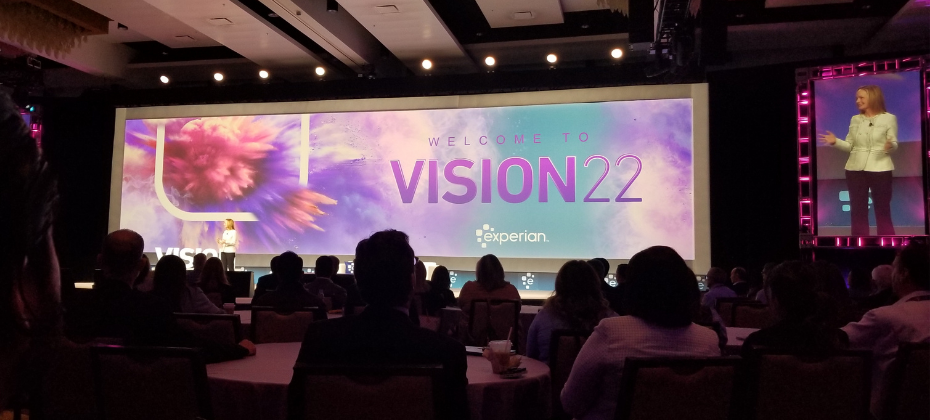
“Disruption has caused enormous amounts of innovation,” said Jennifer Schulz, CEO of Experian, North America. “We must continue to be the disruptors in our industry which takes effort, data, technology, bright minds and vision for what the future will be.” Schulz kicked off the 39th Vision conference with a future-focused keynote delivered to a crowd of more than 400 attendees. Alex Lintner, Group President, Experian Consumer Information Services, talked about the next phase of great, highlighting the digital transformation that has taken place in the generations of the past and the disruption and innovation happening today and in the future. Keynote speaker: Dr. Mohamed A. El-Erian Dr. Mohamed A. El-Erian, renowned economist and author, President of Queens’ College, Cambridge, Chief Economic Advisor at Allianz, Chair of President Obama’s Global Development Council and Former CEO and Co-Chief Investment Officer of PIMCO, spoke about the Fed, inflation, negative interest rates and the labor market, as well as the importance of inclusion. El-Erian, who said he reads the Financial Times religiously, acknowledged that we will make mistakes on the journey as we work to be even more inclusive. To navigate what’s ahead, he said we will need resilience, optionality and agility. “It’s important to connect with information, acknowledge the insecurity, in a language people understand, in order to connect,” he said. Session highlights – day 1 The conference hall was buzzing with conversations, discussions and thought leadership. Buy Now Pay Later A large audience was in attendance for a session that introduced Experian’s Buy Now Pay Later Bureau™ and explored how it’s the first and only solution of its kind — serving consumers, BNPL providers, financial institutions and regulators. Identity Identity is constantly evolving, and while biometrics and authentication may have become ubiquitous, there is much activity around the concepts of eIDs, identity wallets and identity networks. Experian is making identities personal and helping businesses to recognize, manage and connect customer identities in new ways using data, analytics and technology. Marketing In today’s hypercompetitive world, businesses need to engage the freshest data and increase velocity when it comes to time to market. An average of 120 days won’t cut it. Ascend Marketing speeds time to market and helps achieve higher ROI. Regulatory Landscape With so much happening at Capitol Hill, a panel of experts from DC discussed a number of topics and proposals (and their impacts), including the defense for risk-based pricing, the impact of suppressing negative data, and trending topics like Buy Now Pay Later and data portability. All the while, the tech showcase had a constant flow of attendees with demos ranging from data and decisioning to financial inclusion and technology. This is just the beginning. And as Schulz said, “There’s more to do.” More insights from Vision to come. Follow @ExperianVision to see more of the action.

Rewards are among the most appealing features of any credit card. While upfront benefits, like sign-up bonuses and cashback, are most influential in card acquisition, ancillary benefits, like fraud and identity protection, can amplify a card’s overall value.1 Credit card fraud ranked as the second most common form of identity theft in 2021,2 and is expected to become even more frequent as consumers continue to bank and shop online.3 42% of consumers are concerned for the safety of their banking and shopping transactions. With digital identity theft and fraud on the rise, it’s no surprise that safety measures are “very” or “extremely” important to consumers when deciding between different credit cards.4 In response, many card issuers have started to market their security and protection-related benefits more frequently to better capitalize on their cards’ value to consumers. The ways they’ve highlighted these benefits include: A fraud protection campaign From spotlighting their fraud protection benefits in card welcome kits to providing privacy tips on social media, credit card issuers have crafted compelling campaigns to demonstrate their commitment to protecting their customers from fraud and identity theft. In turn, issuers can differentiate their cards from the competition and improve response rates. Reminders about their fraud prevention efforts Issuers have also sent out ongoing reminders outlining the protections their credit cards offer, such as credit monitoring services 5 that notify cardholders of suspicious activity on their credit report. By consistently promoting their efforts to keep their customers’ accounts and data safe, issuers can earn their cardholders’ trust, build loyalty and drive card usage. While benefits like cashback and travel points can help with card acquisition, fraud and identity protection benefits can help drive long-term customer relationships, especially now that card fraud is becoming a growing concern.6 To learn more about how businesses have worked to meet the consumer demand for secure interactions, check out our 2021 Global Identity and Fraud Report. Learn more 1Jonathan O'Connor. "Most Consumers Aren't Aware of Their Credit Cards' Ancillary Benefits. How Does This Impact Card Acquisition and Usage?" TSYS, January 2019 2FTC. "Consumer Sentinel Network" Data Book, 2021 3April Berthene. "Coronavirus pandemic adds $219 billion to US ecommerce sales in 2020-2021" Digital Commerce 360, March 2022 4"Consumers Consider as Many as Six Factors When Choosing Credit Card" PYMTS.com, December 2021 5David McMillin. "Identity theft is a major problem, but these 5 credit card protection programs can help keep you safe" Business Insider, June 2021 6"New FICO Survey Finds Overconfidence Could Put US Consumers at Risk From Scams" Business Wire, February 2022

Experian’s in-person Vision conference returns next Monday, April 11 in Los Angeles, Calif. The event is known for premier thought leadership, net-new insights and the latest and greatest in technology, innovation and data science. This year’s agenda promises to have intentional discussions around tomorrow’s trending topics including financial inclusion, buy now pay later, open banking, the future of fraud, alternative data strategies, and much more. A few spotlight sessions include: Top trends including the future application of the cloud and emerging technologies, emerging regulatory legislation and the broader implications and opportunities of DeFi. A deep dive into strategies around the targeting/marketing revolution and how to deliver in the post-COVID-19 market environments and bolster financial inclusion decisions. An introduction to Experian’s Buy Now Pay Later BureauTM, the industry’s first and only solution designed to address the needs of consumers, BNPL providers, financial institutions and regulators alike. A roundup of sessions addressing innovation in action spanning from real-time verifications, to data-driven automation, and unified platforms from data to deployment to decisioning. Several sessions highlighting future-looking strategies and solutions that leverage alternative data that can increase conversion rates while concurrently reducing risk. Multiple sessions centered on the rapidly changing identity environment and combatting emerging fraud threats. The event will also include a Tech Showcase, where attendees can get a taste of tomorrow today with more than 20 demos and the latest innovations at their fingertips. And, as always, the event features marquee keynote speakers sure to inspire. This year’s featured speakers are Dr. Mohamed A. El-Erian, President of Queens’ College, Cambridge, Chief Economic Advisor at Allianz, and Former CEO and Co-Chief Investment Officer of PIMCO; Allyson Felix, Olympic Gold Medalist, co-founder of Saysh, a footwear and lifestyle brand for women, and Right to Play and Play Works ambassador; and the closing keynote will feature actor, investor, entrepreneur and philanthropist, Ashton Kutcher. Stay tuned for additional highlights and insights on our social media platforms throughout the course of the conference. Follow Experian Insights on Twitter and LinkedIn.
Experian’s Ascend Intelligence Service platform has been named “Best Consumer Lending Product” in the sixth annual FinTech Breakthrough Awards.

In today’s evolving and competitive market, the stakes are high to deliver both quantity and quality. That is, to deliver growth goals while increasing customer satisfaction. OneAZ Credit Union is the second largest credit union in Arizona, serving over 157,000 members across 21 branches. Wanting to fund more loans faster and offer a better member experience through their existing loan origination system (LOS), OneAZ looked to improve their decisioning system and long-standing underwriting criteria. They partnered with Experian to create an automated underwriting strategy to meet their aggressive approval rate and loss rate goals. By implementing an integrated decisioning system, OneAZ had flexible access to data credit attributes and scores, resulting in increased automation through their existing LOS – meaning they didn’t have to completely overhaul their decisioning systems. Additionally, they leveraged software that enabled champion/challenger strategies and the flexibility to manage their decision criteria. Within one month of implementation, OneAZ saw a 26% increase in loan funding rates and a 25% decrease in manual reviews. They can now pivot quickly to respond to continuously evolving conditions. “The speed at which we can return a decision and our better understanding of future performance has really propelled us in being able to better serve our members,” said John Schooner, VP Credit Risk Management at OneAZ. Read our case study for more insight on how automation and Experian Decisioning can move the needle for your organization, including: Streamlined strategy development and execution to minimize costly customizations and coding Comprehensive data assets across multiple sources to ensure ID verification and a holistic view of your prospect Proactive monitoring and real-time visibility to challenge and rapidly adjust strategies as needed Download the full case study

Lenders are increasingly under pressure to improve access to the financial system and help close the wealth gap in America. Read more!

While many view Millennials and Gen Z through the same lens, savvy automotive marketers are adjusting their strategies to capture the market of this generation.

Reporting positive rental payments provides residents with a powerful incentive to pay their rent on time and in full. Read more!

With consumers having more banking options than ever before, loyalty has become the most valuable currency for financial institutions (FI). As fintechs and big tech companies continue to roll out innovative banking and payment options, traditional FIs must rethink their strategies to drive new business, retain existing customers and remain competitive. According to a recent Mintel report, rewards, transparency and customer service are the top three constants when it comes to building loyalty. Here’s how financial institutions can deliver on these fronts to create and maintain lasting customer relationships: Rewards programs and incentives Rewards have long been a key customer retention strategy, with 39% of consumers stating they would remain loyal to their financial service providers if they offered incentives and rewards. While traditional rewards programs that offer points or cash back on everyday purchases remain popular, many companies are expanding beyond the conventional rewards structure to attract new customers and stand out from the competition. For example, one California-based startup enables its cardholders to earn points at every winery, wine club or wine shop, while a health and wellness company rewards its cardholders with extra cash back when they meet their weekly fitness goals. To build and maintain customer loyalty, FIs can follow suit by incentivizing positive financial behavior, such as offering points to customers when their credit score increases or when they reach their monthly savings goal. Being rewarded for improving their financial health can encourage customers to continue making positive and responsible financial decisions. When customers see how much their financial institution invests in their financial well-being, they are more likely to remain loyal to the brand. Nurturing existing customers through rewards programs is also more cost-effective than acquiring new ones. Rewards program members spend 5-20% more than non-members on average, which not only covers operating costs but leads to increased sales and revenue. Transparency over fees Beyond rewards programs and incentives, many FIs have created innovative tools to help customers avoid overdraft fees, such as real-time alerts for low balances. To take it a step further, some have eliminated these fees altogether. While overdraft fees can be an easy source of revenue for financial institutions, they are a pain point for customers, especially for those who are financially vulnerable. Rather than continuing to be saddled with hefty penalties, customers are likely to switch to providers that are more upfront about their fees or have eliminated them outright. To avoid losing current and prospective customers to new competition, FIs need to be more transparent and work toward establishing fairer practices. Quick, friendly, and accessible customer service With today’s consumers having increased expectations for easy, convenient and accessible customer service, many FIs have refined their strategies by becoming digital-first. When customers have a question or concern, they can engage with financial institutions at any time through digital channels, including chat, email or social media. Being accessible at any hour of the day to assist their customers provides FIs with a great opportunity to build trust, loyalty and a positive reputation. By providing exceptional customer service, compelling rewards and being transparent, financial institutions have the power to create long-lasting customer relationships. Learn more about what you can do to retain your best customers or check out how to build lifetime loyalty with Gen Z. Learn more Build loyalty with Gen Z

Successful salespeople know that their busiest time is never when they are selling a lot of cars. They are way busier when they are not selling! The act of prospecting, following up, and consultatively selling is a time consuming and challenging process. Nevertheless, for salespeople, this pattern can lead to long term success in automotive sales. Until the inventory and chip shortage issues are resolved, you may find that you are busier than ever. You can no longer wait to greet shoppers as they walk into the show room and spend time chatting and test driving in hopes they will purchase a vehicle the same day. Floor traffic has been on a steady decline for a decade and with today’s vastly reduced inventory there is vastly reduced foot traffic. This does not mean that you should not or cannot sell cars. It means that your time should be filled with prospecting, following up on marketing leads and focusing on the dealership’s loyal customers. Focus on strategies that drive pre-orders In addition to prospecting activities, you will need to be extra resourceful during the sales process. For example, when the dealership does not have a specifically requested car on the lot, you should shift focus from the standard sign-and-drive approach to a focus on pre-ordering vehicles. Pre-orders can be attractive to customers because they give them the ability to create a new vehicle according to their color, options, and other preferences rather than settling for whatever the dealer has in stock (which right now is minimal at best). Experian’s Automotive Intelligence Engine™ (AIE), a fully customizable suite of marketing solutions can provide you and your dealership with the data insights necessary to find consumers who would be interested in your brand and models and who are in an equity position to facilitate a pre-order. Here are a few examples of how AIE helps dealers find likely pre-order consumers: Scenario: A Mercedes dealership would like to secure pre-orders and generate interest in vehicles for when inventory becomes available in 2022. Utilize AIE’s Market Insights to find lifestyle and demographic information to find consumers with a high buying propensity to purchase a luxury vehicle. Use AIE’s Audience Targeting to learn who of those consumers are in a positive equity position. Identify consumers who are likely to buy your models based on their prior purchasing history. Using marketing solutions to help find the right consumer now to create interest in the future could be the key to success in 2022. Focus on short term leases opportunities In today’s market, we also recommend dealers focus on targeting consumers who are nearing the term of their lease—because the end of a lease forces consumers to either turn in the vehicle or purchase it. In many cases, the customer can upgrade to a model with more features or a model in a different class—both of which may be compelling, even if the newer vehicle is an older model year than the trade in. This way, the dealer obtains the later model, lower mileage vehicle and the customer gets a model with the extra features they want or an entirely new class of vehicle. The Automotive Intelligence Engine can provide dealers with near term lease consumers in their area for all brands. For an in depth look at this topic, read our November blog “Using Data Insights to Focus on Near-Term Lease Sales Opportunities.” Learn more about Experian’s Automotive Intelligence Engine.

Direct mail isn’t outdated, antique or ineffective – it has evolved and adapted to meet the expectations of today’s consumers.