Customer Targeting & Segmentation

If someone asked you for stats on your retail card portfolio, would you respond with the number of accounts? Average spend per month? Or maybe you know the average revolving balance and profitability. Notice something about that list? Too many lenders think of their portfolio and customers as numbers when in reality these are individuals expressing themselves through their transactions. In an age where consumers increasingly expect customized experiences, marketing to account #5496115149251 is likely to fall on deaf ears. Credit card transaction data including bankcard, retail, and debit cards holds a wealth of information about your consumers' tastes and preferences. Think about all the purchases you made using a credit card this past month. Did you shop at high-end retail stores or discount stores? Expensive restaurants or fast food? Did you buy new clothes for your kids? Maybe you went to the movies, or met friends at a bar. How you use your card paints a picture of who you are. The trick is turning all those numbers into insights. You may have been swept up in all the excitement around Apple’s announcement of the iPhone X in August. However, you may have overlooked the incorporation of Neural Embedding, or machine learning, as one of the most powerful features of the new phone. Experian DataLabs has developed an innovative approach to analyzing transaction data using similar techniques. Unstructured machine learning is applied and patterns begin to emerge around customer spending. The patterns are highly intuitive and give personality to what was previously an indecipherable stream of data. For example, one group may be more likely to spend on children’s clothing, child care services, and theme parks while another spends on expensive restaurants, airlines, and golf courses. If these two consumers happened to spend approximately the same each month on your card, you’d probably treat them as category. But understanding one is a young family and their other is jet setter allows you to tailor messaging, offers, and terms to their needs and use of your products. Further, you can ensure they have the best product based on their lifestyle to minimize silent attrition as their needs evolve. But it’s not just about marketing. When your latest attrition dashboard is updated, what period are you measuring? Do you analyze account closures from the previous month? Maybe a few months back? Understanding churn is important, but it’s inherently reactive and backward looking. You wouldn’t drive a car looking in the rearview mirror, would you? Experian enables clients to actively monitor the portfolio for attrition risk by analyzing usage patterns and predicting future spend. Transactions are then monitored up to daily and, when spend doesn’t occur as expected, an alert is sent so you can proactively attempt to save the account before it closes. These algorithms are finely tuned to reduce false positives that can come from seasonality or predictable gaps in spend such as only using a card at certain times during the week. Most importantly, it gives you an opportunity to manage each account and address changing customer needs instead of waiting for customers to call to cancel. So how well do you know your customers? If you’re still looking at them as numbers, it may be time to explore new capabilities that allow you to act small, no matter how large your portfolio. Transaction Data Insights brings cutting-edge machine learning capabilities to lenders of all sizes. By digging into behavioral segments and having tools to monitor and send alerts when a consumer is showing signs of attrition risk, card portfolios can suddenly treat customers like people, providing the customized experience they increasingly expect.

Our national survey found that consumers struggle to find a credit card that meets their needs. They say there are too many options and it’s too time-consuming to research. What do consumers want? With 53% of survey respondents not satisfied with their current cards and 1 in 3 saying they’re likely to get a new card within 6 months, now’s the time to start personalizing offers and growing your portfolio. Start personalizing offers today>

Everyone loves a story. Correction, everyone loves a GOOD story. A customer journey map is a fantastic tool to help you understand your customer’s story from their perspective. Perspective being the operative word. This is not your perspective on what YOU think your customer wants. This is your CUSTOMER’S perspective based on actual customer feedback – and you need to understand where they are from those initial prospecting and acquisition phases all the way through collections (if needed). Communication channels have expanded from letters and phone calls to landlines, SMS, chat, chat bots, voicemail drops, email, social media and virtual negotiation. When you create a customer journey map, you will understand what channel makes sense for your customer, what messages will resonate, and when your customer expects to hear from you. While it may sound daunting, journey mapping is not a complicated process. The first step is to simply look at each opportunity where the customer interacts with your organization. A best practice is to include every department that interacts with the customer in some way, shape or form. When looking at those touchpoints, it is important to drill down into behavior history (why is the customer interacting), sociodemographic data (what do you know about this customer), and customer contact patterns (Is the customer calling in? Emailing? Tweeting?). Then, look at your customer’s experience with each interaction. Again, from the customer’s viewpoint: Was it easy to get in touch with you? Was the issue resolved or must the customer call back? Was the customer able to direct the communication channel or did you impose the method? Did you offer self-serve options to the right population? Did you deliver an email to someone who wanted an email? Do you know who prefers to self-serve and who prefers conversation with an agent, not an IVR? Once these two points are defined: when the customer interacts and the customer experience with each interaction, the next step is simply refining your process. Once you have established your baseline (right channel, right message, right time for each customer), you need to continually reassess your decisions. Having a system in place that allows you to track and measure the success of your communication campaigns and refine the method based on real-time feedback is essential. A system that imports attribute – both risk and demographic – and tracks communication preferences and campaign success will make for a seamless deployment of an omnichannel strategy. Once deployed, your customer’s experience with your company will be transformed and they will move from a satisfied customer to one that is a fan and an advocate of your brand.

With 1 in 6 U.S. residents being Hispanic, now is a great time for financial institutions to reflect on their largest growth opportunity. Here are 3 misconceptions about the multifaceted Hispanic community that are prevalent in financial institutions: Myth 1: Hispanic consumers are only interested in transaction-based products. In truth, product penetration increases faster among Hispanic members compared with non-Hispanic members when there’s a strategic plan in place. Myth 2: Most Hispanics are undocumented. The facts show that of the country’s more than 52 million Hispanics, most are native-born Americans and nearly 3 in 4 are U.S. citizens. Myth 3: The law prevents us from serving immigrants. Actually, financial institutions can compliantly lend to individuals who have an Individual Taxpayer Identification Number. There are many forms of acceptable government-issued identification, such as passports and consular identification cards. Solidifying the right organizational mentality, developing a comprehensive strategy based on segmentation, and defining what success truly looks like. These are all part of laying the foundation for success with the Hispanic market. Learn more>

Direct mail is dead. It’s so 90s. Digital is the way to reach consumers. Marketers have heard this time and again, and many have shifted their campaign focus to the digital space. But as our lives become more and more consumed by digital media, consumers are giving less time and attention to the digital messages they receive. The average lifespan of an email is now just two seconds and brand recall directly after seeing a digital ad is just 44%, compared to direct mail which has a brand recall of 75%. Further research shows direct mail marketing is one of the most effective tools for customer acquisition and loan growth. The current Data & Marketing Association (DMA) response rate report reveals the direct mail response rates for 2016 were at the highest levels since 2003. Additionally, while mailing volume has trended down since October 2016, response rates have trended up, and reached 0.68% in March 2017, up from 0.56% in October 2016. Using data and insights to tailor a direct mail campaign can yield big results. Here are some attention-grabbing tips: Identify Your Target Market: Before developing your offer and messaging strategy, begin with the customer profile you are trying to attract. Propensity models and estimated interest rates are great tools for identifying consumers who are more likely to respond to an offer. Adding them as an additional filter to a credit-qualified population can help increase response rates. Verify your Mailing List: Experian’s address verification software validates the accuracy and completeness of a physical address, flags inaccuracies, and corrects errors before they can negatively impact your campaign. Personalize the Offer: Consumers are more likely to open offers that are personalized, and appeal to their life stage, organizational affiliations or interests. Experian’s Mosiac profile report is a simple, inexpensive way to gather data-based insight into the lifestyle and demographics of your audience. Time the Offer: Timing your campaign with peak market demand is key. For example, personal loan demand is highest in the first quarter after the holidays, while student loans demand peaks in the Spring. Direct mail can help overcome digital fatigue that many consumers are experiencing, and when done right, it’s the printed piece that helps marketers boost response rates.

Many institutions take a “leap of faith” when it comes to developing prospecting strategies as it pertains to credit marketing. But effective strategies are developed from deep, analytical analysis with clearly identified objectives. They are constantly evolving – no setting and forgetting. So what are the basics to optimizing your prospecting efforts? Establish goals Unfortunately, far too many discussions begin with establishing targeting criteria before program goals are set. But this leads to confusion. Developing targeting criteria is kind of like squeezing a balloon; when you restrict one end, the other tends to expand. Imagine the effect of maximizing response rates when soliciting new loans. If no other criteria are considered, you could end up targeting high-risk individuals who cannot get approved elsewhere. Obviously, we’re not interested in increasing originations at all cost; risk must be understood as well. But this is where things get complicated. Lower-risk consumers tend to be the most coveted, get the best offers, and therefore have lower response rates and margins. Simplicity is best The US Navy developed the KISS acronym (keep it simple, stupid) in the 1960s on the philosophy that complexity increases the probability of error. This is largely true in targeting methodologies, but don’t mistake limiting complexity for simplicity. Perhaps the most simplistic approach to prescreen credit marketing is using only risk criteria to set an eligible population. Breaking a problem down to this single dimension generally results in low response rates and wasted budget. Propensity models and estimated interest rates are great tools for identifying consumers that are more likely to respond. Adding them as an additional filter to a credit-qualified population can help increase response rates. But what about ability to pay? So far we’ve considered propensity to open and risk (the latter being based on current financial obligations). Imagine a consumer with on-time payment behavior and a solid credit score who takes a loan only to be unable to meet their obligations. You certainly don’t want to extend debt that will cause a consumer to be overextended. Instead of going through costly income verification, income estimation models can assist with identifying the ability to repay the loan you are marketing. Simplicity is great, but not to the point of being one-dimensional. Take off the blindfold Even in the days of smartphones and GPS navigation, most people develop a plan before setting off on a road trip. In the case of credit marketing, this means running an account review or archive analysis. Remember that last prescreen campaign you ran? What could have happened with a more sophisticated targeting strategy? Having archive data appended to a past marketing campaign allows for “what if” retrospective analysis. What could response rates have been with a propensity tool? Could declines due to insufficient income have been reduced with estimated income? Archive data gives 20/20 hindsight to what could have been. Just like consulting a map to determine the shortest distance to a destination or the most scenic route, retrospective analysis on past campaigns allows for proactive planning for future efforts. Practice makes perfect Even with a plan, you probably still want to have the GPS running. Traffic could block your planned route or an unforeseen detour could divert you to a new path. Targeting strategies must continually be refined and monitored for changes in customer behavior. Test and control groups are essential to continued improvement of your targeting strategies. Every campaign should be analyzed against the goals and KPIs established at the start of the process. New hypotheses can be evaluated through test populations or small groups designed to identify new opportunities. Let’s say you typically target consumers in a risk range of 650-720, but an analyst spots an opportunity where consumers with a range of 625-649 with no delinquencies in the past 12 months performs nearly at the rate of the current population. A small test group could be included in the next campaign and studied to see if it should be expanded in future campaigns. Never “place bets” Assumptions are only valid when they are put to the test. Never dive into a strategy without testing your hypothesis. The final step in implementing a targeting strategy should be the easiest. If goals are clearly understood and prioritized, past campaigns are analyzed, and hypotheses are laid out with test and control groups, the targeting criteria should be obvious to everyone. Unfortunately, the conversation usually starts at this phase, which is akin to placing bets at the track. Ever notice that score breaks are discussed in round numbers? Consider the example of the 650-720 range. Why 650 and not 649 or 651? Without a test and learn methodology, targeting criteria ends up based on conventional wisdom – or worse, a guess. As you approach strategic planning season, make sure you run down these steps (in this order) to ensure success next year. Establish program goals and KPIs Balance simplicity with effectiveness Have a plan before you start Begin with an archive Learn and optimize In God we trust, all others bring data

Historical data that illustrates lower credit card use and increases in payments is key to finding consumers whose credit trajectory is improving. But positive changes in consumer behavior—especially if it happens slowly over time—don’t necessarily impact a consumer’s credit score. And many lenders are missing out on capturing new business by failing to take a closer look. It’s easy to categorize consumers by their credit score alone, but you owe it to your bottom line to investigate further: Are the consumer’s overall payments increasing? Is his credit card utilization decreasing? Are the overall card balances remaining consistent or declining? Could the consumer be within your credit score guidelines within a month or two? And most importantly, could a competitor acquire the consumer a month or two after you declined him? Identifying new customers who previously used credit responsibly is relatively easy since they typically have rich credit profiles that may include a mortgage and numerous types of credit accounts. But how do you evaluate consumers who may look identical? Trended data and attributes provide insight into whether a consumer is headed in the right direction: With more than 613 trended attributes available for real-time decisioning and for batch campaigns, Experian trends key factors that provide the insight needed for lenders to lend deeper without sacrificing credit quality. Looking at trended data and attributes is critical for portfolio growth, and credit line increases based on good credit behavior is a must for lenders for two reasons. First, you’ve already spent the money acquiring the consumer and you should not waste the opportunity to maximize returns. Second, competition is fierce; another lender could reward the consumer for great credit behavior they’ve displayed with your company. Be there first, be consistent, or be left behind. Use Experian’s Payment Stress Attributes and Short-term Utilization Attributes in custom scores or swap-set strategies in order to find quality customers who may be worthy of line increases or other attribute credit terms. Look to trended data to swap in consumers who may fall within a few points under your credit score guidelines, and reward your existing customers before another lender does. Near-prime consumers of today are the prime consumers of tomorrow.

There’s a new crew coming of age. Enter Generation Z. Gen Z — those born between the mid-1990s and the early 2000s — makes up one-quarter of the U.S. population. By 2020, they’ll account for 40% of all consumers. The oldest members of this next cohort — 18- to 20-year-olds — are coming of age. Here are some insights on how this initial segment of Gen Z is beginning to use credit. Credit scores averaged 631 in 2016. Debt levels — consisting largely of bankcards and auto and student loans — are low, with an average debt-to-income ratio of just 5.7%. Average income is $33,800. This generation is being raised in an era of instant, always-on access. They expect a quick, seamless and customized mobile experience. You have just 8 seconds to capture their attention. Webinar: A First Look at Gen Z and Credit

Millennials have long been the hot topic over the course of the past few years with researchers, brands and businesses all seeking to understand this large group of people. As they buy homes, start families and try to conquest their hefty student loan burdens, all will be watching. Still, there is a new crew coming of age. Enter Gen Z. It is estimated that they make up ¼ of the U.S. population, and by 2020 they will account for 40% of all consumers. Understanding them will be critical to companies wanting to succeed in the next decade and beyond. The oldest members of this next cohort are between the ages of 18 and 20, and the youngest are still in elementary school. But ultimately, they will be larger than the mystical Millennials, and that means more bodies, more buying power, more to learn. Experian recently took a first look at the oldest members of this generation, seeking to gain insights into how they are beginning to use credit. In regards to credit scores, the eldest Gen Z members sported a VantageScore® credit score of 631 in 2016. By comparison, younger Millennials were at 626 and older Millennials were at 638. Given their young age, Gen Z debt levels are low with an average debt-to-income at just 5.7%. Their tradelines largely consist of bankcards, auto and student loans. Their average income is at $33.8k. Surprisingly, there was a very small group of Gen Z already on file with a mortgage, but this figure was less than .5%. Auto loans were also small, but likely to grow. Of those Gen Z members who have a credit file, an estimated 12% have an auto trade. This is just the beginning, and as they age, their credit files will thicken, and more insights will be gained around how they are managing credit, debt and savings. While they are young today, some studies say they already receive about $17 a week in allowance, equating to about $44 billion annually in purchase power in the U.S. Factor in their influence on parental or household purchases and the number could be closer to $200 billion! For all brands, financial services companies included, it is obvious they will need to engage with this generation in not just a digital manner, but a mobile manner. They are being raised in an era of instant, always-on access. They expect a quick, seamless and customized mobile experience. Retailers have 8 seconds or less — err on the side of less — to capture their attention. In general, marketers and lenders should consider the following suggestions: Message with authenticity Maintain a long-term vision Connect them with something bigger Provide education for financial literacy and of course Keep up with technological advances. Learn more by accessing our recorded webinar, A First Look at Gen Z and Credit.
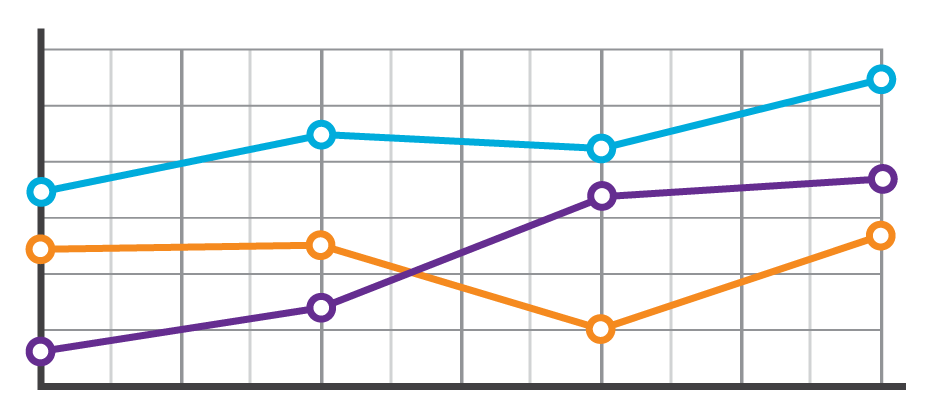
Sometimes life throws you a curve ball. The unexpected medical bill. The catastrophic car repair. The busted home appliance. It happens, and the killer is that consumers don’t always have the savings or resources to cover an additional cost. They must make a choice. Which bills do they pay? Which bills go to the pile? Suddenly, a consumer’s steady payment behavior changes, and in some cases they lose control of their ability to fulfill their obligations altogether. These shifts in payment patterns aren’t always reflected in consumer credit scores. At a single point in time, consumers may look identical. However, when analyzing their past payment behaviors, differences emerge. With these insights, lenders can now determine the appropriate risk or marketing decisions. In the example below, we see that based on the trade-level data, Consumer A and Consumer B have the same credit score and balance. But once we see their payment pattern within their trended data, we can clearly see Consumer A is paying well over the minimum payments due and has a demonstrated ability to pay. A closer look at Consumer B, on the other hand, reveals that the payment amount as compared to the minimum payment amount is decreasing over time. In fact, over the last three months only the minimum payment has been made. So while Consumer B may be well within the portfolio risk tolerance, they are trending down. This could indicate payment stress. With this knowledge, the lender could decide to hold off on offering Consumer B any new products until an improvement is seen in their payment pattern. Alternatively, Consumer A may be ripe for a new product offering. In another example, three consumers may appear identical when looking at their credit score and average monthly balance. But when you look at the trend of their historical bankcard balances as compared to their payments, you start to see very different behaviors. Consumer A is carrying their balances and only making the minimum payments. Consumer B is a hybrid of revolving and transacting, and Consumer C is paying off their balances each month. When we look at the total annual payments and their average percent of balance paid, we can see the biggest differences emerge. Having this deeper level of insight can assist lenders with determining which consumer is the best prospect for particular offerings. Consumer A would likely be most interested in a low- interest rate card, whereas Consumer C may be more interested in a rewards card. The combination of the credit score and trended data provides significant insight into predicting consumer credit behavior, ultimately leading to more profitable lending decisions across the customer lifecycle: Response – match the right offer with the right prospect to maximize response rates and improve campaign performance Risk – understand direction and velocity of payment performance to adequately manage risk exposure Retention – anticipate consumer preferences to build long-term loyalty All financial institutions can benefit from the value of trended data, whether you are a financial institution with significant analytical capabilities looking to develop custom models from the trended data or looking for proven pre-built solutions for immediate implementation.

Reactivation campaigns make economic sense. They build on a brand’s previous investments, targeting customers who already are aware of and previously have engaged with your brand. Use these 4 steps to build a successful reactivation framework: 1. Analyze subscriber data to identify reactivation segments to target. 2. Identify subscriber activity to divide customers into at least 3 unique segments. 3. Develop messaging strategies for each segment. 4. Integrate or suppress inactive subscribers based on whether they re-engage. Reactivation campaigns can deliver significant incremental revenue and position inactive subscribers for further engagement in future campaigns. Download report>

When it comes to buying a vehicle, we found that consumers who owned a Certified Pre-Owned (CPO) used vehicle are most loyal to the original vehicle manufacturer — to the tune of 75% — when purchasing another CPO used vehicle. Consumer buying patterns show that the loyalty rate to the manufacturer is also high when: Moving from a new vehicle to another new vehicle (60.9%). Switching from a CPO used vehicle to a new vehicle (54.1%). By understanding loyalty rates and other key market trends, manufacturers, dealers and resellers can make smarter decisions that create more opportunities for themselves and in-market consumers. More insights>

Big changes for the new year 2017 is expected to bring some big changes. But what do those changes mean for the financial services space? Here are 3 trends and twists Experian expects to occur over the next 12 months: Trump and the Republican-controlled Congress will move forward with a deregulatory agenda. Recognizing and scoring more previously invisible consumers through alternative data sources will be emphasized. Personalized credit offers delivered via multiple digital channels in a sequenced, trackable manner. What are your predictions for 2017? Only time will tell, but we’re certain that regulations and advancements in digital will be huuuge. >>More 2017 trends

When you think of criteria for prescreen credit marketing, what comes to mind? Most people will immediately discuss the risk criteria used to ensure consumers receiving the mailing will qualify for the product offered. Others mention targeting criteria to increase response rates and ROI. But if this is all you’re looking at, chances are you’re not seeing the whole picture. When it comes to building campaigns, marketers should consider the entire customer lifecycle, not just response rates. Yes, response rates drive ROI and can usually be measured within a couple months of the campaign drop. But what happens after the accounts get booked? Traditionally, marketers view what happens after origination as the responsibility of other teams. Managing delinquencies, attrition, and loyalty are fringe issues for the marketing manager, not the main focus. But more and more, marketers must expand their role in the organization by taking a comprehensive approach to credit marketing. In fact, truly successful campaigns will target consumers that build lasting relationships with the institution by using the three pillars of comprehensive credit marketing. Pillar #1: Maximize Response Rates At any point in time, most consumers have no interest in your products. You don’t have to look far to prove this out. Many marketing campaigns are lucky to achieve greater than a 1% response rate. As a result, marketers frequently leverage propensity to open models to improve results. These scores are highly effective at identifying consumers who are most likely to be receptive to your offer, while saving those that are not for future efforts. However, many stop with this single dimension. The fact is no propensity tool can pick out 100% of responders. Layering just a couple credit attributes to a propensity score allows you to swap in new consumers. Simultaneously, credit attributes can identify consumers with high propensity scores that are actually unlikely to open a new account. The net effect is even higher response rates than can be achieved by using a propensity score alone. Pillar #2: Risk Expansion Credit criteria are usually set using a risk score with some additional attributes. For example, a lender may target consumers with a credit score greater than 700 and no derogatory or delinquent accounts reported in the past 12 months. But, most of this data is based on a “snapshot” of the credit profile and ignores trends in the consumer’s use of credit. Consider a consumer who currently has a 690 credit score and has spent the past six months paying down debt. During that time, utilization has dropped from 66% to 41%, they’ve paid off and closed two trades, and balances have reduced from $21,000 to $13,000. However, if you only target consumers with a score greater than 700, this consumer would never appear on your prescreen list. Trended data helps spot how consumers use data over time. Using swap set analysis, you can expand your approval criteria without taking on the incremental risk. Being there when a consumer needs you is the first step in building long-term relationships. Pillar #3: Customer profitability and early attrition There’s more to profitability than just originating loans. What happens to your profitability assumptions when a consumer opens a loan and closes it within a few months? According to recent research by Experian, as many as 26% of prime and super-prime consumers, and 38% of near-prime consumers had closed a personal loan trade within nine months of opening. Further, nearly 32% of consumers who closed a loan early opened a new personal loan trade within a few months. Segmentation can help identify consumers who are likely to close a personal loan early, giving account management teams a head start to try and retain them. As it turns out, many consumers use personal loans as a form of revolving debt. These consumers occasionally close existing trades and open new trades to get access to more cash. Anticipating who is likely to close a loan early allows your retention team to focus on understanding their needs. If you don’t, you’re competition will take advantage through their marketing efforts. Building the strategy Building a comprehensive strategy is an iterative process. It’s critical for organizations to understand each campaign is an opportunity to learn and refine the methodology. Consistently leveraging control and test groups and new data assets will allow the process to become more efficient over time. Importantly, marketers should work closely across the organization to understand broader objectives and pain points. Credit data can be used to predict a range of future behaviors. As such, marketing managers should play a greater role as the gatekeepers to the organization’s growth.

Looking to score more consumers, but worried about increased risk? A recent VantageScore® LLC study found that consumers rendered “unscoreable” by commonly used credit scoring models are nearly identical in their financial and credit behavior to scoreable consumers. To get a more detailed financial portrait of the “expanded” population, credit files were supplemented with demographic and economic data. The study found: Consumers who scored above 620 using the VantageScore® credit score exhibited profiles of sufficient quality to justify mortgage loans on par with those of conventionally scoreable consumers. 3 to 2.5 million – a majority of the 3.4 million consumers categorized as potentially eligible for mortgages – demonstrated sufficient income to support a mortgage in their geographic areas. The findings demonstrate that the VantageScore® credit score is a scalable solution to expanding mortgage credit without relaxing credit standards should the FHFA and GSEs accept VantageScore® credit scores. Want to know more?