
Automotive

AutoCheck Buyback Protection is a policy that will compensate a consumer by buying back their vehicle under certain circumstances...

Experian's Q4 2020 State of the Automotive Finance Market report gives insight into the current state of the leasing market.
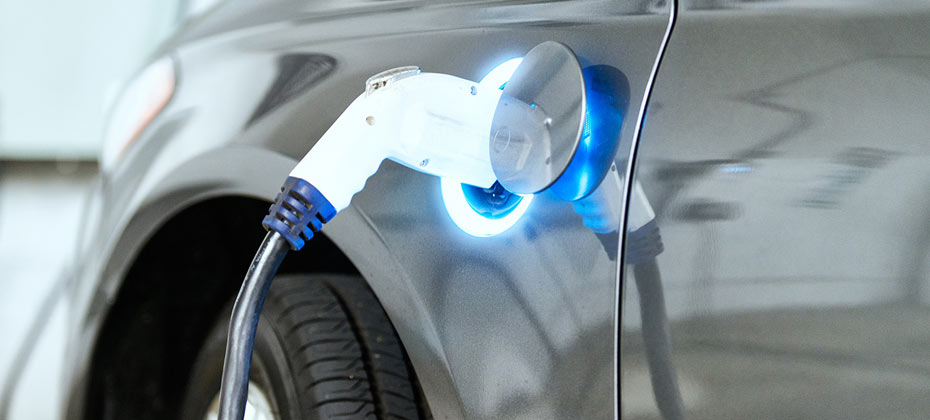
The Q4 2020 State of the Automotive Finance Market report zooms in to get a better picture of the alternative fuel marketplace.
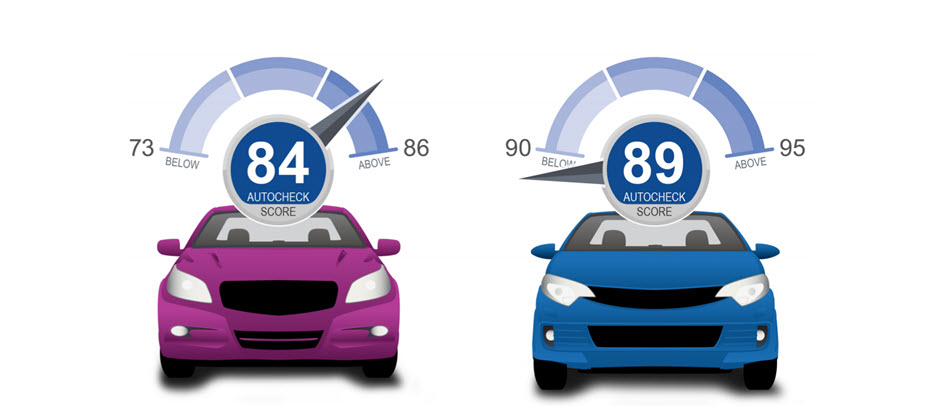
Do you know what the patented AutoCheck Score represents? The AutoCheck Score predicts the likelihood an individual vehicle will be on the road in five years.

Last year is a testament to how quickly trends can shift, and entire industries can be turned upside down.

Millennials and Gen Z consumers have proven to be future trend shapers for the auto industry.

Experian Automotive Market Insights includes an in-depth analysis of auction volume across the United States.

Experian Automotive Market Insights helps dealers efficiently identify potential conquest opportunities in their region and beyond.

Experian Automotive Market Insights dashboard provides a variety of insights to help dealers tackle their biggest challenges.

Small SUVs became the most financed vehicle segment in Q3 2020, making up 26.01% of all financed vehicles during the quarter.

According to Experian’s Q3 2020 State of the Automotive Finance Market report, 26.20% of all new vehicles are leased compared to 30.27% last year.

While things aren't quite back to normal in Q3 2020, there were a number of positive trends that demonstrates the automotive industry's resilience.

Leveraging data to eliminate wasted ad spend will set your dealership up for success in the new year.

When we think about vehicle history, we tend to imagine two audiences: dealers and consumers. After all, identifying any potential hidden defects could have a significant impact on a used car buying decision; vehicle history reports are an invaluable part of the process. But it’s not just dealers and consumers who can benefit. It takes three things to sell a vehicle: the car (dealers), the consumer and credit; we’ve covered the first two, so let’s focus on the third. Lenders take a plethora of information into consideration when making automotive lending decisions, including a borrower’s credit score, payment history and utilization rate. But these data points only reflect the risk associated with the borrower; there’s also inherent risk with the vehicle itself. I recently participated in a virtual workshop, The Risky Side of the Road, during Used Car Week 2020, where we discussed the value of leveraging vehicle history information to minimize risk with lending decisions. Extending a loan to a borrower hoping to purchase a used vehicle with unidentified defects exposes the lender to unnecessary risk; hidden damage and maintenance costs could impact a borrower’s ability to repay the loan. To minimize portfolio risk, we recommend lenders leverage vehicle history reports, such as AutoCheck, before making a lending decision. Hidden Damage Significantly Impacts Vehicle Value Let’s consider the universe of used vehicles that could potentially be sold and financed. According to Experian’s Q2 2020 Market Trends Review, there are more than 280 million vehicles on the road. And our research indicates that four out of 10 of the cars and light duty trucks on the road have been in at least one accident, and around 20% of vehicles have been in multiple accidents. What does this mean for a vehicle’s value? Even if a vehicle has been completely restored and repaired, the value of the vehicle diminishes. According to a recent Mitchell Industry Trends Physical Damage Report, in Q2 2019, the average diminished value for a vehicle involved in an accident was $3,151; and this doesn’t include the fiscal impact of other hidden defects, such as flood damage. And the loss in value trickles down to the consumer and lender. For instance, if a lender unknowingly extends a $10,000 loan to a consumer who purchases a used vehicle that was involved in an accident, the actual value of the vehicle may be around $7,000. If the consumer decides to sell the vehicle before paying off the loan, it is very likely they will be up-side down. If the consumer falls behind on payments and the vehicle is repossessed, it will be difficult for the lender to recoup any losses at auction. But that’s where vehicle history reports come into play. Tools, such as AutoCheck vehicle history reports, inform lenders about reported accidents and recall information, among other insights. In addition, the AutoCheck Score, enables users to compare a vehicle with vehicles of similar class and age and assess the likelihood it will be on the road in five years. The AutoCheck Score can also help gauge the value and drivability of a repossessed vehicle. For example, according to Experian’s similarly titled white paper, The Risky Side of the Road, we found that the percentage of repossessed vehicles that were drivable was higher for vehicles assured by AutoCheck vehicle history reports (86.16%) versus those that were not assured (80.75%). Additionally, we found that repossessed vehicles that were drivable tend to have higher AutoCheck Score range. And unsurprisingly, vehicles that are drivable tend to perform better at auction, meaning a better return on investment for the lender. During these uncertain times, it is important for lenders to more precisely gauge the level of risk they take on. The more information lenders have about the used vehicles they are financing, the better positioned they will be to offer loan terms that minimize portfolio risk, while better meeting consumer needs. To view Experian’s white paper, The Risky Side of the Road, click here.

Enterprise Security Magazine recently named Experian a Top 10 Fraud and Breach Protection Solutions Provider for 2020. Accelerating trends in the digital economy--stemming from stay-at-home orders and rapid increases in e-commerce and government funding--have created an attractive environment for fraudsters. At the same time, there’s been an uptick in the amount of personally identifiable information (PII) available on the dark web. This combination makes innovative fraud and breach solutions more crucial than ever. Enterprise Security Magazine met with Kathleen Peters, Experian’s Chief Innovation Officer, and Michael Bruemmer, Vice President of Global Data Breach and Consumer Protection, to discuss COVID-19 digital trends, the need for robust fraud protection, and how Experian’s end-to-end breach protection services help businesses protect consumers from fraud. According to the magazine, “With Experian’s best in class analytics, clients can rapidly respond to ever-changing environments by utilizing offerings such as CrossCore® and Sure ProfileTM to identify and prevent fraud.” In addition to our commitment to develop new products to combat the rising threat of fraud, Experian is focused on helping businesses minimize the consequences of a data breach. The magazine noted that, “To serve as a one-stop-shop for data breach protection, Experian offers a wide range of auxiliary services such as incident management, data breach notification, identity protection, and call center support.” We are continuously working to create and integrate innovative and robust solutions to prevent and manage different types of data breaches and fraud. Read the full article Contact us