Tag: fraud prevention

Tenant screening fraud is rising, with falsified paystubs and AI-generated documents driving risk. Learn how income and employment verification tools powered by observed data improve fraud detection, reduce costs, and streamline tenant screening.
In today’s digital lending landscape, fraudsters are more sophisticated, coordinated, and relentless than ever. For companies like Terrace Finance — a specialty finance platform connecting over 5,000 merchants, consumers, and lenders — effectively staying ahead of these threats is a major competitive advantage. That is why Terrace Finance partnered with NeuroID, a part of Experian, to bring behavioral analytics into their fraud prevention strategy. It has given Terrace’s team a proactive, real-time defense that is transforming how they detect and respond to attacks — potentially stopping fraud before it ever reaches their lending partners. The challenge: Sophisticated fraud in a high-stakes ecosystem Terrace Finance operates in a complex environment, offering financing across a wide range of industries and credit profiles. With applications flowing in from countless channels, the risk of fraud is ever-present. A single fraudulent transaction can damage lender relationships or even cut off financing access for entire merchant groups. According to CEO Andy Hopkins, protecting its partners is a top priority for Terrace:“We know that each individual fraud attack can be very costly for merchants, and some merchants will get shut off from their lending partners because fraud was let through ... It is necessary in this business to keep fraud at a tolerable level, with the ultimate goal to eliminate it entirely.” Prior to NeuroID, Terrace was confident in its ability to validate submitted data. But with concerns about GenAI-powered fraud growing, including the threat of next-generation fraud bots, Terrace sought out a solution that could provide visibility into how data was being entered and detect risk before applications are submitted. The solution: Behavioral analytics from NeuroID via Experian After integrating NeuroID through Experian’s orchestration platform, Terrace gained access to real-time behavioral signals that detected fraud before data was even submitted. Just hours after Terrace turned NeuroID on, behavioral signals revealed a major attack in progress — NeuroID enabled Terrace to respond faster than ever and reduce risk immediately. “Going live was my most nerve-wracking day. We knew we would see data that we have never seen before and sure enough, we were right in the middle of an attack,” Hopkins said. “We thought the fraud was a little more generic and a little more spread out. What we found was much more coordinated activities, but this also meant we could bring more surgical solutions to the problem instead of broad strokes.” Terrace has seen significant results with NeuroID in place, including: Together, NeuroID and Experian enabled Terrace to build a layered, intelligent fraud defense that adapts in real time. A partnership built on innovation Terrace Finance’s success is a testament to what is possible when forward-thinking companies partner with innovative technology providers. With Experian’s fraud analytics and NeuroID’s behavioral intelligence, they have built a fraud prevention strategy that is proactive, precise, and scalable. And they are not stopping there. Terrace is now working with Experian to explore additional tools and insights across the ecosystem, continuing to refine their fraud defenses and deliver the best possible experience for genuine users. “We use the analogy of a stream,” Hopkins explained. “Rocks block the flow, and as you remove them, it flows better. But that means smaller rocks are now exposed. We can repeat these improvements until the water flows smoothly.” Learn more about Terrace Finance and NeuroID Want more of the story? Read the full case study to explore how behavioral analytics provided immediate and long-term value to Terrace Finance’s innovative fraud prevention strategy. Read case study

BIN attacks are a growing threat in today’s digital payments ecosystem. Learn how to mitigate these attacks to reduce losses.

Learn what lending fraud is, what you can do to safeguard your organization and consumers and how we can help. Read more!
Experian is proud to be a Thought Leadership Sponsor at this year’s Federal Identity Forum & Expo. Meet us on site at FedID!
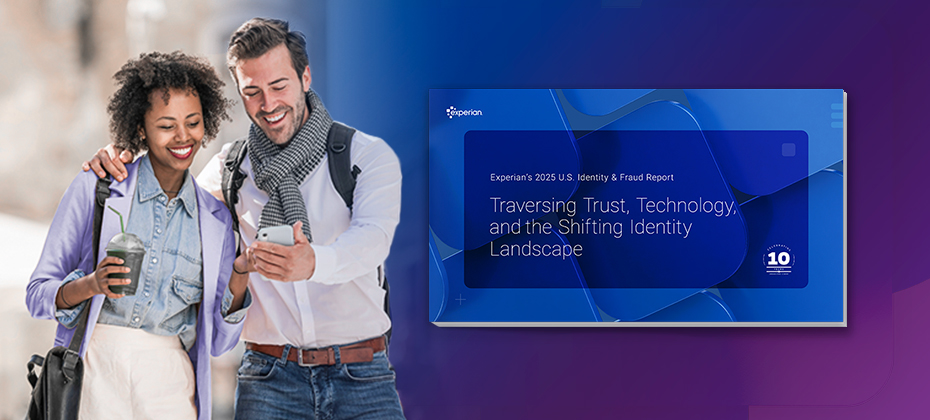
Now in its tenth year, Experian’s U.S. Identity and Fraud Report continues to uncover the shifting tides of fraud threats and how consumers and businesses are adapting. Our latest edition sheds light on a decade of change and unveils what remains consistent: trust is still the cornerstone of digital interactions. This year’s report draws on insights from over 2,000 U.S. consumers and 200 businesses to explore how identity, fraud and trust are evolving in a world increasingly shaped by generative artificial intelligence (GenAI) and other emerging technologies. Highlights: Over a third of companies are using AI, including generative AI, to combat fraud. 72% of business leaders anticipate AI-generated fraud and deepfakes as major challenges by 2026. Nearly 60% of companies report rising fraud losses, with identity theft and payment fraud as top concerns. Digital anxiety persists with 57% of consumers worried about doing things online. Ready to go deeper? Explore the full findings and discover how your organization can lead with confidence in an evolving fraud landscape. Download report Watch on-demand webinar Read press release

User and entity behavior analytics monitors how users and systems typically behave and raises a red flag when something unusual happens.

Click fraud is a costly, often overlooked threat affecting digital businesses. Learn more about how behavioral analytics can help stop it.

Fake IDs have been around for decades, but today’s fraudsters aren’t just printing counterfeit driver’s licenses — they’re using artificial intelligence (AI) to create synthetic identities. These AI fake IDs bypass traditional security checks, making it harder for businesses to distinguish real customers from fraudsters. To stay ahead, organizations need to rethink their fraud prevention solutions and invest in advanced tools to stop bad actors before they gain access. The growing threat of AI Fake IDs AI-generated IDs aren’t just a problem for bars and nightclubs; they’re a serious risk across industries. Fraudsters use AI to generate high-quality fake government-issued IDs, complete with real-looking holograms and barcodes. These fake IDs can be used to commit financial fraud, apply for loans or even launder money. Emerging services like OnlyFake are making AI-generated fake IDs accessible. For $15, users can generate realistic government-issued IDs that can bypass identity verification checks, including Know Your Customer (KYC) processes on major cryptocurrency exchanges.1 Who’s at risk? AI-driven identity fraud is a growing problem for: Financial services – Fraudsters use AI-generated IDs to open bank accounts, apply for loans and commit credit card fraud. Without strong identity verification and fraud detection, banks may unknowingly approve fraudulent applications. E-commerce and retail – Fake accounts enable fraudsters to make unauthorized purchases, exploit return policies and commit chargeback fraud. Businesses relying on outdated identity verification methods are especially vulnerable. Healthcare and insurance – Fraudsters use fake identities to access medical services, prescription drugs or insurance benefits, creating both financial and compliance risks. The rise of synthetic ID fraud Fraudsters don’t just stop at creating fake IDs — they take it a step further by combining real and fake information to create entirely new identities. This is known as synthetic ID fraud, a rapidly growing threat in the digital economy. Unlike traditional identity theft, where a criminal steals an existing person’s information, synthetic identity fraud involves fabricating an identity that has no real-world counterpart. This makes detection more difficult, as there’s no individual to report fraudulent activity. Without strong synthetic fraud detection measures in place, businesses may unknowingly approve loans, credit cards or accounts for these fake identities. The deepfake threat AI-powered fraud isn’t limited to generating fake physical IDs. Fraudsters are also using deepfake technology to impersonate real people. With advanced AI, they can create hyper-realistic photos, videos and voice recordings to bypass facial recognition and biometric verification. For businesses relying on ID document scans and video verification, this can be a serious problem. Fraudsters can: Use AI-generated faces to create entirely fake identities that appear legitimate Manipulate real customer videos to pass live identity checks Clone voices to trick call centers and voice authentication systems As deepfake technology improves, businesses need fraud prevention solutions that go beyond traditional ID verification. AI-powered synthetic fraud detection can analyze biometric inconsistencies, detect signs of image manipulation and flag suspicious behavior. How businesses can combat AI fake ID fraud Stopping AI-powered fraud requires more than just traditional ID checks. Businesses need to upgrade their fraud defenses with identity solutions that use multidimensional data, advanced analytics and machine learning to verify identities in real time. Here’s how: Leverage AI-powered fraud detection – The same AI capabilities that fraudsters use can also be used against them. Identity verification systems powered by machine learning can detect anomalies in ID documents, biometrics and user behavior. Implement robust KYC solutions – KYC protocols help businesses verify customer identities more accurately. Enhanced KYC solutions use multi-layered authentication methods to detect fraudulent applications before they’re approved. Adopt real-time fraud prevention solutions – Businesses should invest in fraud prevention solutions that analyze transaction patterns and device intelligence to flag suspicious activity. Strengthen synthetic identity fraud detection – Detecting synthetic identities requires a combination of behavioral analytics, document verification and cross-industry data matching. Advanced synthetic fraud detection tools can help businesses identify and block synthetic identities. Stay ahead of AI fraudsters AI-generated fake IDs and synthetic identities are evolving, but businesses don’t have to be caught off guard. By investing in identity solutions that leverage AI-driven fraud detection, businesses can protect themselves from costly fraud schemes while ensuring a seamless experience for legitimate customers. At Experian, we combine cutting-edge fraud prevention, KYC and authentication solutions to help businesses detect and prevent AI-generated fake ID and synthetic ID fraud before they cause damage. Our advanced analytics, machine learning models and real-time data insights provide the intelligence businesses need to outsmart fraudsters. Learn more *This article includes content created by an AI language model and is intended to provide general information. 1 https://www.404media.co/inside-the-underground-site-where-ai-neural-networks-churns-out-fake-ids-onlyfake/

Financial institutions can help protect clients by educating them on the warning signs of fraudulent lottery scams.

Fraud rings cause an estimated $5 trillion in financial damages every year, making them one of the most dangerous threats facing today’s businesses. They’re organized, sophisticated and only growing more powerful with the advent of Generative AI (GenAI). Armed with advanced tools and an array of tried-and-true attack strategies, fraud rings have perfected the art of flying under the radar and circumventing traditional fraud detection tools. Their ability to adapt and innovate means they can identify and exploit vulnerabilities in businesses' fraud stacks; if you don’t know how fraud rings work and the right signs to look for, you may not be able to catch a fraud ring attack until it’s too late. What is a fraud ring? A fraud ring is an organized group of cybercriminals who collaborate to execute large-scale, coordinated attacks on one or more targets. These highly sophisticated groups leverage advanced techniques and technologies to breach fraud defenses and exploit vulnerabilities. In the past, they were primarily humans working scripts at scale; but with GenAI they’re increasingly mobilizing highly sophisticated bots as part of (or the entirety of) the attack. Fraud ring attacks are rarely isolated incidents. Typically, these groups will target the same victim multiple times, leveraging insights gained from previous attack attempts to refine and enhance their strategies. This iterative approach enables them to adapt to new controls and increase their impact with each subsequent attack. The impacts of fraud ring attacks far exceed those of an individual fraudster, incurring significant financial losses, interrupting operations and compromising sensitive data. Understanding the keys to spotting fraud rings is crucial for crafting effective defenses to stop them. Uncovering fraud rings There’s no single tell-tale sign of a fraud ring. These groups are too agile and adaptive to be defined by one trait. However, all fraud rings — whether it be an identity fraud ring, coordinated scam effort, or large-scale ATO fraud scheme — share common traits that produce warning signs of imminent attacks. First and foremost, fraud rings are focused on efficiency. They work quickly, aiming to cause as much damage as possible. If the fraud ring’s goal is to open fraudulent accounts, you won’t see a fraud ring member taking their time to input stolen data on an application; instead, they’ll likely copy and paste data from a spreadsheet or rely on fraud bots to execute the task. Typically, the larger the fraud ring attack, the more complex it is. The biggest fraud rings leverage a variety of tools and strategies to keep fraud teams on their heels and bypass traditional fraud defenses. Fraud rings often test strategies before launching a full-scale attack. This can look like a small “probe” preceding a larger attack, or a mass drop-off after fraudsters have gathered the information they needed from their testing phase. Fraud ring detection with behavioral analytics Behavioral analytics in fraud detection uncovers third-party fraud, from large-scale fraud ring operations and sophisticated bot attacks to individualized scams. By analyzing user behavior, organizations can effectively detect and mitigate these threats. With behavioral analytics, businesses have a new layer of fraud ring detection that doesn’t exist elsewhere in their fraud stack. At a crowd level, behavioral analytics reveals spikes in risky behavior, including fraud ring testing probes, that may indicate a forthcoming fraud ring attack, but would typically be hidden by sheer volume or disregarded as normal traffic. Behavioral analytics also identifies the high-efficiency techniques that fraud rings use, including copy/paste or “chunking” behaviors, or the use of advanced fraud bots designed to mimic human behavior. Learn more about our behavioral analytics solutions and their fraud ring detection capabilities. Learn more

Fraud never sleeps, and neither do the experts working to stop it. That’s why we’re thrilled to introduce Meet the Maker, our new video series spotlighting the brilliant minds behind Experian’s cutting-edge fraud solutions. In our first episode, Matt Ehrlich, Senior Director of Identity and Fraud Product Management, and Andrea Nighswander, Senior Director of Global Solution Strategy, share how they use data, advanced analytics, and deep industry expertise to stay ahead of fraudsters. With 35+ years of combined experience, these fraud-fighting veterans know exactly what it takes to keep bad actors at bay. Watch now for an exclusive look at the minds shaping the future of fraud prevention. Stay tuned for more episodes featuring the visionaries driving fraud innovation.

Romance scams target individuals of all ages and backgrounds. Financial institutions need to protect their customers from these schemes.

A spoofing attack occurs when a threat actor impersonates a trusted source to gain access to sensitive information, disrupt operations or manipulate systems.

Financial identity theft is one of the biggest threats to consumer’s financial wellness in today’s age. Learn how you can help prevent it.