Loading...

Red Flags Rule and commercial accounts

Published: September 29, 2009 by Guest Contributor

By: Kristan Keelan

Most financial institutions are well underway in complying with the FTC’s ID Theft Red Flags Rule by:

1.  Identifying covered accounts
2.  Determining what red flags need to be monitored
3.  Implementing a risk based approach

However, one of the areas that seems to be overlooked in complying with the rule is the area of commercial accounts.  Did your institution include commercial accounts when identifying covered accounts?  You’re not alone if you focused only on consumer accounts initially.

Keep in mind that commercial credit and deposit accounts also can be included as covered accounts when there is a “reasonably foreseeable risk” of identity theft to customers or to safety and soundness.

Start by determining if there is a reasonably foreseeable risk of identity theft in a business or commercial account, especially in small business accounts.   Consider the risk of identity theft presented by the methods used to open business accounts, the methods provided to access business accounts, and previous experiences with identity theft on a business account.

I encourage you to revisit your institution’s compliance program and review whether commercial accounts have been examined closely enough.

Related Posts

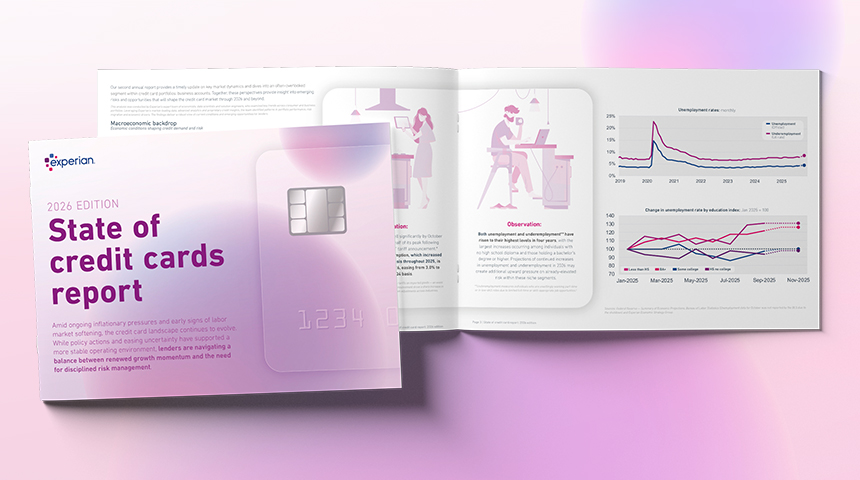
Growth, risk and the rise of "hidden" business accounts As inflation remains elevated and early signs of labor market cooling emerge, the credit card landscape is entering its next phase. Over the past few weeks, policy actions and discussions around potential interest-rate caps have driven increased uncertainty across the credit card industry and broader global markets. Lenders face a careful balancing act: capturing growth opportunities while maintaining disciplined risk oversight. Our second annual State of Credit Cards Report explores the macroeconomic forces influencing the market, key shifts in originations and delinquency trends, and lender mix. New this year, the report also digs into an often‑overlooked segment: business accounts hidden inside consumer credit card portfolios. Additionally, the report offers actionable strategies to help lenders segment risk and drive disciplined growth more effectively. Key insights include: 30+ DPD delinquency rates remained above pre-pandemic levels in 2025, underscoring the need for disciplined asset‑quality monitoring. Fintechs continue to gain ground, posting a 71% YOY increase in account originations.  Business accounts masked in the consumer credit card universe represent roughly 14% of balances and are more than 50% larger than the business card universe — a material segment with distinct risk and profitability dynamics that many lenders are not explicitly managing today. The report also outlines practical strategies to: Identify and segment business behavior within consumer portfolios. Align underwriting and account management with actual usage patterns. Capture targeted growth while protecting long‑term portfolio performance. Ready to dive deeper? Download the full 2026 State of Credit Cards Report to uncover insights that can help your organization manage risk more precisely and grow with confidence. Download report

Published: February 2, 2026 by Theresa Nguyen

Experian experts provided insight on how data furnishers can help support small businesses amidst the pandemic while complying with recent regulations.

Published: April 15, 2020 by Laura Burrows

It’s important for lenders to get a comprehensive view to find the most qualified candidates. Using alternative credit data can expand your choices.

Published: July 9, 2019 by Kelly Nguyen